

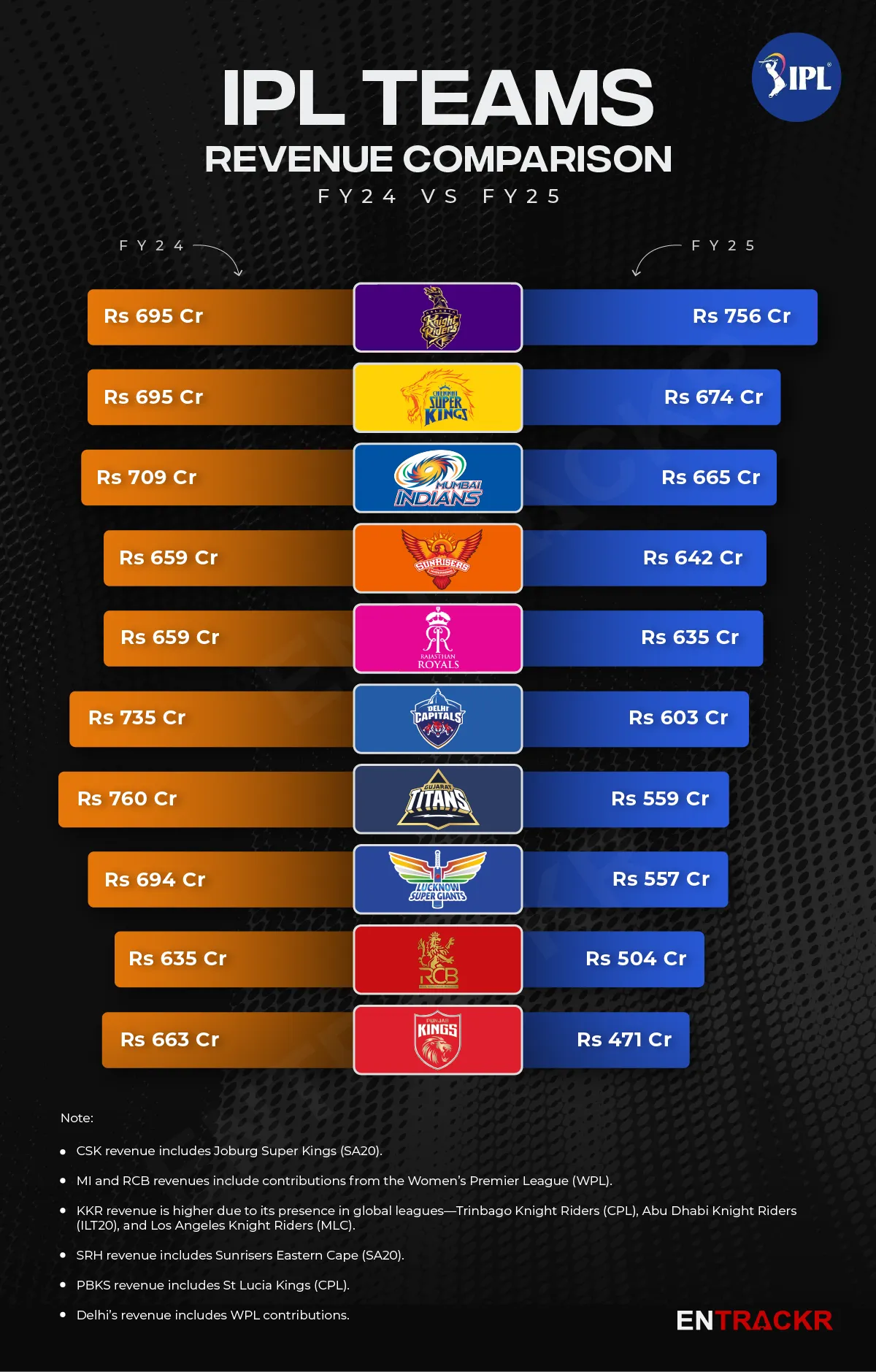
Cricket is a sport that captures the hearts of millions, but the Indian Premier League has transformed it into an absolute financial juggernaut. Every spring, stadiums fill up, televisions turn on, and massive amounts of money change hands. Fans often see the massive auction bids for superstar players and wonder how franchises can afford to spend millions on a single athlete for a two-month tournament.
The secret lies in a brilliantly structured financial ecosystem. The league operates on a specific business model designed to maximize revenue at both the central and team levels. Understanding how these teams generate income requires looking past the boundary ropes and stepping straight into the corporate boardrooms where broadcasting deals and sponsorship contracts are fiercely negotiated.
If you have ever been curious about the true profitability of these cricket franchises, you need to examine their diverse income streams and steep operational costs. From selling media rights to offloading merchandise, the financial mechanics of this league are staggering. Here is a comprehensive look at the full economics of an Indian Premier League team.
Introduction to IPL Economics
The financial architecture of this cricket league is recognized globally as a masterpiece of sports management. It balances the interests of the central governing body with the profitability of individual team owners.
IPL as a Business Ecosystem
At its core, the league operates on a franchise model. Private companies, Bollywood celebrities, and corporate conglomerates purchase the rights to operate teams in specific cities. This creates localized fan bases while maintaining a national appeal. The backbone of this ecosystem is a revenue-sharing system. The central governing body pools the largest chunks of income and distributes them among the participating franchises, ensuring that even teams with smaller market shares have the capital to compete effectively.
Why IPL Is Financially Powerful
The financial power of the tournament stems directly from its massive, highly engaged global audience. Hundreds of millions of viewers tune in every season. This enormous reach guarantees a high brand value for the league itself and every participating franchise. Advertisers and broadcasters are willing to pay astronomical sums for access to this audience, creating a virtuous cycle of wealth generation. For a look back at the origins of this massive enterprise, you can read about How IPL Was Born.
Major Revenue Sources for IPL Teams
To understand how a team makes money, you have to break down their specific income streams. Revenue generally falls into three massive buckets.
Media Rights Revenue
Media rights represent the largest single source of income for any franchise. Television networks and digital streaming platforms bid billions of dollars for the exclusive right to broadcast matches. These funds go directly into a central pool distribution. The governing body then takes its cut and distributes the rest evenly among the franchises. This single revenue stream often covers the entire player wage bill for most teams.
Sponsorship Deals
Sponsorships inject massive capital into the sport. There are title sponsors for the league itself, and then there are team sponsors. Franchises sell ad space on every inch of their team uniforms. The front of the jersey, the back, the sleeves, the trousers, and even the helmets are monetized. Teams also sign deals with official beverage partners, transportation partners, and technology partners.
Ticket Sales & Matchday Revenue
While broadcasting brings in the billions, stadium earnings remain a crucial piece of the puzzle. Ticket sales go directly to the home team. Matchday revenue also includes the sale of food, beverages, and hospitality packages in VIP boxes. A packed stadium of forty thousand screaming fans translates directly into significant localized cash flow. To understand more about the broadcasting side, check out IPL Media Rights Explained.
Central Revenue Pool Explained
The central revenue pool is the financial safety net that guarantees the survival and profitability of the franchises.
Role of Board of Control for Cricket in India
The Board of Control for Cricket in India acts as the custodian of the league. They negotiate the massive broadcasting and central sponsorship contracts. The board is responsible for revenue distribution, ensuring that the wealth generated by the league’s immense popularity is shared in a way that sustains the entire ecosystem.
Franchise Share
The percentage split of the central revenue pool has evolved over the years. Initially, the central board kept a larger portion of the funds to cover the startup costs of the league. Today, the franchise share is highly favorable to the team owners. Generally, the central pool is split evenly, with 50 percent going to the board and 50 percent divided among the teams. Furthermore, the team that wins the tournament, alongside the runner-up, receives additional prize money from this pool. You can learn more by reading IPL Business Model Explained.
Team-Level Revenue Streams
Aside from the central handouts, teams have to hustle to build their own independent income channels. This is where the marketing teams earn their salaries.
Merchandise Sales
Merchandise sales provide a direct link between the team and the fans. Supporters buy replica jerseys, caps, flags, and an array of lifestyle apparel. While counterfeit markets have historically hampered this revenue stream, official merchandise sales have grown exponentially as teams launch dedicated e-commerce platforms and open physical retail stores.
Digital and Social Media Revenue
A strong digital presence is highly lucrative. Franchises boast millions of followers across various social platforms. They monetize this digital and social media revenue by producing exclusive behind-the-scenes content, player interviews, and interactive fan experiences. Platforms often pay teams for video views, and sponsors pay a premium to be featured in viral social media posts.
Brand Collaborations
Players are essentially walking billboards. Franchises leverage their star athletes through specific brand collaborations. When a team’s star captain appears in a commercial for a smartphone or an energy drink, the franchise often takes a cut or negotiates these appearances as part of a larger team-wide sponsorship package. Read more about IPL Brand Value Growth.
Expenses of an IPL Team
Generating millions of dollars is useless if the expenses exceed the income. Running a professional sports team is a highly capital-intensive operation.
Player Salaries
Player salaries are the most significant expense for any franchise. During the auction spending phase, owners bid fiercely for top-tier international and domestic talent. The salary cap ensures spending remains competitive, but teams routinely exhaust their entire allocated purse. Retaining marquee players also demands massive financial commitments year after year.
Operational Costs
Moving a squad of players, coaches, medical staff, and executives across a massive country for two months requires deep pockets. Operational costs encompass luxury hotel accommodations, chartered flights, private security, and daily allowances. Teams also have to rent the stadiums from local state cricket associations for their home games, paying for pitch maintenance and matchday policing.
Marketing Expenses
To sell tickets and merchandise, teams must invest heavily in marketing expenses. They run massive advertising campaigns across television, print, and digital media before the season begins. Building fan loyalty requires hosting fan parks, running promotional events, and paying digital agencies to manage their online presence. Discover more details by reading IPL Mega Auction Explained.
Profitability – Do IPL Teams Actually Make Profit?
A common question among business analysts is whether these teams actually make a profit, or if they are simply vanity projects for billionaires.
Early Years vs Current Scenario
During the early years, almost every franchise operated at a severe loss. The initial franchise fees paid to the central board were staggering, and the revenue streams had not yet matured. Owners had to absorb heavy losses while building their brands. The current scenario is entirely different. Thanks to the explosion of media rights values, almost all teams are now highly profitable enterprises generating millions in pure profit annually.
Break-Even Point
The break-even point for most original franchises was reached around the fifth or sixth season. Once the initial massive operational debts were cleared, and the broadcasting rights were renegotiated at exponentially higher rates, the financial scales tipped. Today, a new franchise can expect to reach profitability much faster due to the guaranteed massive payouts from the central revenue pool. For a deeper dive into team worth, look at IPL Franchise Valuation.
Most Valuable IPL Teams
Not all franchises are created equal. Certain teams have built dynasties that make them incredibly valuable corporate assets.
Mumbai Indians
The Mumbai Indians stand at the pinnacle of franchise valuation. Backed by India’s largest corporate conglomerate, they boast a massive fan base and a history of winning championships. Their sponsorship slots are the most expensive in the league, and their brand value is recognized globally.
Chennai Super Kings
The Chennai Super Kings rival Mumbai in both popularity and valuation. Led by iconic players, their fan loyalty is arguably the strongest in the sport. This translates to sold-out stadiums, massive merchandise sales, and an incredibly lucrative digital footprint.
Royal Challengers Bangalore
Despite a historical lack of championship trophies, the Royal Challengers Bangalore remain an absolute commercial powerhouse. Their brand is built heavily around superstar personalities and an aggressive marketing strategy. They consistently rank among the highest in social media engagement, which drives massive sponsorship revenue. You can explore the history of top teams by reading Mumbai Indians Dynasty.
How IPL Became a Billion-Dollar League
The transformation of a domestic cricket tournament into a global decacorn (a business valued at over $10 billion) did not happen overnight.
Growth of Media Rights
The primary driver of this wealth has been the staggering growth of media rights. The original broadcasting deal was considered massive at the time, but recent renewals have shattered global sports records. The competition between traditional television broadcasters and digital streaming giants has created bidding wars that push the value of the league into the stratosphere.
Expansion of Sponsorship
Corporate India quickly realized the unmatched visibility the tournament offered. The expansion of sponsorship categories allowed the league to monetize everything from the strategic timeouts to the umpire’s uniforms. The influx of tech startups and digital payment companies as sponsors in recent years has further inflated the league’s overall valuation. To trace this timeline, review IPL Evolution (2008–2026).
Case Study – Revenue of a Top IPL Team
Let us look closely at the rough financials of a top-tier franchise to understand the exact scale of the money involved.
Income Breakdown
A top franchise can easily generate upwards of $60 million to $70 million in a single season. The central revenue pool (driven by media rights) accounts for roughly 60 to 70 percent of this total. Team-specific sponsorships bring in another 20 percent. The remaining 10 to 20 percent is generated through ticket sales, hospitality, merchandise, and digital monetization.
Profit Margins
After deducting the player salaries, which are capped by the league, and the heavy operational and marketing costs, a well-run franchise can walk away with an operating profit margin of 20 to 30 percent. This means a top team might clear $15 million to $20 million in pure profit for a two-month sporting event. This high return on investment is exactly why massive corporations fight to buy into the league. Dive into specific numbers by reading IPL Team Analysis.
Future of IPL Economics
The financial ceiling for this league has not yet been reached. The economic indicators point toward even more massive growth in the coming decade.
Increasing Franchise Valuation
Franchise valuations are skyrocketing. When two new teams were added to the league recently, the winning bids were in the billions of dollars. This set a new benchmark, automatically increasing the paper valuation of all existing franchises. As long as the central revenue pool continues to expand, team valuations will climb concurrently.
Global Expansion Impact
The league is no longer just an Indian phenomenon. The global expansion impact is becoming highly visible. Franchise owners are buying subsidiary teams in international T20 leagues across the Caribbean, South Africa, and the United States. This creates a year-round global brand presence, unlocking new international fan bases and foreign sponsorship dollars. The financial ecosystem is evolving into a multinational corporate enterprise. For predictions on the coming years, read Future of IPL After 2026.
The Final Score on IPL Finances
The financial mechanics of this cricket league represent a triumph of modern sports marketing and business strategy. What began as an experimental domestic tournament has transformed into a global financial powerhouse. The franchises are no longer just sports teams; they are highly lucrative corporate brands with diverse, globally integrated revenue streams.
As broadcasting deals continue to break records and team valuations soar into the billions, the business of cricket has never been healthier. The blueprint established here provides a fascinating lesson in how to monetize audience engagement, leverage corporate sponsorships, and balance central control with localized profitability.
Leave a Reply