

A short, dry nature walk and a long hike on rocky ground require different planning. Start with the trail, weather, distance and your experience, then compare footwear designed for those conditions. A shoe is one part of the preparation, alongside route planning and supplies.
This guide explains buying and fit questions, not a ranking of tested footwear. No shoe guarantees that you will not slip or be injured.
Check the trail before choosing
Look at the route’s surface, elevation, forecast and local notices. The National Park Service’s hiking safety guidance recommends planning for the conditions and discusses appropriate footwear for trails. Ask the park or trail manager when you are unsure.
For snowy or icy routes, footwear alone may not be enough. Local guidance may recommend traction equipment, and the appropriate equipment depends on conditions and experience. Our winter footwear guide links to an example of park-specific advice.
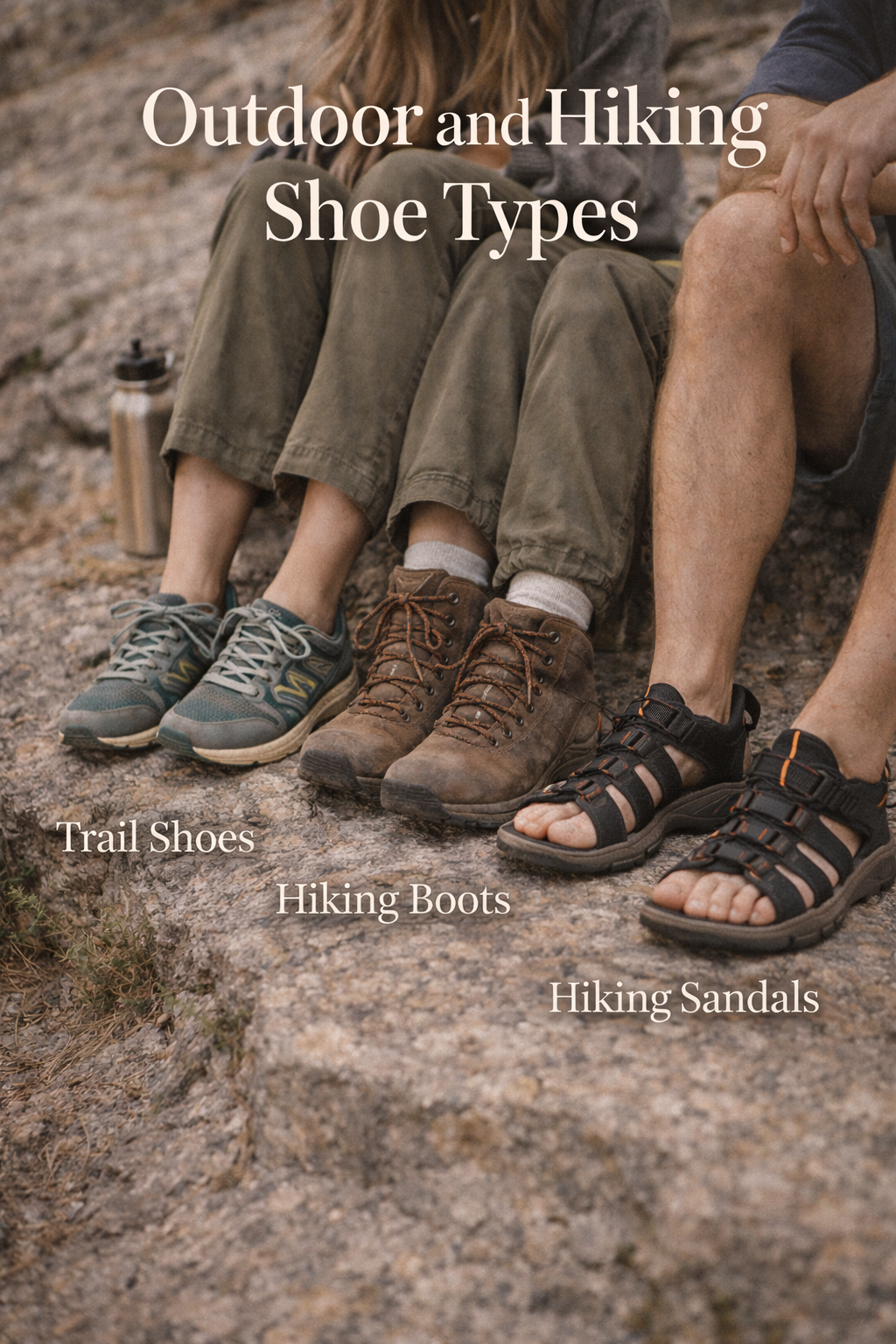
Compare common outdoor footwear
Hiking shoes and low-cut designs
A low-cut hiking shoe can provide coverage and tread intended for outdoor use, depending on the model. Compare the outsole, upper and fit for your route rather than assuming every hiking shoe performs the same way.
Hiking boots
Boots can offer more coverage around the ankle and lower leg. Height alone does not guarantee ankle protection. Check the collar, fastening and heel fit, and select a model intended for your terrain and expected weather.
Trail running shoes
Some trail runners use designs intended for uneven ground and may be suitable for certain hikes. Compare the exact model’s intended surface, fit and weather features. A lighter shoe is not automatically better for every route; the lightweight shoe guide explains the trade-offs.
Weather and traction
Water-resistant and waterproof are different product claims. Check the manufacturer’s description and consider how water can enter around the collar. No outsole provides guaranteed traction on all wet rock, mud or ice. Reassess the route when conditions change.
For hot-weather choices, the summer shoe guide discusses ventilation and coverage, but do not choose an open shoe for a trail solely because the weather is warm.
Fit and preparation
Try both shoes with the socks and any insoles you plan to wear. Check toe room, width, heel security and pressure around the collar. Walk and use stairs if the retailer permits. Try the pair on shorter suitable outings before a demanding trip; a painful shoe should not be accepted as normal.
Pack according to the route, including water and other essentials, and tell someone your plans when appropriate. Follow local warnings and turn back if conditions exceed your experience or equipment.
Frequently asked questions
Are hiking boots always necessary?
No single style suits every route. Choose footwear for the terrain, conditions and your needs, following local guidance.
Do higher boots prevent ankle injuries?
No shoe guarantees prevention. Fit, route and individual circumstances matter.
Are all trail shoes waterproof?
No. Check the exact model and intended use.



Leave a Reply