

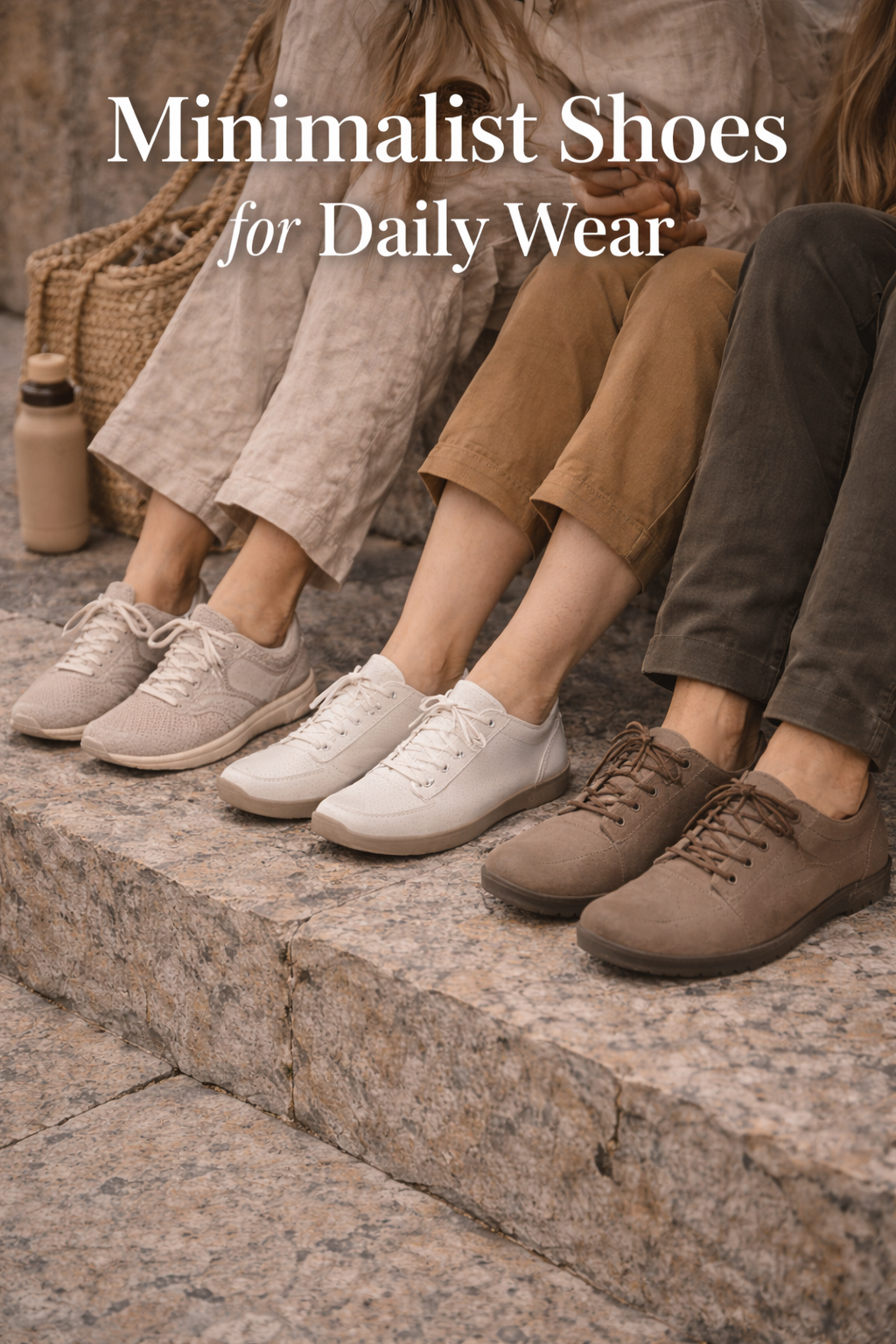
A minimalist shoe can feel very different from a cushioned everyday sneaker. Some people enjoy its flexible sole and closer feel of the ground; others prefer more cushioning or support. The best choice depends on your feet, your activities and how the individual pair fits.
What makes a shoe minimalist?
Minimalist footwear generally uses a flexible, relatively thin sole and little difference in height between the heel and forefoot. Many designs also give the toes more room. Features vary, so check the actual shoe rather than relying on the label. A simple-looking sneaker is not necessarily minimalist in construction.
A thin sole transmits more of the surface underfoot, which some wearers like. It can also feel less comfortable on hard or uneven ground. A lightweight shoe can be an alternative if you want less bulk but prefer more cushioning.
Everyday styles to consider
Minimalist sneakers can work with jeans, casual trousers or activewear. Slip-ons are convenient for quick errands, but check that the heel stays secure without gripping with your toes. Some low-profile leather shoes and boots suit smart-casual settings; examine their sole and fit rather than assuming they are all built alike.
Think about where you will wear them. A flexible casual shoe may be suitable for short errands yet feel too firm for a long shift on a hard floor. Wet weather, rough surfaces and workplace rules may call for a different pair. If protective footwear is required, check your employer’s requirements and the specific shoe’s certification.
How to check fit
Try both shoes with the socks you expect to wear. Your toes should have room without pressing against the front or sides, while the heel and midfoot should feel secure. Walk around the store and notice pressure points. Sizing differs by brand, so use fit rather than the number alone. Our guide to walking and running shoes explains other features to compare for your routine.
If you are new to minimalist shoes
Start with a short, comfortable period and increase use gradually if it feels good. Keep your existing shoes available. Do not push through pain, and stop if symptoms develop or persist. If you have a foot condition, an injury, diabetes or a prescribed insert, ask a qualified clinician about your needs before changing footwear.
Research on transitions has largely examined runners rather than everyday walking. For example, this small prospective study of runners followed people changing footwear; it does not establish that minimalist shoes prevent injury or improve posture for everyone. No shoe is a guaranteed treatment for foot or back pain.
A useful comparison
A minimalist sole, a thick sole and a shoe with a clean appearance are three different things. Look beyond the profile and compare the actual cushioning, flexibility and fit. Our minimalist and chunky shoe comparison explores the visual and practical differences.
Frequently asked questions
Can I wear minimalist shoes all day? Some people do, but a full day is a poor first test. Suitability depends on your feet and the demands of the day.
Are they always more comfortable? No. Comfort is individual, and thin or flexible soles may not suit everyone or every surface.
Do they last longer? Durability depends on the materials, construction, surface and wear. Inspect the outsole and upper regularly rather than assuming a particular lifespan.

Leave a Reply