

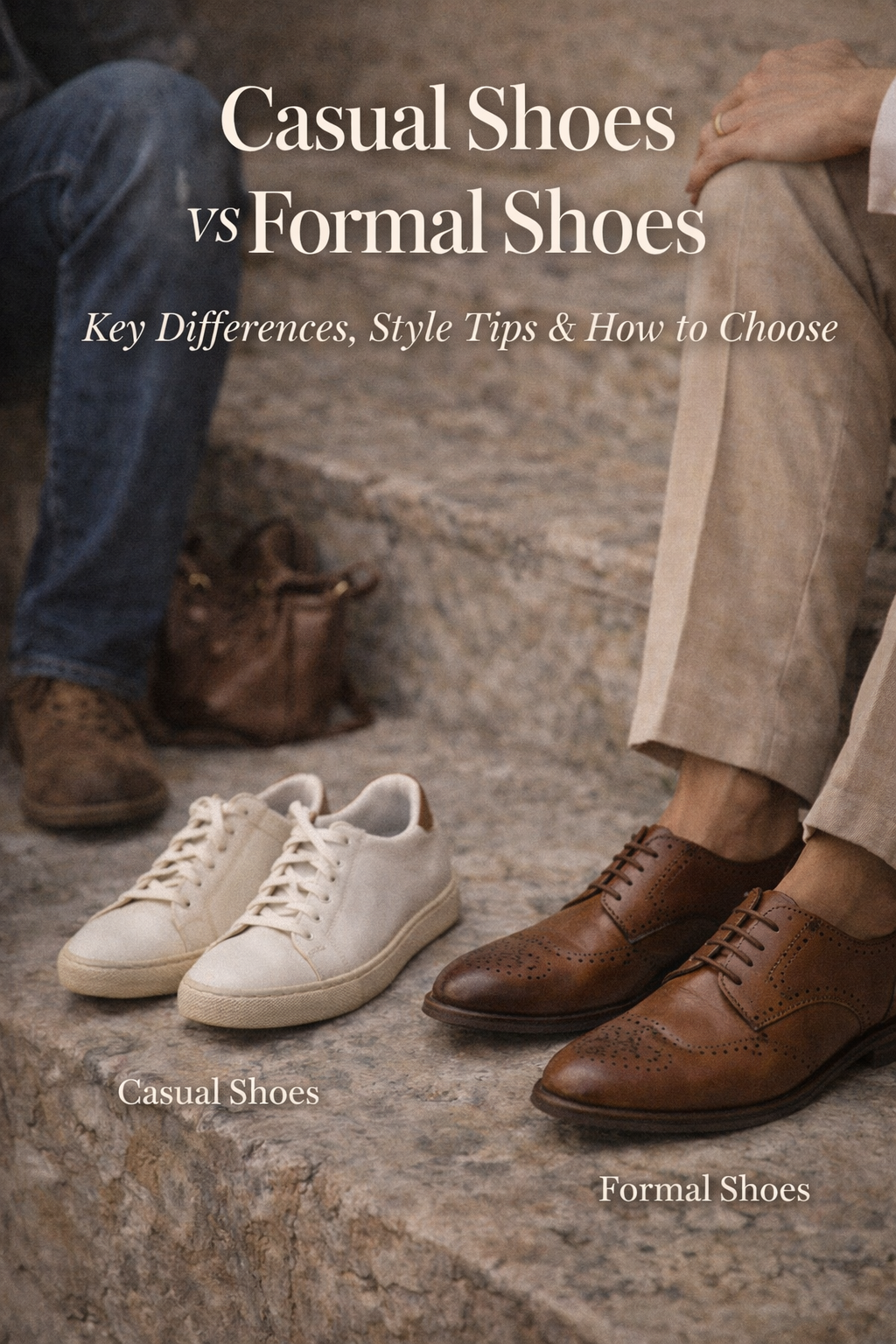
A shoe that works for a relaxed lunch may feel out of place at a formal ceremony. But the line between casual and formal is not fixed: the venue, invitation, outfit and local dress code all matter. Start with the occasion, then look for a pair that fits and suits the amount of walking you expect.
This guide compares styles rather than ranking brands or claiming that a particular shoe is comfortable for everyone.
What usually makes a shoe more or less formal?
Casual shoes often include sneakers, canvas slip-ons and relaxed boots. Formal options can include polished lace-ups, dress loafers, pumps or other refined styles. These are broad descriptions, not strict rules: a simple dark leather sneaker may look dressier than a brightly colored one, and a rugged boot may feel less formal than a sleek boot.
Material, finish, shape and condition affect the overall impression. A clean, well-maintained shoe usually works better for a dressier setting than a worn pair, but the invitation or workplace policy takes priority.
| Style | What to consider |
|---|---|
| Relaxed outing | Sneakers, casual flats or boots can work; consider the weather and distance. |
| Smart casual workplace | Compare a clean sneaker, loafer or ankle boot with the actual office dress code. |
| Formal event | Check the invitation and choose a dress shoe that fits the occasion and your outfit. |
| Job with hazards | Follow the employer’s protective-footwear requirements regardless of appearance. |
How to decide when the dress code is unclear
Read the invitation or ask the organizer what is expected. For an office, look at the written policy rather than assuming all workplaces interpret “smart casual” alike. A polished loafer or understated lace-up can sit between a casual sneaker and a more formal dress shoe, depending on the outfit.
Our smart casual footwear guide gives examples for offices, dinners and travel. For a closer look at individual categories, see sneakers vs loafers vs boots.
Fit matters at every formality level
Try both shoes with the socks or hosiery you plan to wear. Stand and walk: your toes should have room, the sides should not pinch and the heel should stay secure without rubbing. The AAOS guide to tight shoes recommends checking both length and width and avoiding shoes that do not fit.
A formal shoe is not automatically uncomfortable and a casual shoe is not automatically comfortable. Fit and construction vary between models. If the occasion involves a long walk, consider carrying an event pair and wearing a suitable walking pair during the journey.
Work and weather are separate decisions
If your role involves falling objects, wet floors or other hazards, ask your employer about required footwear. A formal-looking or casual shoe does not establish protective performance. Our work-shoe guide explains how to compare job requirements.
For rain or cold, check the exact material and weather description. Water-resistant is not the same as waterproof. Follow the care label and let wet shoes dry as directed.
Frequently asked questions
Can sneakers be smart casual?
Sometimes. The dress code, shoe condition and outfit all matter. Ask the organizer or employer when the rules are unclear.
Are loafers casual or formal?
They can be either, depending on their design, finish and the occasion. Compare the specific pair rather than relying on the category name.
Should dress shoes feel tight at first?
Do not buy a pair that pinches in the hope it will become comfortable. Try another size, width or shape.

Leave a Reply