

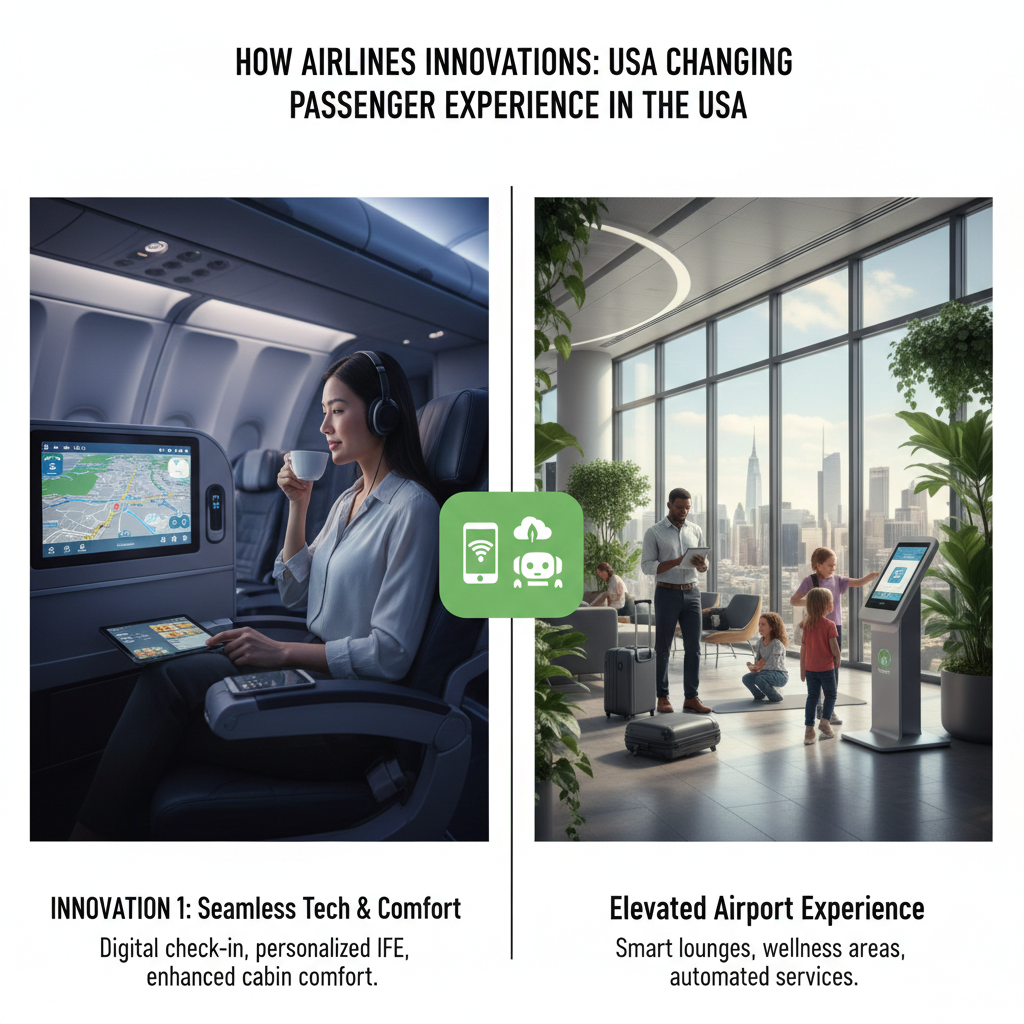
If you’ve flown recently, you might have noticed that the air travel experience feels a bit different than it did a decade ago. It’s not just about getting from point A to point B anymore; it’s about how smooth, connected, and comfortable the journey can be. From the moment you book your ticket to the time you pick up your luggage, airlines are rethinking every touchpoint.
The golden age of flying—often romanticized as a time of spacious seats and full meals—may be behind us, but a new era is emerging. This one is defined by efficiency, digital control, and a surprising amount of personalization. U.S. carriers are investing billions to upgrade fleets, revamp terminals, and deploy technology that puts the passenger in the pilot’s seat of their own journey.
Whether you are a frequent business flyer or planning your annual family vacation, understanding these changes can help you navigate the skies with more ease. Let’s look at how airlines are transforming the passenger experience across the United States.
Why Passenger Experience Is a Priority for U.S. Airlines
For years, price was the primary battlefield for airlines. Travelers simply wanted the cheapest ticket possible. While cost is still a major factor, the landscape has shifted. Rising competition—not just from other major carriers but from ultra-low-cost carriers and even premium train services—has forced airlines to differentiate themselves.
Customer expectations have also skyrocketed. We live in an on-demand culture where we can track a pizza delivery in real-time or stream a movie instantly. Passengers now expect that same level of transparency and connectivity at 30,000 feet.
Furthermore, post-pandemic travel behavior has changed the game. Leisure travelers have returned in droves, often willing to pay a premium for more space or flexibility. Business travel, while recovering, looks different, with more “bleisure” trips (combining business and leisure). To capture these markets, airlines know they must offer an experience that feels valuable, not just a commodity.
Technology Transforming the Passenger Journey
The most visible changes are happening on the screens in our pockets and the kiosks in the lobby. Technology is the backbone of the modern passenger experience, designed to reduce friction and speed up processes.
Digital Check-In and Biometrics
Gone are the days of printing paper boarding passes at home or waiting in long lines just to check in. Mobile apps have become the remote control for your trip. You can change seats, pay for bags, and board the plane with a few taps.
But the real game-changer is biometrics. Facial recognition technology is rolling out at major hubs across the U.S., allowing for a seamless, touchless experience. In some terminals, your face is your boarding pass. This speeds up boarding significantly and reduces physical contact—a priority that emerged strongly during the pandemic and has stayed relevant for hygiene-conscious travelers.
AI and Personalization
Artificial Intelligence (AI) is working quietly in the background to tailor your trip. Airlines use data to understand your preferences. If you always check a bag or prefer a window seat, the airline’s app might prompt you with those options automatically.
Predictive service is another benefit. AI helps airlines anticipate disruptions. Instead of leaving you in the dark during a delay, automated systems can now rebook you on the next available flight and notify you via text before you even realize there’s a problem. It turns a potential travel nightmare into a manageable inconvenience.
Cabin Comfort and Seating Innovations
Let’s talk about the elephant in the room: legroom. While economy seats haven’t suddenly transformed into recliners, airlines are getting smarter about design.
Newer slimline seats are designed to maximize personal space without sacrificing capacity. By moving the seat pocket to the top of the seatback or slimming down the frame, passengers gain valuable inches at the knee level.
The biggest shift, however, is the explosion of Premium Economy. This “middle ground” cabin appeals to travelers who can’t justify a business class ticket but dread the squeeze of standard economy. With wider seats, deeper recline, and elevated service, it’s becoming the sweet spot for comfort-seeking domestic flyers.
Additionally, cabin environments are improving. Modern aircraft like the Boeing 787 and Airbus A350 feature advanced LED lighting that mimics time of day to reduce jet lag, as well as quieter engines and higher cabin humidity levels to help you arrive feeling less dehydrated and groggy.
In-Flight Entertainment and Connectivity
Remember when the only entertainment on a flight was a drop-down screen playing a movie you’d already seen? Today, the goal is to replicate your living room experience.
High-speed Wi-Fi is rapidly moving from a paid luxury to a free expectation. Delta Air Lines, JetBlue, and others have led the charge in offering free, fast Wi-Fi to loyalty members. This connectivity allows business travelers to stay productive and leisure travelers to stay entertained.
Carriers are also leaning into the “bring your own device” (BYOD) trend. Instead of expensive seatback screens that become obsolete quickly, many airlines offer extensive libraries of movies and TV shows that stream directly to your tablet or phone. To support this, power outlets and USB (and now USB-C) ports are becoming standard at every seat, ensuring you don’t land with a dead battery.
Food, Beverage, and Service Changes
Airplane food has been the punchline of jokes for decades, but U.S. airlines are working hard to change the narrative.
Healthier and customizable options are taking center stage. You’re more likely to find a protein box, a fresh salad, or a grain bowl than a greasy mystery meal. Pre-ordering is also gaining traction. Through the airline’s app, you can select your meal days in advance, ensuring you get your first choice and helping the airline reduce food waste.
In premium cabins, the service is becoming more restaurant-style, with plated meals and curated wine lists. Even in economy, brand partnerships (like serving popular coffee brands or craft beers) are elevating the snack cart experience.
Baggage Handling and Tracking Improvements
There are few travel anxieties worse than the fear of lost luggage. Airlines are using technology to alleviate this stress.
Real-time baggage tracking is now a standard feature on many airline apps. You can watch your bag’s journey from the check-in counter, onto the plane, and onto the carousel. It provides peace of mind—and if a bag does go missing, the digital trail makes it much easier to locate.
Behind the scenes, automated baggage handling systems are reducing the rate of mishandled luggage. While mistakes still happen, the statistical likelihood of your bag arriving with you has improved significantly thanks to better tracking tech.
Customer Experience at Airports
The flight is only part of the journey; the airport experience sets the tone. Airlines are investing in infrastructure to make terminals more pleasant and efficient.
Security checkpoints are getting faster with new scanning technology that allows you to keep laptops and liquids in your bag (in participating lanes). Biometric boarding, as mentioned earlier, clears queues at the gate.
For those with lounge access, the experience is becoming ultra-premium. Airline lounges are evolving from simple waiting rooms with stale snacks into luxury spaces featuring spa services, outdoor decks, and chef-prepared dining. New access models—such as day passes or credit card perks—are also making these spaces accessible to more than just first-class flyers.
Sustainability and Passenger Experience
Eco-consciousness is no longer a niche concern; it’s a mainstream expectation. Travelers want to know their flight isn’t costing the earth, and airlines are responding by making sustainability part of the passenger experience.
You might notice this in the aircraft itself. New, fuel-efficient planes are quieter and smoother. Inside the cabin, single-use plastics are disappearing, replaced by bamboo cutlery or sustainable packaging.
Some booking platforms now display carbon emission estimates for different flights, allowing passengers to make informed choices. While the industry has a long way to go to reach “net zero,” these visible changes help passengers feel aligned with brands that care about their environmental footprint.
Loyalty Programs and Passenger Value
Frequent flyer programs used to be simple: fly a mile, earn a mile. Today, they are complex ecosystems based on spending, not just distance.
Airlines have shifted to dynamic rewards models. This rewards high spenders but can be frustrating for budget travelers. However, airlines are also finding new ways to add value. Partnerships with ride-share apps, hotels, and credit cards mean you can earn points on the ground, not just in the air.
Personalized benefits are also on the rise. Instead of a generic status perk, you might be offered a choice of rewards—like a lounge pass for one trip or extra Wi-Fi for another—allowing you to tailor the loyalty program to your specific needs.
Budget Airlines vs. Full-Service Airlines
The divide between ultra-low-cost carriers (ULCCs) like Spirit or Frontier and legacy carriers like United, American, or Delta is distinct.
Budget airlines offer the “unbundled” experience. The ticket price gets you a seat and a seatbelt; everything else—carry-ons, seat selection, water—costs extra. This model works for passengers who just want the lowest fare and travel light.
Full-service airlines are countering this by offering “Basic Economy” fares to compete on price, while still offering the option to bundle services. The trade-off is transparency. Passengers now have to be savvy readers of the fine print to know exactly what experience they are buying.
Challenges Airlines Still Face
Despite these innovations, the passenger experience isn’t perfect. The industry still faces significant hurdles that can derail even the best-laid plans.
Delays and cancellations remain a major pain point, often exacerbated by staffing shortages. Pilot and air traffic controller shortages in the U.S. constrain how many flights can operate, leading to congested schedules and higher susceptibility to weather disruptions.
Cost pressures are also real. Inflation affects fuel prices and labor costs, which eventually trickle down to ticket pricing. Balancing profitability with affordable fares while trying to fund these massive experience upgrades is a tightrope walk for airline executives.
What the Future Passenger Experience Looks Like
So, where are we headed? The future of U.S. air travel aims for a seamless end-to-end journey.
Imagine a trip where a car picks you up at the exact right time because it’s synced with your flight status. You walk through security without stopping because biometric sensors identify you as you move. Your bag is picked up from your home and meets you at your hotel.
We can expect even greater personalization. Your seatback screen (or your phone) might greet you by name and suggest movies based on your viewing history. Automation will handle the mundane tasks, leaving airline staff free to handle complex issues and provide genuine hospitality.
The goal is to make the travel day feel less like a hurdle and more like the start of the vacation. While we aren’t there yet, the trajectory is clear: U.S. airlines are building a future where the passenger is prioritized, connected, and comfortable.
FAQs – Airline Passenger Experience in the USA
How are airlines improving passenger experience?
Airlines are improving experience through technology (mobile apps, biometrics), cabin upgrades (better seats, lighting), connectivity (free Wi-Fi), and streamlined airport processes to reduce friction and wait times.
Do budget airlines offer good passenger experiences?
It depends on your expectations. If you value the lowest possible price and don’t mind paying extra for amenities, they offer great value. However, they generally lack the comforts, legroom, and free perks of full-service carriers.
Is airline travel becoming more comfortable?
In some ways, yes. Premium economy cabins, better entertainment, and quieter planes improve comfort. However, standard economy seats remain snug, making the experience highly dependent on which cabin class you book.
How does technology improve air travel?
Technology empowers passengers with control. It allows for instant rebooking during delays, provides real-time bag tracking, speeds up check-in, and offers entertainment options that keep travelers connected to their lives on the ground.
What should passengers expect in the future?
Expect more automation, biometric identification replacing paper documents, and a hyper-personalized experience where the airline anticipates your needs before you even ask.
Leave a Reply