

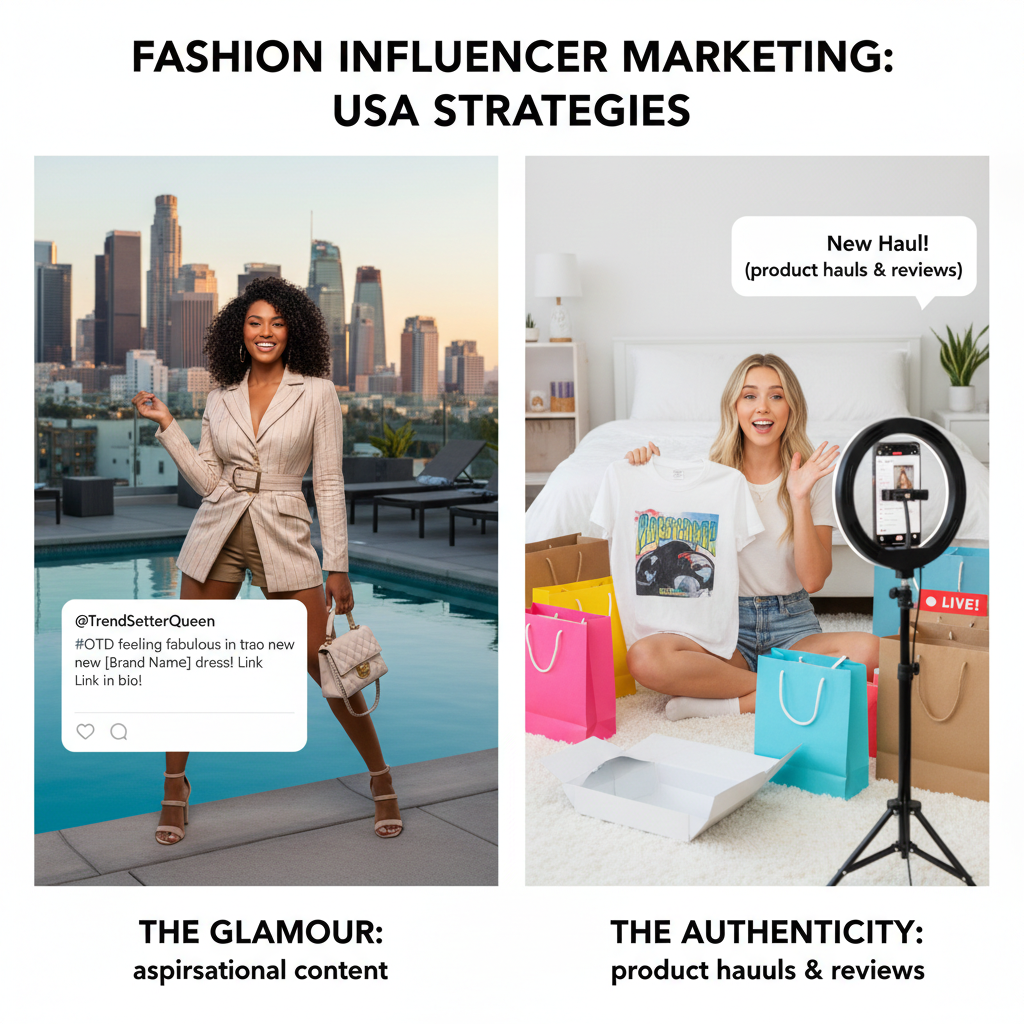
A creator can show how a garment fits, moves or combines with other pieces. For a fashion brand, that can support awareness or sales, but results depend on the audience, creative, offer and measurement. Start with a clear objective rather than assuming every partnership will convert.
Choose a goal and a creator
Decide whether the campaign should introduce the brand, generate qualified visits, produce usable content or drive purchases. Then review a creator’s audience, content quality and relevance to the product. Follower count is one data point; it does not guarantee attention or sales.
Discuss the deliverables, timing, payment or gifted products, approval process and permission to reuse content. Record any limits on paid advertising usage and the duration of those rights.
Common campaign formats
A paid post can introduce a collection; product seeding gives a creator an item to consider; affiliate links or codes can help track some resulting sales. A longer partnership may allow repeated demonstrations. Each format has costs and limitations, and a code will not capture every customer journey.
Disclose the relationship clearly
The FTC’s influencer guidance says material connections can include payment, free or discounted products and other relationships. Disclosures should be clear and placed with the endorsement. The FTC also notes that a platform’s built-in tool is not automatically sufficient.
Brands should give creators clear instructions and monitor the resulting content. The FTC’s endorsement guidance explains responsibilities and examples. Check the current guidance and applicable rules for the campaign.
Measure what matches the goal
For awareness, examine reach and relevant engagement. For traffic, use tagged links and review visits. For sales, compare tracked orders and revenue with creator fees, product cost and any paid media. Attribution is incomplete: someone may see a post and buy later through another channel.
A simple test can compare similar creators or formats over a defined period. Keep a record of costs, results and what was learned before increasing spend.
Claims and audience trust
Do not ask a creator to claim an experience they did not have or make unsupported product claims. If a campaign discusses environmental features, specify exactly what is supported. Our fashion claims guide explains the questions readers can ask.
Frequently asked questions
Do gifted products need disclosure? A free product can create a material connection. Consult the FTC guidance for the situation.
Are smaller creators always more effective? No. Fit with the audience and campaign outcome matter more than a universal rule.
Does a discount code measure every sale? No. It captures only purchases that use the code.



Leave a Reply