

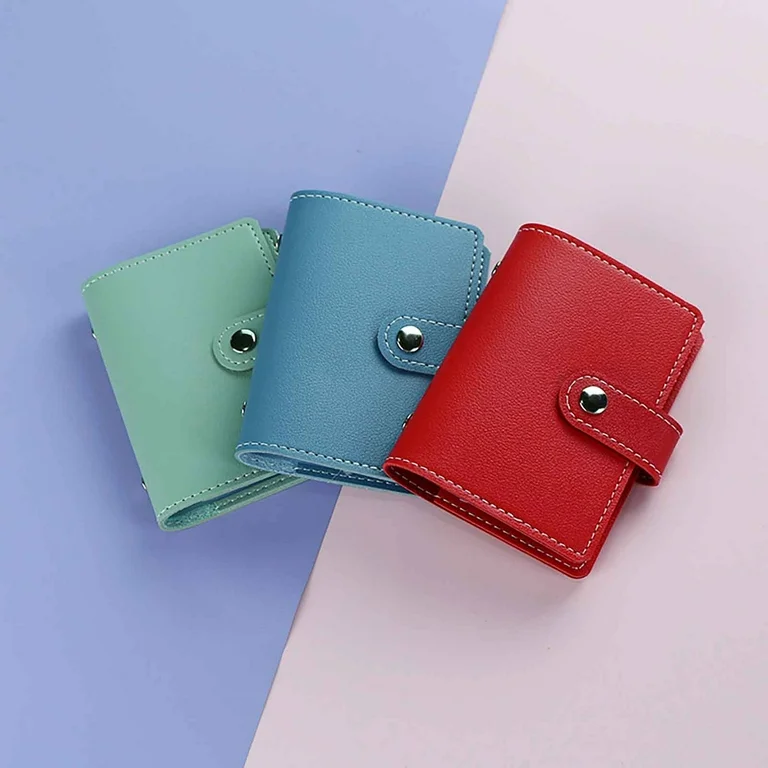
An affordable wallet needs to hold what you carry without making it awkward to pay or find identification. Start by emptying your current wallet. The number of cards, notes and coins you actually use is a better buying guide than a claim about maximum capacity.
This is a comparison checklist, not a tested product ranking. Prices and product specifications vary, so check the exact model and seller before buying.
Choose a format around your contents
A bifold can suit someone who carries notes and several cards. A trifold adds another fold and may feel bulkier when filled. A card sleeve keeps things simple if you carry only a few cards, while a zipped compartment is useful if loose coins are part of your routine.
Put together a realistic daily load, including any identification you need. Compare the wallet’s filled dimensions, not only its size when empty. The minimalist wallet guide explains the trade-offs if you want to carry less.
Inspect the parts you will use repeatedly
Check stitching around card slots and folds. Look at the edges and lining for loose areas. Open and close any zip or snap, then assess whether you can reach a card without bending it or pulling everything out. A soft lining and smooth slot opening may matter more to you than a decorative finish.
Read the material description carefully. If it is vague, ask for clarification rather than inferring the construction from photographs. A label such as genuine leather does not by itself tell you the thickness, finish, seam quality or likely lifespan of the whole wallet.
Test the pocket or bag fit
Try the wallet in the place you expect to carry it, with ordinary clothing and your normal contents. Check access while standing and seated. A rigid cardholder and a soft bifold can feel very different even when their external measurements are similar.
For a bag, confirm that the wallet fits the intended compartment and can be removed without unloading other items. If you carry a long zipped wallet, check the opening of the bag as well as its internal space.
Read security claims narrowly
A product advertised with RFID blocking should explain what the feature is intended to do. Do not treat it as complete protection against theft or fraud. A wallet cannot prevent someone taking the whole item, and a tracking accessory does not guarantee recovery.
Avoid paying extra for a security label without understanding the feature. For comparing manufacturers, use the wallet brand checklist, including model details, support and return terms.
Compare the total price
Include shipping and any optional insert or accessory needed for your usual contents. Check the seller, return conditions and warranty exclusions. A long warranty is not the same thing as evidence that every part will last that long.
Before buying, ask whether the wallet fits your actual load, allows easy access and suits the way you carry it. Our everyday accessory guide may help with wider planning, but choose the wallet around its everyday job first.


Leave a Reply