

On January 7, 2026, a confrontation between federal agents and a civilian in Minneapolis turned fatal, sparking immediate local unrest and national scrutiny. Renee Nicole Good, a 37-year-old resident, was shot and killed by an Immigration and Customs Enforcement (ICE) agent during what authorities described as an enforcement operation. The incident has since evolved into a complex narrative of conflicting accounts, video evidence disputes, and intense political debate.
While federal authorities maintain the agent acted in self-defense, local officials and eyewitnesses tell a different story. As protests erupt and investigations begin, the death of Renee Nicole Good has become a flashpoint in the ongoing conversation about federal law enforcement conduct and accountability. This article examines the timeline of events, the life of the woman at the center of the tragedy, and the questions that remain unanswered.
What Happened in the Minneapolis ICE Shooting
The incident occurred on the afternoon of January 7, 2026, in a residential neighborhood of Minneapolis. According to initial reports, federal agents were conducting an operation when they encountered a vehicle blocking the road. The situation escalated rapidly, resulting in lethal force being used against the driver.
Law enforcement officials stated that agents approached the vehicle, which they claim was obstructing traffic during their operation. Moments later, at least two shots were fired by a federal agent. Following the gunfire, the vehicle crashed nearby. The sequence of events from the initial approach to the shooting happened in a matter of seconds, leaving a community in shock and investigators scrambling for answers.
Currently, the investigation is ongoing. Multiple agencies are working to piece together the precise movements of the vehicle and the agents involved. While the official narrative centers on an immediate threat to officer safety, the lack of body camera footage from federal agents—common in local policing but less consistent federally—has complicated the immediate verification of these claims.
Who Was Renee Nicole Good?
The woman killed was identified by family and local officials as Renee Nicole Good, a 37-year-old Minneapolis resident. Far from the target of a federal sting, initial reports indicate she was a bystander or simply in the wrong place at a chaotic moment.
Good was a mother of three and a partner, deeply embedded in her local community. Loved ones and neighbors have described her as compassionate and community-oriented, someone whose life revolved around her family and her neighborhood. Her death has left a void in the lives of her partner and children, transforming a private family tragedy into a public symbol of grief and anger.
Friends remember her for her dedication to those around her, painting a picture of a woman whose life stood in stark contrast to the violence of her final moments. As the community mourns, the disparity between her personal reputation and the violent circumstances of her death has fueled public outrage.
Official Statements and Conflicting Accounts
Understanding the shooting requires navigating two distinct and often contradictory narratives: the official account provided by federal agencies and the perspective offered by local officials and witnesses on the ground.
Federal Government and ICE Narrative
Immigration and Customs Enforcement (ICE) released a statement asserting that the agent involved fired their weapon in self-defense. According to Reuters, the agency claims that the vehicle Good was driving moved toward officers in a threatening manner, necessitating the use of lethal force to protect the agents’ lives. Department of Homeland Security (DHS) leadership has supported this view, framing the incident within the context of broader, ongoing enforcement operations in the region.
Local and Witness Accounts
Minneapolis officials, including the mayor, have pushed back against the implication that Good was a criminal suspect. ABC News reports that local authorities clarified she was not the target of the enforcement operation the agents were conducting.
Furthermore, eyewitness accounts and video evidence suggest a different sequence of events. PBS has highlighted discrepancies between the official self-defense claim and what bystanders witnessed. Some witnesses dispute that the vehicle posed an immediate threat to the agents, arguing that the car was attempting to maneuver away from the blockage rather than toward the officers. This conflict in interpretation—whether the car was a weapon or a vehicle attempting to flee confusion—is now central to the investigation.
Video Evidence and Public Reaction
In the age of digital surveillance, video footage has become a critical piece of evidence. Clips from multiple angles, including security cameras and bystander cell phones, have circulated widely on social media. PBS notes that this footage has allowed the public to scrutinize the seconds leading up to the shooting, frame by frame.
The videos have sparked intense debate. Some observers argue the footage supports the claim that the vehicle moved dangerously, while others believe it shows panic rather than aggression. The Economic Times reports that these conflicting interpretations have deepened the divide between those supporting the federal agents and those calling for justice for Good.
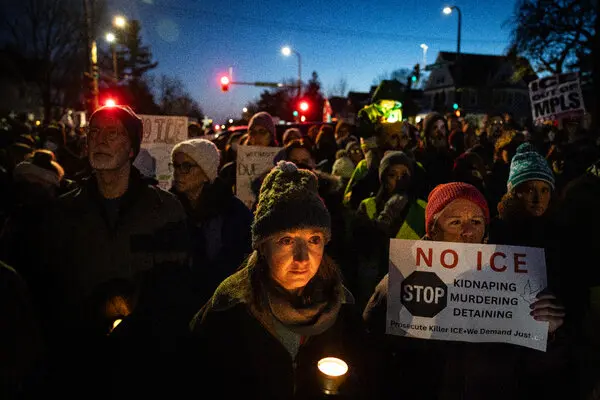
The reaction on the ground has been swift and emotional. MPR News reports that vigils and protests have sprung up across Minneapolis. Demonstrators are demanding transparency, the release of unedited evidence, and accountability for the agent involved. The atmosphere in the city is tense, reminiscent of past conflicts between the community and law enforcement.
Political Response and National Debate
The shooting has triggered a significant political fallout. Minneapolis officials were quick to condemn the shooting, emphasizing the tragedy of a local mother’s death during a federal operation. Axios reports that local leaders are demanding answers from DHS and seeking assurances about the conduct of federal agents within city limits.
At the state level, the response has been equally serious. According to ABC News, the Minnesota Governor has prepared the National Guard to assist with maintaining peace, acknowledging the potential for the situation to escalate into broader civil unrest.
This incident does not exist in a vacuum. It has reignited national debates regarding federal immigration enforcement. Critics argue that aggressive tactics in residential areas put civilians at risk, while proponents maintain that federal agents must have the authority to protect themselves during dangerous operations. The clash between local policing standards and federal rules of engagement is once again in the spotlight.
Legal and Human Rights Considerations
Legal experts are raising questions about the use of force standards applied in this case. Federal agents are bound by specific protocols regarding lethal force, generally permitting it only when there is an imminent threat of death or serious bodily injury. Reuters suggests that the investigation will focus heavily on whether a reasonable officer would have perceived the moving vehicle as such a threat.
Beyond the legal technicalities, the case touches on broader civil liberties. Advocates are questioning the accountability mechanisms for federal agents compared to local police. In many jurisdictions, local police are subject to strict body camera mandates and oversight boards, while federal agencies often operate with different levels of transparency.
This shooting joins a historical list of controversial incidents involving federal agents and civilians, fueling ongoing demands for systemic reform in how these agencies operate within domestic borders.
What We Still Don’t Know
Despite the volume of information released, critical gaps remain in the timeline. The identity of the ICE agent who fired the shots has not been publicly released, a standard procedure in many ongoing federal investigations but a point of contention for transparency advocates.
The full outcomes of the official investigation—which will likely involve ballistics reports, comprehensive video analysis, and internal interviews—are still pending. Perhaps the most crucial unknown is the final determination on the threat assessment: did the agent truly have no other choice, or was this a preventable tragedy born of panic and aggression?
Frequently Asked Questions
Who was Renee Nicole Good?
Renee Nicole Good was a 37-year-old Minneapolis resident, mother of three, and active community member. She was killed on January 7, 2026, during an encounter with federal agents.
Why did ICE agents fire at her?
ICE claims the agent fired in self-defense because Good’s vehicle moved toward officers. However, witnesses and local officials dispute this, suggesting she was not a threat and was not the target of the operation.
Is this incident under investigation?
Yes, multiple agencies are investigating the shooting to determine the exact sequence of events and whether the use of force was justified.
What has been the community response?
The Minneapolis community has responded with protests, vigils, and public outcry, demanding transparency and accountability for Good’s death.
Seeking Justice and Answers
The death of Renee Nicole Good is a tragedy that has shaken Minneapolis and drawn the eyes of the nation. It highlights the fragile intersection between federal enforcement and local community safety. As investigations continue, the conflicting narratives between official reports and eyewitness accounts serve as a reminder of the importance of transparency and due process.
This incident is far from resolved. The coming weeks will likely bring more evidence, legal challenges, and continued public advocacy. For those seeking truth and justice for Renee Nicole Good, staying informed is the first step. Follow verified news sources and official updates as this complex story continues to unfold.
Leave a Reply