

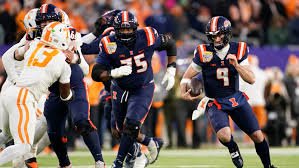
Tennessee lost the Music City Bowl 30–28 to Illinois on December 30, 2025, at Nissan Stadium. The finish explains the frustration more clearly than a sweeping verdict on the programme: the Volunteers took a late lead and still did not get the ball back in time to protect it.
The Tennessee game report records Joakim Dodson’s 94-yard kickoff-return touchdown, which put Tennessee ahead 28–27. Illinois then used the remaining 4:58 before David Olano’s winning field goal.
Two phases, two different outcomes
Dodson’s return changed the score without an offensive possession. It was a substantial special-teams contribution, but the celebration did not remove the need for another defensive stop. Illinois was able to move the ball and reduce the time available for a response.
Our Illinois account of the closing sequence follows that possession. Keeping the two perspectives separate helps explain both Tennessee’s opportunity and the opponent’s execution, without making either team a caricature.
What to examine before blaming one decision
Start with the drive chart. Note down-and-distance, timeouts, field position and the choices available before each snap. A decision that looks obvious after the result may have involved a different trade-off at the time.
That does not make every call defensible. It means a criticism should identify the particular call and its circumstances instead of attributing a loss to an entire squad’s attitude.
Keep the season in perspective
The loss left Tennessee 8–5. That record belongs to the completed 2025 season; it is not a current form guide for a later roster. Departures, injuries and new starters require separate reporting.
For another close bowl finish, TCU’s overtime win over USC offers a useful comparison. Our college football guide to evaluating less prominent programmes also explains why the quality of the opposition matters when judging a record. A two-point bowl loss is evidence about that game, not a complete forecast of what comes next.


Leave a Reply