

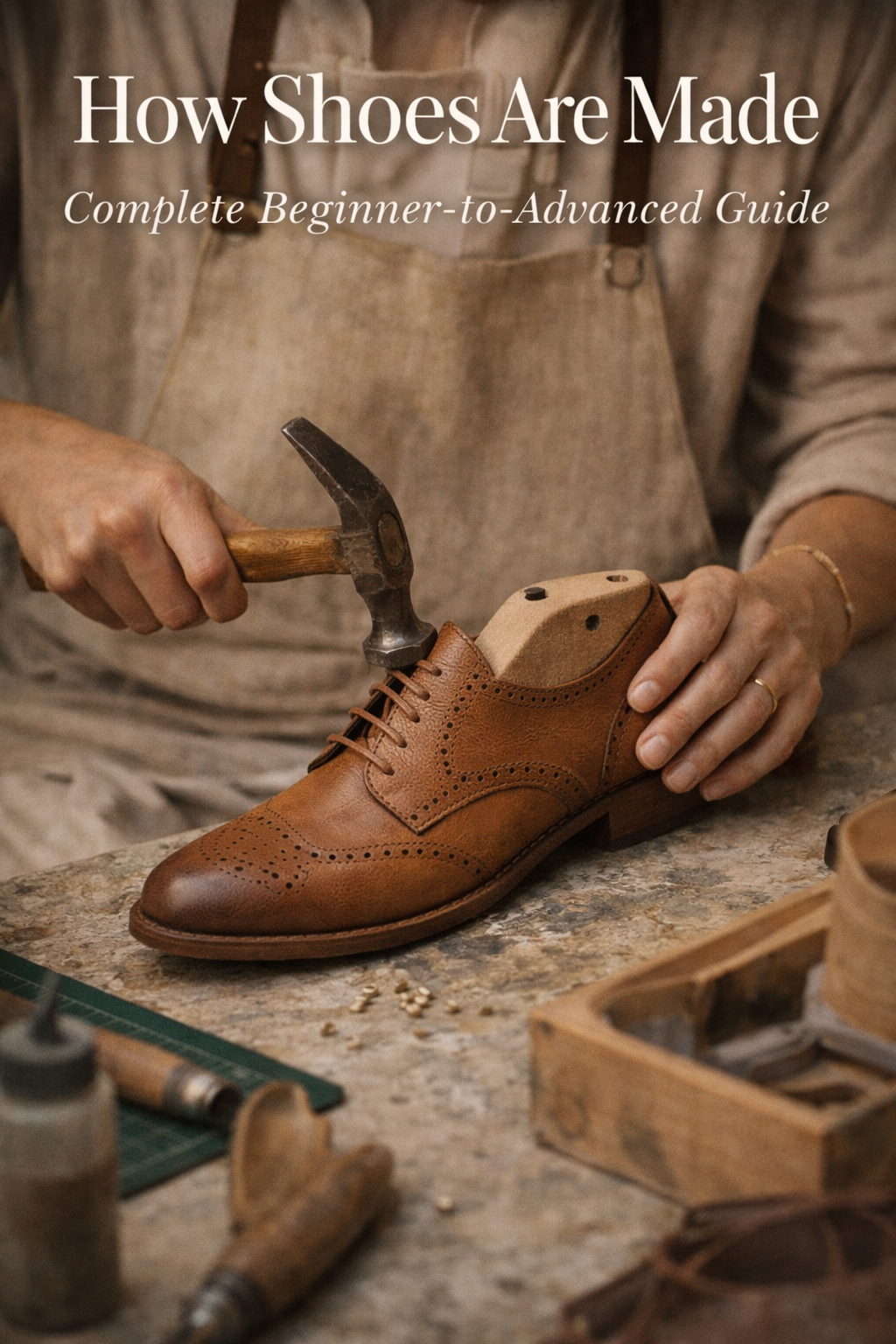
A single pair of sneakers can contain over 30 distinct components, each serving a specific biomechanical or aesthetic purpose. A bespoke Oxford shoe might undergo 200 separate operations before it ever touches the ground. The journey from a flat sketch to a three-dimensional object capable of supporting the full weight of a human body is a marvel of both artistry and industrial engineering.
Understanding how shoes are made transforms the way we look at footwear. It shifts the perspective from seeing a mere fashion accessory to appreciating a complex tool designed for movement, protection, and expression. Whether you are a budding designer, a sneaker collector, or simply someone who appreciates quality, grasping the construction process is the key to identifying superior craftsmanship.
This guide is a core component of The Complete Human Shoes Evolution Project. Here, we deconstruct the manufacturing process, connecting the dots between the history of our [Evolution of Shoes], the technical details found in our [Parts of a Shoe Explained] guide, and the modern innovations shaping the industry today.
Step 1: Shoe Design and Concept Development
Before a needle pierces leather or a mold is cast, the shoe exists as an idea. The design phase is where function meets fantasy, determining not just how a shoe looks, but how it performs.
Inspiration and Sketching
Every shoe begins with a brief. For athletic footwear, the brief might prioritize energy return and ankle support. For high fashion, the priority might be a striking silhouette or an unusual texture. Designers start with rough sketches, exploring lines, proportions, and shapes. These initial drawings are refined into technical blueprints—often called “tech packs”—that specify measurements, materials, and colorways.
This stage is a balancing act. A design must be visually compelling but also manufacturable. Designers must consider how seams will lie against the foot and how materials will stretch or fold during movement.
Creating the Shoe Last
If the shoe has a soul, it is the “last.” A last is a mechanical form that mimics the shape of the human foot. It is the solid mold upon which the shoe is built. The last determines the fit, the heel height, the toe shape, and the overall volume of the shoe.
Historically, lasts were carved from hardwood like maple or beech. Today, they are typically made from high-density plastic or aluminum. Creating a last is an art form in itself; a millimeter of difference in the arch or the instep can determine whether a shoe is comfortable for hours or painful after minutes. The shape of the last dictates the final [Shoe Silhouettes Explained], influencing everything from the sleekness of a dress shoe to the bulky profile of a dad sneaker.
Material Selection
Once the shape is defined, materials are chosen. This selection process is critical for durability and breathability.
- Leather: Prized for its ability to mold to the foot over time. Full-grain, top-grain, and suede offer different textures and strengths.
- Textiles: Cotton canvas, nylon, and polyester are common in casual and athletic wear.
- Synthetics: Modern polyurethane (PU) leathers and high-tech meshes offer consistency and weather resistance that natural materials sometimes lack.
Step 2: Cutting and Preparing Materials
With the design finalized and materials sourced, the manufacturing process enters the physical production phase. This stage is about precision.
Pattern Making
The three-dimensional design of the shoe must be flattened into two-dimensional shapes that can be cut from rolls of fabric or hides of leather. This is pattern making. It is similar to architecture; a series of flat geometric shapes must eventually curve and lock together to form a structured 3D object.
Modern factories use CAD (Computer-Aided Design) software to digitize these patterns, ensuring that material waste is minimized—a technique known as “nesting.”
Cutting the Upper Components
The “upper” refers to everything above the sole. In high-end shoemaking, cutting is often done by hand (“clicking”). A skilled cutter, or clicker, inspects the leather hide for imperfections like scars or bug bites, positioning the pattern dies to avoid them. They ensure the leather’s grain runs in the correct direction to prevent the shoe from warping over time.
In mass production, especially for sneakers, automated laser cutters or hydraulic press machines stamp out these pieces by the thousands with microscopic accuracy.
Reinforcement Layers
A shoe is not just a single layer of material. Between the lining and the outer shell, unseen reinforcement layers are added. Counters are inserted at the heel to provide structural support and prevent the shoe from collapsing. Toe puffs are added to the front to maintain the toe box’s shape. These hidden elements are crucial; without them, a shoe would look like a deflated balloon after a few wears. For a deeper dive into these hidden components, refer to our [Parts of a Shoe Anatomy Guide].
Step 3: Stitching and Upper Assembly
This phase is often called “closing the room.” It is where the flat pieces finally begin to resemble a shoe.
Sewing Techniques
Skilled machinists stitch the various pieces of the upper together. Different shoes require different stitching techniques. A heavy work boot might use double or triple stitching for durability, while a dress shoe might use fine, high-density stitching for a refined look. The sequence is vital; generally, the smaller components are stitched onto larger ones before the main structural seams are closed.
Attaching Panels
This is where the shoe’s personality emerges. Logos, decorative overlays, eyelet stays, and tongues are attached. In complex sneakers, an upper might consist of 20 or more overlapping panels. Alignment marks are often printed on the material (invisible in the final product) to help workers match pieces perfectly.
Padding and Lining
Comfort is engineered during assembly. Foam padding is inserted into the tongue and collar to prevent chafing. The lining—the material that actually touches your skin—is sewn in. This could be breathable mesh, moisture-wicking synthetic, or soft calfskin. The assembly creates a complete, hollow shell, ready to be given its true form. For more on how assembly varies across styles, see our [Complete Guide to Types of Shoes].
Step 4: Lasting — Giving the Shoe Its Shape
Lasting is the bridge between a floppy collection of fabrics and a structured piece of footwear. The stitched upper is pulled over the “last” (the foot mold we discussed in Step 1) and secured to the bottom structure.
Strobel Lasting
Common in athletic footwear, Strobel lasting involves stitching the bottom edge of the upper to a flexible fabric “insole board” (the Strobel board), much like a sock. This method creates a very flexible and lightweight shoe, ideal for running and movement.
Board Lasting
Here, the upper is pulled over the last and glued or stapled securely to a stiff fiberboard at the bottom. This creates a more rigid and stable structure, often used in hiking boots or dress shoes where support is prioritized over flexibility.
Slip Lasting
In this method, the upper is sewn into a completely closed moccasin shape and then forced onto the last. This offers the ultimate flexibility but is less common due to the difficulty of construction.
The lasting process is critical for defining the [Shoe Silhouettes Explained]. It is the moment the shoe acquires its final volume, toe spring, and heel curve.
Step 5: Sole Construction and Attachment
The upper is now shaped, but it needs a platform. The bottom unit of the shoe is usually composed of three parts: the insole, the midsole, and the outsole.
Midsole Technologies
The midsole is the engine of comfort. Located between the foot and the ground, it provides cushioning and energy return.
- EVA (Ethylene Vinyl Acetate): A common foam used in sneakers for lightweight cushioning.
- PU (Polyurethane): Denser and more durable, often used in hiking boots or support shoes.
- Air/Gel Units: Proprietary pockets of gas or gel encapsulated within the foam to absorb shock.
Outsole Materials
The outsole contacts the ground. It must be durable and provide traction. Carbon rubber is used for high-wear areas (like the heel), while blown rubber (which has air injected into it) provides a softer, lighter feel for the forefoot.
Cemented vs. Stitched Construction
How is the sole attached to the upper?
- Cementing: The most common modern method. The upper and sole are roughed up, coated in strong adhesive, heated to activate the glue, and pressed together hydraulically. It is fast, cheap, and flexible.
- Stitched (Welted): Used in high-quality leather shoes (like Goodyear Welting). A strip of leather (the welt) is stitched to the upper and insole, and then the outsole is stitched to the welt. This allows the sole to be replaced repeatedly, extending the shoe’s lifespan by decades.
- Vulcanizing: Common in skate shoes (like Vans or Converse). The rubber sole is glued to the upper and then baked in an oven. The heat fuses the rubber and fabric together chemically for an incredibly strong bond.
Refer to [Parts of a Shoe Explained] for diagrams of these sole constructions.
Step 6: Finishing, Quality Control, and Packaging
The shoe is physically complete, but it isn’t ready for the customer yet.
Inspection Process
Shoes go through a rigorous cleaning and inspection phase. Excess glue is removed, loose threads are burned off or trimmed, and the leather is polished or brushed. A quality control inspector checks for symmetry—ensuring the left shoe matches the right in height, width, and color.
Branding and Details
The final touches are applied. Laces are inserted, hangtags are attached, and tissue paper is stuffed inside to help the shoe retain its shape during shipping.
Final Adjustments
In high-end manufacturing, shoes might stay on the last for several days (or weeks) to “season,” allowing the leather to settle permanently into shape. Mass-produced shoes are usually delasted immediately to keep production moving. This difference in time is a major factor separating bespoke quality from fast fashion—a concept explored further in [Evolution of Shoes Through History].
How Construction Shapes Modern Shoe Silhouettes
The method of make dictates the aesthetic. You cannot have the streamlined, sock-like profile of a modern runner if you are using rigid board lasting and heavy leather welting. Conversely, you cannot achieve the structured, authoritative silhouette of a brogue using flimsy knit fabrics and Strobel stitching.
Chunky sneakers, for example, rely on complex, multi-layered midsole molds and cemented construction to support their exaggerated volume. Minimalist shoes strip away the midsole almost entirely, relying on thin rubber outsoles and glove-like uppers. Understanding construction explains why certain trends are even possible; technology allows for new shapes that were physically impossible to manufacture fifty years ago. Read more in [Shoe Silhouettes Explained].
Cultural and Technological Evolution of Shoemaking
For centuries, shoemaking was a solitary craft. A cordwainer would make a shoe from start to finish. The Industrial Revolution introduced the sewing machine and the lasting machine, fracturing the process into hundreds of specialized steps.
This shift didn’t just make shoes cheaper; it changed their cultural meaning. Shoes went from being expensive, cherished items repaired over a lifetime, to disposable commodities, and finally to collectible assets. The ability to mass-produce complex designs allowed for the sneaker culture explosion of the 1980s. Today, we stand at another precipice: automation. “Cobots” (collaborative robots) now work alongside humans, handling the dangerous or repetitive tasks like roughing and gluing.
For more on the societal impact of footwear, visit our [Why Humans Care About Shoes] pillar.
The Future of How Shoes Are Made
The factory of the future looks very different from the assembly lines of today.
- 3D Printing: Companies are experimenting with printing midsoles (and even entire shoes) directly from liquid resin, eliminating molds and allowing for completely custom cushioning based on a runner’s stride.
- Knitting Technology: Computerized knitting machines can weave an entire upper in one piece, reducing waste to near zero compared to traditional cutting methods.
- Sustainable Innovation: We are seeing leathers grown from mushroom mycelium and soles made from algae foam. The focus is shifting from “how fast can we make it?” to “how cleanly can we make it?”
This forward-thinking journey continues in our article on the [Future of Shoes: Technology & Innovation].
Conclusion: Understanding Shoes Beyond the Surface
When you hold a shoe, you are holding the result of thousands of years of evolution and hundreds of hands. From the initial sketch on a designer’s tablet to the heat of the vulcanizing oven, every step in the process matters.
Knowing how shoes are made empowers you. It helps you distinguish between a high price tag justified by complex construction and one that is simply marketing. It helps you understand why your running shoes feel different than your boots. It grounds the fashion object in the reality of human effort and engineering.
To continue your education, explore our authority hub on the [Complete Guide to Types of Shoes] to see how these construction methods apply to different footwear categories.
Leave a Reply