

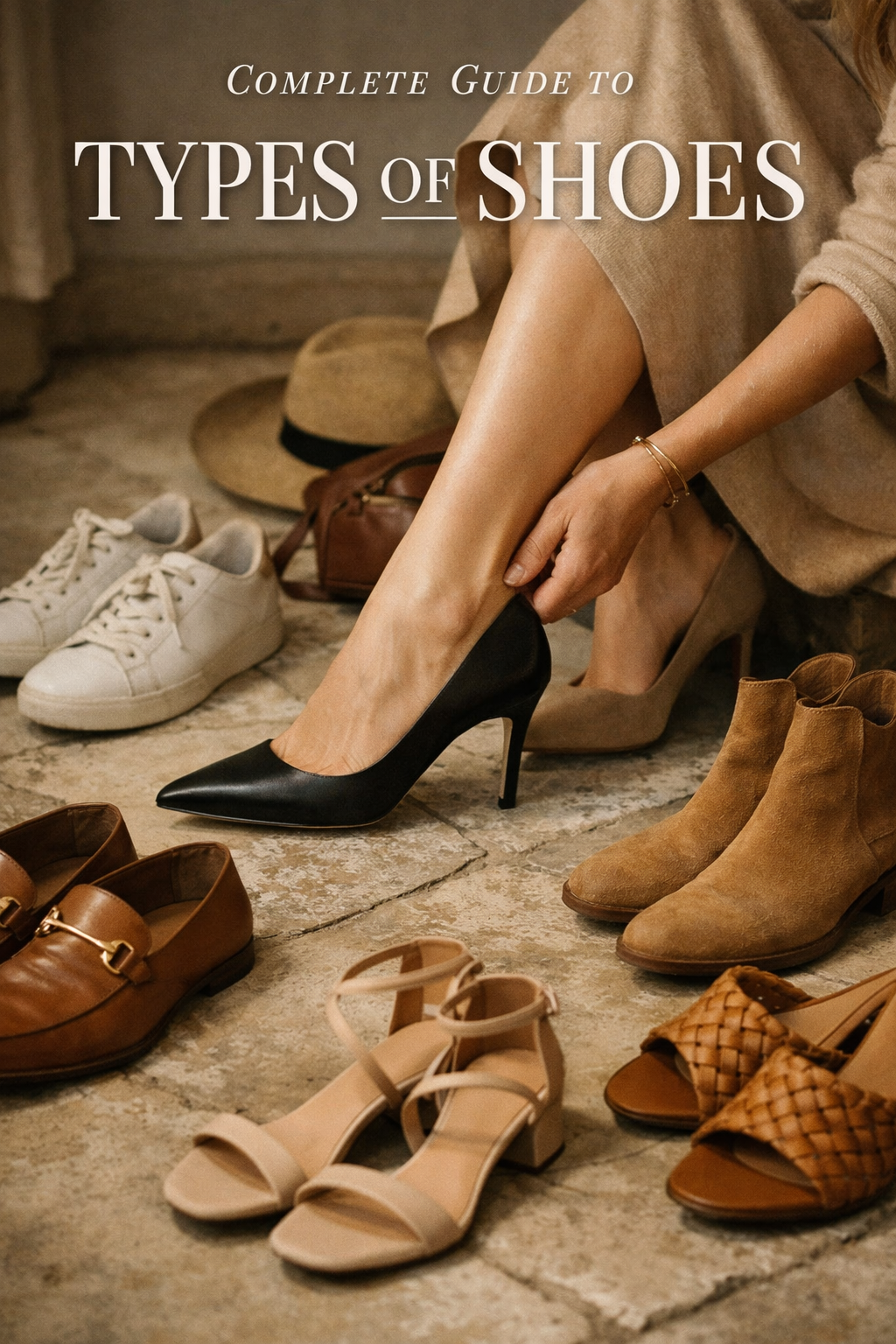
Look down at your feet. What you see is likely more than just a protective covering made of leather, canvas, or foam. Whether you are wearing scuffed work boots, pristine white sneakers, or polished Oxfords, you are wearing thousands of years of human engineering and cultural evolution.
Footwear began as a biological necessity—a way for early humans to traverse jagged terrain and survive harsh climates. But somewhere along the timeline of history, shoes transcended their utilitarian roots. They became symbols of status, markers of tribal identity, and canvases for artistic expression.
In the modern era, the sheer volume of footwear options can be overwhelming. We categorize shoes by activity (running, hiking), by construction (cemented, Goodyear welted), and by social setting (formal, casual). Yet, understanding these distinctions is vital. It is not merely about fashion; it is about understanding how form follows function, and how a specific silhouette can alter your posture, your comfort, and the way the world perceives you.
This guide is a foundational component of the Human Shoes Evolution Project. Here, we break down the complex taxonomy of footwear. From the biomechanics of athletic trainers to the structural elegance of dress shoes, we explore the definitions, histories, and purposes of the shoes that carry us through life.
[Internal Link: Evolution of Shoes]
[Internal Link: Parts of a Shoe Explained]
What Defines a “Type” of Shoe?
Before dissecting specific styles, we must establish what actually categorizes a shoe. Is a sneaker still a sneaker if it costs $1,000 and is made of Italian leather? Is a boot defined by its ruggedness or its height?
Shoe categorization generally relies on two pillars: function and silhouette.
Function vs. Fashion Categories
Historically, a shoe’s type was dictated strictly by its purpose. You had shoes for riding horses (heels to grip stirrups), shoes for labor (reinforced toes), and shoes for court (delicate materials).
In the 21st century, these lines have blurred. Performance shoes are now lifestyle staples—think of basketball shoes worn by people who have never stepped on a court. However, the structural DNA remains. A “type” is often defined by the problem the shoe was originally engineered to solve.
- Performance: Built for biomechanical efficiency, shock absorption, and specific movements.
- Lifestyle: Built for aesthetics, moderate comfort, and social signaling.
- Utility: Built for protection against elements, impact, or terrain.
How Silhouette Shapes Categories
The “silhouette” is the outline or shape of the shoe. It is the first thing the eye registers and the primary way designers classify footwear. The silhouette is determined by the height of the shaft (low-top vs. high-top), the shape of the toe box (pointed vs. round), and the volume of the sole.
For example, the difference between a shoe and a boot is technically the shaft height—boots generally sit at or above the ankle bone. Understanding these visual cues allows you to identify a shoe type instantly, regardless of the brand or colorway.
[Internal Link: Shoe Silhouettes Explained]
Casual Shoe Types Explained
Casual footwear is the dominant category in modern culture. As workplace dress codes relax and street culture influences high fashion, the “casual” shoe has become the most innovative space in footwear design.
Sneakers
Once reserved for gymnasium floors, the sneaker has become the most significant footwear category on the planet. Technically, a sneaker is defined by a flexible sole made of rubber or synthetic material and an upper made of leather, synthetic, or canvas.
- The Structure: Sneakers utilize a “cupsole” or “vulcanized” construction. They prioritize flexibility and soft landings.
- The Evolution: Originating as “plimsolls” in the 19th century—so named because they were quiet enough to sneak around in—they exploded in the 1980s with the rise of basketball culture and hip-hop.
- Modern Purpose: Today, sneakers are the default daily driver. They range from “beaters” (everyday wear) to “grails” (high-value collectibles).
Loafers & Slip-Ons
The loafer is the bridge between casual and formal. It is defined by its laceless construction. The wearer simply slides their foot in, relying on the vamp (the top part of the shoe) to hold the foot in place.
- The Structure: Most loafers feature a moccasin-style construction where the leather wraps around the bottom of the foot.
- The Styles:
- Penny Loafers: Distinguished by a leather strap across the vamp with a slit (where students used to keep a penny for a phone call).
- Driving Mocs: Soft, unstructured shoes with rubber grommets on the heel for grip while driving.
- Espadrilles: Simple slip-ons with a distinctive jute rope sole.
- Minimalist Silhouettes: Because they lack laces, eyelets, and tongues, slip-ons offer a clean, uninterrupted visual line, making them ideal for minimalist wardrobes.
Canvas & Lifestyle Shoes
While technically sneakers, canvas shoes deserve their own distinction due to their specific construction and cultural weight. Brands like Converse and Vans popularized this style: a simple canvas upper glued or vulcanized to a rubber sole.
- Streetwear Relevance: These shoes originated in specific subcultures—skating, surfing, and basketball. They are flat, stable, and durable. Over time, they transitioned from performance equipment to symbols of youth culture and rebellion.
[Internal Link: Classic Sneaker Silhouettes]
[Internal Link: Psychology of Sneaker Culture]
Formal Shoe Types
The world of formal footwear is governed by tradition. Unlike sneakers, where rules are meant to be broken, formal shoes adhere to strict structural definitions that have existed for over a century. The differences here are often found in the lacing system.
Oxfords
The Oxford is the gold standard of formal footwear. It is the most elegant and dressy option for men.
- The Defining Feature: Closed Lacing. The quarters (the side flaps with the eyelets) are sewn under the vamp. This creates a sleek, sealed appearance that hugs the foot closely.
- When to Wear: Black tie events, business professional settings, and with suits.
Derbies
To the untrained eye, a Derby looks just like an Oxford. However, a closer look reveals a crucial difference in construction.
- The Defining Feature: Open Lacing. The quarters are sewn on top of the vamp. This creates two “flaps” that can be pulled open wider.
- The Purpose: Originally developed as a hunting boot and later adapted for sport, the Derby is less formal than the Oxford. The open lacing accommodates higher insteps and offers a more rugged, relaxed aesthetic. It is versatile enough to be worn with a suit or jeans.
Brogues & Dress Shoes
“Brogue” is actually a misnomer when used as a specific shoe type. Brogueing refers to the decorative perforations (holes) punched into the leather. You can have an Oxford Brogue, a Derby Brogue, or even a Boot Brogue.
- Historical Evolution: These holes were not originally for decoration. They were functional drainage holes invented by Scottish and Irish farmers to let bog water drain out of their shoes.
- Monk Straps: Another sub-category of dress shoe defined by a buckle and strap closure rather than laces. They sit comfortably between the formality of an Oxford and the flair of a loafer.
[Internal Link: Evolution of Shoes]
[Internal Link: How Formal Shoes Are Made]
Athletic and Performance Shoes
In this category, design is dictated entirely by biomechanics. Engineers study the gait cycle—how the foot strikes, rolls, and pushes off the ground—to create footwear that enhances human capability.
Running Shoes
Running generates impact forces up to three times your body weight. Consequently, running shoes are engineered for linear motion and shock absorption.
- Cushioning Systems: Manufacturers use EVA foam, polyurethane, or pressurized air pockets to mitigate impact.
- The Drop: This refers to the height difference between the heel and the toe. Traditional running shoes have a higher drop (10mm+) to propel the runner forward, though “zero-drop” shoes (mimicking barefoot running) have gained popularity.
Training Shoes (Cross-Trainers)
While running shoes are for moving forward, training shoes are for moving in every direction.
- Function-First Design: A training shoe has a flatter sole for stability during weightlifting and reinforced sidewalls to support the foot during lateral (side-to-side) movements typical in HIIT or court sports. Wearing running shoes for heavy lifting is a common mistake; the squishy foam causes instability.
Walking Shoes
Walking implies a different heel-strike pattern than running.
- The Structure: Walking shoes are stiffer than running shoes. They often feature a “rocker” sole profile that helps roll the foot from heel to toe efficiently, reducing fatigue over long distances.
[Internal Link: How Shoes Are Made]
[Internal Link: Shoe Anatomy Guide]
Boots and Protective Footwear
Boots are arguably the oldest type of footwear, evolving from simple animal skins wrapped around the ankle to protect against brush, cold, and snakes. Today, they represent durability and power.
Chelsea Boots
The Chelsea boot is a masterclass in Victorian engineering. Invented by Queen Victoria’s shoemaker, J. Sparkes-Hall, it utilizes an elastic side panel to allow the boot to be pulled on and off easily, eliminating the need for laces.
- Cultural Symbolism: In the 1960s, the “Mod” scene in London and bands like The Beatles adopted the Chelsea boot, transforming it from a riding boot to a rock-and-roll icon. It remains the most versatile boot silhouette, capable of being worn with suits or denim.
Work Boots
The work boot is a tool. Brands like Timberland, Red Wing, and Dr. Martens built their legacies on these silhouettes.
- Structure: High shafts (6 to 8 inches) for ankle protection, steel or composite toes for safety, and lugged rubber outsoles for traction on slick surfaces (oil, mud, concrete).
- Fashion Transition: Much like blue jeans, work boots transitioned from factory floors to fashion runways, symbolizing a rugged, utilitarian aesthetic.
Hiking Boots
Hiking boots are the off-road tires of the footwear world.
- Tech Specs: They feature stiff shanks (a hard insert in the sole) to prevent the shoe from twisting on uneven rocks. The uppers are often treated with Gore-Tex or similar membranes for waterproofing, and the lacing systems use speed hooks to secure the ankle tightly.
[Internal Link: Boot Silhouettes Explained]
[Internal Link: Human Meaning of Shoes]
Seasonal and Lifestyle Shoe Types
Human migration required footwear that could adapt to the environment. The geography of early civilizations dictated the materials and shapes of their shoes.
Summer Sandals
The sandal is the most primal shoe type, dating back over 10,000 years.
- Structure: An open type of footwear consisting of a sole held to the wearer’s foot by straps going over the instep and around the ankle.
- Variations:
- Slides: A simple open-toed, backless silhouette.
- Gladiators: Straps that extend up the calf (historical origin).
- Huaraches: Woven leather sandals originating from Mexico.
Winter Footwear
Survival in northern climates necessitated the invention of insulation.
- Mukluks and Snow Boots: Originally made by Arctic peoples using hide and fur, modern iterations use synthetic insulation (like Thinsulate) and seam-sealed rubber lowers to make the boot completely waterproof. Traction is paramount here to prevent slipping on ice.
Travel Shoes
A modern category born of the jet age. Travel shoes prioritize weight (lightness), packability (squashable materials), and versatility (looking good at a dinner but comfortable enough for a 10-mile walking tour).
[Internal Link: Origin of Shoes]
How to Choose the Right Type of Shoe
With so many categories, building a rotation can be daunting. The choice should be a triangulation of three factors.
1. Based on Lifestyle
Your daily activities dictate your needs. A corporate lawyer requires a rotation of Oxfords and loafers. A freelance graphic designer might live exclusively in lifestyle sneakers and Chelsea boots. Be realistic about your daily terrain.
2. Based on Silhouette Preference
Understanding your own aesthetic is key. Do you prefer the chunky, grounded look of a work boot, or the sleek, aerodynamic line of a slip-on? Your shoe silhouette should balance your outfit. For example, wide-leg trousers often pair better with chunkier shoes, while slim denim works well with low-profile boots.
3. Based on Comfort & Construction
Never sacrifice foot health for a “type.” If you have flat feet, flat canvas shoes might cause pain; you need the arch support of a structured running shoe or a boot with a strong shank. Always look at the construction—a Goodyear welted boot will be heavier and stiffer at first but will mold to your foot and last for decades.
[Internal Link: Shoe Silhouettes Explained]
[Internal Link: Parts of a Shoe Explained]
The Cultural Meaning Behind Shoe Categories
We cannot discuss types of shoes without discussing what they mean.
In the corporate world, the Oxford is a signal of conformity, professionalism, and respect for tradition. In the creative world, a pair of limited-edition sneakers signals that you are “in the know”—you are part of a tribe that values hype, art, and rarity.
High heels, historically worn by Persian cavalrymen, eventually became associated with feminine beauty standards, literally altering the wearer’s center of gravity and gait. Work boots worn in an urban setting signal a connection to heritage and authenticity.
Every time you choose a type of shoe, you are engaging in a non-verbal conversation with the people around you.
[Internal Link: Psychology of Sneaker Culture]
The Future of Shoe Types
As we look forward, the rigid boundaries between these categories are dissolving.
- Hybrid Shoes: We are seeing “dress sneakers” (Oxford uppers on sneaker soles) and “sneaker boots” becoming standard.
- AI and Generative Design: Computers are designing lattice-structure soles that human engineers couldn’t conceive of, creating new categories of performance wear that react to individual foot strikes.
- Sustainability: As materials change—from leather to mycelium (mushroom root) and ocean plastic—the structure of shoes will adapt. We may see modular shoes where you replace the sole but keep the upper, reducing waste.
[Internal Link: Future of Shoes: Technology & Innovation]
Conclusion: Shoes as Evolution, Not Just Fashion
From the humble sandal of antiquity to the high-tech marathon racer of today, the evolution of shoe types mirrors the evolution of humanity itself. We have moved from surviving our environment to mastering it, and finally, to expressing ourselves within it.
Understanding the types of shoes is not just about knowing the difference between an Oxford and a Derby. It is about appreciating the craftsmanship, the history, and the engineering that supports your every step.
Now that you understand the broad categories, the next step is to dive deeper into the visual language of footwear.
[Internal Link: Shoe Silhouettes Explained]
Leave a Reply