

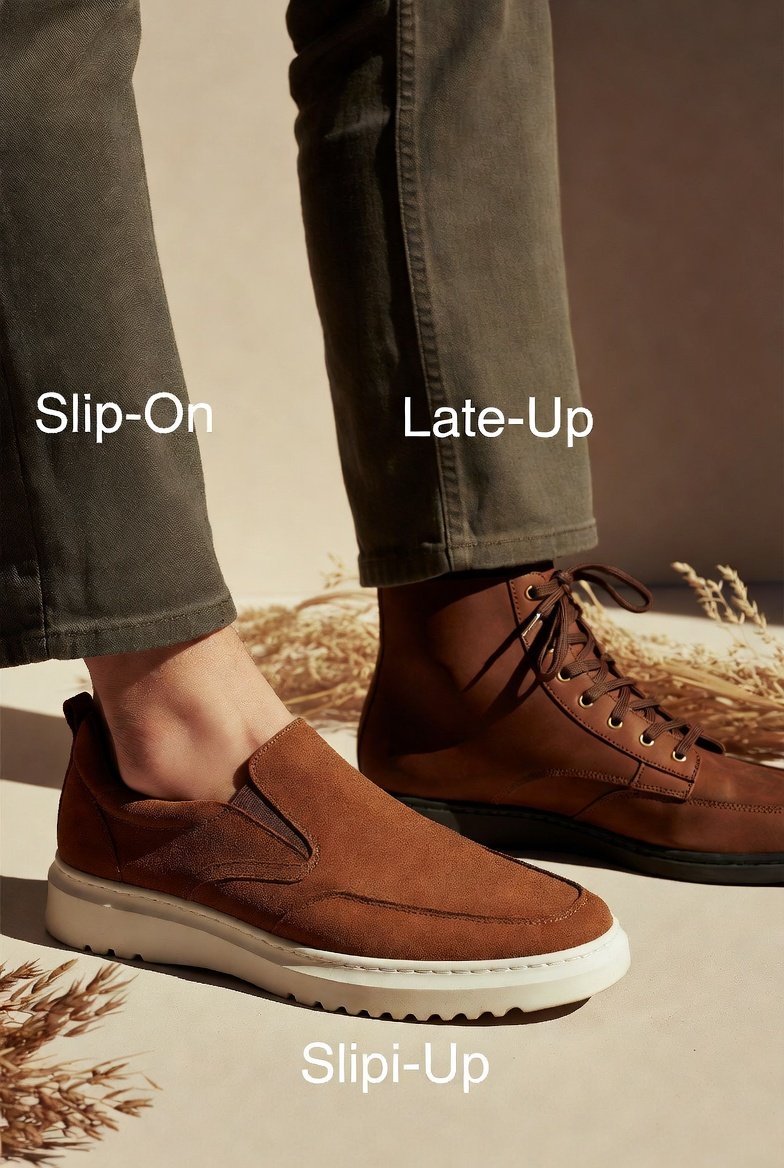
The way a shoe closes is not just a detail; it is a fundamental aspect of its architecture. Whether you are sliding your foot into a loafer or tying the laces of a running shoe, the closure system dictates the fit, the silhouette, and ultimately, how the shoe interacts with your foot.
While colorways and materials often grab the headlines, the structural divide between slip-on and lace-up designs shapes the entire user experience. It determines the volume of the shoe, the security of the hold, and the ease of daily wear. Understanding these structural differences is key to building a wardrobe that balances convenience with control.
Introduction: Why Closure Systems Shape Shoe Design
Closure systems act as the bridge between the foot and the footwear. They are the defining structural element that transforms a static object into a functional piece of apparel. Without a closure system—whether it relies on tension, elasticity, or mechanical fastening—a shoe is simply a covering, lacking the necessary hold to move efficiently with the human body.
The role of lacing, historically, has been about adjustability. Laces allow the wearer to customize the internal volume of the shoe, accommodating high arches, wide feet, or the natural swelling that occurs throughout the day. This adjustability provides a level of precision that static designs struggle to replicate.
However, the rise of slip-on convenience in modern footwear challenges this dominance. As lifestyles shift toward comfort and ease, the demand for shoes that require zero manual adjustment has skyrocketed. From the boardroom to the boardwalk, the silhouette of the slip-on has evolved from a purely casual option to a staple of contemporary design.
Related reading: What Is a Shoe Silhouette, Evolution of Shoes
What Are Slip-On Shoes?
Slip-on shoes are defined by the absence of a manual fastening system. Instead of laces, buckles, or velcro, they rely on the structure of the upper and the elasticity of materials to secure the foot. This category encompasses a vast range of styles, from the humble canvas plimsoll to the sophisticated leather Chelsea boot.
Elastic and Stretch Panels
The engineering behind a successful slip-on often hides in plain sight. Most designs incorporate elastic gores or stretch panels—often located at the instep or the sides of the collar. These panels expand to allow the foot to enter the shoe and then retract to hug the foot securely. This dynamic tension is crucial; without it, the shoe would either be too tight to put on or too loose to walk in comfortably.
Minimal Structure Design
Structurally, slip-ons tend to be “cleaner” than their lace-up counterparts. By removing the eyestay (the part of the shoe that holds the eyelets) and the tongue construction required for laces, designers can create a seamless, uninterrupted vamp. This minimalist approach highlights the material quality and the shape of the last (the mold upon which the shoe is built) rather than the mechanics of the closure.
Casual and Lifestyle Appeal
The lack of hardware and the smooth lines generally give slip-ons a more relaxed aesthetic. They are synonymous with leisure—think boat shoes, driving mocs, and skate slip-ons. The ease of wear directly translates to a lifestyle appeal where transition is key; moving from indoors to outdoors without the pause of tying laces fits seamlessly into a relaxed routine.
Related reading: Complete Guide to Types of Shoes
What Are Lace-Up Shoes?
Lace-up shoes are built on the principle of containment. They use a system of laces weaving through eyelets to pull the two sides of the upper (the quarters) together. This mechanism allows the wearer to manually dictate the pressure distribution across the top of the foot.
Adjustable Fit and Support
The primary advantage of the lace-up structure is the adjustable fit. If you have a narrow heel but a wide forefoot, you can adjust the tension of the laces accordingly—tightening the top while leaving the bottom looser. This customization is vital for support, locking the foot onto the footbed and preventing internal sliding, which is a common cause of blisters and instability.
Structured Upper Construction
Because they need to withstand the tension of tightening, lace-up shoes often feature more complex upper construction. The eyestay area is usually reinforced with backing materials or double stitching to prevent tearing. This adds layers and structural rigidity to the shoe, giving it a more defined and often bulkier silhouette compared to a sleek slip-on. The tongue plays a critical protective role here, cushioning the instep from the pressure of the laces.
Athletic and Formal Use Cases
This structure dominates two very different worlds: high-performance athletics and formal wear. In sports, the lockdown provided by laces is non-negotiable for safety and efficiency. In formal wear—like the Oxford or Derby—lacing provides a refined, traditional look where the structure of the shoe is meant to complement the structure of a suit.
Related reading: Running Shoe vs Lifestyle Silhouette
Slip-On vs Lace-Up: Key Structural Differences
When choosing between these two dominant styles, the decision often comes down to four key structural pillars.
Fit and Adjustability
Lace-ups win on precision. The ability to manipulate the fit millimeter by millimeter offers a level of control that slip-ons cannot match. Slip-ons rely entirely on the initial fit of the last and the stretch of the material. If a slip-on is too loose, there is no mechanism to tighten it; if it is too tight, you rely on the material stretching out over time.
Comfort and Stability
Comfort is subjective, but stability is objective. Lace-up shoes generally offer superior lateral stability because the upper can be cinched tight against the foot. This is why you rarely see slip-on basketball shoes. However, slip-ons often win on immediate, low-impact comfort. The absence of pressure points across the instep (often caused by tight laces) makes them ideal for sitting, standing, or casual walking.
Style and Silhouette
The silhouette of a slip-on is fluid and unbroken. It creates a longer visual line for the leg, which can be aesthetically pleasing. Lace-ups break the visual line with the texture and complexity of the lacing system. This makes lace-ups inherently more “busy” in their design, while slip-ons offer a sleek, modern, or minimalist canvas.
Ease of Wear
This is the slip-on’s home turf. The friction of entry is zero. For travel, quick errands, or cultures where removing shoes indoors is mandatory, the structural advantage of the slip-on is undeniable. Lace-ups require engagement and two hands to secure, a ritual that some find grounding and others find tedious.
Related reading: Shoe Silhouettes Explained
How Construction Influences Closure Systems
The closure system isn’t just added at the end; it dictates how the shoe is made from the very beginning.
Lasting Methods
The “last” is the 3D form that simulates the foot. Shoes destined to be slip-ons often use a specific type of last with a different girth measurement at the instep. Because there are no laces to open up the shoe wide, the “cone” of the last must allow for the foot to slide in while still providing hold. Lace-up lasts can be more forgiving in their dimensions because the closure system compensates for fit variances.
Related reading: Lasting Process in Shoemaking
Stitching Techniques
Lace-up shoes require specific stitching to reinforce the eyestay. If you look closely at a sneaker or a dress shoe, you will see varied stitching density around the holes where the laces pass. Slip-ons, conversely, rely on “butt seams” or moccasin stitching that allows materials to wrap around the foot comfortably without the rigidity of reinforced panels.
Related reading: Shoe Stitching Techniques Explained
Material Flexibility
You can make a lace-up shoe out of rigid, thick leather because the mechanical advantage of the laces can force the material to bend and conform. Slip-on shoes require materials with inherent drape or elasticity. Stiff materials in a slip-on design result in heel slippage and blisters because the shoe cannot flex adequately with the foot during the gait cycle.
Cultural Meaning of Slip-On vs Lace-Up Shoes
The structure of our shoes often signals our intent to the world.
Slip-ons have culturally codified themselves as the footwear of leisure and rebellion. From the penny loafers of the Ivy League to the checkered vans of skate culture, the slip-on says, “I am relaxed.” It suggests a rejection of formality and rigidity.
Lace-ups, particularly in leather, remain the symbols of performance and formality. Tying one’s laces is often the first step of “getting ready” for work, for a run, or for an event. The structure implies readiness and action. A tightly laced boot or a crisp Oxford communicates discipline and adherence to tradition.
Related reading: Why Humans Care About Shoes
Choosing Between Slip-On and Lace-Up for Your Lifestyle
Your daily activities should dictate the structure of your footwear.
Everyday Convenience
If your day involves frequent transitions—in and out of the house, security checks, or changing environments—the slip-on structure reduces friction. It is the structure of efficiency for the modern urban commuter or the remote worker.
Athletic Activities
If your lifestyle is active, involving running, hiking, or gym sessions, the lace-up structure is essential. The safety of your ankles and the efficiency of your movement depend on the shoe becoming an extension of your foot, which only the lockdown of lacing can provide.
Formal Settings
While the rules are relaxing, the highest levels of formality still demand lace-ups. A tuxedo or a sharp business suit structurally pairs best with the complex, refined silhouette of a lace-up shoe. However, high-end loafers (slip-ons) have successfully infiltrated “business casual,” bridging the gap with premium materials.
Related reading: How to Choose the Right Shoes for Your Lifestyle
The Future of Closure Systems in Footwear
The binary choice between laces and slip-ons is blurring thanks to technology.
We are seeing the rise of “laceless” sneaker technology in performance gear—shoes that look like slip-ons but use internal cages or pumps to provide the lockdown of a lace-up. Brands are experimenting with auto-lacing technology (smart fit systems) that tighten mechanically around the foot, offering the best of both worlds: the ease of a slip-on with the custom fit of a lace-up.
Sustainable design is also pushing innovation here. Monomaterial shoes (shoes made from a single material to be easily recycled) favor slip-on structures because they eliminate the need for mixed materials like metal eyelets or polyester laces, making the recycling process more efficient.
Related reading: The Future of Shoes: Technology & Innovation
Conclusion: Convenience vs Control in Modern Footwear Design
The choice between slip-on and lace-up structures is ultimately a negotiation between convenience and control. Do you value the seamless ease of a shoe that is ready when you are? Or do you prioritize the ritual and precision of a fit that you define yourself?
As footwear technology advances, we may see these lines blur further, but the fundamental physics remains. Laces offer tension and security; slip-ons offer freedom and flow. Recognizing how these structures influence the fit and silhouette of your shoes ensures that you aren’t just buying a style, but investing in a design that actually works for your life.
Related reading: What Is a Shoe Silhouette
Leave a Reply