

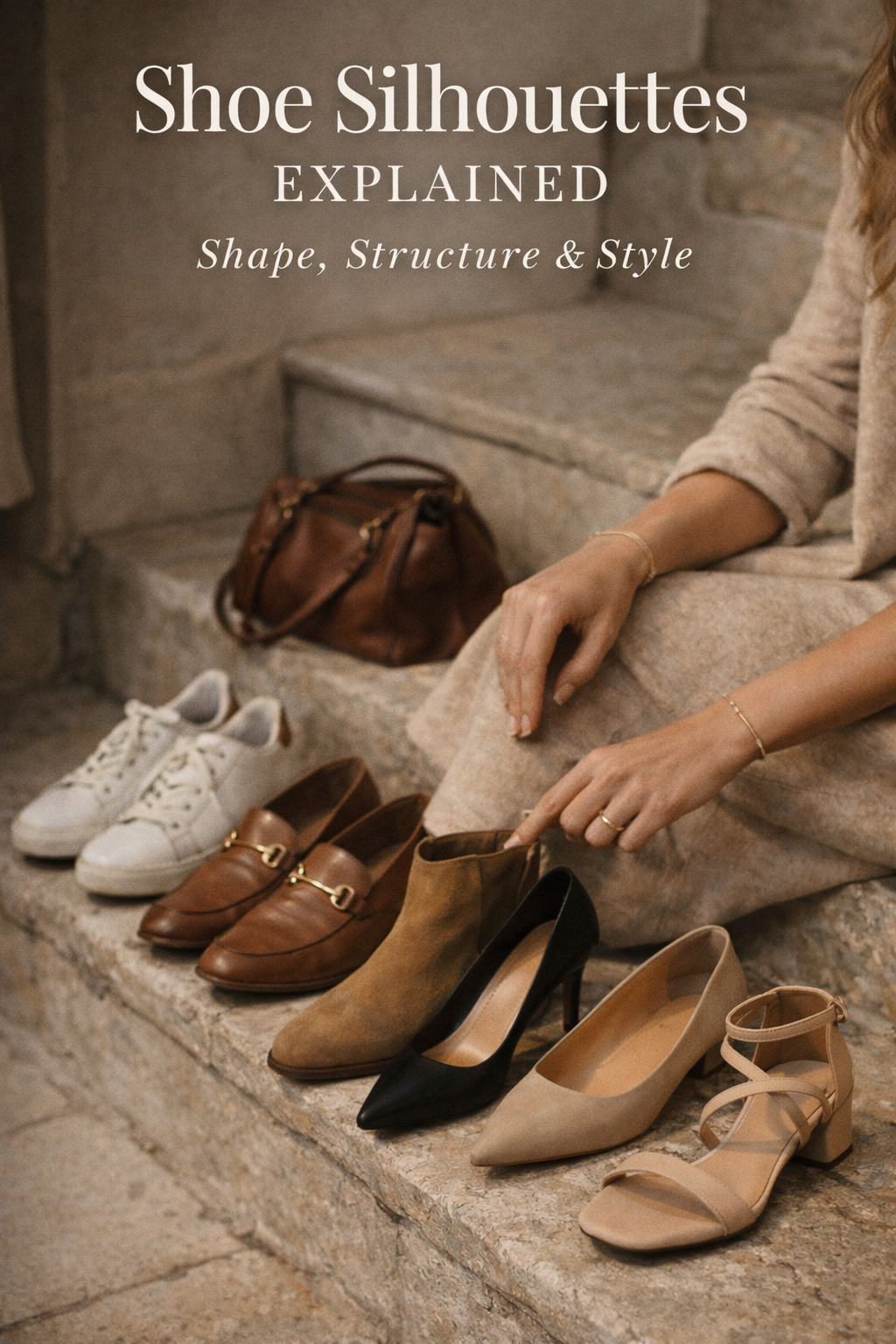
When you spot a pair of shoes from across the street, you don’t immediately see the stitching, the leather quality, or the brand logo. What your brain registers first is the outline—the dark shape cut against the pavement. This is the silhouette.
In the world of footwear design, the silhouette is the foundation upon which everything else is built. It is the geometric profile that determines whether a shoe looks fast or sturdy, elegant or aggressive, retro or futuristic. While color and material provide the texture of the story, the silhouette provides the plot.
For fashion historians and designers, understanding shoe silhouettes is about more than aesthetics; it is a study of human anthropology. The shape of our footwear has evolved alongside our needs, shifting from the protective foot-wraps of the Paleolithic era to the exaggerated, status-signaling points of medieval Europe, and finally to the aerodynamically engineered profiles of modern athletics.
This guide explores the anatomy of the shoe silhouette, dissecting the structural elements that define shape and analyzing how these forms influence both style and function.
[Internal Link: Parts of a Shoe Explained]
[Internal Link: Evolution of Shoes]
What Is a Shoe Silhouette?
Strictly defined, a silhouette is the solid shape of a single object as seen against a lighter background. In footwear, it refers to the overall contour of the shoe when viewed from the side (the profile) and the top (the toe down).
Designers obsess over this outline because it dictates the shoe’s “personality.” A sleek, tapered silhouette suggests speed and agility, often found in track spikes or dress shoes. A wide, blocky silhouette suggests stability and durability, common in work boots or maximalist sneakers.
Before a designer chooses leather, mesh, or rubber, they sketch the silhouette. This initial line work establishes the shoe’s proportion in relation to the human leg. Does it extend the leg line, or does it ground the wearer with visual weight? Understanding this concept is the first step in mastering footwear style.
The Core Elements That Define a Shoe Silhouette
A shoe’s silhouette isn’t a single line; it is a composition of several structural variables. By manipulating the height, toe shape, and sole thickness, designers can completely alter the visual message of the footwear.
Height: High-Top vs. Low-Top
The verticality of a shoe is the most obvious aspect of its silhouette. This element, known as the collar height, determines where the shoe interacts with the ankle.
- Low-Tops: These sit below the ankle bone. Visually, they allow the leg to look longer and offer a sense of freedom and casual ease. From a performance standpoint, they prioritize range of motion.
- High-Tops: Extending over the ankle, high-tops create a continuous line from the foot to the leg. This silhouette is historically rooted in athletic support (specifically basketball) and utilitarian protection (combat boots). Visually, they shorten the leg but add a sense of bulk and presence.
- Mid-Tops: The hybrid choice, offering a silhouette that provides the visual weight of a boot without the restrictive movement.
Toe Shape: The Leading Edge
The toe box acts as the prow of the ship; it leads the motion and defines the shoe’s character.
- Round Toes: The most natural shape, mimicking the actual anatomy of the human foot. A round toe silhouette is inherently casual, friendly, and approachable. It is the standard for work boots and sneakers because it allows for toe splay and comfort.
- Pointed Toes: A pointed silhouette elongates the foot. Historically, this shape has been associated with status and impracticality (implying the wearer does not need to perform manual labor). In modern design, it communicates sharpness, aggression, and formality.
- Square Toes: A controversial silhouette that cycles in and out of fashion. It offers a brutalist, architectural look. A square toe creates an abrupt visual stop, making the foot appear shorter and sturdier.
Sole Thickness & Proportion
The bottom of the silhouette—the outsole and midsole—anchors the design.
- Minimal/Low Profile: A thin sole creates a streamlined, “barefoot” aesthetic. Examples include driving loafers or vintage track shoes. This silhouette feels light, nimble, and ground-connected.
- Chunky/Maximalist: A thick, exaggerated sole creates a “platform” silhouette. This design choice adds visual weight and vertical height. It is associated with trend-focused streetwear and high-cushion running shoes, communicating dominance and comfort.
Overall Profile & Flow
Finally, there is the “rake” or flow of the shoe. This refers to the aerodynamic line from the heel collar down to the toe. A running shoe often has a wedge-shaped silhouette that looks like it is moving forward even when standing still. A skate shoe might have a flat, uniform silhouette that looks planted and stable.
[Internal Link: How Shoes Are Made]
Classic Shoe Silhouette Categories
Throughout history, certain shapes have become archetypes. These silhouettes are so recognizable that they have become part of our visual vocabulary.
Sneaker Silhouettes
The evolution of the sneaker has given us distinct sub-categories of shapes:
- The Retro Runner: Characterized by a wedge shape (thick heel, thin toe). This silhouette creates a forward-leaning stance. It defines the classic 1970s and 80s jogging boom aesthetic.
- The Basketball High-Top: A bulky, protective silhouette. It features a wide base for stability and a high collar for support. This shape dominates street culture because of its substantial canvas for color blocking.
- The Court Shoe: A low-profile, flat-soled silhouette (think tennis shoes). These are minimalist and symmetrical, offering a clean shape that pairs with almost any garment.
Boot Silhouettes
Boots offer silhouettes defined by their shaft height and rugged construction:
- The Chelsea: A sleek, laceless silhouette with elastic side panels. It fits close to the ankle, creating a streamlined, unbroken line that works well with slim trousers.
- The Combat: A jagged, aggressive silhouette. The lugged sole adds texture to the bottom of the profile, while the tall lacing system creates a militaristic verticality.
- The Hiker: A functional silhouette defined by hardware (D-rings) and a padded collar. The shape is often bulbous and rounded to accommodate thick socks and swelling feet.
Slip-On & Loafer Silhouettes
These shoes lack laces, which dramatically changes the top-down silhouette. Without the visual clutter of a tongue and laces, the silhouette is defined by the “vamp” (the top part of the shoe).
- The Penny Loafer: A structured, moccasin-style silhouette. The visible stitching creates a ridge that defines the shape.
- The Belgian Loafer: A soft, unstructured silhouette that sits low on the foot, exposing more of the instep.
[Complete Guide to Types of Shoes]
How Silhouettes Influence Comfort and Performance
A shoe’s shape is rarely just an artistic choice; it is usually a technical solution to a biomechanical problem. The silhouette tells you how the shoe will perform.
Cushioning vs. Minimalism
When you see a silhouette with a massive, stacked heel (like a Hoka running shoe), the shape is dictating the function. The extra volume is necessary to house high-rebound foam. While this creates a polarized visual—some love the “cloud” look, others find it clumsy—the silhouette is essential for shock absorption over long distances. Conversely, a minimalist silhouette with a zero-drop sole (where heel and toe are the same height) promotes natural foot mechanics and proprioception.
Stability and Support
A silhouette with a wide, flared outsole acts like an outrigger on a canoe. This shape prevents the ankle from rolling during lateral movements. You will often see this triangular silhouette in cross-training shoes or basketball sneakers. The wider the footprint, the more stable the platform.
Movement and Flexibility
The curve of the sole, known as the “rocker,” changes the silhouette entirely. A shoe with a high toe spring (where the toe curls upward) is designed to roll the foot forward during a stride. This curved silhouette aids in propulsion but can feel unstable when standing still.
[Parts of a Shoe Anatomy Guide]
The Evolution of Shoe Silhouettes Through History
The shapes we wear today are the result of thousands of years of trial and error, influenced by technology and culture.
Ancient Functional Shapes
Early footwear silhouettes were purely organic. The sandal, the moccasin, and the turnshoe were shaped by the material (leather or plant fibers) wrapping around the foot. There was no “structure” in the modern sense. The silhouette was simply the shape of the foot itself.
Industrial Era Standardization
The 19th-century Industrial Revolution brought the “Last”—the mechanical mold upon which shoes are shaped. This allowed for mass production but also standardized the silhouette. During this era, the ankle boot was the dominant silhouette for men and women, providing protection in dirty, unpaved urban environments. The toe shapes were generally sensible and rounded, prioritizing utility over fashion.
Rise of Modern Sneaker Silhouettes
The invention of vulcanized rubber and later, EVA foam, allowed designers to break free from the constraints of leather. Suddenly, silhouettes could be molded. The 1980s and 90s saw an explosion of complex silhouettes (like the Air Max) where visible air bubbles and plastic cages became part of the shoe’s outline. The shoe moved from being a covering for the foot to being a piece of architectural technology.
[Internal Link: Evolution of Shoes Through History]
Modern Trends in Shoe Silhouettes
In the 21st century, the definition of a “normal” shoe shape has expanded. We are currently seeing three dominant movements in silhouette design.
Chunky Sneakers (The “Dad” Shoe)
Driven by a reaction against the sleek, minimalist styles of the early 2000s, the “Dad Shoe” trend celebrates maximalism. These silhouettes are deliberately awkward, featuring multiple layers of materials, oversized soles, and busy uppers. They disrupt the traditional proportion of the leg, drawing the eye downward and making the ankle appear thinner by contrast.
Retro Revival Shapes
Nostalgia is a powerful driver of shape. We are seeing a massive resurgence of the “terrace” silhouette—low profile, gum-soled soccer trainers from the 1970s. These slim, T-toe silhouettes offer a sharp counterpoint to the chunky sneaker, returning to a simpler, more streamlined aesthetic that pairs easily with wide-leg trousers.
Minimalist Lifestyle Shoes
On the other end of the spectrum is the “luxury common” silhouette. These are sneakers stripped of all branding and unnecessary lines, leaving only the pure geometric shape of the shoe. This silhouette relies entirely on the quality of the materials and the perfection of the curve. It is the footwear equivalent of modern architecture.
[Internal Link: Psychology of Sneaker Culture]
How to Choose the Right Silhouette for Your Lifestyle
Choosing the right shoe isn’t just about size; it’s about selecting a silhouette that fits your environment and your body geometry.
Casual Wear and Visual Balance
When styling an outfit, consider the “weight” of the shoe.
- Wide-Leg Pants: Pair well with chunkier silhouettes. A slim shoe can get lost under a wide hem, making your feet look disproportionately small.
- Skinny or Tapered Pants: Pair well with streamlined, high-top, or boot silhouettes. A massive shoe at the end of a skinny leg can create a “clown shoe” effect.
- Shorts: Low-top silhouettes generally look best with shorts, as high-tops can cut off the calf muscle and make legs look shorter.
Performance Needs
If you are on your feet all day, look for a silhouette with a substantial midsole (stack height). A flat, minimalist silhouette like a Converse Chuck Taylor offers zero arch support and is essentially a piece of canvas glued to rubber. While stylish, the silhouette offers no mechanical advantage for long shifts.
Personal Style Expression
Your choice of silhouette is a declaration of identity.
- Pointed/Sleek: Communicates precision, professionalism, and adulthood.
- Round/Soft: Communicates comfort, approachability, and youth.
- Chunky/Abstract: Communicates creativity, boldness, and an awareness of fashion trends.
[Complete Guide to Types of Shoes]
The Future of Shoe Silhouettes
Where does the shape of footwear go from here? As manufacturing technology shifts from cutting-and-sewing to 3D printing and injection molding, silhouettes are becoming more organic.
We are entering an era of “biomorphic” design. Shoes like the Yeezy Foam Runner or creations by Zaha Hadid Architects challenge the traditional idea that a shoe needs a distinct sole and upper. The future silhouette is a single, continuous form—a unibody structure that looks more like a growing organism than a manufactured product.
Furthermore, as sustainability becomes paramount, silhouettes may become simpler. Modular shoes, designed to be taken apart and recycled, may lead to a new aesthetic of “deconstructed” shapes, where the mechanics of the shoe are visible on the outside.
[Internal Link: Future of Shoes: Technology & Innovation]
Why Silhouette Is the Language of Footwear Design
When you strip away the logos, the hype, and the colorways, you are left with the silhouette. It is the shadow the shoe casts and the space it occupies in the world.
Whether it is the sharp authority of a stiletto, the utilitarian dominance of a combat boot, or the aerodynamic wedge of a runner, the silhouette tells the story of who we are and where we are going. By understanding these shapes, you not only make better purchasing decisions but also gain a deeper appreciation for the engineering and artistry that supports your every step.
Leave a Reply