

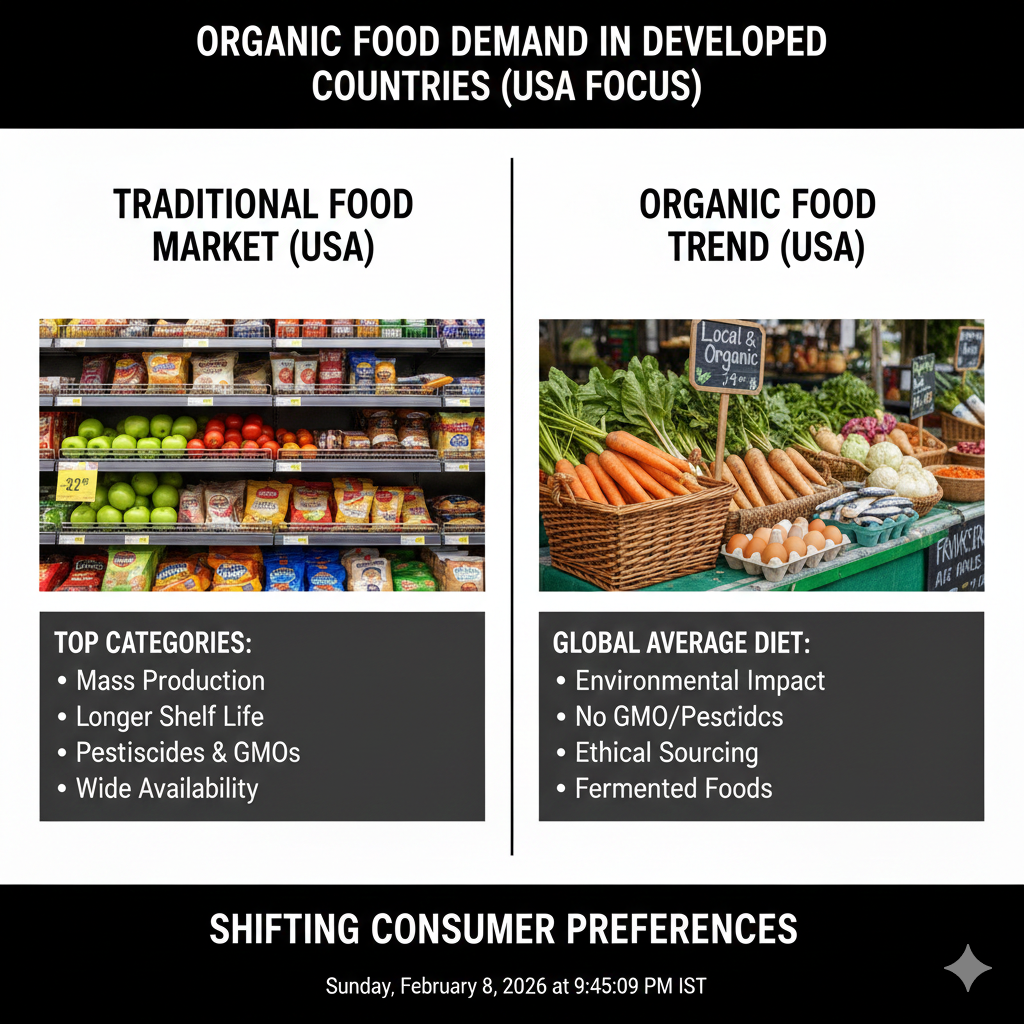
Walk down the aisle of any major supermarket in the United States, Europe, or Australia, and you will notice a distinct shift in the landscape. Green labels, leaf icons, and “Certified Organic” stamps are no longer relegated to a small, dusty corner of the produce section. They are front and center, covering everything from apples and milk to potato chips and cotton t-shirts.
This visibility represents a massive shift in how we eat and shop. Over the last two decades, the demand for organic food has exploded, particularly in developed economies. Consumers are increasingly voting with their wallets, opting for products that they perceive as safer, healthier, and more environmentally friendly.
But what is driving this surge? Is it simply a trend fueled by social media influencers, or does it represent a fundamental change in our relationship with agriculture? Understanding the organic food market requires looking at the complex mix of economics, health awareness, and environmental ethics that influence modern shoppers. This article explores the booming demand for organic products, with a specific focus on the United States, to understand why “going organic” has become a mainstream lifestyle choice.
What Is Organic Food?
Before analyzing market trends, it is helpful to clarify what “organic” actually means. It is a term often used loosely in conversation, but in the food industry, it has a strict legal definition.
Organic food definition
Organic food refers to agricultural products grown and processed without the use of synthetic fertilizers, genetically modified organisms (GMOs), or synthetic pesticides. For livestock, it means animals are raised without the routine use of antibiotics or growth hormones and are generally given access to the outdoors and organic feed. The goal of organic farming is to work with natural systems rather than against them, emphasizing soil health, biodiversity, and ecological balance.
Certification and labeling basics
In developed countries, you cannot simply claim a product is organic; you have to prove it. In the United States, the USDA (United States Department of Agriculture) sets the standards. Products labeled “100% Organic” or “Organic” must be certified by an accredited agent. Similar rigorous standards exist in the European Union and other developed nations. These labels act as a guarantee to the consumer that the product has moved through a verified supply chain, separating it from conventional goods from the farm to the store shelf.
Global Demand for Organic Food
The appetite for organic products is a global phenomenon, but it is heavily concentrated in specific regions. While organic farming takes place all over the world, the consumption of these goods is skewed toward wealthier nations.
Growth in developed economies
North America and Europe are the undisputed leaders in organic consumption. According to recent global data, these two regions account for the vast majority of organic sales worldwide. Countries like Denmark, Switzerland, and Austria have some of the highest per capita spending on organic goods. This disparity exists largely because organic food generally commands a price premium—often costing 20% to 100% more than conventional alternatives. Developed economies have the infrastructure to distribute these goods and a consumer base with the purchasing power to afford them.
Market size and adoption trends
The market is not just large; it is maturing. In the early 2000s, organic growth was often double-digit year over year as it expanded from a niche to a sub-sector. Today, while growth has stabilized in some mature markets, the overall trajectory remains upward. We are seeing a shift from organic being a “specialty purchase” to a “staple purchase.” It is no longer just about buying organic spinach; consumers are filling their baskets with organic eggs, milk, grains, and packaged snacks.
Organic Food Demand in the USA
The United States represents the single largest market for organic food in the world. The American consumer has embraced the organic movement with enthusiasm, driving changes in farming practices across the country and abroad.
Consumer adoption rates
Surveys consistently show that a majority of American households buy organic food at least occasionally. It is no longer a fringe behavior. While a smaller percentage of the population buys exclusively organic, the “casual organic consumer” is a massive demographic. These shoppers might buy organic milk and strawberries but stick to conventional onions and avocados. This pragmatic approach has helped organic products penetrate mainstream retail channels, moving beyond specialty health food stores.
Popular organic food categories
Fresh produce has always been the gateway to organic shopping. Apples, berries, leafy greens, and carrots remain top sellers because consumers are most concerned about pesticide residue on the skins of fruits and vegetables they eat raw. However, other categories are catching up fast.
- Dairy and Eggs: Parents often switch to organic milk and eggs first, concerned about hormones and antibiotics.
- Meat and Poultry: As animal welfare becomes a hotter topic, organic meat sales have seen robust growth.
- Packaged Foods: The “center of the store” is transforming, with organic options for mac-and-cheese, cereal, and cookies now standard.
Spending trends
Despite inflation and economic fluctuations, spending on organic food in the US has shown remarkable resilience. While budget-conscious shoppers might trade down in other areas, many view food quality as a non-negotiable health investment. Data suggests that once consumers switch to organic for specific staples, they rarely switch back to conventional, even when money is tight.
Why Organic Food Demand Is Higher in Developed Countries
The divide between organic consumption in developed versus developing nations is stark. Several structural and cultural factors explain why the US and Europe lead the pack.
Higher disposable income
The most obvious factor is economics. Organic farming is more labor-intensive and produces lower yields than industrial conventional farming, leading to higher shelf prices. In developed nations, a larger portion of the population has the disposable income required to absorb this “green premium.” When basic caloric needs are easily met, consumers begin to prioritize quality and production methods.
Health and wellness awareness
Developed countries have high rates of literacy regarding nutrition and food systems. Access to information regarding industrial farming practices, additives, and nutrition has shifted public opinion. Consumers in these regions are often proactive about their health, viewing food as a form of preventative medicine.
Food safety concerns
Paradoxically, developed nations with safe food supplies often have consumers who are highly anxious about food safety. High-profile recalls or news stories about chemical residues drive shoppers toward organic labels, which they perceive as a safer, more regulated option.
Key Drivers of Organic Food Demand
What specifically makes a shopper reach for the $5 organic berries instead of the $3 conventional ones? The motivation usually falls into three buckets: personal health, environmental ethics, and trust.
Health and Nutrition Perceptions
Reduced pesticide exposure
This is the primary driver for most shoppers. Many consumers want to minimize their family’s exposure to synthetic pesticides and herbicides. While regulatory agencies argue that conventional produce is safe, many health-conscious consumers prefer the precautionary principle—avoiding these chemicals whenever possible.
Clean-label preferences
Organic processed foods (like cookies or sauces) are prohibited from using artificial preservatives, colors, and flavors. For shoppers trying to avoid “ultra-processed” ingredients, the organic seal serves as a quick shortcut to finding products with simpler ingredient lists.
Environmental and Sustainability Concerns
Soil and biodiversity impact
As climate change dominates headlines, more consumers are linking their diet to the planet’s health. Organic farming practices are designed to build soil health and protect local wildlife. Shoppers who worry about pollinators (like bees) or water pollution often choose organic to support farming systems that are less chemically intensive.
Climate-conscious consumers
There is a growing recognition that synthetic fertilizers used in conventional farming are significant contributors to greenhouse gas emissions. Consumers who are trying to reduce their carbon footprint view organic agriculture as a more climate-friendly alternative.
Trust and Transparency
Supply chain visibility
In an era of complex global supply chains, people want to know where their food comes from. The strict audit trail required for organic certification offers a level of transparency that conventional food often lacks.
Brand credibility
Trust in “Big Food” corporations has eroded. Organic brands, even those owned by large parent companies, have successfully positioned themselves as more ethical and transparent. The organic label acts as a proxy for trust.
Demographics Driving Organic Food Consumption
Who is the typical organic shopper? The profile has evolved significantly over the last decade.
Millennials and Gen Z
Younger generations are driving the market. Millennials and Gen Z are statistically more likely to scrutinize labels and research brand values. They are willing to pay more for products that align with their personal ethics regarding sustainability and health. For these cohorts, organic is often seen as the baseline standard rather than a luxury.
Families with children
Parenthood is a major entry point into the organic market. New parents are often hyper-vigilant about what their babies and toddlers eat. The baby food aisle is one of the most thoroughly organic sections in the supermarket. Once parents start buying organic for their children, they often begin adopting those habits for themselves.
Urban vs rural consumers
Access plays a role. Urban and suburban areas typically have more grocery stores carrying extensive organic inventories compared to rural areas. Furthermore, the “foodie” culture prevalent in cities often overlaps with the values of the organic movement.
Organic vs Conventional Food Consumption
The battle for market share between organic and conventional is ongoing, defined by a few key friction points.
Price differences
Price remains the biggest barrier. For many families, the price gap is simply too wide to justify, especially for staples like milk or meat. However, the gap is narrowing in some categories as organic farming becomes more efficient and widespread.
Nutritional debates
Is organic food more nutritious? This is a contentious topic. Some studies suggest organic produce may have higher antioxidant levels, while others find no significant difference in macronutrients (protein, carbs, fats). However, the conversation has shifted away from just vitamins and minerals toward what is absent from the food—namely, antibiotic residues and synthetic chemicals.
Purchase frequency
Most consumers are “hybrid” shoppers. They might buy organic spinach (which has a high pesticide load in conventional farming) but buy conventional bananas (which have thick peels). This strategic purchasing allows consumers to participate in the organic market without blowing their entire budget.
Challenges Limiting Organic Food Growth
Despite the boom, the organic sector faces significant hurdles that prevent it from taking over the entire food system.
Higher costs
The cost of production is higher for organic farmers. They rely on labor rather than chemicals to manage weeds, and organic feed for livestock is expensive. These costs are passed down to the consumer, capping the potential market size.
Supply chain limitations
Demand often outstrips supply. Converting a conventional farm to an organic one takes three years, during which the farmer must follow organic practices but cannot sell their goods as organic. This “transition period” is a financial valley of death that discourages many farmers from switching.
Certification barriers
The paperwork and fees associated with maintaining organic certification are burdensome, especially for small, family-run farms. Some farmers use organic practices but opt out of the official label because the administrative cost is too high.
Retail Channels for Organic Food
Where we buy organic food has changed just as much as what we buy.
Supermarkets and big-box retailers
The democratization of organic food happened when Walmart, Costco, and Kroger got involved. By stocking organic goods, these giants forced prices down and made organic food accessible to the average American, not just the wealthy elite. Costco is now one of the largest organic retailers in the US.
Farmers markets and specialty stores
While big-box stores move volume, farmers markets and co-ops remain the spiritual home of the organic movement. These channels offer the freshest produce and a direct connection to the grower, appealing to the most dedicated consumers.
Online grocery platforms
Services like Amazon Fresh, Thrive Market, and Instacart have made it easier than ever to find specific organic niche products that might not be available at a local store. This is particularly helpful for consumers with specific dietary restrictions (like gluten-free organic).
Future Trends in Organic Food Demand
The future of organic looks robust, but it is evolving.
Expansion of private-label organic brands
Retailers are doubling down on their own organic lines (like Whole Foods’ “365” or Costco’s “Kirkland Signature”). These products offer a lower price point, making organic accessible to budget shoppers and putting pressure on name-brand competitors.
Growth of organic snacks and convenience foods
The “health halo” of organic is expanding to junk food. Organic potato chips, candy, and soda are growing categories. Consumers feel better about indulging if the ingredients are certified organic.
Technology in organic farming
New tech may help solve the yield problem. Robots that can weed fields mechanically and AI-driven pest management systems could lower the cost of organic farming, potentially bringing shelf prices down closer to conventional levels.
FAQs – Organic Food Demand in Developed Countries
Why is organic food more popular in developed countries?
Developed countries have higher average disposable incomes, allowing consumers to pay the premium for organic goods. Additionally, these nations generally have higher levels of education regarding nutrition and established regulatory bodies that enforce clear labeling, building consumer trust.
How big is the organic food market in the USA?
The US organic market is massive. According to the Organic Trade Association, total organic sales topped $60 billion recently. It continues to outpace the growth rate of the overall food market.
Is organic food demand still growing?
Yes, but the rate of growth has normalized. After years of explosive double-digit growth, the market is settling into a steady, sustainable upward trajectory. The growth is now coming from depth (more categories) rather than just width (new users).
Who buys organic food the most?
Millennials and Gen Z are the most active buyers, along with families with young children. However, adoption is increasing across all age groups as health concerns become universal.
Will organic food become more affordable?
Likely, yes. As supply chains become more efficient, private-label brands expand, and technology improves farming yields, the price gap between organic and conventional is expected to narrow, though organic will likely always carry some premium due to labor costs.
Moving Toward a Greener Plate
The demand for organic food in the US and other developed nations is not a fleeting fad; it is a fundamental restructuring of the food value equation. Consumers are increasingly signaling that they care about how their food is produced, the health of the soil it grew in, and the purity of the ingredients.
While price remains a barrier, the continued growth of the sector suggests that for many, the benefits—whether perceived or proven—outweigh the costs. As technology improves and big retailers continue to lean into the space, the green leaf on the package is likely to become the standard, rather than the exception, for the modern shopping cart.
Leave a Reply