

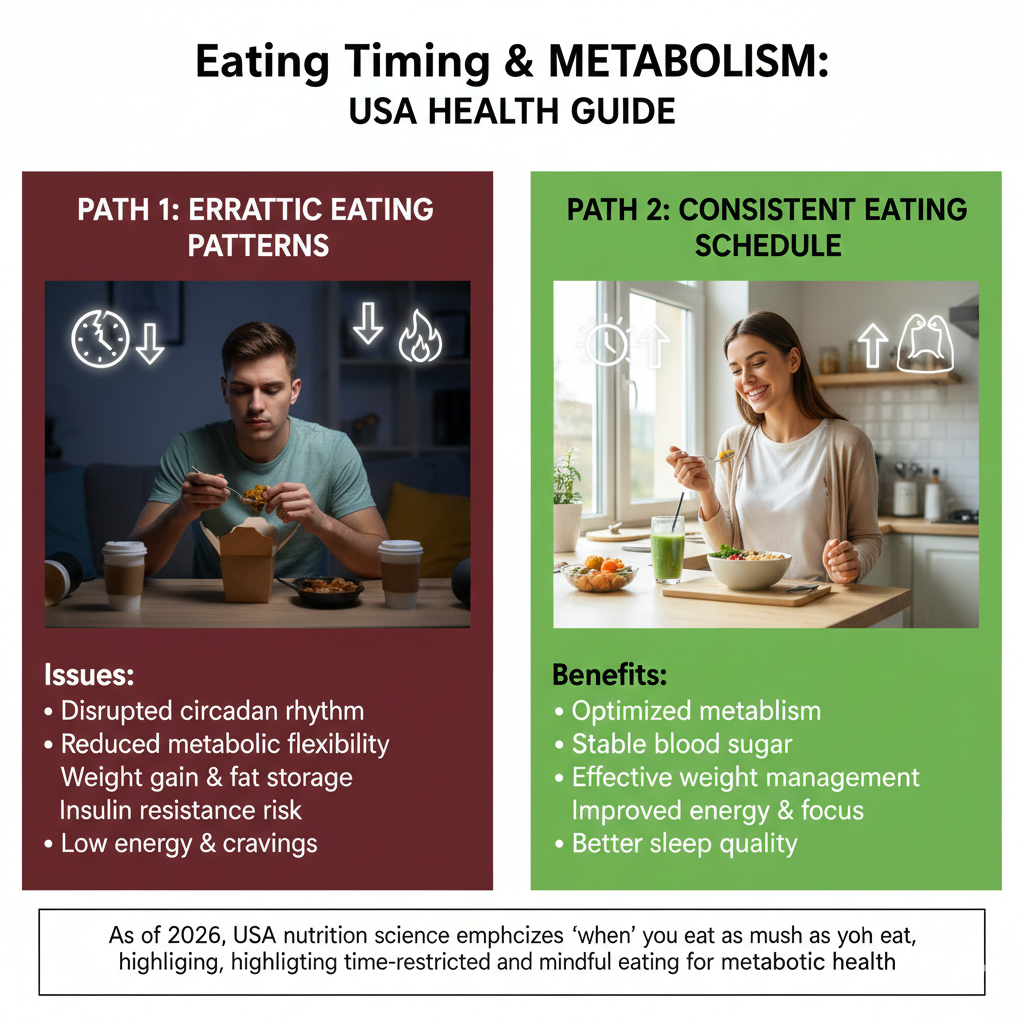
For decades, the conversation around nutrition in the United States has focused almost exclusively on what we eat. We count calories, obsess over macros, cut carbs, and demonize fats. While the nutritional quality of food is undeniably important, emerging science suggests we might be ignoring a critical piece of the puzzle: when we eat.
Modern life often demands that we override our natural rhythms. We skip breakfast to rush to the office, grab a quick lunch at our desks, and consume the majority of our calories late at night while winding down in front of the TV. This misalignment between our eating patterns and our biological clocks may be contributing significantly to metabolic issues, low energy, and weight management struggles.
Understanding the relationship between meal timing and metabolism doesn’t require a degree in biology, but it does require a shift in perspective. It involves looking at the body not just as a bank account for calories, but as a complex machine that runs on a tight schedule. By aligning our eating habits with our internal clocks, we can potentially unlock better energy, improved digestion, and a healthier metabolic rate.
What Is Metabolism?
To understand why timing matters, we first need to clarify what metabolism actually is. It is often discussed as if it were a dial that can be turned up or down, but the reality is more complex.
Simple definition
At its core, metabolism refers to the countless chemical processes that go on continuously inside your body to keep you alive and your organs functioning normally. These processes include breathing, repairing cells, and digesting food. When people talk about a “fast” or “slow” metabolism, they are usually referring to their Basal Metabolic Rate (BMR)—the number of calories the body burns at rest just to maintain these basic functions.
How the body uses energy
Your body converts the food and drink you consume into energy. Even when you are sleeping/resting, your body needs energy for “hidden” functions like circulating blood, adjusting hormone levels, and growing and repairing cells. While genetics play a role in your BMR, your lifestyle—including activity levels and dietary habits—determines how efficiently your body processes and uses this energy.
Why Eating Timing Matters for Metabolism
The human body operates on a 24-hour cycle known as the circadian rhythm. This internal clock regulates sleep-wake cycles, but it also dictates liver activity, gut function, and hormone release.
Circadian rhythm and digestion
Your digestive system is not designed to run at full capacity 24/7. During the day, your body is primed to digest food, absorb nutrients, and utilize energy. As the sun goes down, your body naturally shifts gears toward repair and restoration. Eating large meals when your body is preparing for sleep can force your digestive system to work when it should be resting, potentially leading to metabolic inefficiency.
Hormonal responses to food timing
Hormones like insulin (which helps cells absorb sugar) and cortisol (the stress hormone) fluctuate throughout the day. Generally, insulin sensitivity is higher in the morning and decreases as the day goes on. This means your body is better equipped to handle a bagel at 8:00 AM than a bowl of ice cream at 10:00 PM, even if the calorie count is identical.
Meal Timing Basics Explained
In the United States, the standard eating structure has traditionally been three distinct meals: breakfast, lunch, and dinner. However, modern habits have blurred these lines significantly.
Breakfast, lunch, and dinner timing
The timing of these main meals sets the cadence for your metabolic day. A typical schedule might look like breakfast at 7:00 AM, lunch at 12:30 PM, and dinner at 6:30 PM. This spacing allows blood sugar to rise and fall naturally between meals. When we push lunch to 3:00 PM or delay dinner until 9:00 PM, we disrupt the body’s expected rhythm.
Consistency vs. irregular eating
Your body loves predictability. Studies suggest that irregular eating patterns—having lunch at noon one day and 4:00 PM the next—can impair cardiometabolic health. When the body can anticipate when fuel is coming, it can prepare the necessary enzymes and hormones for digestion. Erratic schedules keep the metabolic system in a state of reactive stress rather than proactive efficiency.
Eating Timing and Blood Sugar Control
Blood glucose levels are a primary indicator of metabolic health, and timing plays a massive role in keeping them stable.
Glucose spikes and crashes
When you eat carbohydrates, your blood sugar rises. In response, your pancreas releases insulin to move that sugar into cells for energy. If you eat highly processed foods or sugary snacks at irregular intervals, you can send your blood sugar on a rollercoaster ride of spikes and crashes. This not only affects your mood and energy but can lead to insulin resistance over time.
Insulin sensitivity throughout the day
Because we are diurnal creatures (active during the day), our insulin sensitivity naturally drops in the evening. This means that a meal eaten late at night results in higher and more prolonged blood glucose levels than the exact same meal eaten for lunch. For those concerned with pre-diabetes or general metabolic health, front-loading carbohydrate intake to the earlier parts of the day is often a smart strategy.
Breakfast Timing and Metabolic Health
The debate over whether breakfast is the “most important meal of the day” continues, but from a timing perspective, starting early has advantages.
Early vs. late breakfast
Eating breakfast “kickstarts” the metabolism effectively by breaking the overnight fast (hence the name). Consuming calories early in the day aligns with high cortisol levels and peak insulin sensitivity. Pushing your first meal to the afternoon may result in missed opportunities for efficient fuel utilization.
Skipping breakfast myths
While some people thrive on skipping breakfast (often as part of an intermittent fasting protocol), for many, skipping the morning meal leads to intense hunger later in the day. This often results in overcompensating with high-calorie convenience foods at dinner. The metabolic downside of skipping breakfast is often less about the skipped meal itself and more about the poor dietary choices made later in the day as a result of ravenous hunger.
Late-Night Eating and Metabolism
One of the most common habits in the US is the “fourth meal” or late-night snacking. This is perhaps the most significant disruptor of metabolic health regarding timing.
Digestion and sleep interaction
Digestion requires energy and blood flow. Sleep requires a drop in core body temperature and a decrease in heart rate. When you eat a heavy meal right before bed, these two biological processes conflict. The body stays active to digest, which can inhibit deep sleep. Since poor sleep is directly linked to weight gain and metabolic slowdown, this creates a vicious cycle.
Fat storage and energy use
When you consume calories late at night, you are unlikely to burn them off through physical activity. With insulin sensitivity at its lowest and melatonin (the sleep hormone) rising, the body is more inclined to store that late-night energy as fat rather than burn it as fuel.
Meal Frequency and Metabolic Rate
Should you eat three square meals or six small ones? This is a frequent point of confusion.
Three meals vs. frequent meals
The idea that eating frequent small meals “stokes the metabolic fire” is largely a myth. The Thermic Effect of Food (TEF)—the energy used to digest food—is determined by the total amount of calories and nutrients consumed, not how many times you sit down to eat. Whether you eat 2000 calories in three meals or six meals, the energy used to digest them is roughly the same.
Snacking patterns in the USA
The real issue with high frequency is the quality of the snacks. In the American diet, “snacking” rarely means eating an apple or a handful of almonds. It usually implies processed foods high in sugar and unhealthy fats. Constant grazing prevents insulin levels from ever fully returning to baseline, keeping the body in a constant state of fat storage mode rather than fat burning mode.
Intermittent Fasting and Time-Restricted Eating
Intermittent fasting (IF) has exploded in popularity, and its success is largely based on the principles of meal timing.
Popular approaches explained
The most common form of IF is Time-Restricted Eating (TRE), such as the 16:8 method. This involves eating all your daily meals within an 8-hour window (e.g., 10:00 AM to 6:00 PM) and fasting for the remaining 16 hours.
Metabolic pros and cons
The metabolic benefit of TRE is that it gives the digestive system a long break. This allows the body to focus on cellular repair (autophagy) and lowers circulating insulin levels, which facilitates fat burning. However, it is not a magic bullet. If the eating window is filled with poor-quality food, or if the fasting window leads to binge-eating behaviors, the metabolic benefits are negated.
Eating Timing and Weight Management
While the law of thermodynamics (calories in vs. calories out) still applies, timing influences the “calories out” side of the equation more than we previously thought.
Calorie timing vs. calorie amount
Research indicates that people who eat the majority of their calories earlier in the day tend to lose more weight than those who eat the majority later, even when total calorie intake is controlled. This relates back to the circadian alignment of hormones.
Appetite regulation
Timing affects the hormones ghrelin (hunger) and leptin (fullness). Irregular eating schedules can cause these signals to misfire, leading you to feel hungry even when you don’t need energy. Establishing a consistent rhythm helps regulate appetite, making it easier to stick to a healthy eating plan without feeling deprived.
Eating Timing for Energy and Performance
Food is fuel, and you wouldn’t fill up your gas tank after you’ve finished a long road trip.
Workday productivity
Many Americans experience the “post-lunch slump.” This is often due to meal composition and timing. A heavy, carb-laden lunch causes a blood sugar spike followed by a crash, leading to brain fog. Timing a balanced lunch for when you need peak cognitive function—and stopping eating well before you become sluggish—can improve workplace performance.
Exercise and recovery timing
For active individuals, nutrient timing is essential. Consuming protein and carbohydrates shortly after a workout helps repair muscle tissue and replenish glycogen stores. Unlike the general population, athletes may need to eat closer to bedtime to ensure adequate recovery, highlighting that context is key.
How Lifestyle Factors Affect Eating Timing
Our eating schedules are rarely determined by hunger alone; they are dictated by our jobs, families, and social lives.
Sleep schedules
If you stay up until 2:00 AM, you are biologically more likely to eat a fourth meal. Sleep deprivation also increases the production of ghrelin, making you crave high-calorie foods the next day. A consistent sleep schedule is the foundation of a consistent eating schedule.
Shift work and irregular routines
Shift workers face the hardest battle. Working overnight fights against biology, forcing the body to digest food when it wants to sleep. This population has a statistically higher risk of metabolic syndrome. Strategies for shift workers involve trying to stick to a routine that mimics a “day” as much as possible, or focusing on lighter, protein-based meals during the night shift to reduce digestive strain.
Common Eating Timing Mistakes
Even health-conscious individuals can fall into timing traps.
Skipping meals unintentionally
Being “too busy to eat” often backfires. Going six or seven hours without food can lead to a drop in blood sugar that triggers intense cravings. When you finally do eat, you are likely to eat much faster and consume more than you would have if you had eaten a smaller meal earlier.
Long gaps followed by overeating
This is the classic “starve and binge” cycle. It stresses the metabolism by forcing the body to process a massive influx of energy all at once after a period of scarcity. Spacing intake out ensures a steady supply of energy.
Practical Meal Timing Tips for Americans
You don’t need to overhaul your entire life to see benefits. Small shifts can yield big results.
Simple daily schedules
Try to structure your day like an inverted pyramid: eat like a king at breakfast, a prince at lunch, and a pauper at dinner. Aim to consume at least 70% of your daily calories before dinner time.
Adapting timing to busy lifestyles
- Set a “Kitchen Closed” time: Decide that after 8:00 PM (or 3 hours before bed), the kitchen is closed. This simple rule prevents mindless snacking.
- Meal Prep: Having a healthy lunch ready prevents the 3:00 PM vending machine raid.
- Listen to cues: Learn to distinguish between “clock hunger” (it’s noon, so I must eat) and physical hunger.
Who Benefits Most from Optimizing Eating Timing?
While everyone can benefit from better alignment, certain groups will see the most dramatic improvements.
Office workers
Sedentary jobs lower the body’s immediate need for fuel. Office workers benefit greatly from front-loading calories and avoiding heavy lunches that cause afternoon lethargy.
Athletes and active adults
Timing is a performance tool here. Aligning intake with activity ensures that the fuel is available when the muscles need it, rather than sitting in the stomach during a run or lifting session.
Shift workers
Because their circadian rhythms are constantly challenged, strict adherence to a specific eating window (even if it’s at odd hours) can help mitigate the health risks associated with night shifts.
FAQs – Eating Timing and Metabolism
Does meal timing really affect metabolism?
Yes. While total calorie intake is the primary driver of weight, meal timing affects hormonal efficiency, digestion, and blood sugar regulation, all of which influence your overall metabolic health.
Is eating late at night bad for metabolism?
Generally, yes. Eating late forces the body to digest during its rest phase, negatively impacting sleep and insulin sensitivity. It promotes fat storage rather than fat burning.
How many hours should I wait between meals?
Most experts suggest a gap of 3 to 5 hours between meals allows blood sugar to return to baseline and gives the digestive system a necessary rest, known as the migrating motor complex (MMC).
Is intermittent fasting good for metabolism?
For many people, yes. It can improve insulin sensitivity and help regulate appetite. However, it is not suitable for everyone, particularly those with a history of disordered eating or certain medical conditions.
What is the best eating schedule for energy?
A schedule that front-loads calories (bigger breakfast and lunch, smaller dinner) and maintains consistent timing from day to day generally provides the most stable energy levels.
Syncing Your Schedule for Better Health
The science of eating timing teaches us that our bodies are not isolated engines; they are part of a rhythmic biological system. While the “what” of nutrition—eating whole foods, plenty of vegetables, and lean proteins—will always be fundamental, the “when” offers a powerful lever for health optimization.
You don’t need to be perfect. Simply trying to eat more of your calories earlier in the day, closing the kitchen a few hours before bed, and striving for consistency can have a profound impact on how you feel and function. By respecting your body’s internal clock, you can stop fighting against your metabolism and start working with it.
Leave a Reply