

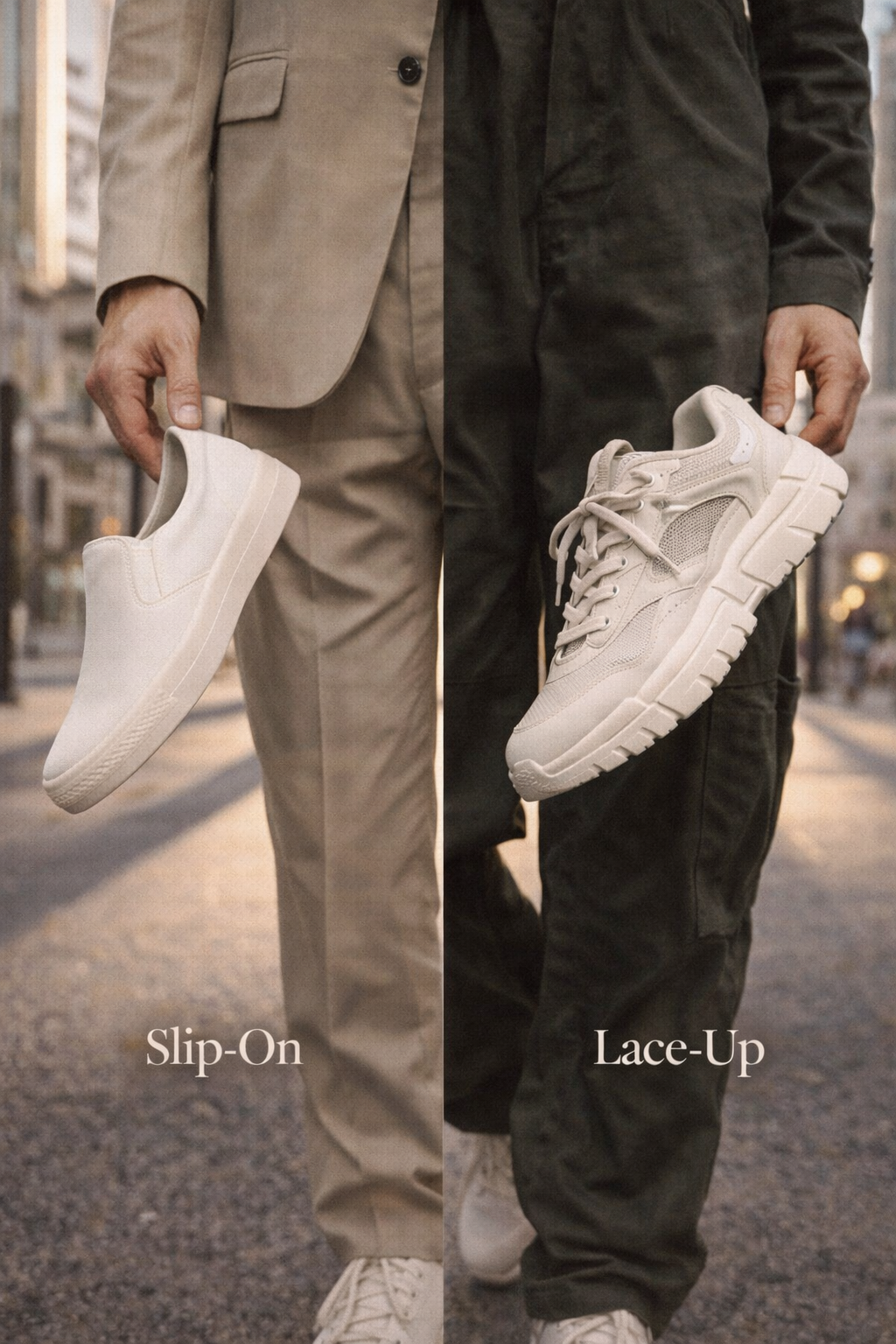
When you walk into a sneaker store or scroll through an online catalog, what is the first thing that catches your eye? For most consumers, it is color. A flash of neon, a classic white-on-white, or a moody triple black colorway often dictates the initial attraction. We are biologically wired to respond to color; it evokes immediate emotion and draws our attention.
However, if you were to sit down with a footwear designer at the start of their creative process, color would likely be the last thing on their mind. Before a single drop of dye is selected, the designer is obsessed with lines, proportions, and volume. They are focused on the shadow the shoe casts on the ground—its silhouette.
While color serves as the decoration, the silhouette is the foundation of visual identity. It is the architecture upon which the rest of the design rests. A coat of paint can change the mood of a house, but it cannot change whether that house is a Victorian manor or a mid-century modern bungalow. The same principle applies to footwear. The silhouette tells the story of the shoe’s function, its era, and its cultural significance. Understanding this distinction is crucial for anyone looking to deepen their appreciation of footwear design.
What Is a Shoe Silhouette?
To the untrained eye, a shoe is simply a covering for the foot. But in design terms, the silhouette is the overall shape and outline of the footwear when viewed from the side profile. It is the “skeleton” of the design, dictating how the shoe occupies space and how it relates to the human body.
Shape and Outline
The primary component of a silhouette is the immediate outline. This includes the curvature of the toe box, the height of the collar, and the angle of the heel. Is the toe pointed and aggressive, or rounded and approachable? Is the collar padded and bulky, or thin and deconstructed?
These choices are rarely accidental. A running shoe features a toe spring (an upward curve at the toes) to propel the runner forward. A formal oxford shoe lies flat to suggest stability and tradition. The outline communicates function before the consumer even tries the shoe on.
[Toe Shapes in Shoes Explained]
Height and Proportion
Proportion plays a massive role in defining a silhouette. This refers to the relationship between the different parts of the shoe. For instance, a high-top basketball sneaker has a fundamentally different visual weight than a low-cut tennis shoe.
The height of the upper relative to the length of the foot changes how the leg is perceived. A high-top cuts off the ankle, creating a blockier, sturdier look often associated with athletic support or rugged durability. A low-cut silhouette elongates the leg, offering a more streamlined and casual aesthetic. Designers manipulate these proportions to control where the eye is drawn.
Sole Thickness and Profile
In modern footwear, the sole unit has become a dominant factor in silhouette design. Think of the difference between a vulcanized skate shoe and a maximalist distance runner. The skate shoe has a thin, flat profile that keeps the wearer close to the ground for board feel. The runner might have a 40mm stack height of foam, creating a chunky, futuristic profile.
The thickness of the sole anchors the design. It provides the visual base. A heavy, lugged sole immediately signals “outdoors” or “workwear,” regardless of whether the upper is made of delicate suede or tough leather.
[Sole Thickness and Style Impact]
Why Color Is Secondary in Design Thinking
It acts as a powerful marketing tool, but color is ultimately interchangeable. A successful silhouette must work in grayscale. If a design relies entirely on a specific color blocking to look good, it is often considered a weak design.
Color Can Change Easily
Manufacturers release dozens of colorways for a single successful shoe model. The Nike Air Force 1, for example, has been released in thousands of colors since 1982. Yet, whether it is pink, black, or tie-dye, it remains unmistakably an Air Force 1.
The silhouette is the constant; the color is the variable. Designers know that if they nail the shape, the marketing team can refresh the product indefinitely with new palettes. This longevity is why the initial sketching phase focuses almost exclusively on line work and shading rather than hue.
[Classic Sneaker Silhouettes in History]
Shape Defines Identity
Remove the logos and the colors from a shoe, and what are you left with? If the design is strong, you are left with a recognizable identity.
Think of a cowboy boot versus a combat boot. You could paint a combat boot bright pink and cover it in glitter, but it will never look like a cowboy boot. The identity is baked into the construction—the heel height, the shaft width, and the toe shape. The silhouette carries the cultural DNA of the object. When we identify a “style,” we are almost always identifying a silhouette first and a color second.
Branding vs Structure
While logos are important for brand recognition, the silhouette often does the heavy lifting for branding. A brand like Converse owns the specific silhouette of the Chuck Taylor. Even without the star logo on the ankle, the rubber toe cap and the specific canvas cut make it instantly identifiable.
High-end fashion houses often rely on silhouette to distinguish themselves without plastering logos everywhere. The specific arch of a Christian Louboutin heel or the distinct oversized sole of a Balenciaga sneaker serves as a “structural logo” that screams the brand name louder than any printed text could.
How Silhouette Influences Perception and Psychology
The shape of a shoe does more than just fit a foot; it fits a feeling. The lines and curves of a silhouette trigger psychological responses that influence how we perceive the wearer.
Minimalist vs Bold Shapes
Minimalist silhouettes, characterized by clean lines and low profiles, evoke a sense of calm, efficiency, and sophistication. Think of a simple leather slip-on or a Common Projects sneaker. These shapes suggest that the wearer values subtlety and order.
In contrast, bold, exaggerated silhouettes with protruding heels, multiple layers, and aggressive angles demand attention. They signal confidence, non-conformity, and high energy. The “Dad shoe” trend was a psychological rebellion against the sleek, sock-like sneakers that dominated the previous era. By adopting a deliberately “ugly” or chunky silhouette, wearers signaled a specific kind of ironic, fashion-forward confidence.
[The Psychology of Sneaker Culture and Modern Identity]
Height and Confidence
There is a literal and figurative elevation that comes with specific silhouettes. High heels and platform boots physically make the wearer taller, altering their posture and gait. This physical change translates into a psychological shift—wearers often report feeling more authoritative or powerful.
Even in sneakers, a higher stance provided by a thick air bubble or foam stack can provide a subconscious boost in confidence. It changes the wearer’s relationship with the ground, making them feel more substantial and planted.
Cultural Meaning of Form
Shapes carry cultural baggage. The pointy toe of a dress shoe is historically linked to European aristocracy and formal attire. The rounded, wide toe of a work boot is linked to labor and the working class.
Designers play with these associations. When a designer puts a steel-toe silhouette on a luxury runway, they are subverting cultural expectations. They are using the “language” of the working-class silhouette to make a statement about high fashion. Understanding these codes allows consumers to curate their image more intentionally.
Examples: Same Color, Different Silhouettes
To truly understand the power of silhouette, it helps to visualize shoes that share the exact same color palette but communicate entirely different messages.
Running vs Lifestyle Sneakers
Imagine an all-white performance marathon shoe next to an all-white Stan Smith.
The marathon shoe has a curved sole, a pointed toe, and aerodynamically sculpted foam. It looks like it’s moving even when it’s sitting still. It screams “velocity” and “technology.”
The Stan Smith has a flat sole, a rounded toe, and a static, stable upper. It looks rooted to the ground. It says “leisure” and “classic.” despite both being white leather sneakers, their silhouettes place them in different worlds.
[Running Shoe vs Lifestyle Silhouette]
High-Top vs Low-Top
Take the classic Converse Chuck Taylor. In a low-top, it’s a summer shoe—breezy, light, and unobtrusive. It pairs easily with shorts and implies a relaxed afternoon.
Switch to the high-top silhouette in the same color. Suddenly, the shoe feels more serious. It references its basketball origins. It changes the line of the leg, shortening it slightly, and demands to be styled differently, perhaps with cuffed jeans or wider trousers. The fabric and color are identical, but the extra few inches of canvas fundamentally alter the shoe’s categorization.
[High-Top vs Low-Top Explained]
Chunky vs Minimal Designs
Compare a sleek, black ballet flat with a black combat boot. Both are black footwear options. The ballet flat’s silhouette is essentially a tracing of the foot itself—it is submissive to the body’s natural shape. It implies delicacy and grace.
The combat boot imposes its own shape onto the foot. It widens the stance and adds bulk. It implies protection and aggression. The color black serves as a unifying element, but the silhouette dictates the emotion.
Construction Elements That Shape Silhouette
The silhouette isn’t just a drawing; it’s a result of engineering. Specific construction techniques are required to achieve different shapes.
Lasting Methods
The “last” is the mechanical form that a shoe is molded around. It is the proxy for the human foot during manufacturing. The shape of the last dictates the shape of the shoe.
If a designer wants a sleek, pointed toe, they must use a last that tapers aggressively. If they want a wide, anatomical fit, the last must reflect that. The lasting process—pulling the upper material tight over this form—is what locks the silhouette in place. You cannot achieve a refined silhouette with a clumsy lasting process.
[Lasting Process in Shoemaking]
Cushioning Systems
Modern comfort technology has radically altered silhouettes. In the past, cushioning was hidden inside the sole. Now, technology like Nike Air, Adidas Boost, or On Running’s CloudTec is visible and structural.
These cushioning systems require space. To include a massive air bubble, the heel must be raised and widened to maintain stability. This necessity gave birth to the wedge-shaped silhouette common in modern runners. Form follows function, and the function of cushioning has permanently bulked up the average sneaker silhouette.
[Cushioning Technologies Explained]
Material Structure
The choice of material dictates how a silhouette holds its shape. Stiff leathers and heavy canvases can support sharp, architectural lines. They can stand up on their own, creating boxy or structured silhouettes.
Soft knits and meshes, widely used in modern “sock” shoes, collapse without a foot inside them. They create a silhouette that is organic and fluid, hugging the wearer’s anatomy. A designer cannot force a soft knit to hold the sharp shape of a dress shoe without adding internal cages or reinforcements, which further complicates the construction.
Why Brands Focus on Silhouette First
For footwear companies, silhouette is a matter of intellectual property and long-term value.
Design Consistency
Great brands have a “design language.” You can identify a Porsche by its curve, and you can identify a Birkenstock by its cork footbed profile. Brands strive for silhouette consistency so that their products look like a family. If every shoe had a radically different shape, the brand would lack cohesion.
Recognition Without Logos
The ultimate test of a shoe’s design is recognition from a distance. Logos are small; silhouettes are large. Brands want their shoes to be recognized from across the street.
The distinct profile of a Timberland boot is recognizable from a block away. This level of recognition is incredibly valuable. It turns every customer into a walking billboard, not because of a tag, but because of the physical space the shoe occupies.
Long-Term Product Identity
Trends in color change every season. Neon is in one year; earth tones are in the next. If a brand relies only on color trends, they have to reinvent the wheel constantly.
However, if a brand establishes a classic silhouette—like the Vans Old Skool or the Dr. Martens 1460—they have a perennial seller. They can simply update the colors to match the season while the production line keeps churning out the same profitable shape.
[How Sneakers Are Manufactured]
The Future: Shape-Driven Design in AI and Digital Fashion
As we move into a new era of design, the priority of silhouette is becoming even more pronounced.
AI-Generated Silhouettes
Artificial Intelligence is currently revolutionizing sneaker design. When AI generates shoe concepts, it often prioritizes wild, organic, and complex structures that human designers might not intuitively sketch. These tools experiment with voronoi patterns (cellular shapes) and intricate lattice structures.
In these AI-driven designs, color is often an afterthought or a byproduct of the rendering process. The focus is entirely on creating new, alien geometries that challenge our understanding of what a shoe can look like.
Minimalist vs Futuristic Shapes
We are seeing a divergence in the future of footwear. One path leads toward hyper-minimalism—shoes that are barely there, mimicking the foot (like barefoot shoes). The other path leads toward hyper-futurism—massive, 3D-printed clogs and boots that look like sculptures.
Both paths are defined by shape. The sustainable movement also plays a role here; single-material molded shoes (like those made from algae or recyclable foam) rely entirely on silhouette for interest because they cannot easily be made in multi-colored panels.
Silhouette as the True Language of Footwear Design
While color may be the hook that grabs your attention, the silhouette is the hook that holds it. It is the element that determines fit, function, and feeling. It connects the shoe to history, culture, and engineering.
Next time you are shopping for footwear, try to look past the colorway. Squint your eyes and look at the outline. Ask yourself what the shape is telling you. Is it fast? Is it stable? Is it aggressive? When you learn to read the silhouette, you stop seeing just a shoe and start seeing the intention behind the design. Color makes a shoe pretty, but silhouette makes it an icon.
Leave a Reply