

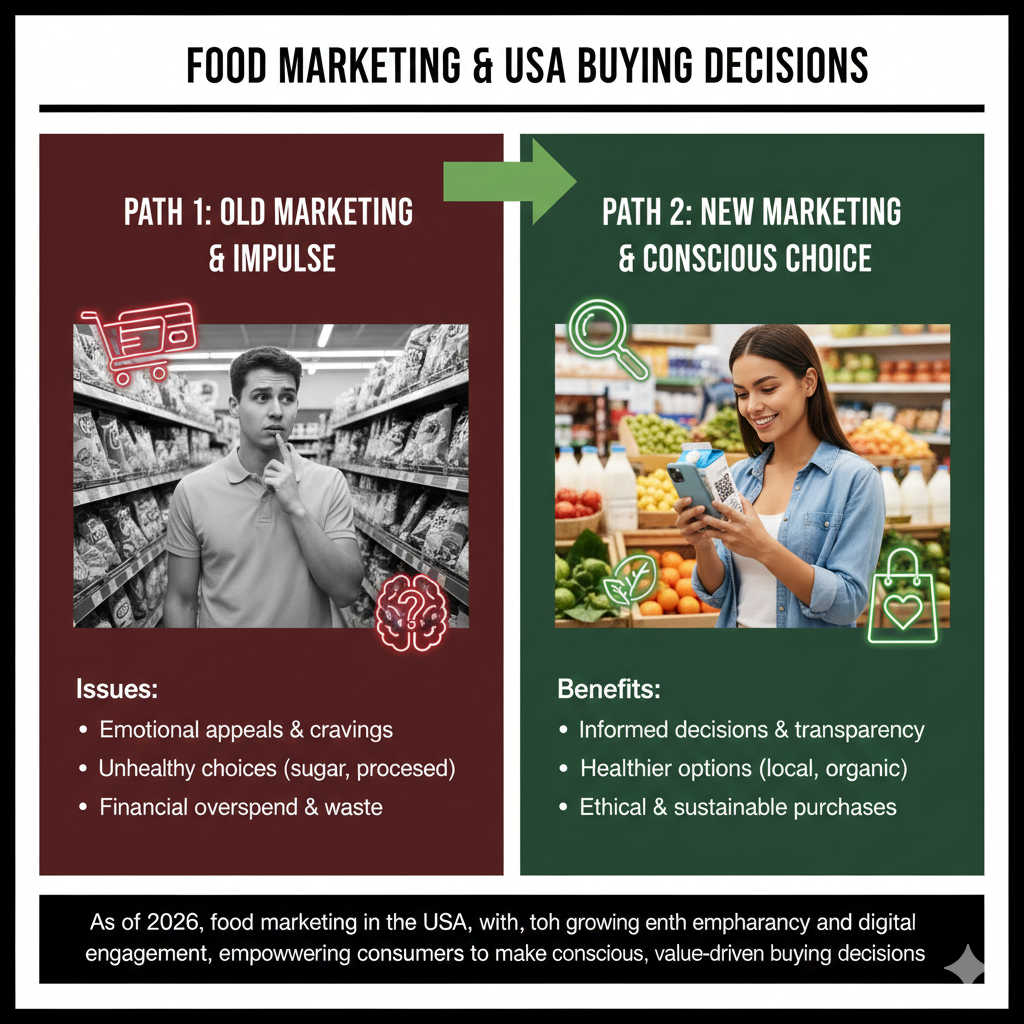
Walking down a grocery aisle in the United States is rarely a neutral experience. Every colorful box, every strategically placed display, and every “all-natural” label is part of a complex ecosystem designed to catch your eye and open your wallet. While we like to think we make logical choices based on hunger or nutrition, the truth is that food marketing plays a massive role in what ends up in our carts.
The American food landscape is particularly saturated with these signals. From viral TikTok recipes that empty store shelves of feta cheese to the subtle psychology of checkout line candy bars, marketing strategies are woven into the fabric of daily life. For health-conscious consumers, navigating this landscape requires more than just willpower; it requires an understanding of the game being played.
This guide explores the mechanisms behind food marketing in the USA. We will break down the strategies companies use to influence behavior, the psychology behind why they work, and how you can reclaim control over your grocery shopping habits.
What Is Food Marketing?
Food marketing is the comprehensive process of planning and executing the conception, pricing, promotion, and distribution of food products. Its primary goal is to create an exchange that satisfies individual consumer needs while meeting organizational objectives—essentially, selling more food.
This isn’t just about commercials during the Super Bowl. It encompasses a vast network of activities connecting the farm to the consumer’s plate. This includes product development, packaging design, retail placement, and increasingly, digital engagement.
Traditional vs. Digital Food Marketing
Historically, food marketing relied heavily on traditional media: television spots, radio jingles, billboards, and print coupons in the Sunday paper. While these methods still exist, the landscape has shifted dramatically.
Digital food marketing now dominates. It is data-driven, personalized, and often interactive. Instead of a generic TV ad, a consumer might see a targeted Instagram ad for a protein bar based on their recent gym check-in or Google searches for “post-workout snacks.” This shift allows brands to reach consumers at the exact moment they are making purchasing decisions, often blurring the lines between content and advertising.
Why Food Marketing Strongly Influences Buying Decisions
The influence of marketing is powerful because it bypasses logical reasoning and speaks directly to human needs and desires.
Visual Cues and Emotional Triggers
Humans are highly visual creatures. We eat with our eyes first. High-quality photography showing steam rising from a bowl of soup or condensation on a cold soda bottle triggers a physiological response—salivation and hunger. Beyond appetite, marketing taps into emotions. A commercial showing a chaotic family dinner turning peaceful over a specific brand of pasta sauce sells the idea of harmony, not just tomatoes.
Convenience and Brand Trust
In the USA, where schedules are tight, convenience is a major currency. Marketing that emphasizes “ready in 5 minutes” or “grab-and-go” appeals to the time-strapped consumer. Furthermore, brand trust acts as a mental shortcut. If a shopper recognizes a logo from their childhood, they are more likely to buy it over a generic competitor because it feels safe and familiar, reducing the cognitive load of decision-making.
Key Food Marketing Strategies Used in the USA
To understand why we buy what we buy, we must look at the specific tools marketers use.
Packaging and Label Design
Packaging is the “silent salesman.” It is the last opportunity a brand has to convince a consumer to buy before they leave the store.
Color, Typography, and Imagery
Colors evoke specific feelings. Red is associated with excitement and appetite (think fast-food logos), while green signifies health and freshness. Typography matters, too; a handwritten-style font can make a mass-produced cookie feel artisanal and homemade. Imagery of fresh ingredients on the front of a package—even if those ingredients represent a tiny fraction of the product—signals quality to the brain.
Health Claims and Buzzwords
The American consumer is increasingly health-aware, and marketers have adapted by plastering packages with buzzwords.
“Natural,” “Organic,” and “High-Protein” Messaging
Terms like “natural” are loosely regulated in the U.S., yet they significantly boost sales. A bag of chips labeled “all-natural” may still be highly processed, but the word creates a “health halo” effect, leading consumers to believe it is a better choice. Similarly, the protein craze has led to everything from cereal to ice cream being marketed as “high-protein,” tapping into current dietary trends.
Pricing and Promotions
Price is a primary driver for many households, but perception is often more important than reality.
Discounts, Bundles, and Perceived Value
“Buy one, get one free” (BOGO) deals are classic examples of making consumers buy more than they need. Ending prices in .99 creates the illusion of a bargain. Bundling items—like a meal deal with a sandwich, drink, and chips—increases the average transaction value while making the consumer feel like they scored a deal.
Placement and Shelf Positioning
Where an item sits in the store is never an accident. Brands pay slotting fees to secure prime real estate.
Eye-Level Product Placement
“Eye level is buy level.” Premium brands and high-margin items are placed at eye level where they are easiest to see and grab. Cheaper generic brands are often on the bottom shelf.
Checkout Displays
The checkout lane is the impulse buy danger zone. Retailers stock this area with single-serve treats, gum, and magazines. These low-cost items don’t require much thought, making them easy add-ons while you wait in line.
Social Media and Influencer Marketing
The rise of TikTok and Instagram has revolutionized how food trends spread.
Viral Food Trends
When a recipe like “baked feta pasta” goes viral, it drives massive sales for specific ingredients. Marketers jump on these trends quickly, sponsoring creators to use their specific brand of feta or pasta.
Creator-Driven Brand Promotion
Influencers act as trusted friends. When a fitness influencer recommends a specific green juice powder, their followers are more likely to buy it than if they saw a standard banner ad. The recommendation feels authentic, even if it is a paid partnership.
Psychology Behind Food Buying Decisions
Marketing works because it leverages human psychology.
Impulse Buying Triggers
Impulse buying is driven by immediate gratification. Marketers create urgency (Limited Time Offer!) or scarcity (Only 3 left!) to bypass the rational part of the brain that asks, “Do I really need this?”
Emotional and Sensory Marketing
Supermarkets pump the smell of rotisserie chicken or freshly baked bread into the air to stimulate hunger. They play slower music to encourage leisurely browsing (and more spending). These sensory inputs create an environment where saying “yes” to a purchase feels good.
Role of Branding and Brand Loyalty
Branding is about identity. Consumers often buy products that align with how they see themselves.
Familiarity and Trust Factors
Consistent branding builds a reliability loop. If you buy a specific brand of yogurt and it tastes good, you are likely to buy it again to avoid the risk of a bad experience with a new brand.
Storytelling and Lifestyle Branding
Brands that tell a story—perhaps about a family farm or a commitment to sustainability—connect on a deeper level. A coffee brand isn’t just selling beans; it’s selling the lifestyle of a sophisticated, eco-conscious traveler.
How Marketing Affects Healthy vs. Unhealthy Food Choices
Marketing budgets are rarely evenly distributed. Processed food companies often have significantly more capital to spend on advertising than fresh produce growers.
Convenience Foods vs. Whole Foods
You rarely see a commercial for broccoli during prime-time TV. You do, however, see commercials for frozen pizza, soda, and fast food. This exposure disparity normalizes processed foods as the default option for dinner, while whole foods require more effort to seek out and prepare.
Consumer Perception of “Healthy”
Marketing can muddy the waters of nutrition. A sugary granola bar might be marketed as “made with whole grains,” distracting from the high sugar content. This can lead well-meaning consumers to choose processed snacks over whole fruit, believing they are making a healthy choice.
Digital Marketing and Online Grocery Shopping
As grocery shopping moves online, the marketing tactics have evolved.
Personalized Ads
Retailers track purchase history to suggest items. If you bought diapers last week, the algorithm might suggest baby food this week. These personalized prompts reduce the effort of shopping but can also lock consumers into specific buying patterns.
Algorithm-Driven Product Discovery
On a digital shelf, there is no “eye level.” There is only the first page of search results. Brands pay for sponsored placements to appear at the top of the list when you search for “cereal” or “milk,” dominating the digital visibility.
Food Marketing Regulations in the USA
The U.S. has a framework for regulating food marketing, primarily enforced by the Federal Trade Commission (FTC) and the Food and Drug Administration (FDA).
Advertising Standards
The FTC monitors for false or misleading advertising. Brands cannot make outright false claims—like saying a cereal cures cancer—but they have leeway with vague terms like “boosts energy” or “supports immunity,” provided they are careful with the wording.
Labeling Requirements
The FDA regulates the Nutrition Facts panel and ingredient lists. They also define specific terms like “low fat” or “excellent source of fiber.” However, front-of-package claims remain a battleground where marketing creativity often skirts the edge of regulation.
Impact of Food Marketing on Families and Kids
Children are a major target for food marketers because they influence family spending and represent future lifelong customers.
Snack Marketing and Children
Cereal boxes featuring cartoon characters are placed on lower shelves, directly at a child’s eye level. Commercials on kids’ networks promote sugary snacks and fast food meals with toys. This “pester power” leads parents to buy items they might otherwise avoid.
Media Exposure Effects
Studies show that children exposed to food advertising consume more calories and have a stronger preference for the advertised products. This early conditioning creates taste preferences for high-sugar, high-salt foods that can persist into adulthood.
How Consumers Can Make Smarter Buying Decisions
Knowledge is power. Here is how to navigate the grocery store with intention.
Reading Labels Carefully
Ignore the front of the box. Flip it over to read the Nutrition Facts and the ingredient list. The ingredients are listed by weight; if sugar is in the top three, it is a sugary product, regardless of the “natural” claims on the front.
Recognizing Marketing Tactics
Be aware of the environment. Notice when you are being steered toward an end-cap display. Recognize that the music and smells are designed to make you stay longer. Make a list before you leave the house and stick to it—this is the best defense against impulse buys.
Future Trends in Food Marketing
The future of food marketing is hyper-personalized and tech-driven.
AI-Driven Personalization
Artificial Intelligence will likely take personalization to new heights. Imagine a grocery app that not only suggests products based on past purchases but also syncs with your health data to recommend foods that fit your specific nutritional goals—sponsored, of course, by specific brands.
Sustainability-Focused Branding
As climate change becomes a pressing concern, marketing will pivot heavily toward sustainability. Expect to see more “carbon-neutral,” “regenerative agriculture,” and “upcycled” claims. While positive, consumers will need to be vigilant against “greenwashing,” where brands exaggerate their eco-friendly efforts.
FAQs – Food Marketing and Buying Behavior
How does food marketing influence consumers?
It influences consumers by creating awareness, shaping perceptions of value and health, triggering emotional responses, and utilizing psychological cues like scarcity and social proof to prompt purchases.
Do packaging colors really affect buying decisions?
Yes. Research suggests color accounts for a significant portion of a consumer’s initial assessment of a product. Red stimulates appetite, blue implies trust, and green implies health.
Is food marketing regulated in the USA?
Yes, primarily by the FDA (labeling) and FTC (advertising). However, regulations often focus on preventing outright deception, leaving room for persuasive, puffery-based marketing tactics.
How can shoppers avoid impulse purchases?
The most effective strategies include making a shopping list, eating before shopping (never shop hungry!), avoiding the center aisles where processed foods live, and using self-checkout lanes that have fewer candy displays.
Not always. While some trends promote creativity, many are driven by aesthetics or paid partnerships rather than taste or nutrition. Always approach viral food trends with a healthy dose of skepticism.
Taking Back Control of Your Cart
Food marketing in the USA is a sophisticated machine designed to guide your hand toward specific products. It leverages psychology, visual design, and data to influence what you eat. However, it is not mind control. By understanding these tactics—from the “health halo” on a box of cookies to the strategic placement of milk at the back of the store—you can transform from a passive consumer into an empowered shopper.
The next time you reach for a product, take a split second to ask: Do I want this, or was it sold to me? That brief pause is the first step toward making choices that align with your health, your budget, and your values.
Leave a Reply