

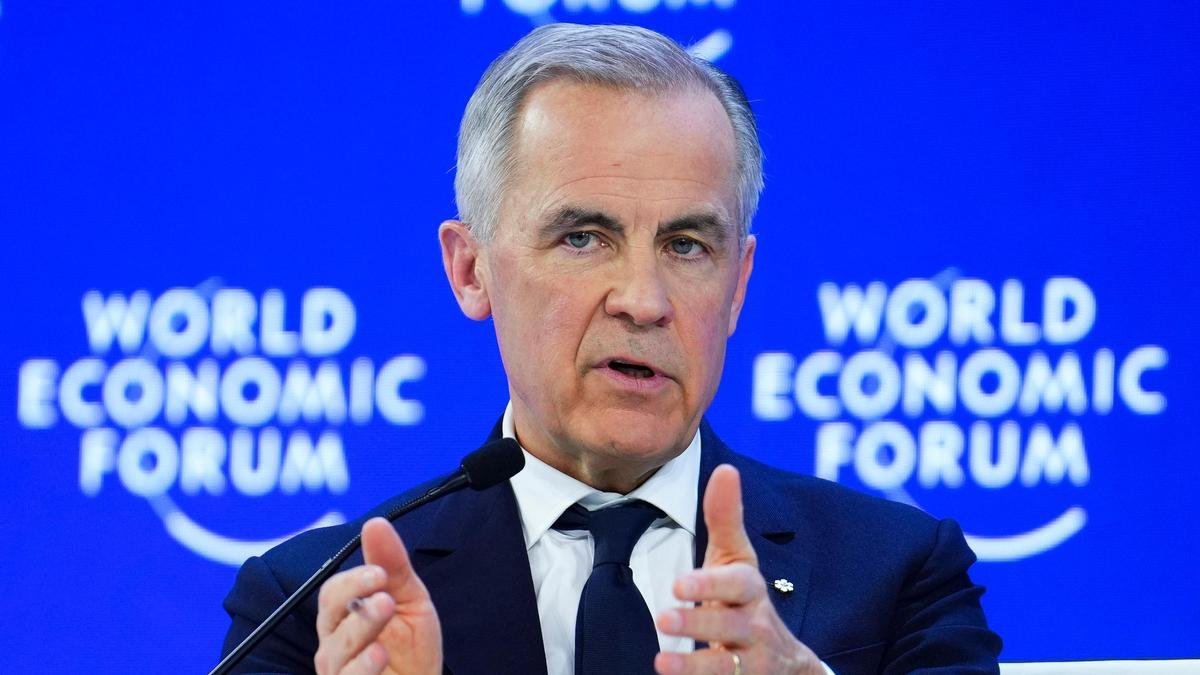
The tectonic plates of our global economy are shifting. For decades, we have walked upon the firm ground of a rules-based international order—a structured, predictable landscape where trade flowed like water and cooperation was the currency of choice. But recent tremors suggest that this era of stability is eroding. The intricate tapestry of global connection is fraying at the edges, pulled apart by the rough hands of protectionism and power politics.
Mark Carney, a figure whose voice resonates through the marble halls of global finance, has sketched a stark vision of what lies ahead. He warns that the old architecture is crumbling, replaced by a design that favors power over rules and fragmentation over unity. This is not merely a political shift; it is a fundamental reimagining of how money, goods, and influence move across our planet.
In this exploration, we will trace the contours of Carney’s vision. We will examine how the collapse of the old order ripples through the corridors of political power, alters the currents of global trade, and sends shockwaves through financial markets. This is a map for a new, uncertain world.
Who Is Mark Carney?
To understand the weight of the message, one must appreciate the messenger. Mark Carney is not simply a banker; he is an architect of modern financial policy. From the rugged economic landscape of Canada, where he served as the Governor of the Bank of Canada, to the venerable, history-steeped Bank of England, Carney has navigated the world’s most turbulent economic storms.
His transition from central banking to global political leadership has been seamless. He moves with the precision of a craftsman, understanding the delicate machinery that keeps the global economy humming. When Carney speaks, he draws upon deep reservoirs of experience, making his diagnosis of our current ailment all the more compelling. He sees the cracks in the foundation before others even feel the floor shaking.
What Does Mark Carney Mean by a “New Global Order”?
When Carney speaks of a “New Global Order,” he is painting a picture of a world moving away from the harmonious symphony of the post-Cold War era. That era was defined by a shared rulebook—a belief that if everyone played by the same regulations, prosperity would flourish.
Carney argues that this golden age is not merely paused; it is gone. In its place, a rougher, more abrasive reality is emerging. The defining themes of this new era are stark:
- Power Politics: The gavel of international law is being silenced by the sheer force of national might.
- Economic Coercion: Trade is no longer just about exchange; it is a weapon. Economic interdependence, once seen as a shield against war, is now a vulnerability to be exploited.
- Fragmentation: The great institutions that once held the world together are splintering, unable to contain the divergent ambitions of rival nations.
Why the Rules-Based Order Is Breaking Down
The decay of the old order did not happen overnight. It was a slow erosion, like a cliff face worn away by relentless waves.
The Weaponization of Commerce
Trade wars, sanctions, and tariffs have become the favored tools of statecraft. We have watched as nations build walls where bridges once stood. The trust required to maintain global institutions—like the World Trade Organization (WTO) and the IMF—has evaporated. Without trust, these bodies are merely hollow shells, echoing with the disagreements of their members.
The Rise of Rival Blocs
We are witnessing the formation of distinct geopolitical islands. Strategic competition has replaced strategic partnership. Nations are retreating into defensive crouches, gathering allies close and viewing outsiders with suspicion.
The Perfect Storm
Adding to this fragility are the external shocks that batter the system. The spectre of inflation, the snapping of fragile supply chains, and the looming, existential threat of climate risk have all exposed the weaknesses in our current design. The structure simply cannot hold the weight of these accumulating crises.
What Carney’s Vision Means for Global Politics
In this new design, the global consensus is a fading memory. The political landscape is becoming a mosaic of regional alliances and “middle-power” coalitions.
National interest has returned to the center stage, performing a solo act. For democracies, this poses a profound challenge. How do you maintain open, cooperative governance in a world that rewards secrecy and defensiveness? International cooperation becomes a rare, handcrafted luxury rather than a standard commodity.
For nations like Canada, members of the EU, and rising powers like India, the path forward is treacherous. They must navigate the narrow straits between warring giants, crafting policies that protect their sovereignty while seeking new, perhaps smaller, circles of trust.
Implications for Global Trade
The grand, flowing river of global trade is being dammed and diverted. We are moving from a vast ocean of open exchange to a series of disconnected lakes.
The End of Efficiency
For decades, the goal was simple: efficiency. Goods were made wherever it was cheapest and fastest. Carney notes that this “free-trade absolutism” is dead. In its place rises “friend-shoring”—the practice of moving supply chains to politically friendly countries.
Regional Supply Chains
We are seeing the rise of regional fortresses. Supply chains are becoming shorter, more local, and more robust, but also more expensive. We are trading the low costs of the past for the security of the future. For developing economies, this could mean being shut out of lucrative markets or forced to choose sides in a binary world.
Impact on Financial Markets
For investors, the canvas has changed dramatically. The calm predictability that allowed capital to flow freely is being replaced by jagged lines of volatility.
A New Risk Premium
Geopolitical uncertainty is the new background noise of the market. Investors must now “reprice” risk. Every investment decision must be weighed against the potential for political upheaval.
Turbulence in Assets
This uncertainty bleeds into currencies, bonds, and equities. The interconnected nature of global capital means that a political decision in one capital can send tremors through the stock exchanges of another. Long-term investors can no longer rely on the tides of the past to predict the waves of the future. They must adapt to a system where the weather can change in an instant.
Climate Finance and Economic Resilience
Amidst this gloom, Carney highlights a critical intersection: the green economy. He has long been a passionate advocate for recognizing climate risk as financial risk.
In this new order, sustainable finance is not just a nice-to-have; it is a pillar of resilience. The transition to a low-carbon economy requires massive investment and innovation. Carney envisions a world where climate policy is woven intimately into the fabric of trade and geopolitics. Those who master the craft of green energy and sustainable infrastructure will hold the keys to the new kingdom.
Critics and Supporters of Carney’s View
Carney’s vision is a bold stroke on the canvas of public opinion, and it has drawn both admirers and detractors.
The Realists
Supporters argue that Carney is simply holding up a mirror to the world. They appreciate his realism about the return of hard power and the fragmentation of the economy. To them, acknowledging the broken nature of the system is the first step toward building something durable.
The Skeptics
Critics, however, worry that such a vision risks becoming a self-fulfilling prophecy. By declaring the rules-based order dead, are we accelerating its demise? They fear that normalizing protectionism invites chaos, turning a difficult situation into a desperate one.
What Comes Next?
We stand at a crossroads. The future global order is not yet fully built; the cement is still wet.
Will new institutions rise from the ashes of the old, designed to handle the complexities of the 21st century? Or will we retreat further into our silos? Governments, businesses, and investors must prepare for multiple scenarios. The only certainty is that the blueprints of the past will not serve us in the future. We must be ready to build anew.
FAQs – Mark Carney & the New Global Order
What is Mark Carney’s vision for the global economy?
Carney envisions a fragmented economy where power politics and national security trump free trade and efficiency, leading to a more volatile and divided world.
Why does Carney say the rules-based order is over?
He argues that the rise of geopolitical competition, the weaponization of trade, and the decline of trust in global institutions have fundamentally broken the cooperative system established after the Cold War.
How will this affect global trade and markets?
Expect less efficiency and higher costs due to “friend-shoring,” alongside increased market volatility as investors grapple with geopolitical unpredictability.
What role does climate finance play in Carney’s vision?
Carney sees climate action as essential for economic resilience. In the new order, energy security and the transition to green finance will be central to national power and stability.
Final Verdict
Mark Carney’s argument is a clarion call. The era of easy globalization is behind us. The new global order is a landscape of jagged edges, competing powers, and fragmented alliances. For policymakers, businesses, and investors, the message is clear: adaptation is survival.
We can choose to mourn the loss of the old world, or we can roll up our sleeves and begin the hard work of crafting a path through the new one. The currents are changing, and only those who understand the new tides will stay afloat.
Ready to navigate the shifting currents of the global economy? Subscribe to our newsletter today for expert insights and strategies that help you stay ahead of the curve.
Leave a Reply