

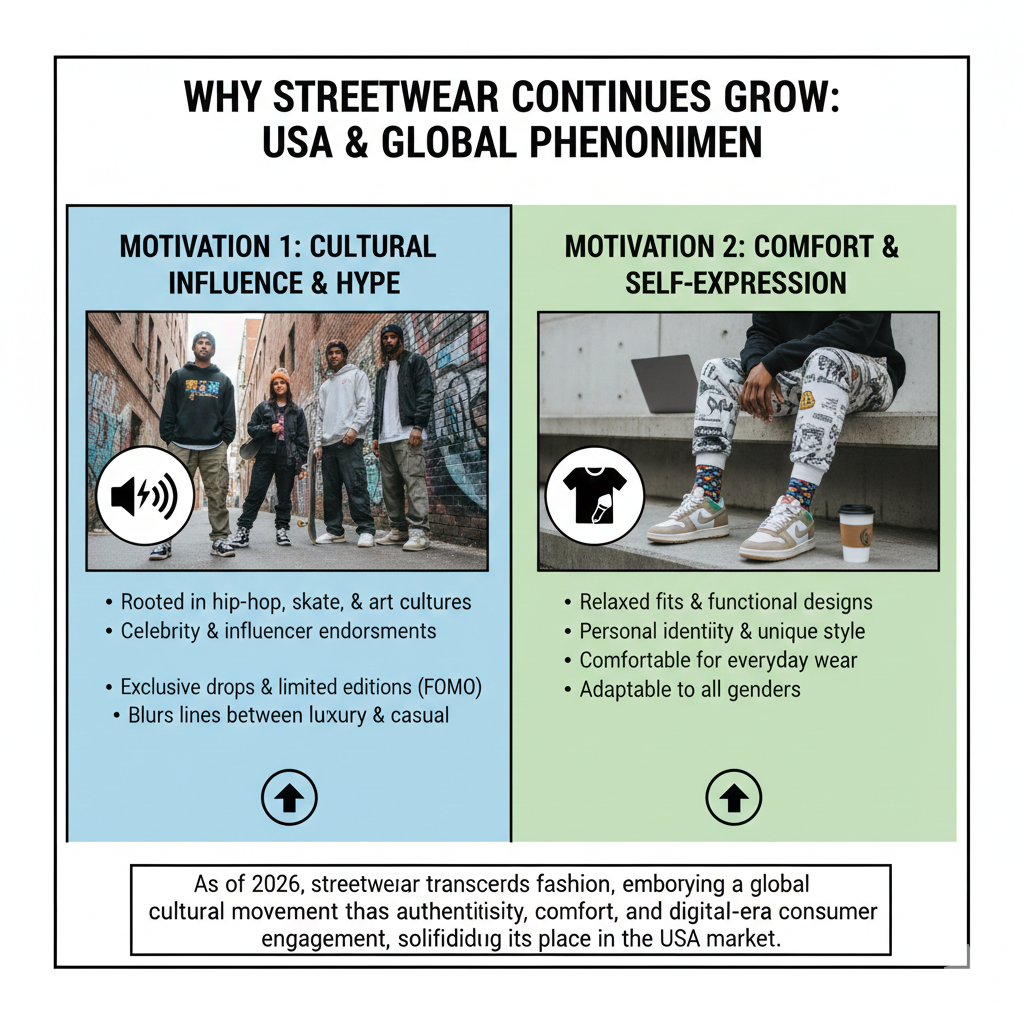
Walk down any busy street in New York, Los Angeles, or Chicago, and you will notice a common theme. It isn’t three-piece suits or formal dresses. Instead, you see graphic t-shirts, comfortable hoodies, loose-fitting denim, and sneakers. This shift in how we dress isn’t just a temporary trend or a “casual Friday” anomaly. It is the dominance of streetwear.
Once a niche subculture found only in skate parks and hip-hop venues, streetwear has exploded into a global phenomenon. It has redefined what luxury means, changed how businesses market products, and altered the dress codes of workplaces across America. But why has this specific style of clothing become the default uniform for so many people?
The answer lies in a mix of cultural identity, the rise of digital communities, and a universal shift toward comfort. Streetwear is no longer just for youth culture; it is for anyone who values versatility and self-expression. By understanding its roots and its trajectory, we can see why this fashion movement is likely to remain a permanent fixture in American life and beyond.
What Is Streetwear?
At its core, streetwear is a style of casual clothing that centers on comfort and everyday wearability. It is the antithesis of stiff, formal attire. While “fashion” was historically dictated by elite designers in European capitals, streetwear grew from the ground up. It originated from the people who wore it, rather than the runways that tried to sell it.
Definition and origins
Defining streetwear can be tricky because it changes constantly, but the essentials remain the same: t-shirts, baseball caps, sneakers, hoodies, and denim. The roots of the movement trace back to the 1970s and 1980s. It was born from a convergence of California surf and skate culture, combined with the emerging hip-hop scene in New York. Early adopters customized their clothes to reflect their hobbies, their music taste, and their neighborhoods. It was a uniform for the outsiders.
Streetwear vs traditional fashion
Traditional fashion often relies on seasons, strict trends, and a top-down approach where designers tell consumers what is “in.” Streetwear flips this model. It relies on community feedback and cultural relevance. Where traditional fashion emphasizes silhouette and tailoring, streetwear emphasizes graphic design, logos, and athletic functionality. It is democratic fashion—items like a printed tee or a pair of canvas shoes are accessible to almost everyone, regardless of tax bracket.
Why Streetwear Continues to Grow Globally
The expansion of streetwear isn’t just about selling more clothes; it is about selling a mindset. The global appeal comes down to authenticity. In an era where consumers are skeptical of polished, corporate advertising, streetwear feels raw and real.
Cultural relevance and authenticity
Streetwear acts as a mirror to society. When you wear a shirt featuring a specific artist, a local sports team, or a political message, you are communicating who you are and what you care about. This authenticity resonates with people. It allows the wearer to feel like part of a tribe. Because the style is rooted in real subcultures—like skateboarding or basketball—it carries a history and a “cool factor” that mass-market clothing often lacks.
Influence beyond fashion
The influence of this movement extends far beyond the closet. It impacts art, design, and even home decor. The aesthetic of streetwear—bold graphics, industrial materials, and irony—has seeped into furniture design and car interiors. It proves that this isn’t just about what you put on your body; it’s about a lifestyle that values creativity and breaking the rules.
The USA’s Role in Global Streetwear Growth
While fashion capitals like Paris and Milan have embraced the look, the DNA of streetwear is undeniably American. The United States serves as the primary exporter of the culture that drives the clothing.
American street culture roots
The relaxed, rebellious spirit of American youth culture serves as the blueprint for streetwear globally. The laid-back vibe of Los Angeles skaters and the gritty, artistic energy of New York City graffiti artists created the visual language that the rest of the world now imitates. When someone in Tokyo or Berlin dresses in streetwear, they are often participating in a global conversation started on American pavement.
Music, sports, and youth influence
American exports like hip-hop music and professional basketball are the engines keeping streetwear moving. When a U.S. rapper wears a new style of jacket in a music video, it sells out globally. When an American basketball player arrives at a game in a unique outfit, social media accounts instantly dissect the look for millions of followers. The U.S. remains the cultural epicenter, constantly feeding new trends to the global market.
Key Drivers Behind Streetwear’s Popularity
Several factors have combined to create the perfect storm for streetwear’s dominance. It is not just one thing, but a combination of demographics, technology, and celebrity culture.
Youth and Gen Z Influence
For Generation Z, clothing is a primary tool for identity creation. They are the first generation to grow up entirely online, and they are hyper-aware of their personal brand.
Identity, self-expression, and community
Younger generations reject the idea of blending in. They use streetwear to stand out or to signal membership in a specific community. Because streetwear is often unisex and size-inclusive, it appeals to a generation that values fluidity and inclusivity. It allows them to be comfortable while still making a statement.
Social Media and Digital Culture
You cannot discuss the rise of streetwear without discussing the internet. The two grew up together.
Instagram, TikTok, and creator influence
Platforms like Instagram and TikTok have democratized fashion. You don’t need to buy a magazine to see what is cool; you just need to open an app. “Fit checks” and “get ready with me” videos have turned everyday people into tastemakers. This constant stream of content creates a rapid-fire cycle of trends, keeping streetwear dynamic and exciting. If a specific style of cargo pant goes viral on TikTok, it becomes a global trend overnight.
Celebrity and Athlete Endorsements
The people we idolize have changed how they dress. Red carpets used to be strictly formal affairs. Now, it is common to see A-list actors and chart-topping musicians wearing sneakers with suits or designer hoodies to award shows.
Cultural tastemakers driving trends
Athletes, particularly in the NBA and NFL, have turned the walk from the team bus to the locker room into a fashion runway. These “tunnel walks” are covered by major sports networks and fashion blogs alike. When an athlete wears a specific brand, they validate it. They bridge the gap between performance gear and lifestyle clothing, making it acceptable for fans to wear athletic gear in casual settings.
Limited Drops and Exclusivity
One of the most genius marketing tactics in streetwear is the “drop” model. Instead of releasing a large collection once a season, brands release small batches of products at specific times.
Scarcity-driven demand
This creates a sense of urgency. If you don’t buy the item on Saturday morning at 10 AM, you miss out. This scarcity turns shopping into a sport. It rewards the people who are paying attention and creates a frenzy around simple items like t-shirts or socks.
Hype culture
This mechanism fuels “hype.” The excitement of obtaining a rare item becomes just as important as the item itself. It turns clothing ownership into a status symbol, proving that you were “in the know” enough to get the product before it sold out.
Streetwear and Music Culture
The soundtrack of streetwear is hip-hop. The two industries are so intertwined that they are almost indistinguishable.
Hip-hop and street fashion crossover
In the 80s and 90s, rappers rapped about the sneakers they wore and the brands they coveted. Today, that relationship has evolved. Fashion is a central pillar of hip-hop culture. The aesthetic of oversized fits, bold jewelry, and rare sneakers became the visual identity of the music genre that now dominates global charts.
Artist-led fashion brands
Musicians are no longer just wearing the clothes; they are making them. Some of the most successful streetwear brands in the world are founded or directed by American musicians. This gives fans a direct way to buy into the artist’s vision. Wearing a shirt designed by your favorite rapper feels like a closer connection than simply buying their album.
Streetwear Meets Luxury Fashion
Perhaps the biggest shift in the last decade is the acceptance of streetwear by high-end luxury houses.
High-fashion collaborations
Historic European fashion houses, realizing they needed to appeal to younger buyers, began collaborating with American streetwear brands. This was a shock to the system. Suddenly, hoodies were being sold for luxury prices. These collaborations validated streetwear as “real” fashion in the eyes of the establishment.
Blurring lines between street and luxury
Today, the line is blurred. It is hard to tell where streetwear ends and luxury begins. You can wear sneakers to a Michelin-star restaurant. You can wear a hoodie to a creative office job. The hierarchy of fashion has flattened, prioritizing “cool” over “formal.”
Global Adoption of Streetwear
While the U.S. exports the culture, the world adapts it.
Asia, Europe, and emerging markets
Japan was one of the first countries to embrace and refine American streetwear, adding a level of detail and quality that raised the bar for everyone. South Korea has also become a major player, with K-pop stars influencing trends globally. In Europe, streetwear has merged with football (soccer) culture, creating a unique regional look.
Local adaptations of U.S. streetwear
Every region takes the American blueprint and twists it. In London, the weather and local music scenes influence the style (more technical outerwear, tracksuits). In varying climates and cultures, the basic elements—sneakers and tees—remain, but the styling changes to fit the local vibe.
Streetwear as a Lifestyle, Not Just Clothing
Streetwear is a hobby. It invites participation in a way that buying a business suit does not.
Sneakers, accessories, and identity
For many, sneakers are the entry point. Collecting footwear is a massive subculture within the streetwear umbrella. But it extends to accessories—backpacks, jewelry, even collectibles like toys and art. These items signal your taste level and your interests to others who are part of the culture.
Community and storytelling
Every piece of streetwear usually has a story. Maybe a graphic tee references an obscure movie, or a sneaker colorway honors a historic sports moment. Wearing the gear is a way of telling a story. When you meet someone else wearing similar items, there is an instant connection—a shared language of style.
Streetwear and E-Commerce Growth
The internet made streetwear global.
Direct-to-consumer brands
Many streetwear brands bypass traditional department stores. They sell directly to you through a website. This lowers the barrier to entry for new designers. A kid with a great idea in Ohio can start a brand and sell to someone in Paris without ever needing a physical store.
Online drops and global reach
The digital “drop” allows anyone with an internet connection to participate. While this can be frustrating when bots buy up inventory, it theoretically gives everyone a fair shot. It has removed the geographic gatekeepers that used to control fashion.
Sustainability and Streetwear
As the world becomes more eco-conscious, streetwear is adapting.
Shift toward conscious production
Consumers are asking more questions about where their clothes come from. They want better materials and ethical labor practices. Streetwear brands are responding with organic cottons and recycled materials. Because streetwear relies on “basics,” people tend to keep the items longer than fast-fashion trend pieces, which inherently helps sustainability.
Resale and circular fashion influence
The resale market is massive in streetwear. Because items are durable and collectible, they are often bought, worn, and sold again. This “circular economy” extends the life of the garment. Buying a vintage hoodie is often seen as cooler than buying a brand new one, promoting reuse over waste.
Challenges Facing the Streetwear Market
It isn’t all positive growth. The industry faces growing pains.
Oversaturation
With so many brands trying to cash in on the trend, the market is flooded. There are thousands of t-shirt brands and sneaker releases. It can be overwhelming for consumers to filter through the noise to find quality.
Trend fatigue
Can we handle another “drop”? Some consumers are getting tired of the constant pressure to buy new things every week. There is a growing movement toward buying less, but buying better—slowing down the hype cycle.
Authenticity concerns
When massive corporate retailers start selling “streetwear,” it can feel fake. The culture was built on outsiders and rebellion. When it becomes mass-marketed by big box stores, it risks losing the edge that made it special in the first place.
Is Streetwear Here to Stay?
Despite the challenges, streetwear is not going anywhere. It has evolved from a trend into a category.
Evolution into a mainstream category
Just as “jeans and a t-shirt” replaced the suit and tie in the mid-20th century, streetwear has become the standard casual wear of the 21st century. It isn’t a subculture anymore; it is pop culture.
Long-term cultural relevance
As long as people value comfort, self-expression, and connection to music and sports, streetwear will remain relevant. It may change form—silhouettes will get tighter or looser, colors will shift—but the core philosophy of comfortable, authentic clothing is the new standard for the modern world.
FAQs – Streetwear Growth
Why is streetwear so popular worldwide?
It is popular because it prioritizes comfort and community. It allows people to express their identity and connect with global cultures like hip-hop and sports without needing to dress formally.
Is streetwear still growing in the USA?
Yes. While the market is maturing, it is still growing. It is expanding into new areas like digital fashion and is becoming the standard dress code for many American workplaces.
How did streetwear become mainstream?
The rise of social media, the influence of hip-hop culture, and the relaxation of workplace dress codes all helped streetwear move from the fringes to the center of fashion.
Does streetwear appeal only to young people?
No. While it started with youth culture, the emphasis on comfort appeals to all ages. It is now common to see parents and older professionals wearing sneakers and hoodies.
Will streetwear remain relevant long-term?
Yes. Streetwear has fundamentally changed how we dress. The shift toward comfort and versatility is unlikely to reverse, meaning streetwear will likely evolve into “modern sportswear” rather than disappear.
Leave a Reply