

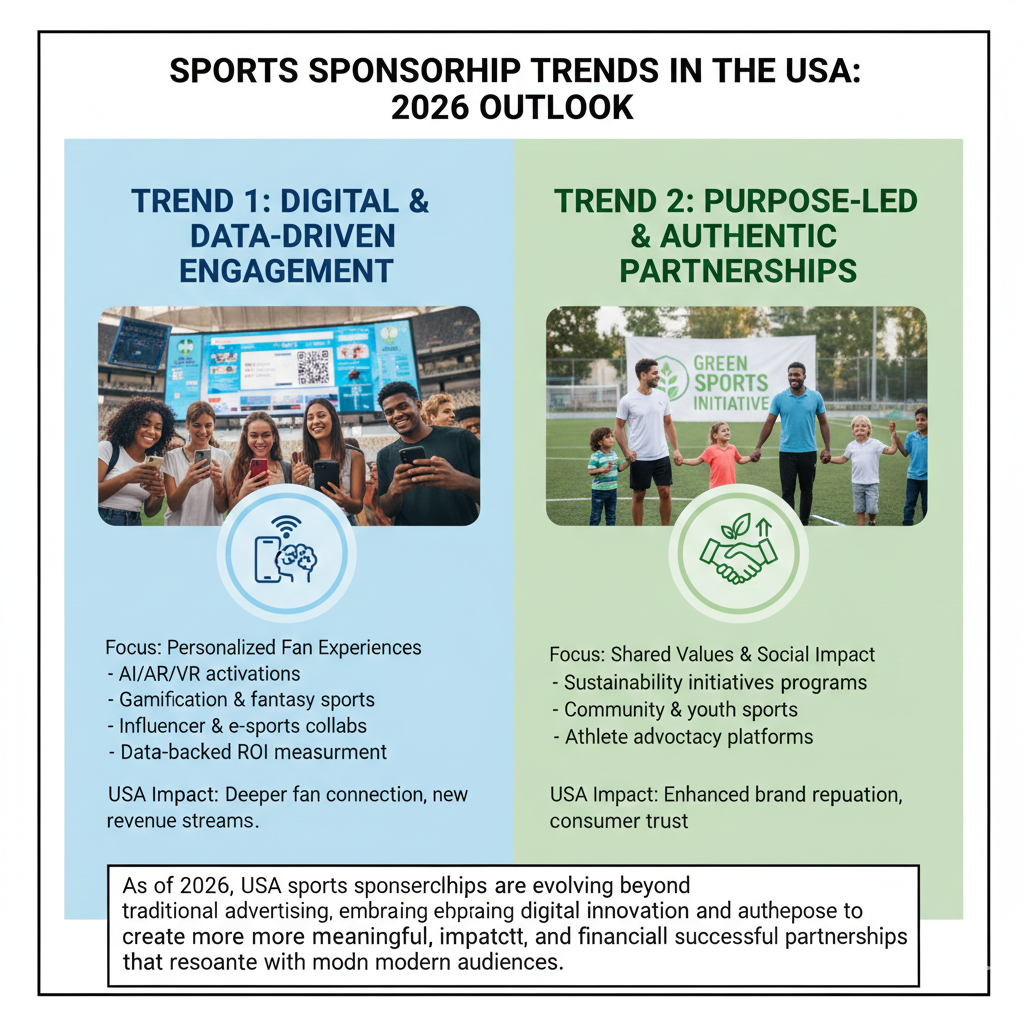
The playing field of sports sponsorship in the United States is shifting beneath our feet. Gone are the days when a logo slapped on a jersey or a stadium billboard was enough to capture fan attention. As we move deeper into 2026, the intersection of technology, culture, and consumer behavior is rewriting the rules of engagement between brands and sports properties.
For fans, this means more immersive experiences. For analysts, it signals a move toward rigorous data-driven strategies. And for brands, it represents a critical pivot point: adapt to the digital-first reality or risk being benched. This guide explores how the landscape is evolving, why the old playbook no longer works, and what trends are defining the future of sports sponsorship in the USA.
What Is Sports Sponsorship?
At its core, sports sponsorship is a marketing strategy where a brand supports an event, team, athlete, or organization financially or through products and services. In exchange, the brand gains rights to associate with the sports property for commercial advantage. This exchange has traditionally been about visibility—getting eyes on logos during live broadcasts.
However, the modern definition goes far beyond passive visibility. Today, sponsorship is a partnership aimed at achieving specific business objectives, from increasing brand awareness to driving direct sales. Common models include:
- Title Sponsorship: A brand’s name becomes part of the event or team name (e.g., the “FedEx Cup”).
- Official Partner: Brands gain exclusivity in their category (e.g., “Official Soft Drink of the NBA”).
- Technical Partner: Brands provide equipment or technology used by the team (e.g., Nike providing NFL uniforms).
In the broader context of sports marketing, sponsorship serves as the anchor. It provides the authenticity and emotional connection that standard advertising often lacks. When a fan cheers for their team, some of that goodwill transfers to the sponsor, creating a halo effect that is difficult to replicate in other industries.
Why Sports Sponsorship Is Changing in 2026
The shift in 2026 isn’t sudden; it’s the culmination of a decade-long transformation in how we consume entertainment. Two primary drivers are pushing this change: the rise of digital-first fan engagement and the fragmentation of media consumption.
First, fans are no longer just spectators; they are participants. They engage with teams on social media, play fantasy sports, and interact with second-screen experiences during games. A static banner ad cannot compete with a personalized notification on a smartphone. Consequently, sponsors must find ways to integrate into these active digital conversations rather than just interrupting them.
Second, the monopoly of cable television has shattered. Cord-cutting has led to a landscape where live sports are streamed across various platforms like Amazon Prime, Apple TV+, and Peacock, alongside traditional networks. This fragmentation means audiences are scattered. A sponsorship strategy that relies solely on linear TV exposure will miss a significant chunk of the fanbase, particularly younger demographics who may never sign up for a cable package. Brands are forced to diversify their approach, ensuring they are visible wherever the fan chooses to watch.
Top Sports Sponsorship Trends in the USA
As the industry adapts to these structural changes, several key trends have emerged as dominant forces in 2026.
Athlete-Led Brand Partnerships
The power dynamic has shifted from teams to individuals. Athletes are now media companies in their own right, often boasting social media followings that dwarf the teams they play for. This has led to a surge in athlete-led partnerships where brands collaborate directly with players to create content.
These partnerships leverage the authentic voice of the athlete. When a basketball star shares their training routine using a specific hydration product, it feels like a personal recommendation rather than a corporate ad. This trend is particularly potent on platforms like TikTok and Instagram, where authenticity drives algorithm engagement. Brands are investing in these personal relationships because they offer a direct line to niche communities that broad team sponsorships might miss.
Data-Driven Sponsorship Decisions
Gut feeling is no longer a viable strategy. In 2026, sponsorship decisions are backed by sophisticated data analytics. Brands demand hard evidence that their investment will yield returns before signing the contract.
This involves analyzing fan demographics, purchasing behaviors, and engagement rates with granular precision. Advanced metrics allow brands to predict how a specific sponsorship asset—like a courtside digital sign versus a social media campaign—will perform. This shift ensures that marketing budgets are optimized, reducing waste and focusing resources on channels that provenly drive engagement.
Streaming and Digital Platform Integration
With live sports migrating to streaming services, sponsorship visibility has had to evolve. Digital platforms offer capabilities that traditional TV cannot, such as interactive ads and shoppable content.
Sponsors are now integrating directly into the user interface of streaming platforms. For example, a “presented by” feature might allow viewers to toggle different camera angles or access advanced stats overlays during a game. This integration provides value to the viewer, making the brand a facilitator of a better viewing experience rather than a distraction.
Experiential Fan Engagement
Passive viewership is out; active participation is in. Brands are focusing on experiential marketing that brings fans closer to the action. This could be physical pop-up events at stadiums or digital experiences that gamify fandom.
Interactive campaigns might involve prediction games where fans guess the next play for a chance to win prizes, or VR experiences that let fans “sit” in the best seats in the house from their living room. These experiences create memories associated with the brand, fostering deeper loyalty than a simple logo placement ever could.
Values-Based Sponsorships
Modern consumers, particularly Gen Z and Millennials, expect brands to stand for something. Consequently, sponsorships are increasingly aligning with values such as sustainability, diversity, and social responsibility.
Brands are vetting sports properties to ensure their values align. A company focused on environmental sustainability might partner with a stadium to install solar panels or reduce plastic waste, turning the sponsorship into a tangible demonstration of their corporate mission. This alignment builds trust and resonates with fans who prioritize ethical consumption.
Role of Technology in Modern Sponsorships
Technology is the engine room of modern sponsorship, powering everything from valuation to execution.
AI Analytics and Audience Targeting: Artificial Intelligence is revolutionizing how sponsorships are measured and targeted. AI algorithms can scan thousands of hours of broadcast footage to calculate the exact screen time and quality of brand exposure. Furthermore, AI helps in audience segmentation, identifying micro-communities within a fanbase that are most likely to respond to specific messages.
Augmented and Virtual Experiences: Augmented Reality (AR) and Virtual Reality (VR) are blurring the lines between the physical and digital worlds. AR filters allow fans to virtually try on merchandise or paint their faces in team colors via social media. In stadiums, AR can overlay stats on the field when viewed through a phone camera. These technologies provide novel ways for sponsors to interact with fans, creating “shareable moments” that extend the brand’s reach beyond the venue.
Growth of Niche and Emerging Sports Sponsorships
While the “Big Four” leagues remain giants, smart money is increasingly flowing toward niche and emerging sports.
Esports and Alternative Leagues: Esports has cemented its status as a major player, attracting a demographic that is notoriously difficult to reach through traditional media. Brands are sponsoring tournaments, teams, and even individual streamers. Similarly, alternative leagues like pickleball or drone racing offer lower entry costs and highly engaged, specific audiences, providing high ROI for brands willing to experiment.
Women’s Sports Expansion: The growth of women’s sports is arguably the most significant trend of the decade. Viewership records are being smashed regularly in the WNBA and NWSL. Brands have realized that women’s sports offer incredible value—passionate fanbases, inspiring athlete stories, and a clear signal of support for gender equality. Sponsorship investment here is no longer a charity play; it is a savvy business decision.
Local vs Global Sponsorship Strategies
Sponsorship strategies are becoming bifurcated, often split between hyper-local engagement and massive global reach.
Regional Fan Targeting: For brands with a specific geographic focus, local sponsorships remain vital. Partnering with a minor league baseball team or a college program allows for deep community integration. These sponsorships often feel more personal and tangible to fans, driving local foot traffic and sales.
International Brand Exposure: Conversely, major U.S. leagues are expanding their global footprint, playing games in Europe, Mexico, and beyond. Sponsors of teams like the NFL’s Chiefs or the NBA’s Warriors gain exposure not just in American cities, but in markets across the globe. This allows multinational brands to use a single partnership to drive awareness in multiple countries simultaneously.
Sponsorship Trends Across Major U.S. Leagues
The application of these trends varies across the major American sports landscapes.
- NFL: The NFL continues to dominate, but its sponsorship strategy is evolving toward deeper integration with betting partners and tech firms. The league is utilizing its massive data capabilities to offer partners unprecedented insights into fan behavior.
- NBA: The NBA leads the way in social media and global reach. Sponsorships here are heavily focused on digital content and fashion, leveraging the league’s cultural influence.
- MLB: Baseball is leaning into tradition while modernizing the in-stadium experience. Sponsorships often focus on nostalgia and family experiences, alongside new tech implementations like jersey patch ads.
- NHL: The NHL has embraced digital board advertisements (Digitally Enhanced Dasherboards), allowing different ads to be shown on the broadcast than are seen in the arena, and even targeting specific ads to different broadcast regions.
- College Sports and NIL: The Name, Image, and Likeness (NIL) revolution has transformed college sports. Local car dealerships and national brands alike are now sponsoring college athletes directly, creating a chaotic but lucrative new market that bridges the gap between amateur and professional sponsorship models.
Challenges Facing Sports Sponsors
Despite the opportunities, the road ahead is paved with challenges.
Audience Fragmentation: As mentioned, finding the audience is harder than ever. A sponsor can no longer buy a Super Bowl ad and call it a day. They must manage a portfolio of assets across TV, streaming, social media, and physical events. This complexity requires more resources and sophisticated management.
Measuring True ROI: While data has improved, attributing a specific sale to a sports sponsorship remains difficult. Did the customer buy the shoes because they saw the logo on the court, or because of a separate Instagram ad? Separating the signal from the noise to determine the true Return on Investment is an ongoing struggle for marketing teams.
How Brands Measure Sponsorship Success
To combat these challenges, measurement methodologies have become more rigorous.
Engagement Metrics: Vanity metrics like “impressions” are taking a backseat to engagement metrics. Brands care more about shares, comments, clicks, and time spent interacting with content. These indicators demonstrate active interest rather than passive exposure.
Brand Awareness and Conversion Tracking: Surveys and brand lift studies remain important for measuring shifts in perception. However, brands are increasingly linking sponsorship to direct conversion. This might involve tracking the usage of specific promo codes distributed during a game or analyzing website traffic spikes immediately following a sponsored segment. The goal is to draw a straight line between the sponsorship dollar and the revenue generated.
Future Outlook for Sports Sponsorship
Looking beyond 2026, the trajectory points toward a seamless integration of digital and physical realities.
Personalized Fan Experiences: We are moving toward a future where every fan sees a different sponsorship message. Through connected TVs and personal devices, a fan interested in travel might see an airline ad on the virtual sideline boards, while a fan interested in tech sees a software ad in the same spot.
Integrated Digital Ecosystems: Sponsorships will become part of broader digital ecosystems. A fan might buy a digital collectable (NFT) from a team, which grants them access to a private Discord channel sponsored by a brand, where they can unlock discounts for physical merchandise. The lines between the sponsor, the team, and the platform will dissolve into a unified fan experience.
FAQs – Sports Sponsorship Trends in 2026
What are the biggest sports sponsorship trends today?
The biggest trends include the rise of athlete-led partnerships, rigorous data-driven decision-making, the integration of sponsors into streaming platforms, and a focus on experiential and values-based marketing.
Are digital sponsorships replacing traditional ads?
Not entirely, but they are overtaking them in importance. While traditional stadium signage and TV spots still exist, budgets are shifting heavily toward digital, social, and interactive media where engagement can be better tracked.
How do brands measure sponsorship ROI?
Brands use a mix of engagement metrics (likes, shares), direct conversion tracking (promo codes, sales data), and advanced media valuation tools powered by AI to assess the quality and impact of brand exposure.
Why are athlete partnerships growing?
Athletes often have higher engagement rates and more authentic connections with fans than teams do. Partnering with athletes allows brands to tap into specific, loyal communities on social media platforms.
Will smaller sports attract more sponsors?
Yes. Niche sports and women’s leagues are attracting more sponsors because they offer lower entry costs and highly engaged, specific audiences that are often priced out of major league inventory.
Leave a Reply