

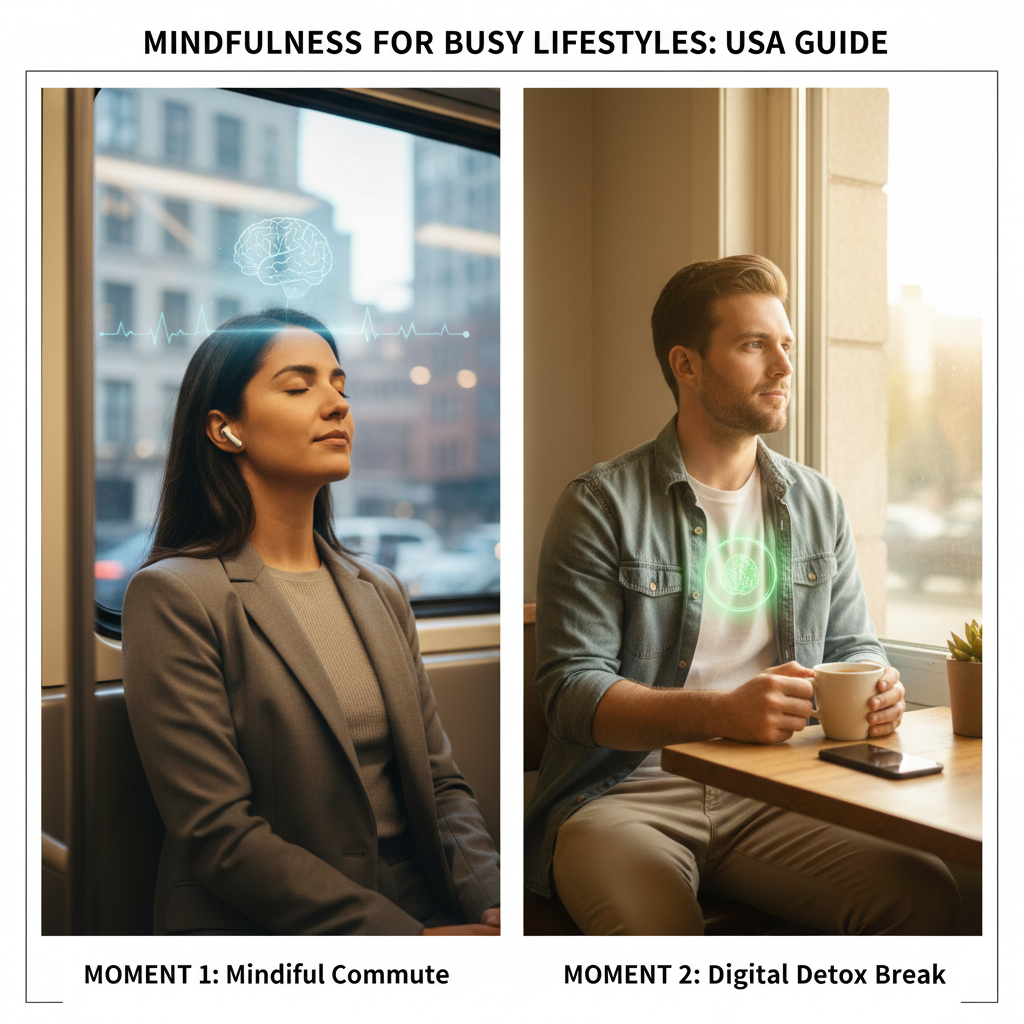
Between endless notifications, traffic jams, 60-hour work weeks, and the pressure to “have it all,” modern life in the United States often feels like a race without a finish line. We rush from one task to the next, our minds constantly cycling through to-do lists, worries, and regrets. We are physically present but mentally miles away.
This constant state of “doing” rather than “being” has a cost. Stress levels are soaring, sleep is elusive, and burnout is becoming a national epidemic. We crave peace, yet we convince ourselves we don’t have time for it.
But what if finding calm didn’t require a silent retreat in the mountains or an hour of sitting cross-legged on a cushion? What if you could integrate peace into the very chaos you are trying to escape? This is the promise of mindfulness—a practical, accessible tool that fits into even the most jam-packed schedules. It isn’t about emptying your mind; it’s about paying attention to your life as it happens, one breath at a time.
What Is Mindfulness?
At its core, mindfulness is the quality of being present and fully engaged with whatever we are doing at the moment—free from distraction or judgment, and aware of our thoughts and feelings without getting caught up in them.
Think of it as training a muscle. Just as you go to the gym to strengthen your body, you practice mindfulness to strengthen your ability to focus and regulate your emotions. It is a simple concept, yet maintaining it amidst the noise of daily life can be challenging.
Mindfulness vs. Meditation
These two terms are often used interchangeably, but they aren’t quite the same. Meditation is a formal practice—a specific time set aside to train the mind, often involving sitting quietly and focusing on the breath or a mantra.
Mindfulness, on the other hand, is a way of living. While meditation is a tool to cultivate mindfulness, you can be mindful without ever sitting on a meditation cushion. You can be mindful while washing dishes, driving to work, or listening to a friend. Meditation is the practice; mindfulness is the application.
Why Mindfulness Matters in Busy Lifestyles
The American lifestyle is synonymous with hustle. We value productivity and efficiency, often at the expense of our well-being. This relentless pace has consequences.
Stress and Burnout in the USA
Recent surveys by the American Psychological Association consistently show that Americans are experiencing high levels of stress. The pressure to perform at work, manage household responsibilities, and maintain social connections leaves little room for downtime. This chronic stress leads to burnout—a state of emotional, physical, and mental exhaustion caused by excessive and prolonged stress.
Mental Overload and Constant Distractions
Our brains are not designed for the constant barrage of information we face daily. From social media feeds to 24-hour news cycles, we are in a state of continuous partial attention. This mental overload fragments our focus, kills our creativity, and elevates our anxiety. Mindfulness offers an antidote. By training our attention to return to the present moment, we can cut through the noise and reclaim our mental space.
Common Barriers to Mindfulness
If mindfulness is so beneficial, why aren’t we all doing it? Several barriers often stand in the way, particularly for those with demanding schedules.
Lack of Time
“I’m too busy” is the most common reason people give for not practicing mindfulness. When your calendar is double-booked, adding another activity feels impossible. However, mindfulness doesn’t have to take extra time; it transforms the time you are already spending.
Misconceptions About Meditation
Many people believe mindfulness requires clearing your mind of all thoughts—an intimidating and frankly impossible goal for most. This misconception leads to frustration. When thoughts inevitably intrude, people feel like they are “failing” and give up. Real mindfulness is simply noticing that your mind has wandered and gently bringing it back.
Inconsistent Routines
Building a new habit is hard, especially when your schedule changes daily. Without a consistent routine, mindfulness practice often falls to the bottom of the priority list, forgotten until stress levels hit a breaking point.
Mindfulness Practices That Fit Busy Schedules
You don’t need an hour of silence to reap the benefits of mindfulness. Here are practical ways to weave it into a busy day.
Mindful Breathing (1–5 Minutes)
Your breath is a portable anchor. It is always with you, making it the perfect tool for a quick reset.
- Box Breathing: Inhale for a count of four, hold for four, exhale for four, and hold for four. Repeat for a few cycles. This technique is used by Navy SEALs to stay calm under pressure.
- The 4-7-8 Technique: Inhale quietly through the nose for 4 seconds, hold the breath for 7 seconds, and exhale forcefully through the mouth for 8 seconds. This acts as a natural tranquilizer for the nervous system.
Mindfulness During Daily Activities
Turn mundane tasks into mindfulness rituals.
- Mindful Eating: Instead of inhaling your lunch while answering emails, take five minutes to just eat. Notice the colors, textures, and flavors of your food. Chew slowly. You might find you enjoy your food more and feel satisfied with less.
- Mindful Walking: Whether you’re walking to the subway or just to the mailbox, pay attention to the sensation of your feet hitting the ground. Feel the air on your skin. Notice the sights and sounds around you.
- Commuting: Instead of fuming in traffic or scrolling on your phone, use your commute to practice presence. Turn off the radio and focus on your breath, or listen to the sounds of the city with curiosity rather than annoyance.
Micro-Meditations
You don’t need twenty minutes. Try “micro-meditations” throughout the day.
- The Stop Sign Practice: Whenever you hit a red light or see a stop sign, take a deep breath and check in with your body. Drop your shoulders, unclench your jaw, and relax your grip on the steering wheel.
- Doorway Trigger: Every time you walk through a doorway, use it as a cue to take one conscious breath and reset your intention for the next room or task.
Digital Mindfulness
Our devices are major sources of stress.
- Turn Off Non-Essential Notifications: reclaim your attention by silencing the pings and buzzes that don’t require immediate action.
- Single-Tasking: Resist the urge to keep twenty tabs open. Focus on one digital task at a time.
- Social Media Boundaries: Set specific times to check social media rather than mindlessly scrolling whenever you have a free second.
Mindfulness at Work
The workplace is often where we need mindfulness the most.
Focused Task Transitions
Multitasking is a myth; we are actually just switch-tasking, which drains energy and lowers IQ. Instead, practice mindful transitions. When you finish one task, take a moment to pause. Close the file, take a deep breath, and acknowledge the completion before intentionally moving to the next item.
Reducing Workplace Stress
When a stressful email lands or a deadline looms, our body’s “fight or flight” response kicks in. Mindfulness creates a buffer between the stimulus and your reaction. Before firing off an angry reply, take three deep breaths. This brief pause allows your rational brain to catch up with your emotional brain, leading to better decision-making and professional relationships.
Mindfulness for Mental and Emotional Health
Beyond productivity, mindfulness is a powerful tool for emotional regulation.
Emotional Awareness
Busyness is often a way to avoid difficult feelings. We stay moving so we don’t have to feel. Mindfulness encourages us to turn toward our emotions with curiosity. Instead of suppressing anxiety or frustration, we acknowledge it: “I am feeling anxious right now.” Naming the emotion can often reduce its intensity.
Stress Response Regulation
Chronic stress keeps our bodies in a state of high alert, flooding our system with cortisol. Mindfulness activates the parasympathetic nervous system—the “rest and digest” mode. Regular practice helps lower baseline stress levels, making us more resilient when challenges arise.
Physical Benefits of Mindfulness
The mind-body connection is undeniable. When we calm the mind, the body follows.
Improved Sleep Quality
A racing mind is the enemy of sleep. Mindfulness practices, particularly body scans (where you mentally check in with each part of your body from toe to head), can help quiet the mental chatter and relax physical tension, paving the way for restful sleep.
Reduced Tension and Fatigue
We often hold stress physically—tight shoulders, clenched jaws, shallow breathing. Mindfulness brings awareness to these physical patterns. By noticing tension early, we can consciously release it, preventing the physical fatigue that comes from holding our bodies in a state of readiness all day.
Mindfulness Tools and Apps
Technology, often the source of distraction, can also be a solution.
Guided Sessions
Apps like Headspace, Calm, and Insight Timer offer guided meditations ranging from one minute to one hour. These are excellent for beginners, providing structure and instruction. Many apps have specific tracks for commuting, work breaks, or falling asleep.
Habit Reminders
Use your phone to support your practice. Set a recurring alarm or calendar notification for a “mindful minute.” There are also browser extensions that remind you to take a deep breath or drink water periodically while working.
How to Build a Sustainable Mindfulness Habit
The key to mindfulness isn’t intensity; it’s consistency.
Start Small and Stay Consistent
Don’t aim for thirty minutes of meditation on day one. Start with two minutes. It is better to practice for two minutes every day than for thirty minutes once a week. Success builds momentum.
Habit Stacking Techniques
Attach your new mindfulness habit to an existing one. This is called “habit stacking.”
- “After I pour my coffee, I will take three deep breaths.”
- “After I brush my teeth, I will do a one-minute body scan.”
- “When I sit at my desk, I will set an intention for the day.”
Mindfulness Myths to Avoid
Don’t let these misconceptions derail your progress.
“No Time” Misconception
We have time for what we prioritize. If you have time to scroll through Instagram for ten minutes, you have time to be mindful. Remember, mindfulness can happen while you are doing other things. It returns time to you by making you more focused and efficient.
Perfection Mindset
There is no “perfect” mindfulness session. Some days your mind will be chaotic; other days it will be calm. Both are part of the practice. The goal isn’t to stop thinking; it’s to change your relationship with your thoughts. If you notice your mind wandering a hundred times, and you bring it back a hundred times, that is a successful session.
Who Benefits Most from Mindfulness Practices?
While everyone can benefit, certain groups may find it particularly transformative.
Professionals and Parents
For those juggling high-pressure careers and family life, mindfulness offers a way to be present for both. It helps parents respond to their children with patience rather than reactivity, and helps professionals manage high-stakes decisions with clarity.
Students and Caregivers
Students facing academic pressure use mindfulness to improve concentration and test anxiety. Caregivers, who often pour all their energy into others, use mindfulness as a form of critical self-care to prevent compassion fatigue.
Reclaiming Your Life, One Moment at a Time
Mindfulness is not a magic pill that will erase your to-do list or eliminate traffic. But it changes how you relate to the chaos. It allows you to step off the hamster wheel, even if just for a few seconds, and breathe. It gives you the choice to respond rather than react.
In a world that demands we go faster, mindfulness is the radical act of slowing down internally so we can move through the world with greater intention and ease. Start today. Take one conscious breath. Notice where you are. Welcome to the present moment—it’s the only place where life actually happens.
FAQs – Mindfulness for Busy Lifestyles
Can mindfulness work if I’m always busy?
Absolutely. In fact, busy people often see the most significant benefits. Mindfulness techniques like mindful breathing or mindful walking are designed to be integrated into a busy schedule, not added on top of it.
How long does mindfulness take to be effective?
You can feel the immediate effects of a deep breath in seconds. For long-term changes in stress reduction and focus, consistency matters more than duration. Many studies suggest that even 10-15 minutes a day can lead to measurable changes in the brain after eight weeks.
Is meditation required for mindfulness?
No. Meditation is a formal training ground for mindfulness, but you can live mindfully without ever meditating formally. Paying full attention to your daily tasks is a form of mindfulness practice.
Can mindfulness reduce anxiety and stress?
Yes. Extensive research shows that mindfulness reduces cortisol levels and helps regulate the nervous system, making it an effective tool for managing anxiety and chronic stress.
How do I stay consistent with mindfulness?
Start with tiny, manageable goals (like 1 minute a day). Use habit stacking to anchor the practice to something you already do. Be kind to yourself when you miss a day—just start again the next day.
Leave a Reply