

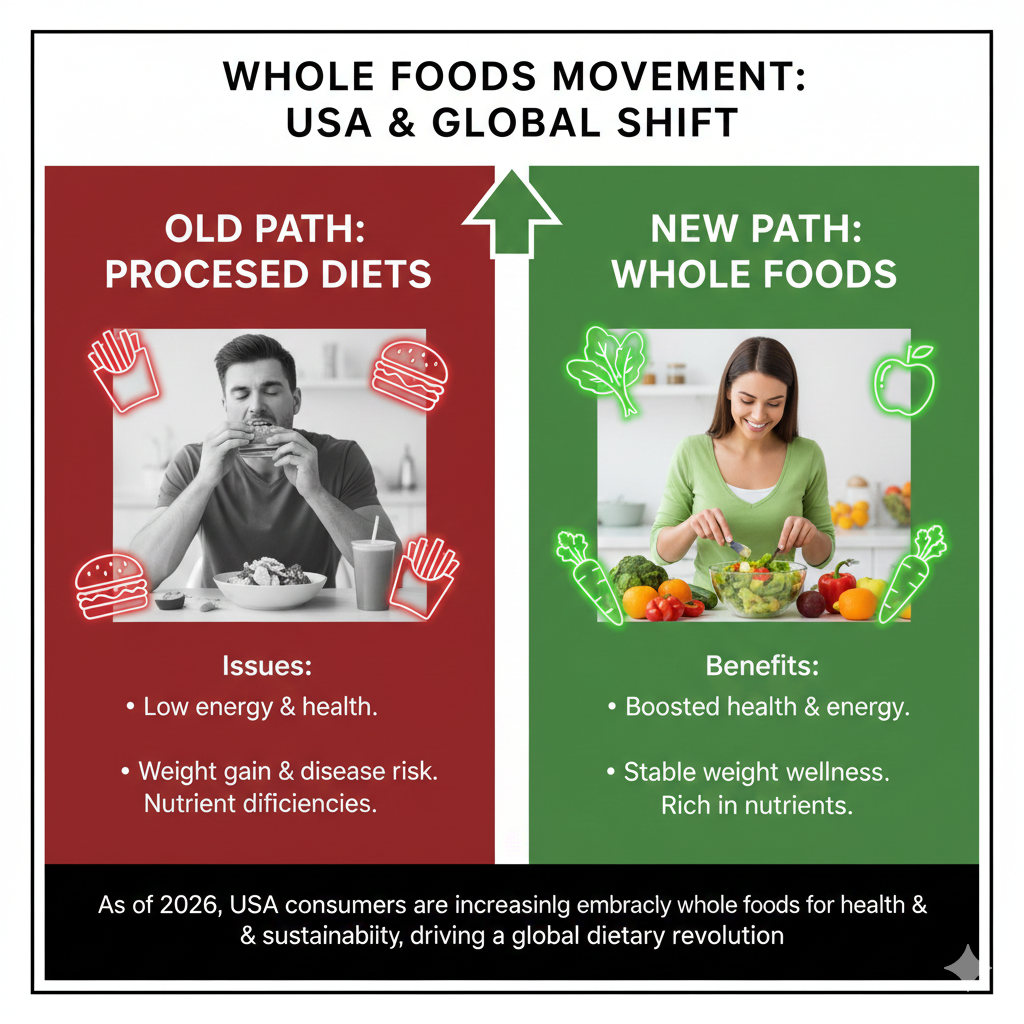
Walking through a grocery store ten years ago felt different. The middle aisles—packed with colorful boxes of sugary cereals, frozen dinners, and snacks with unpronounceable ingredients—dominated the landscape. Today, the perimeter of the store is expanding. Produce sections are larger, bulk bins for grains and nuts are more common, and even the packaged goods aisle is seeing a makeover with “clean label” claims.
This isn’t just a change in store layout; it reflects a massive shift in how the world eats. From the bustling farmers markets of California to the health-conscious cafes of Sydney and London, people are increasingly turning away from ultra-processed options and embracing whole foods. It’s a return to basics, driven by a desire for better health, transparency, and a deeper connection to what we put in our bodies.
This movement goes beyond a temporary diet fad. It represents a fundamental change in lifestyle and consumer behavior, with the United States often serving as a key indicator of these evolving trends.
What Are Whole Foods?
At its core, the concept of whole foods is simple. These are foods that have been processed or refined as little as possible and are free from additives or other artificial substances. Think of an apple versus apple juice, or a baked potato versus potato chips.
Whole foods are typically single-ingredient items. They are the ingredients themselves, rather than products made from ingredients. This category includes fresh fruits and vegetables, whole grains like brown rice and quinoa, legumes, nuts, seeds, and animal proteins like fish, eggs, and unprocessed meats.
Whole foods vs ultra-processed foods
The distinction between whole and ultra-processed foods is the defining line of this movement. Ultra-processed foods (UPFs) are industrial formulations. They are often cheap, convenient, and hyper-palatable, designed to have a long shelf life. However, they frequently contain high levels of added sugars, unhealthy fats, and sodium, while lacking fiber and essential micronutrients.
When you eat a whole food, you are consuming the food in its natural matrix. The fiber, vitamins, and minerals are intact and work together. When you eat a UPF, that matrix has been destroyed or altered, often leading to different metabolic effects on the body. The shift toward whole foods is essentially a rejection of this industrialization of our diet.
Why Whole Foods Are Becoming Popular Worldwide
The rise of whole foods isn’t isolated to one region; it is a global phenomenon. Information travels faster than ever, and health trends that start in one country quickly cross borders.
One of the primary drivers is a heightened focus on preventative health. After years of rising chronic disease rates related to diet—such as type 2 diabetes and heart disease—many people are looking for ways to take control of their well-being. There is a growing consensus among nutrition experts and the public alike that diet quality matters more than calorie counting alone.
Furthermore, there is a collective fatigue with complex dieting rules. People are tired of tracking macros or cutting out entire food groups based on the latest fad. Whole foods offer a refreshing simplicity. You don’t need an app to understand an orange or a piece of salmon. This desire for simple, recognizable ingredients is reshaping food culture globally.
Growth of Whole Food Eating in the USA
The United States has historically been the epicenter of the processed food industry, but it is now also leading the charge in the opposite direction. American grocery habits are changing visibly.
According to recent consumer reports, shoppers are spending more time in the fresh produce, meat, and seafood departments. There is a noticeable decline in the sales of traditional sugary beverages and packaged snacks in favor of healthier alternatives like sparkling water, nuts, and dried fruit.
The rise of clean-label products
Even within the packaged food sector, the “clean label” trend is booming. American consumers are flipping packages over to read the ingredient list. They are looking for short lists with names they recognize—sugar, flour, and butter—rather than high-fructose corn syrup, artificial dyes, and preservatives.
Major U.S. food brands are taking note. Many are reformulating iconic products to remove artificial ingredients or launching entirely new lines that cater to the whole-food consumer. This shift suggests that the demand for real food is not just a niche market for the wealthy, but a broader expectation across the country.
Key Drivers Behind the Whole Food Movement
Several interconnected factors are fueling this transition. It is rarely just one thing that changes a global habit; rather, it is a combination of health, environmental, and social motivations.
Health and Wellness Trends
The modern wellness industry has moved beyond weight loss as the sole metric of success. Today, the focus is on energy levels, digestive health, mental clarity, and longevity. Consumers are realizing that food is fuel.
People report feeling better when they minimize processed foods. They experience fewer energy crashes, better digestion, and improved mood. This positive reinforcement loop keeps people committed to a whole-food lifestyle. It shifts the narrative from “I can’t eat that because it’s bad” to “I choose to eat this because it makes me feel good.”
Consumer Awareness of Food Labels
Transparency is non-negotiable for the modern shopper. Documentaries, books, and social media influencers have shed light on the food industry’s practices, leading to a more skeptical and informed public.
Shoppers now understand that “low fat” might mean “high sugar,” and “natural” doesn’t always mean healthy. This scrutiny drives the demand for whole foods because they offer the ultimate transparency. A banana doesn’t need an ingredient label to explain what it is.
Sustainability and Environmental Concerns
Planetary health is increasingly linked to personal health. Ultra-processed foods often require significant energy to produce, package, and transport. They rely heavily on industrial agriculture monocultures, such as corn and soy.
Whole foods, particularly plant-based ones, are often perceived as more sustainable. They generally require less packaging and processing energy. Many consumers are choosing whole foods not just for their bodies, but to reduce their environmental footprint. The “farm-to-table” concept has gone from a restaurant trend to a household value.
Cultural Shift Toward Home Cooking
The past few years saw a resurgence in home cooking, partly due to global events keeping people indoors. This forced many to relearn the basics of meal preparation.
When you cook from scratch, you naturally lean toward whole ingredients. You buy onions, garlic, raw chicken, and rice rather than a frozen stir-fry kit. This reconnection with the kitchen has demystified cooking and shown people that preparing real food doesn’t have to be complicated or time-consuming.
Common Whole Foods in Modern Diets
The modern whole-food pantry looks colorful and diverse. It isn’t just about salads; it’s about incorporating nutrient-dense foods into every meal.
Fruits and vegetables remain the cornerstone. However, the variety has expanded. Kale, avocados, and berries are staples, but shoppers are also exploring exotic fruits, fermented vegetables like sauerkraut, and a wider array of leafy greens.
Whole grains and legumes have seen a massive revival. Oats, quinoa, brown rice, lentils, and chickpeas are prized for their fiber content and versatility. They are affordable, shelf-stable, and filling, making them accessible to a wide range of budgets.
Nuts, seeds, and lean proteins round out the diet. Almonds, walnuts, chia seeds, and flaxseeds are popular toppings and snacks. In terms of protein, there is a strong preference for responsibly sourced fish, poultry, and grass-fed meats, as well as plant-based proteins like tofu and tempeh.
Whole Foods vs Diet Trends
It is important to distinguish the whole food movement from the cycle of diet trends. Fads tend to be restrictive and short-lived. They might demonize carbohydrates one year and fats the next.
Whole food eating is different because it is about inclusion, not exclusion. It focuses on the quality of the food rather than the macronutrient ratio. You can be vegan, keto, paleo, or omnivorous and still focus on whole foods.
This flexibility makes it sustainable long-term. It doesn’t require complex calculations or expensive supplements. It is simply a philosophy of choosing the least processed version of a food whenever possible. This “balance over restriction” mindset is why nutritionists believe this shift is here to stay.
Benefits Driving Whole Food Adoption
Why are people sticking with this change? The benefits are tangible and often immediate.
Nutrient density is the primary advantage. Whole foods are packed with vitamins, minerals, antioxidants, and fiber that are often stripped away during processing. This means you get more nutritional bang for your buck with every bite.
Stable energy levels are another major draw. Processed foods with added sugars often cause rapid spikes and drops in blood sugar, leading to the dreaded “afternoon slump.” Whole foods, rich in fiber and protein, provide a slow, steady release of energy, keeping you fueled throughout the day.
Better overall diet quality naturally occurs when you prioritize whole foods. By crowding out processed snacks with fruit or nuts, you automatically reduce your intake of added sugars, sodium, and unhealthy fats without having to obsessively count them.
Challenges of Switching to Whole Foods
Despite the benefits, transitioning to a whole-food lifestyle is not without hurdles. Acknowledging these challenges is the first step to overcoming them.
Cost perception
There is a widespread belief that eating healthy is expensive. While it is true that fresh berries and organic meats can be pricey, the foundation of a whole-food diet—beans, rice, oats, seasonal vegetables, and eggs—can be incredibly economical.
The cost issue often comes from comparing calories rather than nutrients. A bag of chips is cheaper than a bag of almonds, but the almonds are far more satiating. When consumers learn to cook with affordable staples, the cost often balances out, especially when factoring in the reduction of expensive convenience foods and potential long-term healthcare savings.
Convenience and time constraints
We live in a busy world, and processed foods sell convenience. Washing, chopping, and cooking takes time that many feel they don’t have. This is the biggest barrier for working families.
However, the market is adapting. Pre-chopped vegetables, grocery delivery services, and quick-cooking whole grains are making it easier. Furthermore, the concept of “meal prepping”—cooking large batches of food on weekends—has become a popular strategy to make whole-food eating viable during a hectic work week.
Food Industry Response to Whole Food Demand
The food industry is not ignoring this shift. They follow the money, and the money is moving toward real food.
Product reformulation is happening across the board. Cereal brands are reducing sugar. Soup companies are removing excessive sodium. Bread manufacturers are using whole grains instead of refined flour.
Natural ingredient marketing is also ubiquitous. Packaging now highlights what isn’t in the food (no high-fructose corn syrup, no artificial flavors) just as much as what is in it. While consumers must remain vigilant against “health-washing” (making a product sound healthier than it is), the general trend toward cleaner ingredients is a positive development for the food supply.
Whole Foods and Lifestyle Changes
Embracing whole foods often triggers a domino effect of other positive lifestyle changes. It rarely stops at dinner.
Mindful eating habits tend to develop naturally. When you eat real food, you pay more attention to hunger and fullness cues. Highly processed foods are often engineered to bypass these signals, leading to overeating. Whole foods are self-limiting; it is difficult to binge on boiled potatoes or apples in the same way one might binge on chips.
Reduced reliance on fast food is another outcome. As people get used to the taste of fresh ingredients, highly processed fast food starts to taste overly salty or artificial. The palate adjusts. A homemade meal becomes more satisfying than a drive-thru burger, changing social and spending habits in the process.
Is Whole Food Eating a Long-Term Global Shift?
Looking at the trajectory, the move toward whole foods appears to be a permanent structural change rather than a passing fad. It aligns with broader global megatrends regarding health, sustainability, and transparency.
From a trend to mainstream behavior, we are seeing whole foods enter schools, hospitals, and workplaces. The definition of a “good meal” has shifted from “large and cheap” to “fresh and nutritious.”
The future outlook suggests a continued blending of convenience and quality. Technology and food innovation will likely focus on making whole foods easier to access and prepare, rather than creating new artificial substitutes. As education around nutrition continues to improve, the demand for real, unadulterated food will likely only grow stronger.
FAQs – Whole Foods Movement
What are whole foods in simple terms?
Whole foods are foods that are as close to their natural state as possible. They have not been processed, refined, or had ingredients added to them. Examples include fresh fruits, vegetables, nuts, seeds, whole grains, fish, and eggs.
Why are whole foods becoming popular?
People are prioritizing preventative health, looking for simple ingredients they understand, and trying to avoid the negative health effects associated with ultra-processed foods. There is also a growing concern for sustainability and transparency in the food system.
Are whole foods healthier than processed foods?
generally, yes. Whole foods retain their natural fiber, vitamins, and minerals. Processed foods often strip these nutrients away and add sugar, unhealthy fats, and sodium. Eating whole foods provides more stable energy and better nutrition.
Is eating whole foods expensive?
It can be, but it doesn’t have to be. While some specialty items are pricey, staples like beans, lentils, brown rice, oats, seasonal produce, and frozen vegetables are among the most affordable foods in the grocery store.
Can busy people follow a whole-food lifestyle?
Absolutely. It requires some planning, but strategies like batch cooking, using slow cookers, and buying pre-chopped or frozen vegetables can make whole-food cooking fit into a busy schedule. Simple meals like stir-frys or sheet-pan dinners can be ready in under 30 minutes.
Making the Change for Good
The shift toward whole foods is about more than just what is on your plate; it is about reclaiming ownership of your health. It is a movement away from confusion and industrialization toward simplicity and nature.
Whether you are in New York, London, or anywhere in between, the path to better eating doesn’t require a strict diet plan or expensive supplements. It starts in the produce aisle. It starts with reading a label and choosing the option with ingredients you recognize. It starts with one real meal at a time.
By focusing on whole foods, you are investing in a way of eating that supports your body, your energy, and the planet. It is a sustainable, enjoyable approach to nutrition that is clearly here to stay.
Leave a Reply