

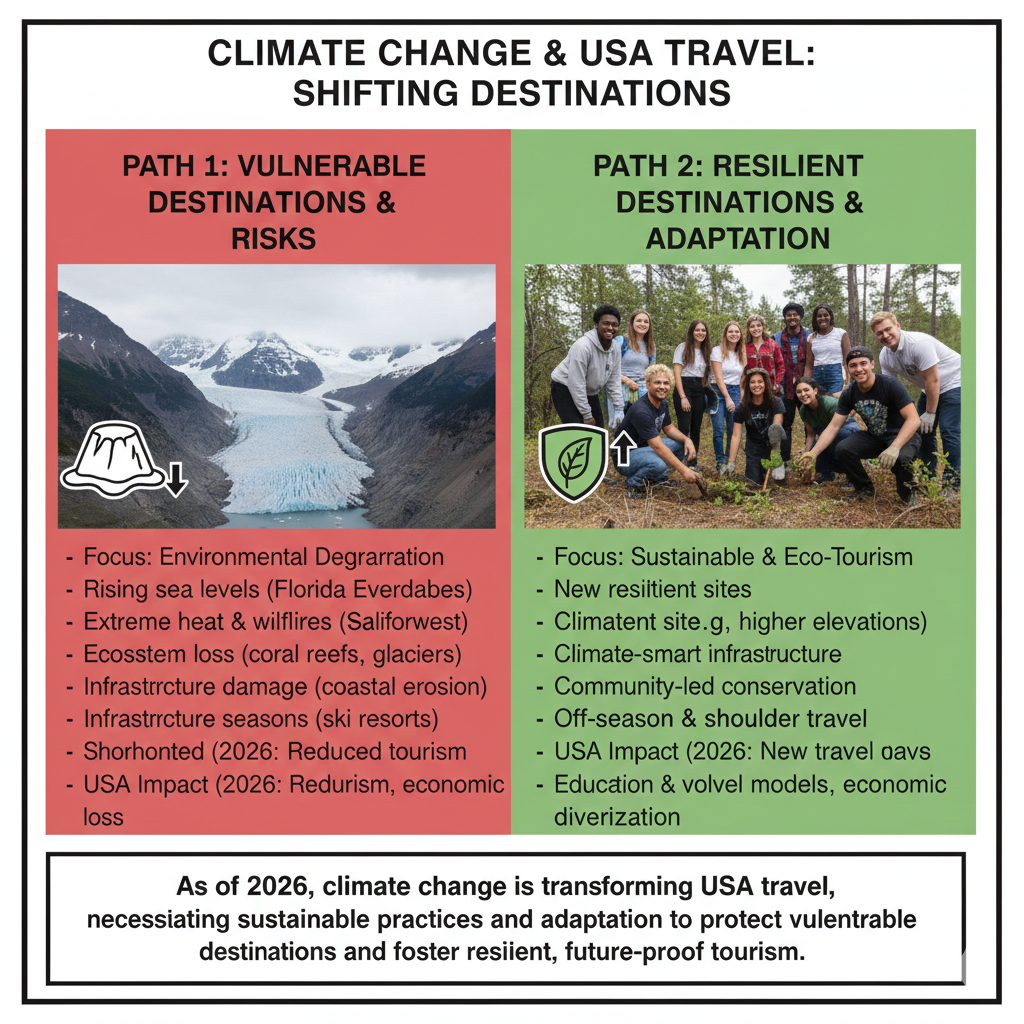
You’ve finally booked that week off work. The Out of Office auto-reply is drafted, the Slack notifications are paused, and you’re ready to recharge. But instead of the pristine beach vacation or snowy ski retreat you envisioned, you’re doom-scrolling weather apps, watching a hurricane track suspiciously close to your rental, or realizing the ski slopes are more mud than powder.
For young professionals balancing demanding careers with a desire for meaningful experiences, travel isn’t just a luxury—it’s a necessary reset. But the reliable vacations of the past are becoming harder to predict. Climate change is no longer a distant threat discussed only in scientific journals; it’s rewriting the rules of travel right here in the USA. From the timing of your PTO to the cost of your flight, environmental shifts are altering where, when, and how we explore.
Understanding these changes isn’t about giving up on travel. It’s about adapting your strategy so you can continue to see the world (and get that much-needed break) without the stress of unexpected disruptions. Here is how the changing climate is transforming American travel destinations and what you can do to stay ahead of the curve.
Why Climate Change Matters for Travel in the USA
Travel has always been a dance with the weather. You go to Florida for the sun, Vermont for the leaves, and Colorado for the snow. But that rhythm is getting erratic. Tourism depends heavily on predictable climate patterns and distinct seasons, both of which are becoming less reliable.
Across the United States, regional climates are shifting. What used to be a safe bet for sunshine might now be prone to sudden storms, and reliable winter wonderlands are facing unseasonably warm spells. For the modern traveler, this means the old playbook—booking the same trip at the same time every year—might need a rewrite.
How Climate Change Affects Travel Destinations
The impacts aren’t uniform; they vary wildly depending on where you’re headed. But three major factors are shaking up the industry nationwide.
Rising Temperatures and Heatwaves
We all love a warm getaway, but there’s a difference between “beach weather” and “heat advisory.” Rising average temperatures are making some classic summer destinations uncomfortable, or even unsafe, during peak months.
- Visitor comfort and safety: Excessive heat can turn a hiking trip into a health risk or make a city walking tour unbearable.
- Reduced peak-season appeal: Places like the Southwest or deep South, traditionally popular in early summer, are seeing tourists push their trips to cooler months to avoid triple-digit temperatures.
Extreme Weather Events
It’s not just the heat; it’s the volatility.
- Hurricanes, floods, and wildfires: These events are becoming more frequent and intense. A wildfire smoke advisory can ground flights and close national parks thousands of miles away from the flames.
- Trip disruptions: For a professional with a tight schedule, getting stranded due to a storm isn’t just an annoyance; it’s a logistical nightmare involving missed meetings and scrambled schedules.
Changing Travel Seasons
The traditional “high season” is blurring.
- Shorter peak seasons: Ski seasons are starting later and ending sooner.
- Shoulder-season growth: Conversely, the “shoulder seasons”—spring and fall—are becoming the new prime time. October is the new July in many parts of the country, offering better weather and fewer crowds, perfect for those with flexible remote work policies.
Impact on Popular U.S. Travel Destinations
Let’s look at how these macro trends are playing out in the spots you likely have on your bucket list.
Coastal and Beach Destinations
From the Outer Banks to Miami Beach, rising sea levels and stronger storm surges are causing erosion that shrinks the very beaches tourists flock to. Frequent “sunny day flooding”—where high tides cause street flooding even without rain—is becoming common in coastal cities. For travelers, this means checking hurricane forecasts is now as essential as packing sunscreen.
National Parks and Outdoor Recreation Areas
Our national parks are on the front lines. Glacier National Park is losing its namesake glaciers. Yosemite faces severe fire risks that can close the park for weeks at the height of summer. These erratic patterns make planning a national park road trip—often done months in advance—a bit of a gamble.
Ski Resorts and Winter Tourism
For winter sports enthusiasts, the window is closing. Warmer winters mean less natural snowfall and a heavier reliance on energy-intensive snowmaking. Some lower-altitude resorts in New England and the Pacific Northwest are facing existential threats, struggling to open for full seasons. This scarcity drives up prices at high-altitude resorts that still have reliable snow, making that annual ski trip a significantly pricier investment.
Effects on Outdoor and Nature-Based Tourism
If your ideal vacation involves hiking boots and trail mix, you need to be aware of the changing landscape.
Trail Closures and Park Access
Extreme weather damages infrastructure. Washouts from heavy rains can close popular trails for entire seasons. Heat domes can lead parks to shut down strenuous trails during midday hours to prevent hiker rescues. Always have a “Plan B” hike in mind.
Wildlife and Ecosystem Changes
The timing of nature is shifting. Migratory birds arrive earlier; wildflowers bloom sooner (and die off faster). If you’re traveling specifically to see fall foliage or a wildlife migration, historical data might steer you wrong. You need real-time updates now more than ever.
Economic Impact on Local Tourism Economies
When you visit a town that relies on tourism, you’re part of a delicate ecosystem.
- Revenue fluctuations: A bad fire season or a hurricane can wipe out a year’s worth of profit for local businesses, leading to closures.
- Recovery costs: Higher taxes or fees often get passed to the tourist to pay for rebuilding boardwalks, dredging beaches, or repairing storm-damaged roads.
How Travel Costs Are Affected
It’s not just your itinerary that’s changing; it’s your budget.
Insurance and Cancellation Risks
Travel insurance used to be an afterthought for domestic trips. Now, it’s a necessity. Policies that cover “Cancel for Any Reason” (CFAR) are more expensive but increasingly popular among young professionals who can’t afford to lose money on a non-refundable booking if a storm hits.
Higher Accommodation and Transportation Costs
Scarcity drives prices up. If the ski season is four weeks shorter, resorts have less time to make their money, so lift tickets cost more. If a hurricane takes half the hotels in a beach town offline, the remaining rooms will skyrocket in price.
Airline and Transportation Disruptions
Air travel is already stressful, but heat adds a new layer of complexity.
- Flight delays: Hot air is less dense, making it harder for planes to take off. In extreme heat (like we see in Phoenix or Las Vegas), flights can be grounded or weight-restricted, bumping passengers and luggage.
- Route changes: increased turbulence from shifting jet streams is making flights bumpier and occasionally longer as pilots navigate around erratic weather systems.
How the Travel Industry Is Adapting
It’s not all doom and gloom. The industry is resilient and innovating rapidly.
- Climate-resilient infrastructure: Hotels are being built to withstand stronger storms, and ski resorts are investing in summer activities like mountain biking to become year-round destinations.
- Flexible policies: The rigid cancellation policies of the past are softening. Many airlines and hotels now offer more flexibility, acknowledging that weather is out of the traveler’s control.
Rise of Sustainable and Climate-Conscious Travel
Young professionals are leading the charge in sustainable travel. It’s no longer just about seeing the world, but protecting it.
- Eco-friendly choices: Travelers are opting for LEED-certified hotels, electric vehicle rentals, and direct flights to reduce carbon footprints.
- Responsible tourism: There’s a growing trend toward “regenerative travel”—leaving a place better than you found it. This might mean participating in a beach cleanup or choosing local tour operators who prioritize conservation.
How Travelers Are Changing Their Behavior
You have the power to adapt your travel style to this new reality.
- Destination flexibility: Instead of “I must go to Napa in August,” the mindset is shifting to “I want a wine country experience when the weather is good.”
- Off-season is the new on-season: Visiting popular spots during the shoulder season isn’t just cheaper; it’s often more pleasant. You avoid the peak heat and the peak crowds.
- Cool-cations: There is a surge in interest for cooler destinations. Instead of a baking hot beach, travelers are looking at Alaska, Northern Michigan, or Maine for their summer escapes.
Role of Government and Policy
This isn’t just an individual problem. Governments are stepping in with climate adaptation plans to protect key tourist assets. This includes reinforcing coastlines, managing forest health to prevent wildfires, and offering grants to help tourism businesses weather the storms (literally).
What Climate Change Means for Future Travel
The future of travel will require a shift in mindset.
- Long-term destination shifts: Some beloved destinations may become less viable, while new, previously overlooked spots will emerge as prime vacation territory.
- Increased planning: Spontaneity is fun, but informed spontaneity is better. Checking climate predictions and having flexible bookings will become standard practice for the savvy traveler.
Adapting for Adventure
The world is changing, and our travel habits need to change with it. For the career-focused explorer, this doesn’t mean staying home. It means traveling smarter. It means embracing flexibility, investing in travel insurance, and perhaps swapping that July beach trip for an October mountain getaway. By staying informed and adaptable, you can continue to explore the incredible diversity of the U.S., while supporting the destinations that need it most.
FAQs – Climate Change and Travel Destinations
How does climate change affect travel destinations?
Climate change alters weather patterns, leading to hotter summers, shorter winters, and more frequent extreme weather events like hurricanes and wildfires. This can affect safety, comfort, and the availability of activities at popular tourist spots.
Which U.S. destinations are most impacted?
Coastal areas (like Florida and the Gulf Coast) face rising sea levels and hurricanes. Western states (like California and Arizona) struggle with extreme heat, drought, and wildfires. Ski resorts across the country are dealing with shorter, warmer winters.
Is travel becoming more expensive due to climate change?
Yes. Disruptions lead to scarcity, which drives up prices for accommodation and activities. Additionally, travelers are spending more on comprehensive travel insurance to protect their investment against weather-related cancellations.
Travel during shoulder seasons (spring and fall) to avoid peak heat and storm seasons. purchase “Cancel for Any Reason” travel insurance. Stay flexible with your dates and destinations, and monitor weather forecasts closely before and during your trip.
Will climate change permanently change tourism patterns?
It likely will. We are already seeing a shift toward “cool-cations” in northern latitudes during summer and increased travel during the spring and autumn months. Some traditional destinations may see a decline in tourism, while others will grow in popularity.
Leave a Reply