

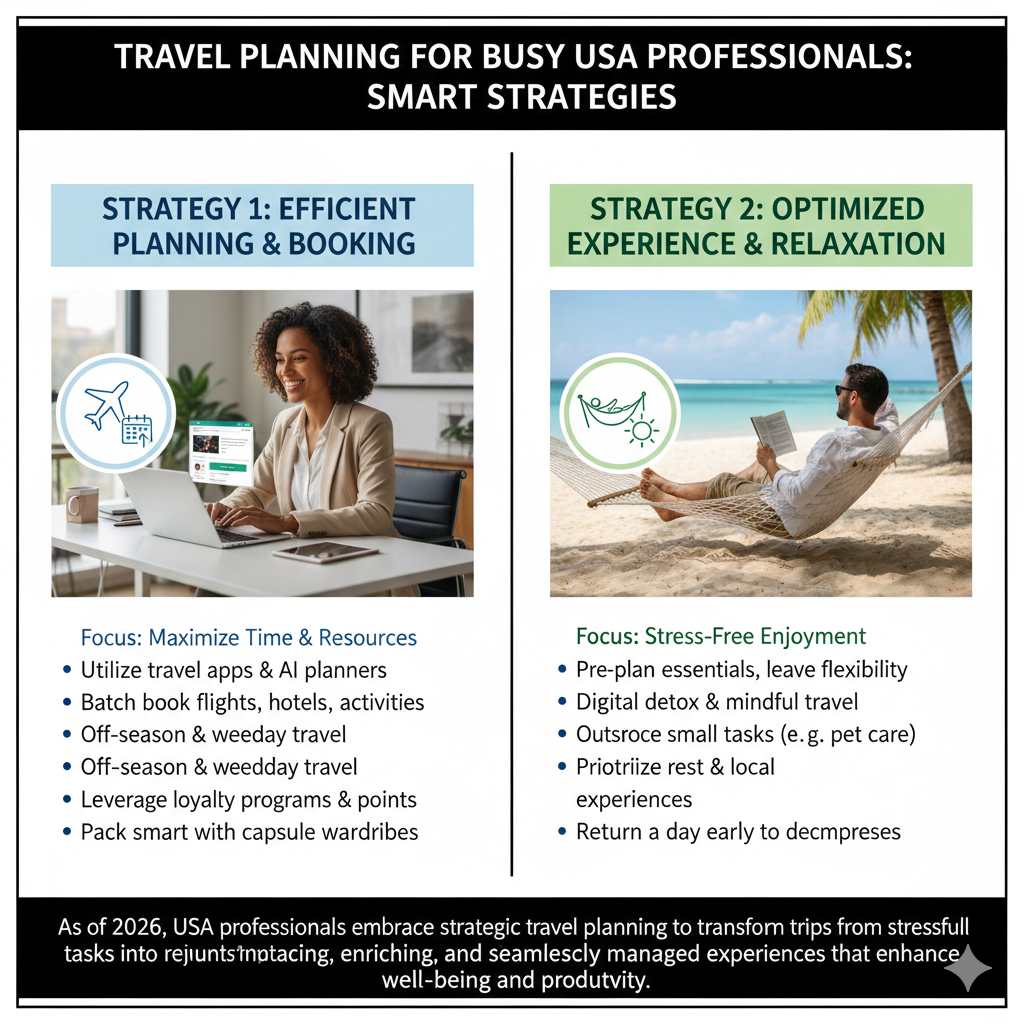
Between back-to-back meetings, project deadlines, and trying to maintain some semblance of a social life, the idea of planning a vacation can feel more like a chore than a treat. You stare at your calendar, hoping a free week will magically appear, but it rarely does. The paradox of the modern young professional is having the income to travel but lacking the time to organize it.
Yet, travel remains one of the most effective ways to reset your brain and gain fresh perspectives. It pulls you out of the daily grind and drops you into new environments that spark creativity. The challenge isn’t the desire to go; it’s the logistics of getting there. When your mental bandwidth is already maxed out, spending hours comparing flight prices or reading hotel reviews feels impossible.
This guide is designed for the high-achiever who needs a getaway but doesn’t have endless hours to plan it. We will explore how to streamline the entire process, from choosing a destination to packing your bags, ensuring your next trip happens sooner rather than later.
Why Travel Planning Is Challenging for Busy People
The biggest hurdle for busy professionals isn’t a lack of money—it’s decision fatigue. By the end of a workday filled with high-stakes choices, the last thing you want to do is decide between a boutique hotel in Austin or an Airbnb in Nashville. This limited mental bandwidth often leads to procrastination. You tell yourself you’ll look at flights “this weekend,” but the weekend comes and goes, filled with errands and recovery time.
Then there’s the pressure of last-minute decisions. As dates get closer, prices skyrocket, and availability dwindles. This creates a cycle where you feel guilty for not booking sooner, which stresses you out more, making the vacation feel less like a reward and more like another deadline you missed. Breaking this cycle requires a shift in how you approach the planning phase entirely.
What Busy Travelers Need from a Travel Plan
Efficiency and flexibility are the two pillars of successful travel for busy people. You don’t need a rigid, hour-by-hour itinerary that feels like a work schedule. You need a framework that allows you to relax without constantly checking your watch. The goal is to minimize the number of decisions you have to make while maximizing the quality of the outcome.
Instead of hunting for the “perfect” hidden gem that requires three transfers and a boat ride, prioritize accessibility and reliability. A direct flight to a major city with solid infrastructure often yields a more relaxing trip than a complicated journey to a secluded paradise. Fewer variables mean fewer things can go wrong, which is exactly what a tired brain needs.
Best Travel Planning Strategies for Busy People
Start with Clear Travel Priorities
Before you open a single browser tab, define the purpose of your trip. Are you looking to sleep for 12 hours a day and order room service? Do you want to hike and disconnect from Wi-Fi? Or are you craving the energy of a new city? Purpose-driven trip planning saves hours of aimless browsing. If you know you need relaxation, you can immediately filter out high-energy destinations like Las Vegas or New York City.
Separate your must-haves from your nice-to-haves. Maybe a gym on-site is non-negotiable for your routine, but a pool is just a bonus. Perhaps you need high-speed Wi-Fi because you’ll be checking emails, but you don’t care about a free breakfast. Knowing these constraints upfront acts as a filter, drastically reducing the number of options you need to consider.
Use All-in-One Travel Apps
Stop juggling five different apps to book one trip. Consolidation is key for speed. Platforms like Expedia, Kayak, or specialized apps like TripIt allow you to view flights, hotels, and car rentals in a single dashboard. This centralization prevents the dreaded “where did I save that confirmation number?” panic.
For itinerary management, apps like Wanderlog can automatically pull details from your email and plot them on a map. This visual aid helps you see if your plans are geographically logical without you having to open Google Maps ten times. The less friction between having an idea and booking it, the more likely you are to actually go.
Plan Shorter, High-Impact Trips
The two-week European vacation is amazing, but it requires significant planning and time off. For many US-based professionals, the “micro-trip” is a more sustainable strategy. Weekend getaways maximize your limited time off. By leaving on a Thursday evening or Friday morning and returning Sunday night, you get a substantial break without burning through your vacation days.
Focus on nearby destinations. If you live on the East Coast, the Caribbean or major cities like Montreal are just a short flight away. West Coasters have easy access to Mexico or the Pacific Northwest. Reducing travel time increases leisure time. A three-hour flight means you can be checking into your hotel by dinner, whereas a cross-country haul eats up almost two full days of a short trip.
Book Flexible Flights and Accommodations
The landscape of travel bookings has changed, and flexibility is now a standard offering rather than a luxury add-on. Look specifically for airlines that have eliminated change fees. This psychological safety net allows you to book a trip tentatively. If a work crisis pops up, you can shift the dates without losing your entire investment.
Apply this same logic to accommodations. Many hotels and third-party booking sites offer “free cancellation until 24 hours before check-in” rates. They might cost slightly more than the non-refundable option, but the stress reduction benefits are worth the premium. You buy yourself the freedom to change your mind, which is invaluable when your schedule is unpredictable.
Stick to Trusted Airlines and Hotels
Novelty is great for food and sightseeing, but for logistics, familiarity is your friend. Sticking to one airline alliance or hotel chain builds status. Status means priority boarding (no fighting for overhead bin space), potential upgrades, and dedicated customer service lines if things go wrong.
Loyalty programs also reduce surprises. If you stay at a Marriott or a Hilton, you generally know what the bed will feel like, how the Wi-Fi works, and what the check-in process entails. This predictability removes low-level anxiety. You aren’t rolling the dice on whether your boutique motel will have hot water; you know exactly what you’re paying for.
Time-Saving Booking Techniques
Leverage technology to do the monitoring for you. Tools like Google Flights allow you to track prices for specific dates and routes. You get an email when the price drops, meaning you don’t have to check every day. It automates the hunt for a deal.
Consider pre-built travel packages. Sites like Costco Travel or airline vacation portals often bundle flights, hotels, and transfers. While seasoned travelers might scoff at “packages,” they are a massive time-saver. You make one transaction, and the logistics of getting from the airport to the hotel are often handled for you. For a busy professional, that convenience is often worth more than the bragging rights of finding a “local” deal.
Smart Packing Strategies
Packing can be a major source of procrastination. The solution is a capsule packing list. Create a standardized list of essentials that stays the same for every trip: toiletries, chargers, basic layers. Keep a toiletry bag pre-packed with duplicates of your toothbrush, deodorant, and skincare. This “grab-and-go” kit means you’re halfway packed before you even open your suitcase.
Commit to carry-on–only travel. Checking a bag adds at least 30 to 60 minutes to your travel time on both ends (dropping it off and waiting at the carousel). It also eliminates the risk of lost luggage. For a 3-4 day trip, a good carry-on and a backpack are more than sufficient. It allows you to walk straight off the plane and into a cab, keeping your momentum going.
Automate and Delegate Travel Tasks
Your calendar is your command center. As soon as you book a trip, block the dates immediately. Add reminders for check-in times (usually 24 hours before flight) and for booking extraneous things like dinner reservations or airport parking.
If your budget allows, delegate the research. Credit cards like the American Express Platinum come with concierge services that can help with bookings. Alternatively, modern travel advisors (the cool, updated version of travel agents) can curate itineraries for a fee. You tell them “I want warmth, good food, and a spa, budget is $2k,” and they present you with three vetted options. It outsources the decision fatigue to an expert.
Travel Planning for Work and Personal Balance
The rise of remote work has popularized the “workcation.” This involves traveling to a new location but working standard hours during the week, saving your evenings and weekends for exploration. It allows you to extend a trip without using PTO. However, this requires careful planning regarding time zones.
If you are working East Coast hours from California, you need to be online by 6 AM. Conversely, working West Coast hours from Europe means your workday ends late at night. Ensure your accommodation has a dedicated workspace and reliable internet. Ask specifically about upload speeds if you spend your day on video calls.
Managing availability is crucial. Set clear boundaries with your team. “I am online from 9 to 5 EST, but will be unreachable after that.” This protects your exploration time and prevents work from bleeding into your entire trip.
How Busy Professionals Can Avoid Planning Mistakes
Overplanning is a common trap. You try to squeeze every monument, museum, and top-rated restaurant into 48 hours. This leads to burnout. You return from your vacation needing another vacation. Instead, plan one major activity per day and leave the rest open. This buffer time allows for spontaneity—finding a cool coffee shop or just napping if you’re jet-lagged.
Another mistake is ignoring buffer time between connections. A 45-minute layover looks efficient on paper, but if your first flight is 20 minutes late, you are sprinting through the terminal. For busy people, stress reduction is the goal. Book the 90-minute layover. Use the extra time to answer emails or grab a decent meal. It’s better to be bored at the gate than anxious on the runway.
Budgeting Without Overthinking
Money stress can ruin a trip before it starts. Set a realistic total budget, then pad it by 15-20%. This “fun fund” covers the unexpected: the surge pricing on Uber, the extra round of drinks, or the spontaneous tour.
Avoid getting bogged down in saving $5 on breakfast. Your time is valuable. If paying $20 for the hotel breakfast saves you 45 minutes of wandering around looking for a café, spend the money. Look at costs in terms of convenience and time saved. Hidden costs often appear in transport—budget for direct flights or private transfers if they save significant time and hassle.
Last-Minute Travel Planning Tips
Sometimes the urge to travel hits on a Wednesday for a Friday departure. Same-day booking apps like HotelTonight are fantastic for this. They offer unsold inventory at discounted rates. You have to be comfortable with limited choices, but the deals can be substantial.
Flexible destination planning is your best asset here. Instead of saying “I must go to Miami,” use the “Explore” feature on Google Flights or Skyscanner. Enter your home airport and leave the destination “Everywhere.” You might find that flights to Denver or Chicago are cheap and direct. Let the logistics dictate the destination.
Sustainable Travel Planning for Busy People
Efficiency often overlaps with sustainability. Direct routes burn less fuel than connecting flights. Choosing a centralized hotel and walking to dinner is greener (and healthier) than taking cabs everywhere.
Focus on fewer stops and longer stays. Instead of hopping between three cities in five days, pick one hub. You reduce your carbon footprint by minimizing transit, and you get a deeper connection with that single location. It’s a slower, more intentional way to travel that aligns perfectly with reducing stress.
Is Travel Still Worth It for Busy People?
When you look at the logistics, the cost, and the time away from your desk, you might wonder if it’s worth the hassle. The answer lies in the stress vs. reward analysis. The memories of a sunset in Santa Monica or a great meal in New Orleans last far longer than the stress of clearing your inbox before you left.
Travel functions as recovery time. It forces a break in your routine that sleeping in on a Saturday at home cannot replicate. It reminds you that there is a world outside of quarterly reports and Zoom calls. For the busy professional, travel isn’t just leisure; it’s maintenance for your high-performing self.
FAQs – Travel Planning for Busy People
How do busy people plan trips efficiently?
They focus on big wins: direct flights, central hotels, and pre-packed luggage. They use aggregated booking apps to manage logistics and prioritize relaxation over seeing “everything.”
What is the fastest way to plan a vacation?
Pick a destination based on flight convenience, not just desire. Use a travel package or a trusted travel advisor to handle the bookings in one swoop.
Are travel apps reliable for planning?
Yes, major apps like Kayak, Expedia, and TripIt are highly reliable. They centralize information, which reduces the chance of user error or lost confirmations.
How far in advance should busy people book trips?
Ideally, 1-3 months for domestic travel and 3-6 months for international. However, last-minute apps make spontaneous travel increasingly viable if you are flexible on location.
Can busy professionals travel without burnout?
Absolutely. The key is to under-schedule the itinerary. Don’t replicate the pace of your workday on your holiday. Build in downtime and prioritize sleep and good food.
Leave a Reply