

We all have that one t-shirt tucked away in a drawer—the one with a small hole or a faded logo that we just can’t bear to throw away. But eventually, spring cleaning happens, and that shirt ends up in a donation bag or, worse, the trash. In the United States alone, the average person throws away roughly 81 pounds of clothing every year. That adds up to billions of pounds of textile waste sitting in landfills, taking decades or even centuries to decompose.
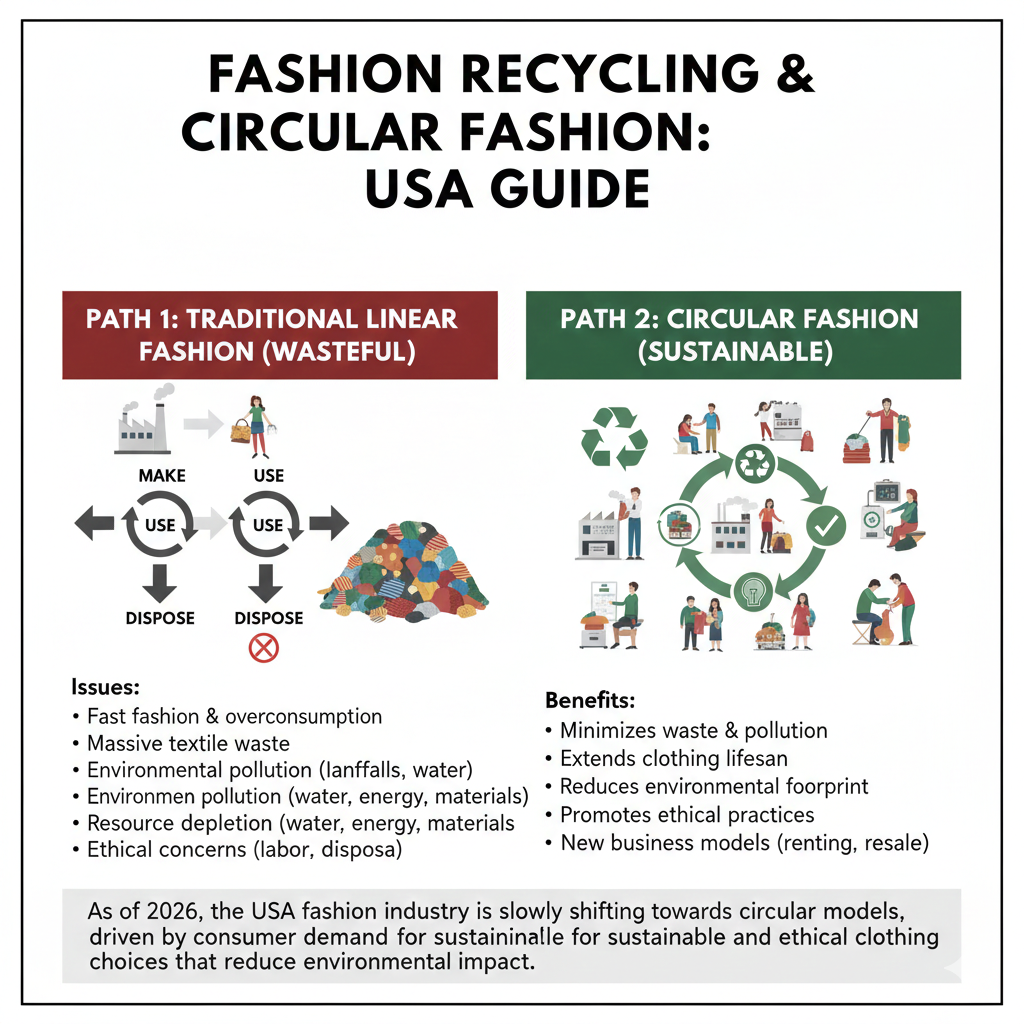
For a long time, the fashion industry operated on a straight line: make, buy, wear, trash. This “linear” model is efficient for producing cheap clothes quickly, but it’s disastrous for the planet. Resources are extracted, processed into garments, and eventually discarded as waste.
However, a new way of thinking is taking hold. It’s called circular fashion. Instead of a straight line to the landfill, circular fashion imagines a loop where clothes are designed to last longer, be repaired easily, and eventually recycled into new materials. It’s a system where waste is designed out of the equation.
This guide explores what circular fashion actually means for the average American consumer. We will break down how fashion recycling works, why it matters, and the practical steps you can take to make your wardrobe a little more sustainable—without needing a degree in environmental science.
What Is Fashion Recycling?
At its core, fashion recycling is the process of recovering fiber, yarn, or fabric and reprocessing it into useful products. It sounds simple, but it’s quite distinct from simply donating clothes to a thrift store (though that is a form of reuse). True recycling involves breaking down the material to create something new.
Textile recycling generally happens in two ways. Pre-consumer recycling involves using scraps created during the manufacturing process—like cutting room floor clippings—and turning them back into fiber. Post-consumer recycling deals with garments that have been bought, worn, and discarded by people like you and me.
While the concept is straightforward, the execution is complex. Not all materials are easy to recycle. A 100% cotton shirt is relatively simple to process, but that stretchy pair of jeans made from cotton, polyester, and elastane? That’s a chemical puzzle that recyclers are still figuring out how to solve efficiently.
What Is Circular Fashion?
Circular fashion is the big picture. If recycling is a single tool, circularity is the entire toolbox.
Circular vs. Linear Fashion Models
The traditional linear model is often described as “take-make-waste.” Raw materials (like cotton or oil for polyester) are taken from the earth, made into products, and eventually wasted.
A circular model aims to keep resources in use for as long as possible. It mimics nature, where waste from one process becomes food for another. In a circular fashion system, a garment is designed from the very beginning with its end-of-life in mind. It might be designed to be extremely durable so it can be resold multiple times, or it might be designed from a single material so it can be easily shredded and spun into new yarn when it wears out.
Design for Reuse, Repair, and Recycling
Circularity starts at the design table. It asks questions like:
- Can this button be easily replaced?
- Is this fabric durable enough to survive 50 washes?
- Are the dyes used safe for the environment when this breaks down?
In a circular economy, clothes are meant to circulate. They move from owner to owner through resale, get repaired when damaged, and are only recycled when they are completely unusable.
Why Circular Fashion Is Growing in the USA
You might have noticed more brands touting “recycled polyester” or offering take-back programs in their stores. This isn’t just a marketing trend; it’s a response to growing pressures.
Environmental Concerns
The fashion industry is responsible for a significant chunk of global carbon emissions—some estimates put it higher than international flights and maritime shipping combined. Water usage is another massive issue; growing cotton for a single pair of jeans can require thousands of gallons of water. Americans are becoming increasingly aware that fast fashion has a steep environmental price tag.
Rising Textile Waste
The Environmental Protection Agency (EPA) estimates that heavily trashed textiles are the main source of municipal solid waste in the U.S. Landfills are overflowing with cheap, synthetic clothing that won’t degrade. This visible waste crisis is pushing cities and states to look for better solutions.
Consumer Demand for Sustainability
Shoppers are voting with their wallets. A growing demographic, particularly younger generations, prefers to buy from brands that align with their values. They want transparency. They want to know where their clothes came from and where they will go when they are done with them. This demand is forcing companies to rethink their business models.
How Fashion Recycling Works
So, what actually happens to your old clothes? The journey of a recycled garment involves several key steps.
Clothing Collection and Sorting
It starts with you. When you drop clothes in a donation bin or send them back to a brand, they go to sorting facilities. This is a labor-intensive process. Workers manually sort items into huge categories: wearable vs. unwearable, cotton vs. synthetic, vintage vs. modern.
Only a portion of donated clothes are sold in local thrift stores. Many are shipped overseas to secondary markets, and the damaged or stained items are set aside for recycling.
Reuse and Resale
Before recycling happens, reuse is the priority. The most sustainable garment is the one that already exists. The resale market in the U.S. has exploded, with platforms allowing people to buy and sell used clothing easily. This keeps items in circulation and out of the trash.
Textile Recycling Processes
For items that can’t be worn, recycling kicks in.
- Mechanical Recycling: This is the most common method. Fabrics are shredded or “carded” to break them down into fibers. These fibers are then spun into new yarn. Because the shredding process shortens the fibers (making them weaker), recycled fibers are often blended with virgin fibers to ensure the new fabric is strong enough. This is often used for cotton and wool.
- Chemical Recycling: This is the frontier of recycling technology. Chemicals are used to dissolve the fabric (like polyester) down to its molecular level. These molecules are then rebuilt into new fiber that is just as strong as the original. This holds great promise for synthetic materials and blended fabrics, but it is currently more expensive and energy-intensive.
Key Benefits of Circular Fashion
Transitioning to this model offers tangible benefits beyond just “feeling good” about our choices.
Reduced Waste and Landfill Use
The most immediate impact is less trash. By keeping textiles in circulation, we reduce the burden on our landfills and the need to export waste to other countries.
Lower Environmental Impact
Using recycled materials generally requires fewer resources than making new ones. For example, recycled polyester doesn’t require new oil extraction, and recycled cotton doesn’t require the water and pesticides needed to grow new crops.
Extended Garment Life
Circular fashion encourages quality. If you buy a jacket designed to be repaired, you might keep it for ten years instead of two. This slows down the frantic pace of consumption and saves you money in the long run.
Role of Fashion Brands in Circular Models
Brands are the gatekeepers of production, so their role is critical.
Recycling Programs and Incentives
Many major U.S. retailers now offer in-store collection bins. Some incentivize this by offering a discount on your next purchase if you drop off a bag of old clothes. These programs help brands capture materials they can potentially use again.
Sustainable Material Sourcing
Brands are increasingly sourcing fabrics made from recycled plastic bottles or regenerated nylon (like from old fishing nets). However, true circularity means they need to use materials that can be recycled again after use, not just once.
Consumer Role in Circular Fashion
While brands make the products, consumers drive the market. Your habits determine whether circularity succeeds.
Responsible Buying Habits
The most powerful thing you can do is buy less and buy better. Instead of buying five cheap shirts that lose their shape after a month, buy one high-quality shirt that lasts years. Look for classic styles that won’t look outdated next season.
Repair, Resale, and Donation
Learn basic repair skills, like sewing a button or patching a hole. When you are done with an item, resell it if it has value, or donate it responsibly. Never throw textiles in the regular trash bin if you have access to a recycling option.
Challenges Facing Fashion Recycling
If circular fashion is so great, why isn’t everyone doing it perfectly yet? There are significant hurdles.
Fabric Blends and Recycling Limits
Check the label on your shirt. Does it say “60% Cotton, 40% Polyester”? That blend is a recycler’s nightmare. Separating those two fiber types is incredibly difficult and expensive. Because so much of our clothing is blended, a huge percentage of it cannot be easily recycled with current technology.
Infrastructure and Cost Barriers
The U.S. lacks a unified infrastructure for textile recycling. Unlike aluminum cans or paper, which have curbside pickup in most towns, textiles require special drop-off points. Furthermore, mechanical recycling is costly, and virgin polyester (made from cheap oil) is often cheaper than recycled polyester, making it hard for businesses to justify the switch financially.
Consumer Awareness Gaps
Many Americans simply don’t know that damaged clothes can be recycled. They assume donation bins are only for “good” clothes, so they trash the ripped jeans and stained tees, unknowingly sending valuable raw materials to the landfill.
Circular Fashion vs. Fast Fashion
These two concepts are fundamentally at odds.
Environmental and Economic Differences
Fast fashion relies on high volume and low cost. It externalizes environmental costs (pollution, waste) to keep price tags low. Circular fashion internalizes these costs, investing in better materials and systems. While circular items may cost more upfront, the environmental cost is far lower.
Longevity vs. Disposability
Fast fashion treats clothing as disposable—like a paper napkin. Circular fashion treats clothing as a durable asset—like a piece of furniture. The shift requires a cultural change where we value our clothes and care for them.
Technology Driving Circular Fashion
Innovation is helping to solve some of the toughest problems.
Material Innovation
Scientists are developing new materials designed to be recycled. Think of biodegradable fabrics made from algae or mushrooms, or new polymers that can be chemically broken down infinitely without losing quality.
Digital Tracking and Transparency
“Digital Product Passports” are an emerging tech where a QR code on a garment tells recyclers exactly what creates the fabric. This solves the sorting problem, allowing automated machines to separate materials accurately and efficiently.
Government and Industry Initiatives in the USA
Change is happening at the policy level, too.
Sustainability Policies
Some states, like California and Massachusetts, are introducing legislation to ban textiles from landfills or require producers to take responsibility for the waste their products generate (known as Extended Producer Responsibility, or EPR).
Industry-Led Programs
Groups like the Ellen MacArthur Foundation are rallying big U.S. brands to commit to circular targets. These coalitions share knowledge and resources to make circularity the industry standard rather than the exception.
Is Circular Fashion a Real Solution?
Is this the silver bullet for fashion’s environmental woes?
Scalability and Long-Term Impact
For circular fashion to work, it needs to scale up massively. We need recycling facilities in every major region and widespread adoption of circular design. It is a long-term solution, not a quick fix.
Behavior Change Requirements
The biggest variable is human behavior. Technology can’t fix overconsumption. If we continue to buy clothes at the current rate, even a circular system will struggle to keep up. We need to shift our mindset from “new is better” to “better is better.”
How to Support Circular Fashion as a Consumer
You don’t need to be perfect to make a difference. Start small.
Smart Purchasing Decisions
- Check the tag: Avoid complex blends if possible. 100% cotton or 100% wool is easier to recycle.
- Buy Secondhand: This is the purest form of circularity.
- Rent: For special occasions, rent a dress or suit instead of buying something you’ll wear once.
Supporting Ethical and Circular Brands
Look for brands that offer repair services, lifetime guarantees, or clear recycling programs. Support companies that are transparent about their supply chain and are actively investing in circular technologies.
Conclusion
The transition from a linear to a circular fashion system is one of the most exciting shifts in the modern economy. It challenges us to rethink our relationship with the material world. It turns waste into wealth and disposability into durability.
While the infrastructure in the USA is still developing, the momentum is undeniable. By understanding what circular fashion is and making small, conscious choices—like repairing a zipper, buying vintage, or choosing recyclable fabrics—we become active participants in this loop. The future of fashion isn’t just about what we wear; it’s about how we value the resources that clothe us. So next time you look at that old shirt, don’t see trash. See a resource waiting for its next life.
FAQs – Fashion Recycling and Circular Fashion
What is circular fashion in simple terms?
Circular fashion is a system where clothes are designed to be used for as long as possible, and then recycled into new products when they can no longer be worn. It avoids waste by keeping materials in a continuous loop of use and reuse, rather than sending them to a landfill.
Can clothes really be recycled?
Yes, but with limitations. Natural fibers like cotton can be mechanically shredded and spun into new yarn (often mixed with new cotton for strength). Synthetic fibers like polyester can be chemically broken down and reformed. However, blended fabrics (like cotton-poly mixes) are currently very difficult and expensive to recycle.
How is circular fashion different from sustainable fashion?
Sustainable fashion is a broad term that covers many ethical and environmental aspects, such as fair wages and using organic materials. Circular fashion is a specific approach within sustainable fashion that focuses strictly on eliminating waste and keeping products in use. A brand can be sustainable (fair trade) but not circular (if the product cannot be recycled).
Is fashion recycling effective in the USA?
It is growing, but it faces challenges. The U.S. has a robust resale and donation market, but actual fiber-to-fiber recycling (turning old clothes into new clothes) is still in the early stages of industrial scaling. Currently, a large percentage of “recycled” textiles are actually downcycled into things like insulation or cleaning rags.
How can consumers participate in circular fashion?
Consumers play a huge role! You can participate by:
- Buying fewer, higher-quality items.
- Shopping secondhand or vintage.
- Repairing clothes instead of tossing them.
- Donating wearable items to charities.
- Dropping off unwearable, damaged clothes at specific textile recycling bins or brand take-back programs.
Leave a Reply