

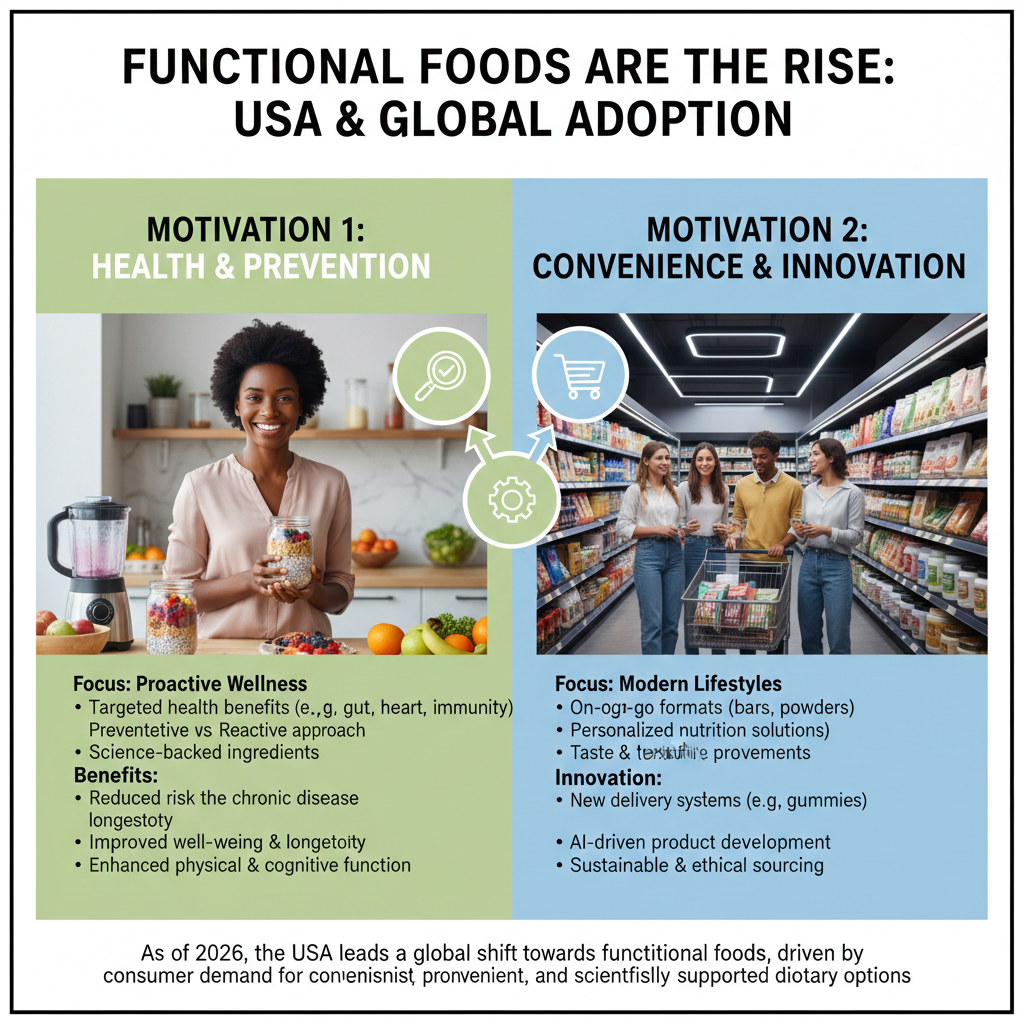
Walk down the beverage aisle of a typical American grocery store, and you’ll notice a significant shift. Where there used to be simple rows of soda and fruit juice, there are now colorful cans promising clarity, gut health, immunity support, and sustained energy. It is no longer just about hydration or taste; it is about performance.
This transformation represents the booming era of functional foods. In developed countries, particularly the United States, the relationship between consumers and what they eat has evolved. Food is no longer viewed solely as a means to satisfy hunger or provide basic survival nutrients. Instead, it is increasingly seen as a tool—a way to hack biology, prevent disease, and optimize daily living.
As healthcare costs rise and information about nutrition becomes more accessible, consumers are taking their health into their own hands, starting with their shopping carts. This shift toward “food as medicine” has turned functional foods from a niche health-store category into a dominant force in mainstream retail, reshaping the food industry in the process.
What Are Functional Foods?
At its core, the definition of functional food is straightforward. These are ingredients or products that offer health benefits that extend beyond their nutritional value. While all food provides nutrients, functional foods contain bioactive components that may promote well-being or reduce the risk of disease.
The category is generally split into two camps: conventional and modified. Conventional functional foods are natural, whole ingredients rich in nutrients, such as salmon (Omega-3s), blueberries (antioxidants), or fermented yogurt (probiotics). Modified functional foods, on the other hand, are fortified or enhanced. This could be orange juice with added calcium, eggs enriched with Omega-3s, or a protein bar infused with vitamins.
The key distinction lies in the intention. A standard apple is healthy, but an apple marketed specifically for its fiber content to support digestion enters the realm of functional marketing. The modern consumer isn’t just buying a snack; they are buying a specific health outcome.
Why Functional Foods Are Growing in Developed Countries
The surge in popularity of these products in nations like the USA, UK, and Japan is not accidental. It is driven by distinct socioeconomic factors that separate developed markets from developing ones.
Preventive Health Mindset
The most significant driver is a collective shift toward preventive healthcare. In the United States, where medical expenses can be astronomical, staying healthy is a financial strategy as much as a physical one. Consumers are increasingly proactive, looking for ways to ward off illness before it begins. This “self-care” mentality has elevated food from a passive necessity to an active defense system.
Aging Populations and Chronic Disease
Developed nations are facing aging populations. As life expectancy increases, so does the desire to maintain quality of life in later years. Older adults are seeking foods that support joint health, cognitive function, and heart health to maintain independence. Simultaneously, the prevalence of chronic lifestyle diseases—such as type 2 diabetes and heart disease—has led younger generations to seek dietary solutions to mitigate their own risk factors.
Growth of Functional Foods in the USA
The United States leads the charge in this market, driven by a culture that values efficiency and innovation. The American consumer is often looking for the “silver bullet”—a way to get maximum health benefits with minimal effort.
Consumer Demand Trends
Data shows a consistent rise in Americans reading nutrition labels, but they aren’t just looking for “low fat” or “low sugar” anymore. They are scanning for “high protein,” “contains probiotics,” or “adaptogens.” The demand is for addition rather than subtraction. Shoppers want to know what the food can do for them.
Expansion in Mainstream Grocery and Retail
Ten years ago, finding a mushroom-infused coffee or a prebiotic soda required a trip to a specialized health food store. Today, these products are available at Walmart, Target, and even convenience stores like 7-Eleven. Mainstream retailers have recognized that wellness is no longer a luxury niche; it is a volume driver. Shelf space is being aggressively reallocated to brands that highlight functionality, forcing legacy brands to adapt or lose relevance.
Key Types of Functional Foods
The functional food market is vast, but several specific categories are currently dominating the shelves.
Gut Health Foods
Perhaps the most significant trend in recent years is the focus on the microbiome. Consumers now understand the link between gut health and overall immunity, mood, and digestion.
- Probiotics and Prebiotics: This includes yogurts, kefirs, and increasingly, shelf-stable snacks containing bacterial strains designed to populate the gut.
- Fermented Products: Kimchi, sauerkraut, kombucha, and miso have moved from ethnic specialty aisles to the mainstream dairy and produce sections.
Functional Beverages
Liquids are the easiest delivery system for functional ingredients, making this a rapidly innovating sector.
- Energy, Focus, and Hydration: Beyond simple caffeine, drinks now feature L-theanine for focus, electrolytes for rapid hydration, and adaptogens like ashwagandha for stress management.
Fortified Foods
This is the oldest category of functional foods but remains vital.
- Added Vitamins and Minerals: Salt iodization and Vitamin D in milk were the pioneers. Now, we see plant-based milks fortified with B12, breads with added fiber, and cereals designed to meet specific nutritional gaps in the standard American diet.
Protein-Enhanced Foods
The “high protein” claim is currently one of the most persuasive marketing tactics in the US.
- Muscle and Satiety: Protein is no longer just for bodybuilders. It is marketed to office workers for satiety (feeling full) and to the elderly for preventing muscle loss. Everything from potato chips to water is receiving a protein boost.
Immunity-Boosting Foods
Following the global pandemic, immunity remains top of mind.
- Immune Support Ingredients: Products highlighting Vitamin C, Zinc, Elderberry, and Turmeric continue to see strong sales. Consumers treat these foods as a daily insurance policy against seasonal illnesses.
Health Benefits Driving Functional Food Demand
Why are consumers willing to pay a premium for these products? The motivation usually stems from three specific desired outcomes.
Digestive Health: Digestive discomfort is a common complaint in the US. Foods that promise to reduce bloating or improve regularity offer an immediate, tangible benefit that encourages repeat purchase.
Energy and Focus: In a high-productivity culture, fatigue is the enemy. Consumers are moving away from sugary energy drinks that cause a crash, opting instead for functional foods that promise sustained, “clean” energy and mental sharpness.
Heart and Metabolic Health: With heart disease remaining a leading cause of death, foods that claim to lower cholesterol (like sterol-fortified spreads) or manage blood sugar levels are staples for millions of households.
Role of Science and Nutrition Research
The rise of functional foods is closely tied to the evolution of nutritional science. We have moved past the era of vague health tonics into an era of evidence-based ingredients.
Evidence-Based Ingredient Development
Ingredients like Omega-3 fatty acids, probiotics, and plant sterols have substantial clinical research backing their efficacy. This scientific validation allows brands to make specific, credible claims that resonate with educated consumers.
Consumer Trust and Transparency
However, the “science” can be a double-edged sword. Consumers are becoming savvy about “science-washing.” They are demanding transparency regarding ingredient sourcing and effective dosages. A product containing a “dusting” of probiotics that won’t survive digestion is increasingly called out by informed shoppers. Brands that invest in clinical trials for their specific formulations are winning trust.
Functional Foods vs Supplements
A common question arises: why eat functional foods when you can take a pill?
Convenience and Compliance
The reality is that pill fatigue is real. Many people dislike the sensation of swallowing capsules or simply forget to take them. Eating a fortified bagel or drinking a functional smoothie is an integrated part of a daily routine. It requires less behavioral change than a supplement regimen.
Whole-Food Delivery Advantages
Nutritionally, whole foods often provide better delivery systems. Nutrients rarely work in isolation; they work synergistically. The fat in a yogurt helps the body absorb Vitamin D, for example. Functional foods can offer this “food matrix” benefit that isolated supplements sometimes lack.
Demographics Driving Adoption
While the trend is widespread, specific groups are propelling the market forward.
Millennials and Gen Z: These generations view food as an expression of their values and identity. They are willing to spend more on products that align with their wellness goals and are the primary drivers of trends like adaptogens and plant-based functional nutrition.
Aging Adults: As the Baby Boomer generation ages, they are heavily investing in functional foods to manage longevity. Their focus is often on preservation—eyesight, bone density, and heart health.
Health-Conscious Professionals: This demographic seeks performance. They are the primary consumers of nootropics (brain-boosting ingredients) and high-protein convenience foods that fit into a busy corporate lifestyle.
Functional Food Market Challenges
Despite the growth, the path forward is not entirely smooth.
Price and Accessibility
Functional foods almost always command a price premium over their conventional counterparts. In times of economic inflation, this can limit growth. There is also an accessibility gap; these products are often abundant in affluent urban centers but scarce in rural areas or food deserts.
Ingredient Skepticism and Regulation
In the US, the FDA regulation of “functional foods” is distinct from drugs. This gray area allows for marketing claims that can sometimes outpace the science. When a product fails to deliver on its promise, consumer skepticism grows, potentially damaging the credibility of the entire category.
Retail and Food Industry Response
The industry is responding to these challenges with rapid innovation.
Product Innovation and Reformulation
Legacy food companies are not sitting on the sidelines. They are acquiring functional food startups to diversify their portfolios. They are also reformulating classic products to remove high-fructose corn syrup and artificial dyes, replacing them with functional ingredients to retain health-conscious customers.
Clean-Label Functional Foods
The trend is moving toward “clean label” functionality. Consumers want the benefit without the chemical complexity. They prefer a bar that gets its protein from nuts and seeds rather than soy protein isolate. The industry is responding by simplifying ingredient lists while maintaining functional claims.
Are Functional Foods a Long-Term Trend?
Is this a bubble, or is it the future of food? All signs point to longevity. The shift from novelty to daily habit is already underway. Functional foods are moving from being an “occasional purchase” to a “pantry staple.”
As nutritional literacy improves, the line between “regular food” and “functional food” will likely blur. Eventually, consumers may simply expect their food to multitask. A pasta that doesn’t offer high protein or fiber might eventually be seen as obsolete. The functional food movement is not just a trend; it is the modernization of the human diet.
The Future of Eating
The rise of functional foods in developed countries represents a fundamental change in consumer psychology. It signifies a move away from passive consumption toward active health management. While challenges regarding regulation and affordability remain, the trajectory is clear. The grocery store of the future will be a place where every item on the shelf is expected to contribute to a longer, healthier, and more vibrant life.
FAQs – Functional Foods in Developed Countries
What are functional foods in simple terms?
Functional foods are ingredients or products that provide health benefits beyond basic nutrition, such as improving digestion or boosting energy.
Why are functional foods popular in the USA?
Their popularity is driven by a preventive health mindset, an aging population looking to maintain quality of life, and a cultural desire for convenient health solutions.
Are functional foods scientifically proven?
It depends on the ingredient. Many functional ingredients like probiotics, fiber, and Omega-3s have strong clinical backing, but others may rely on preliminary studies.
Are functional foods better than supplements?
They can be. Functional foods often provide better nutrient absorption due to the food matrix and are easier for many people to incorporate into daily routines than pills.
Will functional foods keep growing in developed countries?
Yes. As consumers become more educated about nutrition and prioritize preventive health, the demand for foods that serve a specific purpose is expected to continue rising.
Leave a Reply