

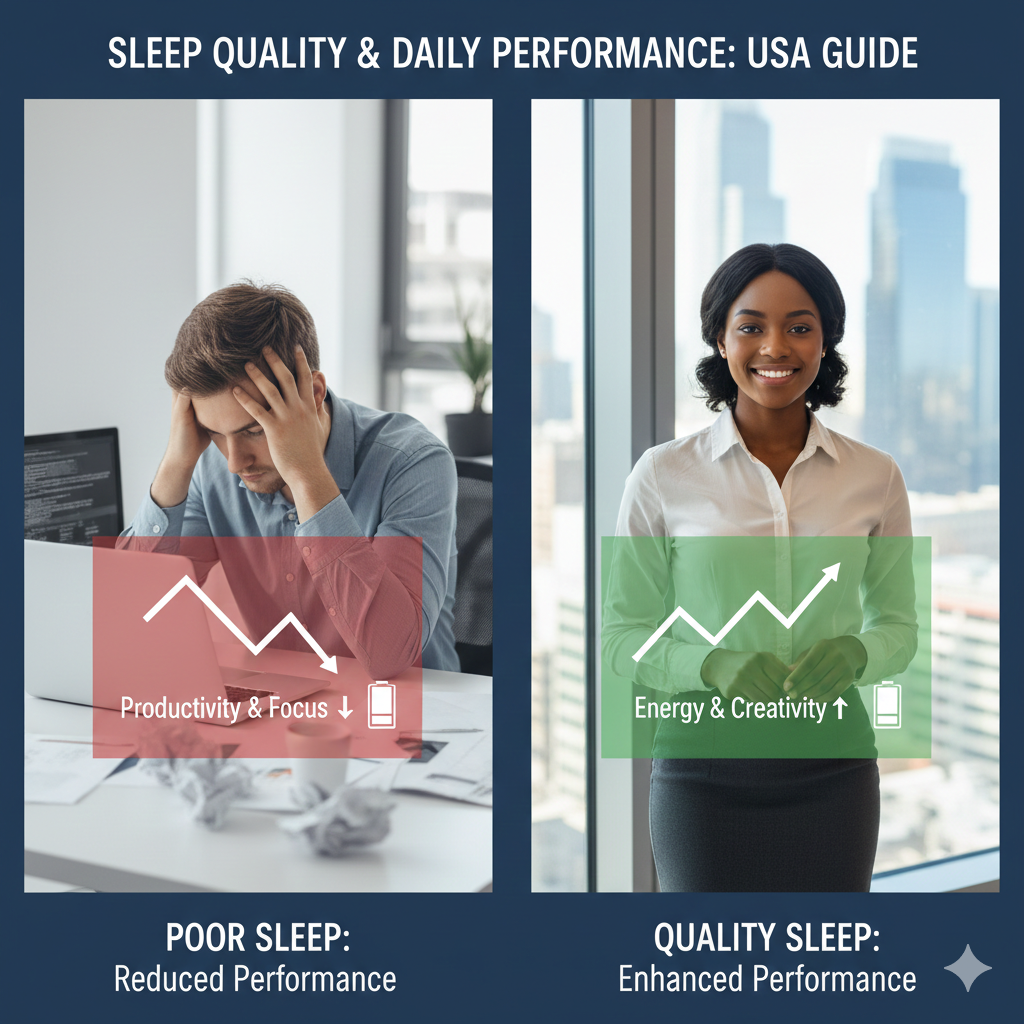
We’ve all been there. The alarm goes off, and instead of feeling refreshed, you feel like you’ve gone twelve rounds in a boxing ring. You drag yourself to the coffee pot, hoping caffeine can jumpstart a brain that feels like it’s wading through molasses. Throughout the day, tasks that usually take ten minutes take thirty, your patience wears thin, and all you can think about is your pillow.
This isn’t just a “bad day.” It’s a direct result of sleep quality—or lack thereof. While we often fixate on the number of hours we spend in bed, the quality of that rest is the true engine of our daily performance. In the United States, where the “hustle culture” often glorifies burning the candle at both ends, sleep is frequently the first casualty. Yet, research consistently shows that deprioritizing rest doesn’t lead to more success; it leads to diminished returns.
Understanding the mechanics of sleep is the first step toward reclaiming your days. By shifting the focus from simply clocking hours to optimizing the restorative power of your rest, you can unlock better focus, emotional stability, and physical vitality.
What Is Sleep Quality?
It is easy to confuse sleep quantity with sleep quality, but they are two very different metrics. Quantity is simply the duration of time you spend asleep. Quality, however, measures how well you sleep—specifically, whether your sleep cycle is continuous and deep enough to be restorative.
You might spend eight hours in bed, but if you wake up frequently, toss and turn, or fail to reach deep sleep stages, you likely suffer from poor sleep quality. High-quality sleep involves falling asleep within 30 minutes, sleeping through the night with minimal awakenings, and drifting back to sleep easily if you do wake up.
Key Sleep Stages Explained
To understand quality, we have to look at the architecture of sleep. A healthy night involves cycling through four distinct stages multiple times:
- Stage 1 (NREM): This is the transition period between wakefulness and sleep. It’s light sleep where your heartbeat, breathing, and eye movements slow down.
- Stage 2 (NREM): Your body temperature drops, and eye movements stop. This stage accounts for a significant portion of your total sleep time.
- Stage 3 (Deep Sleep/NREM): This is the “magic” stage for physical recovery. Your heartbeat and breathing drop to their lowest levels. It is crucial for tissue repair, immune function, and energy restoration.
- REM (Rapid Eye Movement): This is where dreaming happens. Your eyes move rapidly, but your body is temporarily paralyzed. REM is essential for cognitive functions like memory consolidation, learning, and emotional processing.
Good sleep quality means cycling through these stages smoothly. Disruptions prevent you from getting enough Deep Sleep and REM, leaving you feeling groggy regardless of how long you stayed in bed.
Why Sleep Quality Matters for Daily Performance
Think of your brain like a smartphone battery. Sleep is the charging cable. If the connection is loose (poor quality sleep), the phone might stay plugged in all night but never reach 100%.
Brain Function and Alertness
When you sleep well, your brain clears out metabolic waste products that accumulate during the day. This “neural cleaning” allows you to wake up sharp and alert. Without it, you experience “brain fog,” making it difficult to process information or stay vigilant.
Physical Energy and Recovery
Your body doesn’t just sit there while you sleep; it is hard at work. During deep sleep, the pituitary gland releases growth hormones that repair muscles and tissues. This is vital not just for athletes, but for anyone who wants to get through a workday without hitting a wall of exhaustion by 2:00 PM.
Effects of Poor Sleep on Daily Performance
The consequences of a restless night ripple outward, affecting every aspect of how you function.
Reduced Focus and Concentration
One of the most immediate impacts of poor sleep is a fragmented attention span. Tasks that require sustained focus become incredibly difficult. You might find yourself re-reading the same email three times or zoning out during meetings. Decision-making also suffers; the tired brain struggles to weigh pros and cons effectively, leading to impulsive choices or “analysis paralysis.”
Lower Energy and Productivity
Fatigue is the enemy of productivity. When sleep quality is low, your reaction times slow down significantly. This is dangerous when driving, but it also impacts simple tasks like typing or data entry. The mental effort required to perform basic duties increases, meaning you expend more energy to achieve less.
Mood and Emotional Regulation
Have you ever snapped at a partner or coworker over something trivial after a bad night’s sleep? That’s your amygdala—the emotional center of the brain—going into overdrive. REM sleep helps process emotional experiences, effectively “cooling down” the brain’s emotional reactivity. Without sufficient quality sleep, your fuse becomes shorter. Stress feels more unmanageable, irritability spikes, and your motivation to tackle challenges plummets.
Sleep Quality and Cognitive Performance
Your brain uses sleep to organize the day’s information. If you cut that process short, your cognitive abilities take a hit.
Memory Formation: Sleep plays a critical role in memory consolidation. It takes the information you learned during the day and cements it into long-term memory. If you are studying for a certification or learning a new software at work, poor sleep will make retention significantly harder.
Learning and Problem-Solving: A rested brain is a flexible brain. High-quality sleep enhances neuroplasticity, allowing you to make connections between seemingly unrelated ideas. This is where creative problem-solving comes from. When you are sleep-deprived, your thinking becomes rigid and linear, making it harder to overcome obstacles.
Impact on Physical Performance
While we often associate sleep with mental sharpness, its physical impact is just as profound.
Strength, Endurance, and Coordination: Whether you are hitting the gym or just carrying groceries, your physical stamina relies on recovery. Poor sleep reduces glycogen stores (your muscles’ energy source), leading to quicker fatigue. Coordination and balance also degrade, making you clumsier.
Injury Risk and Recovery: Studies involving college athletes have shown that sleep deprivation is the strongest predictor of injuries. This applies to non-athletes, too. If your coordination is off and your muscles haven’t repaired themselves, you are more likely to trip, fall, or strain a muscle during daily activities. Furthermore, if you are sick or injured, poor sleep slows down the immune response, prolonging recovery time.
Sleep Quality in the USA: Current Trends
The United States is currently facing what the CDC has called a public health epidemic of insufficient sleep.
Average Sleep Duration
While the National Sleep Foundation recommends 7 to 9 hours for adults, a significant portion of the U.S. population falls short. Current data suggests that more than one-third of American adults are not getting enough sleep on a regular basis. However, the issue isn’t just duration—it’s the quality of those hours.
Common Sleep Challenges
Americans face unique barriers to quality rest. High stress levels related to the economy and politics, combined with longer working hours and commute times, leave little room for wind-down routines. Additionally, the prevalence of sleep disorders like sleep apnea and insomnia is on the rise, often exacerbated by lifestyle factors like obesity and sedentary behavior.
Sleep and Workplace Performance
The cost of poor sleep isn’t just personal; it’s economic.
Productivity and Absenteeism: Sleep-deprived employees are less efficient. Estimates suggest that fatigue-related productivity losses cost U.S. businesses billions of dollars annually. Furthermore, people with chronic sleep issues are more likely to call in sick due to a weakened immune system or burnout.
Burnout and Job Satisfaction: There is a cyclical relationship between work stress and sleep. Stress causes poor sleep, and poor sleep makes work feel more stressful. This cycle is a primary driver of burnout. Employees who sleep well report higher job satisfaction and better relationships with colleagues, creating a more positive workplace culture.
Factors That Affect Sleep Quality
Identifying what is stealing your sleep is the first step to getting it back.
Screen Time and Digital Habits
This is the modern sleep thief. The blue light emitted by phones, tablets, and laptops suppresses melatonin, the hormone that signals to your body that it is time to sleep. Doom-scrolling through news or social media right before bed keeps the brain in a state of high alert, preventing the relaxation necessary for Stage 1 sleep.
Diet, Caffeine, and Alcohol
What you consume matters. Caffeine has a half-life of several hours; that 4:00 PM latte might still be in your system when you try to sleep at 10:00 PM. Similarly, while alcohol might help you fall asleep faster (a “nightcap”), it severely disrupts the second half of your sleep cycle, often blocking REM sleep and causing fragmentation. Heavy meals right before bed can also cause indigestion, leading to discomfort and wakefulness.
Stress and Mental Health
Anxiety is the enemy of rest. Racing thoughts trigger the release of cortisol and adrenaline, keeping the body in “fight or flight” mode. If you don’t have a way to manage stress—such as journaling, therapy, or meditation—it will likely follow you into the bedroom.
How to Improve Sleep Quality
The good news is that sleep quality is largely within your control. Small, consistent changes can yield massive results.
Sleep Routines and Consistency
The body loves rhythm. Going to bed and waking up at the same time every day—even on weekends—helps regulate your circadian rhythm. Create a “wind-down” routine starting 30 to 60 minutes before bed. This could involve reading a physical book, stretching, or listening to calming music. This signals to your brain that the day is over.
Sleep Environment Optimization
Your bedroom should be a sanctuary for sleep.
- Temperature: Keep it cool. Ideally between 60-67 degrees Fahrenheit.
- Light: Make it pitch black. Use blackout curtains or a sleep mask.
- Noise: If you live in a noisy area, use a white noise machine or earplugs to drown out disturbances.
- Bedding: Ensure your mattress and pillow support your preferred sleeping position.
Lifestyle Adjustments
- Sunlight: Get exposure to natural light first thing in the morning. This helps set your internal clock.
- Exercise: Regular physical activity promotes deeper sleep, but try to finish vigorous workouts at least three hours before bedtime.
- Napping: If you must nap, keep it under 20 minutes and before 3:00 PM to avoid sabotaging your nighttime drive to sleep.
Long-Term Effects of Chronic Poor Sleep
Ignoring sleep quality for years can lead to serious health consequences.
Health Risks: Chronic sleep deprivation is linked to a higher risk of cardiovascular disease, hypertension, type 2 diabetes, and obesity. During deep sleep, the body regulates insulin and glucose; without it, metabolic health suffers.
Cognitive Decline: Emerging research suggests a link between long-term sleep issues and neurodegenerative diseases like Alzheimer’s. The brain’s cleaning system (the glymphatic system) is most active during sleep, clearing out proteins associated with dementia.
Who Is Most Affected by Poor Sleep?
While everyone needs sleep, certain groups are more vulnerable to quality issues.
Students and Young Adults: Academic pressure, social lives, and biological shifts in circadian rhythms often lead to erratic sleep schedules for this demographic, impacting grades and mental health.
Shift Workers: Nurses, factory workers, and emergency responders often work against their biological clocks. This misalignment puts them at significantly higher risk for sleep disorders and metabolic issues.
Professionals and Parents: The “sandwich generation”—those caring for children and aging parents while managing careers—often sacrifice sleep to make time for everything else. This group is highly susceptible to burnout and chronic fatigue.
FAQs – Sleep Quality and Daily Performance
How many hours of sleep do adults need?
Most adults need between 7 and 9 hours of sleep per night. However, individual needs vary. If you feel rested and alert during the day, you are likely getting enough.
Can poor sleep reduce productivity?
Absolutely. Poor sleep slows reaction time, impairs focus, and hinders decision-making, all of which significantly drag down productivity levels.
Is sleep quality more important than quantity?
Both matter, but quality is often the missing piece. Sleeping 9 hours but waking up every hour is less restorative than 7 hours of continuous, deep sleep.
How long does it take to recover from sleep deprivation?
You cannot simply “catch up” on sleep in one weekend. Recovering from chronic debt takes time and consistency. It may take several days (or weeks) of quality sleep to return to baseline performance.
Does improving sleep boost focus and energy?
Yes. Restorative sleep replenishes neurotransmitters in the brain and glycogen in the muscles, leading to sustained energy and sharper focus throughout the day.
Waking Up to a Better Life
Sleep isn’t a luxury; it is a biological necessity. It is the foundation upon which your mood, health, and career are built. By prioritizing the quality of your rest—optimizing your environment, managing your habits, and respecting your body’s need for recovery—you can transform your waking hours. Don’t settle for groggy mornings and sluggish afternoons. Commit to better sleep tonight, and watch your daily performance soar tomorrow.
Leave a Reply