

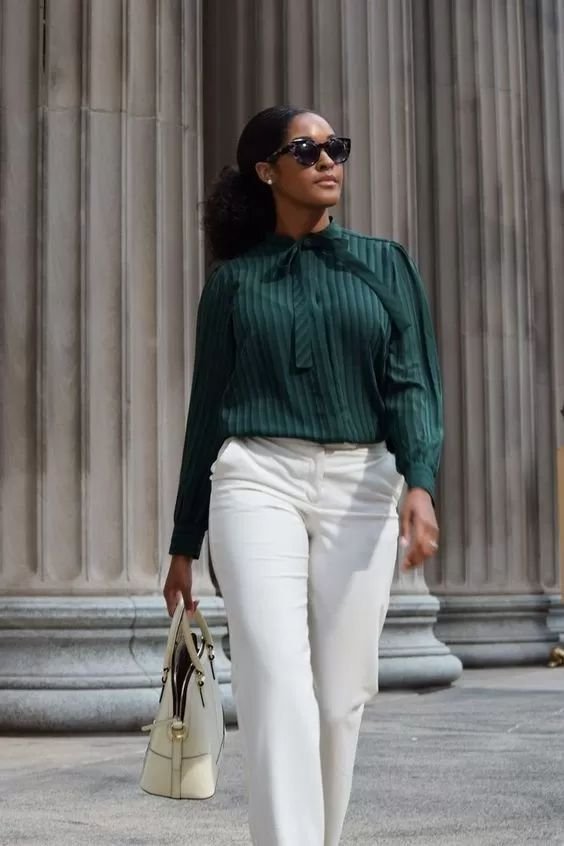
A useful work wardrobe makes the morning easier. You know which trousers work with your shoes, which top stays comfortable at a desk and which layer you can add for a cold meeting room. There is no single outfit that suits every workplace.
Begin with the written dress code and the tasks in your day. This is a guide to choosing and combining clothes, rather than a ranking of products we have tested. Personal style, mobility needs and uniform requirements all affect the right choice.
Three starting points for office outfits
For a formal day, try a matching trouser suit with a simple top, or a dress with a coordinating jacket. Check how the pieces fit together when seated and walking. Choose footwear permitted by the workplace that fits you comfortably; an outfit does not automatically require heels.
For business casual, pair straight or wide-leg trousers with a blouse or knit top and a cardigan. Another option is a skirt with a shirt and a lightweight jacket. Set the level of formality from your workplace rather than assuming every office accepts the same clothes.
For a relaxed office, dark denim with a plain top and a blazer may work if jeans are allowed. Keep an alternative ready for meetings that require more formal clothing. The casual outfit ideas can help with combinations for less formal settings.
Test fit before deciding
Sit in trousers for a few minutes, then stand, bend and reach. Check whether the waistband digs in, pockets gape or the fabric pulls across the hips. Wide legs still need the right rise and length; narrow legs still need enough room to move. Compare sizes by measurements rather than the number on the label.
For a blouse, reach forward as though typing and lift your arms. Look for pulling around the shoulders or gaps between buttons. Try it with the bra or base layer you expect to wear, and check opacity in ordinary daylight.
Walk and sit in dresses and skirts. Notice whether you need to keep adjusting the hem or neckline. Test any slit on stairs. If you use pockets for keys or a phone, put them in during the fitting so you can see how the garment hangs.
Wear your usual work shoes when checking trouser and skirt lengths. A simple hem alteration may solve a length problem, but ask about cost and feasibility before buying something that needs substantial changes.
Think about the room and the commute
A light removable layer can be useful when the journey is warm and the office is cool. Try a cardigan over the tops you own; check that the sleeves fit under a coat. For warm weather, assess the garment’s weight, lining and coverage as well as its fibre content.
If you travel in different shoes, make sure your trousers do not drag during the commute. Our office shoe guide covers style and fit considerations, while the work tote and satchel guide helps you plan space for everyday essentials.
Build a rotation you can maintain
As a starting exercise, choose two bottoms, three tops and one jacket or cardigan, then lay out the combinations. Add a dress if you like wearing one. This is a planning example, not a rule about how many clothes anyone needs. Your laundry schedule and number of office days determine the useful quantity.
Choose a few colours that work together. Photograph combinations you already like so you can repeat them on busy mornings. Before buying another top, check whether it works with at least two pieces you own and whether its care instructions fit your routine.
Spend where it solves a problem
Put your budget toward the item you struggle with most, such as trousers that fit, a washable meeting outfit or a coat that fits over layers. Include cleaning and alterations in the cost. Try one item through a normal working day before buying multiples.
For a finishing detail, use the office accessory styling guide to coordinate a belt, bag or simple jewellery. Keep pieces practical for your tasks and follow any workplace restrictions.
Before leaving a fitting room, check movement, coverage, pockets, shoe compatibility and care instructions. Clothes that pass those everyday checks are more useful than a purchase made only because it is labelled professional.



Leave a Reply