

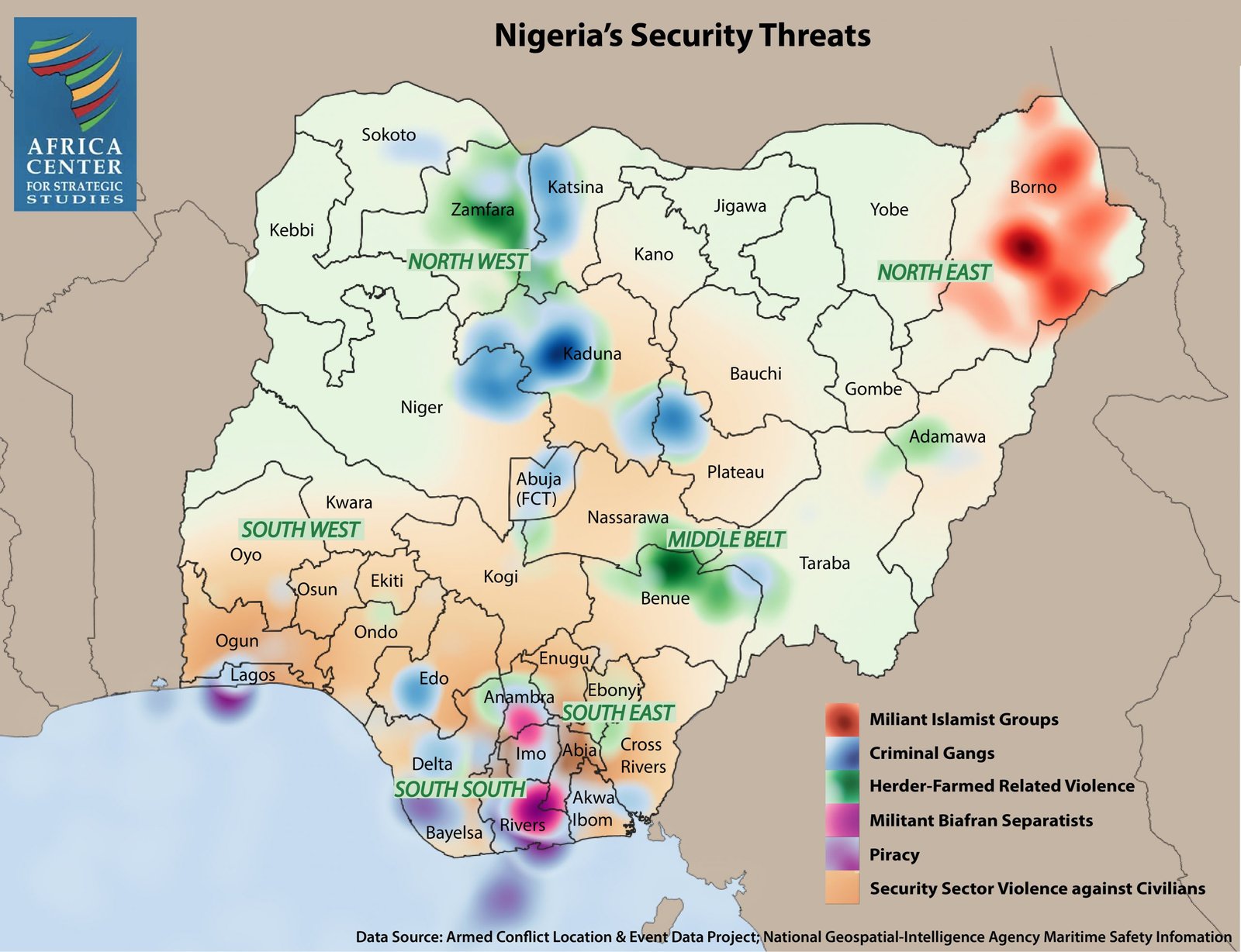
News reports from Nigeria frequently carry headlines that paint a grim picture: bandit raids in the northwest, insurgent attacks in the northeast, and communal clashes in the middle belt. For citizens living through these events, the threat is a daily reality. for global observers, the situation often seems chaotic and difficult to understand. Why does a nation with such immense potential, resources, and cultural richness struggle so profoundly with security?
The answer isn’t simple. There isn’t one single villain or one specific policy failure to blame. Instead, Nigeria’s security crisis is a complex web of historical grievances, economic desperation, weak governance, and ideological extremism. Understanding these root causes is essential for anyone trying to grasp the magnitude of the challenge facing Africa’s most populous nation.
This article explores the deep-seated factors driving the violence, moving beyond the headlines to examine the systemic issues that allow insecurity to thrive.
A Legacy of Instability: Historical Context
To understand the present, we must look at the past. Nigeria’s history since gaining independence in 1960 has been punctuated by periods of intense volatility. The transition from colonial rule was not seamless; it left behind deep regional and ethnic fractures that were never fully healed.
The legacy of military rule, which dominated much of the country’s post-independence history, also plays a significant role. Decades of military dictatorship eroded democratic institutions and centralized power in ways that marginalized vast sections of the population. This created a culture where force became a primary tool for settling disputes or seizing power. The long-term effects are still visible today in the lack of trust between the civilian population and security forces, as well as the fragility of democratic institutions trying to maintain order.
The Terrorist Insurgency: Boko Haram and ISWAP
Perhaps the most globally recognized source of violence in Nigeria is the insurgency in the northeast. This crisis began largely with Boko Haram. Initially a local religious group critical of Western education and government corruption, it transformed into a violent insurgent movement following a government crackdown and the death of its founder in 2009.
Boko Haram’s evolution has been deadly. Their tactics shifted from targeted assassinations to mass abductions, suicide bombings, and seizing territory. Over time, the landscape became even more fractured with the emergence of the Islamic State West Africa Province (ISWAP). This splinter group, linked to ISIS, often focuses on attacking military targets and aid workers, complicating the security situation further.
These groups rely on powerful ideological motivations, framing their violence as a religious duty against a corrupt secular state. However, their recruitment methods are often pragmatic rather than purely theological. They exploit the desperation of impoverished youth, offering money, protection, or a sense of purpose where the state has failed to provide any.
The Economic Engine of Violence
Poverty acts as high-octane fuel for conflict. Nigeria boasts Africa’s largest economy, yet a staggering number of its citizens live below the poverty line. Unemployment, particularly among young people, is rampant.
This economic despair creates a fertile recruiting ground for criminal and extremist groups. When a young person has no job, no education, and no hope for the future, the offer of a weapon and a steady income—however illicit—becomes dangerously attractive.
Furthermore, regional economic disparities exacerbate tensions. The northern regions, which suffer from higher rates of poverty and lower literacy levels compared to the south, have borne the brunt of the insurgency. This uneven development fosters a sense of marginalization and resentment that radical groups easily exploit.
Governance and the Trust Deficit
A state’s primary duty is to protect its citizens. When it fails to do so, a vacuum opens up. In Nigeria, weak governance and corruption have severely undermined the state’s capacity to maintain order.
Corruption within political and security institutions means that resources meant for development or defense often end up in private pockets. Soldiers on the front lines have frequently complained of being under-equipped compared to the insurgents they are fighting.
This leads to a massive accountability gap. When crimes go unpunished and justice is sold to the highest bidder, citizens lose faith in the rule of law. This erosion of public trust is catastrophic. Communities that do not trust the police are less likely to share intelligence and more likely to form vigilante groups, which can eventually become security threats themselves.
Ethnic, Religious, and Land Disputes
While terrorism grabs the headlines, communal violence claims thousands of lives. The “Middle Belt” of Nigeria has become a flashpoint for clashes between farmers and herders.
Historically, these groups coexisted with occasional friction. However, climate change and desertification have pushed herders further south in search of grazing land, leading to encroachment on farmlands. What begins as a dispute over resources often escalates along ethnic and religious lines—typically between Muslim Fulani herders and Christian farmers.
Politicians and local leaders sometimes manipulate these identities to shore up support, turning resource competition into existential religious wars. This identity politics makes resolving land disputes incredibly difficult, as every conflict is viewed through a lens of “us versus them.”
The Rise of Banditry and Organized Crime
In the northwest and north-central regions, a different kind of terror has taken root: banditry. These are not necessarily religious ideologues but armed criminal gangs driven by profit.
The kidnapping-for-ransom economy has boomed. Bandits target schools, travelers, and rural communities, demanding millions of Naira for the release of captives. This has turned travel on major highways into a gamble with death.
These groups operate with sophisticated weaponry, often moving across borders. They have capitalized on the security forces’ focus on the northeast insurgency, carving out territories where they act as de facto rulers, levying taxes on farmers and terrorizing villagers.
Borders Without Barriers
Nigeria’s geography poses a significant security challenge. The country has vast, porous borders with Niger, Chad, Cameroon, and Benin. Policing these expansive frontiers is a logistical nightmare.
This lack of control facilitates the free flow of small arms and light weapons. Instability in neighboring countries—such as the collapse of the Gaddafi regime in Libya or conflicts in the Sahel—has resulted in a flood of weapons moving south. Insurgents and criminals can easily cross borders to evade capture or to resupply, making the conflict regional rather than just national.
The Digital Front: Social Media and Misinformation
Modern conflict is also fought online. Social media has become a double-edged sword in Nigeria’s security crisis. On one hand, it allows citizens to document atrocities and call for help. On the other, it is a potent tool for spreading extremist propaganda.
Fake news travels faster than facts. A rumor about an attack by one ethnic group on another can go viral in minutes, sparking retaliatory violence before authorities can verify the truth. Panic amplification creates a psychological state of siege, where citizens feel unsafe even in areas that are relatively secure. Terrorist groups also use these platforms to showcase their strength and demoralize the public.
The Government’s Response: A Mixed Record
The Nigerian government has not been idle. There have been numerous military operations designed to crush the insurgency and banditry. The military has reclaimed territory previously held by Boko Haram, and many insurgent leaders have been neutralized.
However, a purely military approach has limitations. Critics argue that the government relies too heavily on kinetic force without addressing the underlying socio-economic drivers. There have also been allegations of human rights abuses by security forces, which alienates the very communities they are meant to protect.
Reforms are ongoing, but progress is slow. The sheer scale of the threat—fighting on multiple fronts against different types of enemies—stretches the military and police to their breaking point.
International Dimensions
Nigeria does not exist in a vacuum. Foreign terror networks provide ideological support, and in some cases funding, to local groups. The affiliation of ISWAP with the global ISIS network is a prime example of how local conflicts are internationalized.
Conversely, Nigeria receives significant support from the international community in the form of intelligence sharing, training, and military hardware. However, this relationship is complicated by geopolitical interests and concerns over human rights records. The global community watches closely, knowing that the destabilization of Nigeria would have catastrophic consequences for the entire West African region.
The Human Cost
Behind the analysis and the strategy lies a devastating human toll. Thousands of civilians have been killed. Millions have been displaced, forced to live in squalid camps for Internally Displaced Persons (IDPs).
The impact on the future is terrifying. Schools in the north are frequently targeted, leading to mass closures. An entire generation of children is growing up without education, traumatized by violence. Healthcare systems in conflict zones have collapsed, and livelihoods—mostly farming and trade—have been destroyed, deepening the cycle of poverty.
Pathways to Peace: What Can Be Done?
Reducing attacks in Nigeria requires more than just more boots on the ground. It requires a holistic approach that tackles the root causes.
- Governance Reform: Tackling corruption and improving accountability is non-negotiable. Security forces need to be professionalized and better equipped, but they also need to be held accountable for their conduct.
- Economic Opportunity: Creating jobs for the youth is a security strategy. Investments in agriculture, technology, and infrastructure can provide alternatives to crime.
- Community Policing: Security needs to be local. Building trust between law enforcement and communities is the only way to gather the intelligence needed to stop attacks before they happen.
- Dialogue: While hard power is necessary for terrorists, dialogue is often needed for other types of conflict, such as the farmer-herder clashes. Community-led peace initiatives have shown promise in de-escalating local tensions.
Moving Toward Stability
The question “Why does Nigeria face so many attacks?” reveals a tragedy of missed opportunities and systemic failures. From the dusty plains of the northeast to the forests of the northwest, the violence is a symptom of a state struggling to meet the basic needs of its people.
Solving this crisis will not be quick or easy. It requires political will, economic restructuring, and a commitment to justice that has been lacking for too long. However, the resilience of the Nigerian people remains the country’s greatest asset. Understanding the root causes is the first step toward dismantling the structures of violence and building a future where peace is the norm, not the exception.
Leave a Reply