

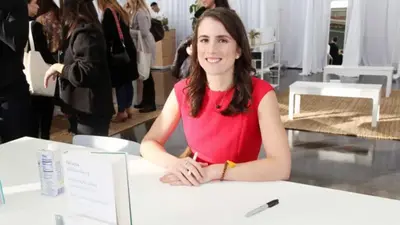
The American public has held a fascination with the Kennedy family for nearly a century. From the political triumphs of Camelot to the tragic losses that followed, the dynasty has occupied a unique space in the cultural consciousness. For decades, the surname alone was enough to generate headlines, launch political careers, and attract relentless paparazzi attention. In this context, it is often assumed that any member of the clan will inevitably drift toward the halls of Washington or the glare of celebrity.
Tatiana Schlossberg, however, has charted a distinctly different course. While she is the granddaughter of President John F. Kennedy and First Lady Jacqueline Kennedy Onassis, and the daughter of Ambassador Caroline Kennedy, Tatiana has quietly built a reputation that relies on bylines rather than bloodlines. As an environmental journalist and author, she has established herself as a serious voice in the fight against climate change, prioritizing data over dynasty.
This article explores how Tatiana Schlossberg navigated the immense weight of her family history to build an independent career. It examines her transition from a “Kennedy cousin” to a respected reporter, her impactful work on environmental issues, and why her voice matters in the modern media landscape.
Growing Up in the Shadow of History
Born in New York City in 1990 to Caroline Kennedy and designer Edwin Schlossberg, Tatiana grew up in an environment that was simultaneously privileged and heavily scrutinized. Unlike the generation before her, however, her upbringing was intentionally shielded from the most intense glare of the spotlight. Her parents made a concerted effort to raise Tatiana, her older sister Rose, and her younger brother Jack, with a degree of normalcy that was rare for their lineage.
Despite this relative privacy, the public expectation surrounding anyone with Kennedy DNA is palpable. The media often looks for the next politician, the next style icon, or the next tragedy. Carrying a historic last name means that every public appearance, career choice, and personal milestone is viewed through the lens of history. For many in her position, the path of least resistance is to lean into the celebrity aspect of the legacy.
Tatiana, however, seemed to understand early on that a name opens doors, but only skill keeps you in the room. While she participated in necessary family functions and upheld the public service ethos of her grandparents, she rarely sought attention for attention’s sake. The challenges of carrying such a name are often invisible—the constant need to prove that one’s achievements are earned, not gifted—and it appears this pressure fueled her drive for academic and professional rigor.
Education and the Foundation of a Journalist
The first steps toward establishing an independent identity came through education. Schlossberg attended Yale University, where she graduated in 2012 with a degree in history. This academic focus is significant; rather than pursuing political science or communications, she studied the context of the past. Following her undergraduate studies, she continued her education at the University of Oxford, earning a master’s degree in American History in 2014.
Her academic background provided more than just credentials; it offered a methodology. History teaches one to look for root causes, to analyze systems, and to understand how individual actions ripple through time. These are the exact skills required for high-level investigative journalism.
During her formative years, Schlossberg showed an interest in writing and public issues that aligned with her family’s values but diverged in application. While many Kennedys shaped policy, she seemed interested in shaping the narrative. Her formal training instilled a respect for evidence and research, traits that would later define her reporting style. She wasn’t training to be a pundit or a talking head; she was training to be a reporter who understood the weight of facts.
Building an Independent Journalism Career
For the children of famous figures, the entry into professional life is often viewed with skepticism. To combat this, Schlossberg chose the unglamorous route of beat reporting. She did not start her career with a vanity column in a glossy magazine. Instead, she cut her teeth reporting for The Bergen Record in New Jersey.
Local news is a grueling training ground. It requires attending municipal meetings, covering local crime, and understanding the specific, often mundane concerns of a community. By working at The Record, Schlossberg demonstrated a willingness to do the legwork. She covered transit, severe weather, and local politics—topics that require attention to detail and accuracy.
She later joined The New York Times as a reporter on the science and climate beat. While her name may have been recognizable, the Times is a meritocracy when it comes to the printed word. Bad copy does not get published, regardless of who wrote it. During her tenure there, she covered everything from New York City’s environmental policies to broader climate science. Her bylines began to appear regularly, not as fluff pieces, but as hard news stories. This period was crucial in establishing her credibility. Readers began to recognize “By Tatiana Schlossberg” as a marker of quality reporting on climate issues, often without realizing the historical weight of the surname attached to it.
A Laser Focus on Climate and Environment
The decision to specialize in environmental journalism was perhaps the most defining move of Schlossberg’s career. Climate change is arguably the most complex and pressing story of our time, yet it is notoriously difficult to cover. It requires translating dense scientific data into compelling human narratives. It involves navigating politics, economics, chemistry, and sociology simultaneously.
Schlossberg gravitated toward this beat because it offered substance. You cannot charm your way through a story about carbon emissions or microplastics; you have to understand the science. Her reporting often highlights the intersection of daily life and environmental impact. She moved away from the abstract “doom and gloom” of melting ice caps—though acknowledging their importance—to focus on the tangible ways human systems interact with the natural world.
Her key themes often revolve around demystifying the invisible. She writes about where our trash goes, the energy cost of the internet, and the environmental impact of the fashion industry. By making these complex scientific issues accessible to the average reader, she found a niche where her voice was not just a famous echo, but a necessary tool for public understanding.
Inconspicuous Consumption: A Thought Leader Emerges
In 2019, Schlossberg published her first book, Inconspicuous Consumption: The Environmental Impact You Don’t Know You Have. This was the moment she truly stepped out as a thought leader. The book explores the hidden environmental costs of modern life, from streaming movies to buying cut flowers.
However, the book’s central message was not about guilt-tripping the individual consumer. Schlossberg argued against the narrative that personal choices alone can solve the climate crisis. Instead, she used these personal choices as an entry point to discuss larger systemic failures and corporate responsibilities. She connected the cashmere sweater in a closet to the desertification of Mongolia, and the binge-watching of Netflix shows to the energy consumption of massive server farms.
The critical reception was positive, with reviewers praising her wit, clarity, and lack of preachiness. The book won the Rachel Carson Environment Book Award, a prestigious honor in the field. This accolade was a signal that her peers in environmental science and literature took her work seriously. The book expanded her influence beyond the news cycle, establishing her as an author capable of sustaining a long-form argument that challenged how we think about consumption and responsibility.
Writing Style and Editorial Values
What makes Schlossberg’s work resonate is her distinctive voice. In a media landscape often dominated by hot takes and sensationalism, her writing is remarkably grounded. She employs an evidence-based, research-driven approach. When she makes a claim, it is backed by data.
Her tone is often described as dry, witty, and calm. She approaches climate change with curiosity rather than panic. This is a strategic choice; panic often leads to paralysis, whereas curiosity leads to engagement. She writes with the precision of a historian and the clarity of a science teacher.
Furthermore, her commitment to ethical journalism is evident. She avoids making herself the story. In interviews promoting her book, she frequently redirected questions about her family back to the subject matter of climate change. This discipline in staying on message reinforces her editorial values: the story is the planet, not the reporter.
Recognition Beyond the Family Legacy
Today, when Tatiana Schlossberg is introduced at panels or literary festivals, the introduction certainly mentions her lineage, but it is no longer the headline. Audiences and critics perceive her primarily as an expert on sustainability.
She has earned respect within journalism circles for doing the work. In the environmental sector, she is viewed as a crucial translator of science. This shift in perception is the result of years of consistent, high-quality output. She did not dabble in journalism as a hobby; she treated it as a vocation.
Her name stands independently because her expertise is specific. Being a Kennedy gives you general fame; being the author of Inconspicuous Consumption gives you specific authority on environmental supply chains. Schlossberg traded the former for the latter.
Influence on Public Awareness
Schlossberg’s contribution to the public discourse on climate change has been significant. She has helped shift the conversation from performative environmentalism to structural awareness. By explaining the “hidden” impacts of consumption, she has armed her readers with the knowledge to demand better policies from corporations and governments.
Her impact is seen in how her readers engage with the world. After reading her work, consumers often look at the internet, their clothing, and their food differently. They understand the supply chain. This is long-term relevance. While political dynasties fade as election cycles pass, the education of the public on climate issues has a lasting legacy.
Comparison with Other Public-Figure Journalists
It is instructive to compare Schlossberg with other journalists who come from famous backgrounds. In the age of social media, many “nepo babies” (as the internet calls them) use their connections to secure hosting gigs or lifestyle columns that rely heavily on their personal brand and access to other celebrities.
Schlossberg differs fundamentally in her approach. She emphasizes substance over celebrity. She is rarely seen at red carpet events unless they are related to her work or family obligations. She does not use her social media to promote a lifestyle brand. This rejection of the “influencer” model in favor of the “reporter” model has insulated her from the criticisms usually leveled at children of the famous. Her professional credibility is the armor against the accusation of nepotism.
Why Her Work Still Matters
In the current climate, both environmental and political, Schlossberg’s work is more relevant than ever. We live in an era of misinformation, where scientific consensus is frequently attacked. We need trusted voices who can bridge the gap between technical science and the general public.
Schlossberg represents a new generation of journalists who are not content to simply report on the “who” and “what,” but are dedicated to explaining the “how” and “why.” The value of her contributions lies in their utility. Her writing helps people navigate a changing world. As the climate crisis accelerates, the need for clear, calm, and accurate reporting will only grow.
Defining Success on Her Own Terms
Tatiana Schlossberg is known beyond the Kennedy name because she chose to be. It would have been easy to exist as a socialite philanthropist, lending her name to galas and causes without engaging in the intellectual heavy lifting. Instead, she chose a path that required study, research, and the vulnerability of public critique.
By focusing on the environment, she honored the public service legacy of her family while completely reimagining what that service looks like in the 21st century. She proved that while you cannot choose your ancestors, you can certainly choose your legacy. Today, Tatiana Schlossberg is not just a descendant of a political dynasty; she is a premier voice in environmental journalism, and that is a title she earned entirely on her own.
Leave a Reply