

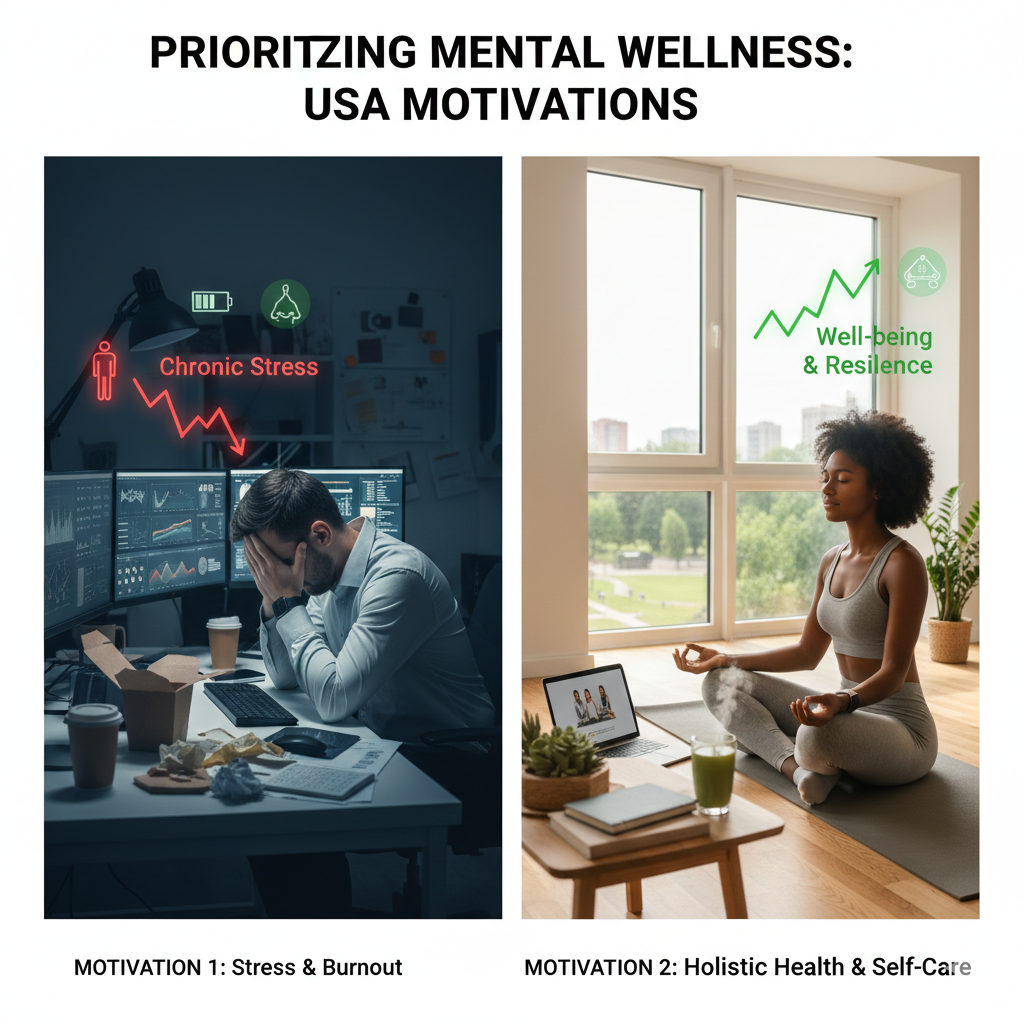
For decades, the American ethos was defined by the hustle. Long hours were a status symbol, burnout was a badge of honor, and rest was something you did only when your body forced you to stop. But the tide has turned. Walk into a bookstore, scroll through your social feeds, or listen to conversations at a coffee shop, and you will notice a distinct change in the atmosphere. The conversation isn’t just about productivity anymore; it’s about peace.
Mental wellness has moved from the fringes of “new age” philosophy to the center of daily American life. It is no longer treated as a luxury for the wealthy or a necessity only for those in crisis. Instead, it is becoming a fundamental pillar of health, viewed with the same importance as cardiovascular fitness or nutrition. This shift represents a massive cultural recalibration. People are realizing that success means very little if you are too anxious or exhausted to enjoy it.
This rising priority isn’t random. It is a direct response to a convergence of cultural, economic, and technological pressures that have pushed the collective psyche to its limit. From the boardroom to the living room, Americans are actively redefining what it means to be well, seeking sustainable habits over quick fixes.
What Is Mental Wellness?
To understand the shift, we first need to clarify what we are talking about. Mental wellness is often conflated with mental illness, but they are not the same thing. You can think of it like physical health: just because you don’t have the flu doesn’t mean you are physically fit.
Mental wellness vs mental illness
Mental illness refers to diagnosable conditions such as depression, anxiety disorders, or bipolar disorder, which often require clinical treatment. Mental wellness, however, is a proactive state. It is a spectrum of emotional and psychological well-being. It involves how we cope with stress, how we relate to others, and how we make choices. You can live with a mental illness and still practice mental wellness strategies to improve your quality of life. Conversely, you can be free of a diagnosable illness but still languish in a state of poor mental wellness.
Everyday emotional and psychological health
At its core, mental wellness is about maintenance. It is the daily practice of managing emotions and maintaining perspective. It includes resilience—the ability to bounce back from setbacks—and the capacity to feel and express a full range of emotions. Prioritizing mental wellness means engaging in habits that support brain health and emotional stability, much like eating vegetables supports physical health.
Why Mental Wellness Is a Growing Priority in the USA
The urgency behind this movement stems from a collective realization that the old ways of operating are unsustainable. The metrics of success have shifted.
Rising stress and burnout
The United States has long been one of the most overworked nations in the developed world. However, the breaking point has arrived. Rates of reported burnout have skyrocketed, affecting everyone from frontline workers to C-suite executives. The physical toll of chronic stress—insomnia, heart issues, autoimmune flare-ups—has made it impossible to ignore the mind-body connection. People are simply tired of feeling tired.
Cultural shift toward self-care
“Self-care” has evolved from a marketing buzzword used to sell bath bombs into a legitimate survival strategy. It is no longer viewed as selfish to set boundaries; it is viewed as essential. There is a growing understanding that you cannot pour from an empty cup. This cultural pivot acknowledges that rest is productive and that taking time to recharge leads to better outcomes in work and relationships.
Key Factors Driving Mental Wellness Awareness
Several specific catalysts have accelerated this movement, forcing mental health into the spotlight.
Work-Related Stress and Burnout
The workplace has traditionally been a significant source of stress, but the dynamic is changing.
Long hours and productivity pressure
For years, the “always-on” culture meant checking emails at dinner and answering Slack messages in bed. The pressure to be constantly productive led to a widespread erosion of work-life boundaries. Now, employees are pushing back. Concepts like “quiet quitting” or “acting your wage” are essentially boundary-setting exercises. Workers are demanding that their jobs fit into their lives, rather than their lives squeezing into the gaps left by their jobs.
Post-Pandemic Lifestyle Changes
The global events beginning in 2020 acted as a massive reset button for American priorities.
Isolation, uncertainty, and recovery
The pandemic stripped away distractions and forced millions to sit with their thoughts. The collective trauma, isolation, and prolonged uncertainty highlighted the fragility of mental health. As the world reopened, many refused to return to the “status quo.” The period of enforced slowness taught many people the value of downtime, and there is a widespread reluctance to give that up.
Social Media and Digital Overload
Technology connects us, but it also drains us. The impact of the digital world on the American psyche is undeniable.
Comparison culture and constant connectivity
We carry the news of the world and the curated highlights of our friends’ lives in our pockets. This constant connectivity breeds anxiety. “Doomscrolling” exposes users to a 24-hour cycle of negativity, while social media platforms foster unrealistic comparisons. The mental wellness movement is, in part, a reaction against this. Digital detoxes and mindful tech usage are becoming standard practices for those seeking to reclaim their attention span and self-esteem.
Mental Wellness and Younger Generations
If you want to see where a culture is heading, look at its youth. Gen Z and Millennials are the architects of this new wellness landscape.
Gen Z and Millennial attitudes
For younger generations, mental health is not a taboo subject; it is a dinner table conversation. They view therapy as a form of personal development similar to going to the gym. They are far less willing to sacrifice their mental peace for a paycheck than previous generations were. Their vocal demand for better mental health support is forcing institutions, from universities to corporations, to adapt.
Normalization of therapy and support
“My therapist said…” is now a common phrase in casual conversation. This normalization reduces the shame associated with seeking help. It frames seeking support not as a sign of weakness, but as a sign of emotional intelligence and responsibility.
Workplace Focus on Mental Health
Employers have realized that ignoring mental health is bad for business. A stressed workforce is an unengaged, inefficient workforce.
Employer wellness programs
Companies are moving beyond token gestures. Comprehensive wellness programs now often include subscriptions to meditation apps, access to counseling services, and workshops on stress management. Mental health is becoming a key component of the benefits package, used to attract and retain talent.
Flexible work and mental health benefits
The fight for remote and hybrid work is largely a fight for mental wellness. The flexibility to work from home, avoid commuting, and manage one’s own schedule has been a game-changer for many. Furthermore, “Mental Health Days” are becoming an accepted category of paid time off, distinct from sick days used for physical ailments.
Increased Access to Mental Health Resources
Awareness is useless without access. Fortunately, the barriers to entry are lowering.
Teletherapy and mental health apps
Technology, often the villain in the mental health story, is also the hero. Teletherapy platforms like BetterHelp and Talkspace have made therapy accessible to people who live in rural areas or those whose schedules don’t allow for in-person visits. Similarly, apps like Calm and Headspace have democratized mindfulness, putting tools for anxiety reduction right on our smartphones.
Online education and awareness
The internet is flooded with educational content about mental health. While this requires careful navigation to avoid misinformation, it has empowered millions with the vocabulary to understand their experiences. People can now find communities of others dealing with similar struggles, reducing the sense of isolation.
Mental Wellness and Physical Health Connection
The Cartesian split between mind and body is healing. Americans are increasingly accepting that you cannot treat the head without considering the body.
Stress, sleep, and energy levels
The impact of chronic stress on sleep quality and energy is well-documented. High cortisol levels lead to weight gain, inflammation, and heart risks. The pursuit of mental wellness is often a pursuit of better sleep and higher energy. People are tracking their sleep not just for performance, but for mood regulation.
Mind-body relationship
Practices like yoga and somatic therapy, which focus on how trauma and stress are stored in the physical body, are gaining mainstream popularity. The understanding is that calming the body is often the fastest way to calm the mind.
Reducing Stigma Around Mental Health
We are witnessing the dismantling of centuries-old stigma.
Public conversations and advocacy
When high-profile figures speak up, the culture listens. Athletes like Simone Biles and Naomi Osaka, who prioritized their mental safety over competition, sent a powerful message: success is not worth sacrificing your soul. These public stances give permission for everyday people to prioritize their own well-being.
Media and influencer impact
TV shows, movies, and social media influencers are portraying mental health struggles with more nuance and empathy than ever before. Seeing relatable characters navigate anxiety or depression validates the experiences of viewers and fosters a more compassionate society.
Economic and Productivity Impacts
The mental wellness movement is also an economic one.
Absenteeism and performance
Depression and anxiety cost the global economy an estimated $1 trillion per year in lost productivity. “Presenteeism”—when employees are physically at work but mentally checked out—is equally costly. Companies are realizing that investing in employee mental health is not charity; it is a necessary operational expense to ensure performance.
Cost of untreated mental health issues
Untreated mental health issues lead to higher physical healthcare costs. By addressing the root psychological causes of stress, the healthcare system can potentially save billions on treating the downstream physical symptoms.
Challenges in Mental Wellness Adoption
Despite the progress, significant hurdles remain.
Cost and access barriers
Therapy is expensive. Even with insurance, co-pays can add up, and many providers do not accept insurance at all. This creates a “wellness gap” where mental health support is easily accessible to the wealthy but remains out of reach for lower-income Americans.
Misinformation and self-diagnosis risks
The “TikTok-ification” of mental health has a downside. Short videos often oversimplify complex conditions, leading people to self-diagnose based on vague symptoms. This can lead to the trivialization of serious disorders or the pursuit of incorrect treatment paths.
Is Mental Wellness Becoming a Lifestyle Standard?
Is this a trend, or is it the new normal? Evidence suggests the latter.
From crisis response to prevention
We are moving from a reactive model (treating the breakdown) to a proactive model (building the foundation). Mental wellness is joining the ranks of exercise and nutrition as a non-negotiable aspect of a healthy life.
Long-term cultural shifts
The skills being learned today—emotional regulation, boundary setting, mindfulness—are being passed down to the next generation. We are raising children with a higher baseline of emotional literacy. This suggests that the prioritization of mental wellness is a permanent evolution in American culture.
Building a Sustainable Wellness Practice
The prioritization of mental wellness in the USA is not a sign of weakness; it is a sign of maturation. It is an acknowledgment that the human machine requires maintenance. As we move forward, the focus will likely shift from “awareness” to “integration”—finding ways to weave these practices seamlessly into our chaotic, beautiful, demanding lives. The goal isn’t a life without stress; it’s a life where we have the tools to handle it without breaking.
FAQs – Mental Wellness in the USA
Why is mental wellness important today?
Mental wellness is crucial because modern life imposes high levels of cognitive load and stress. Prioritizing it improves resilience, enhances relationships, boosts physical health, and allows individuals to navigate challenges without succumbing to burnout.
Is mental wellness the same as mental health?
Not exactly. Mental health often refers to the absence or presence of clinical conditions. Mental wellness is a broader, proactive approach to emotional and psychological well-being. You can practice mental wellness strategies regardless of your mental health status.
Why are younger people more open about mental health?
Younger generations, particularly Gen Z and Millennials, grew up in an era where digital connection allowed for shared experiences. They have been exposed to more education regarding emotional health and have seen influencers and celebrities destigmatize the conversation, making them more comfortable seeking help.
How does stress affect daily life?
Chronic stress keeps the body in a “fight or flight” mode. This affects sleep, digestion, and immune function. Mentally, it leads to irritability, anxiety, brain fog, and a reduced ability to focus or find joy in daily activities.
Will mental wellness remain a priority long-term?
Likely, yes. As the economic and social benefits of mental wellness become clearer, and as younger generations who prioritize it move into leadership positions, these practices will become cemented as standard cultural norms rather than passing trends.
Leave a Reply