

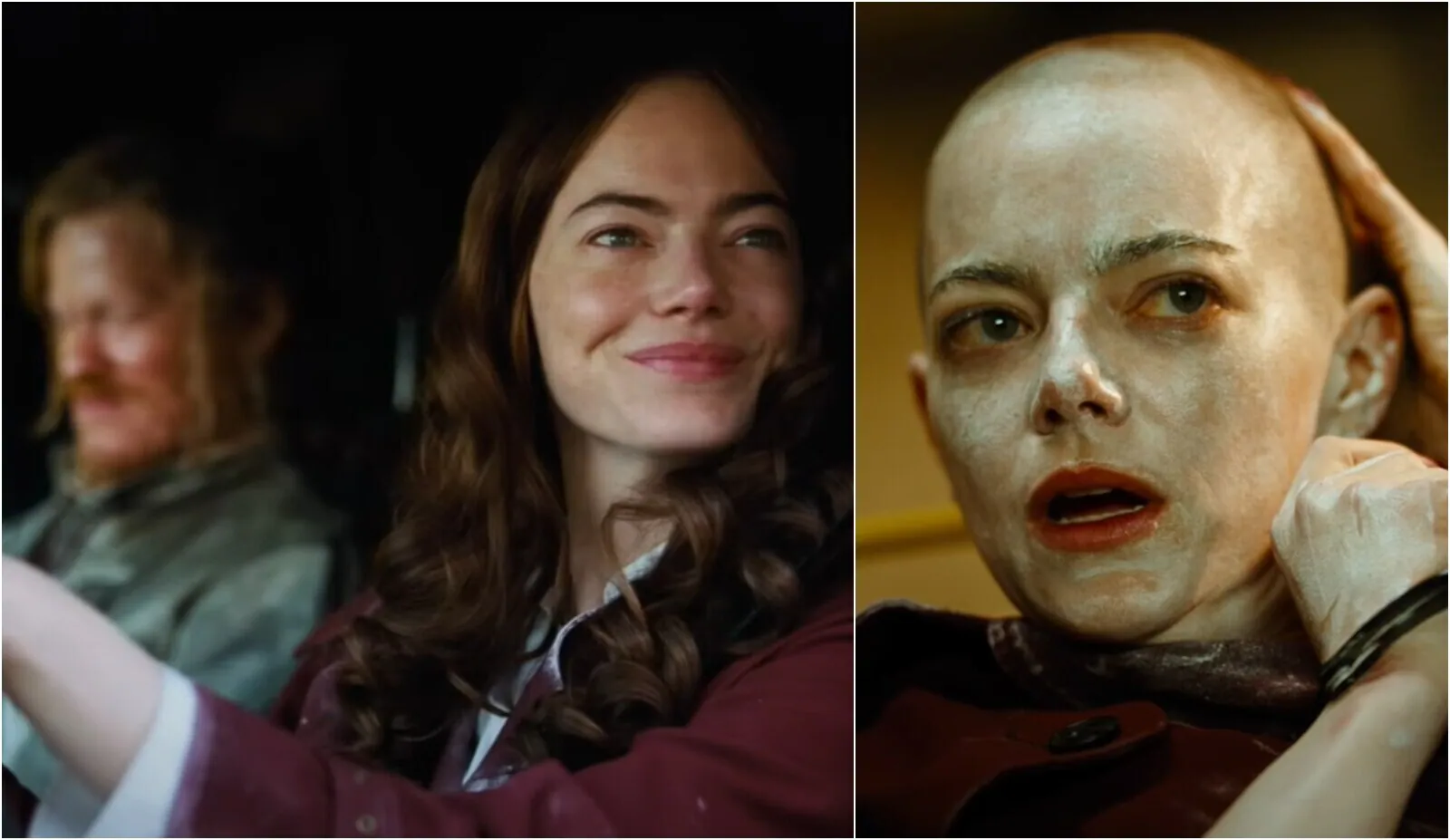
Every so often, a film arrives that doesn’t just entertain audiences—it unsettles them, provoking debates that spill out of movie theaters and onto social media timelines. In 2025, that film is undoubtedly Bugonia. Directed by the singular Yorgos Lanthimos and starring Emma Stone in yet another transformative role, Bugonia has quickly cemented itself as a cultural lightning rod. It is a movie that defies easy categorization, blending dark satire, sci-fi paranoia, and psychological horror into a package that some viewers find brilliant and others find deeply disturbing.
The film’s premise alone is enough to raise eyebrows: two conspiracy-obsessed men kidnap a high-powered pharmaceutical CEO, convinced she is an alien intent on destroying the planet. But it is the execution—Lanthimos’ trademark surrealism combined with an unflinching look at modern misinformation—that has truly ignited the firestorm. From visceral scenes involving head-shaving to marketing stunts demanding bald attendees, Bugonia seems designed to provoke.
Whether you see it as a masterpiece of the “misinformation age” or a step too far into cinematic absurdity, there is no denying its impact. This post explores exactly why Bugonia has become the year’s most talked-about movie, dissecting the controversies, the performances, and the polarized reactions that have made it a defining moment in 2025 cinema.
Controversial Themes in Bugonia
At its core, Bugonia is a reflection of a fractured society. While on the surface it is a remake of the 2003 South Korean cult classic Save the Green Planet!, Lanthimos has updated the narrative to speak directly to the anxieties of the mid-2020s. The controversy largely stems from how uncomfortably close the film cuts to the bone of real-world issues.
The Mirror of Conspiracy Culture
The film’s protagonists, played with unhinged intensity by Jesse Plemons and Aidan Delbis, are not traditional villains. They are portraits of disenfranchisement—men who have fallen down the rabbit hole of internet conspiracy theories. Critics and audiences alike have debated whether the film satirizes these characters or dangerously humanizes them. By grounding their violent actions in genuine pain—the opioid crisis, ecological collapse, and economic failure—Lanthimos forces the audience to sit in an uncomfortable space of empathy for characters committing heinous acts.
Violence and Absurdity
True to Lanthimos’ style (seen in Dogtooth and The Killing of a Sacred Deer), the violence in Bugonia is stark and often clinically detached. The kidnapping and subsequent torture of Michelle (Stone’s character) are depicted with a matter-of-factness that many viewers found jarring. The film doesn’t glamorize violence, but it also refuses to look away, using it as a tool to heighten the absurdity of the situation. This clash between horrific on-screen events and the film’s “black comedy” label has been a significant point of contention, with some arguing the tone trivializes the suffering depicted.
Emma Stone’s Bold Performance
Emma Stone’s collaboration with Yorgos Lanthimos has produced some of the most daring work of her career, from The Favourite to Poor Things. However, her role as Michelle in Bugonia pushes boundaries in a way that feels entirely new.
The Physical Transformation
Much of the pre-release buzz focused on Stone’s physical commitment to the role. In a pivotal and harrowing sequence, her character’s head is shaved by her captors—a moment that Stone performed for real. This wasn’t just a prosthetic trick; it was a raw, vulnerable act that stripped away the vanity usually afforded to Hollywood A-listers. This visual shock serves as a constant reminder of her dehumanization throughout the film.
A Performance of Restraint
Unlike the fantastical Bella Baxter in Poor Things, Michelle is a grounded, icy corporate figure. Stone plays her with a terrifying ambiguity. Is she an alien? Is she just a ruthless CEO? Or is she an innocent victim? Stone walks this tightrope masterfully. Her performance has polarized audiences; some find her character’s detachment alienating (pun intended), while others view it as a brilliant reflection of the “corporate alien” archetype—leaders so disconnected from humanity they might as well be from another planet.
Audience Reactions and Online Debate
If you’ve logged onto Reddit or X (formerly Twitter) in late 2025, you’ve likely seen the Bugonia discourse. The film has inspired a level of analysis and argument reserved for the most divisive pieces of art.
The “Bald” Screenings
The controversy began even before the wide release. In a marketing move that critics called “exploitative” and fans called “genius,” Focus Features hosted early screenings in Los Angeles exclusively for bald attendees or those willing to shave their heads on-site. The stunt went viral, framing the movie as an immersive cult experience. While it generated massive publicity, it also sparked debates about the ethics of extreme marketing and whether it trivialized the film’s darker themes.
Fan Theories and Polarization
Online, the film has split viewers into two distinct camps. One side views Bugonia as a prophetic warning about where conspiracy culture is leading us—a “Misery” for the QAnon era. They dissect every line of dialogue, looking for clues to validate the protagonist’s alien theory. The other side criticizes the film for being “weird for weird’s sake,” arguing that its ambiguous ending and surreal tone ultimately say nothing substantive about the serious topics it raises. This polarization hasn’t hurt the film; in fact, it has fueled its box office success, with Bugonia scoring the year’s best per-screen debut average for an indie film.
Critical Reception
Critically, Bugonia has been a smash, though not without its detractors. Premiering at the Venice Film Festival, it received a thunderous ovation, but reviews highlighted the difficult nature of the watch.
Praise for Originality
Prominent critics have hailed it as a “return to form” for Lanthimos after the mixed reception of Kinds of Kindness. Pete Hammond of Deadline described it as a “dizzying, batsh*t-crazy story” that ranks among the director’s best work. The praise often centers on the film’s ability to balance high-wire tension with dark comedy, and the technical mastery of shooting on VistaVision cameras, which gives the movie a crisp, uncanny visual texture.
Awards Season Buzz
Despite the controversy—or perhaps because of it—the industry has embraced the film. It has garnered Golden Globe and Critics Choice Award nominations, including Best Picture and Best Actress for Stone. This institutional validation has only added fuel to the fire, validating those who see it as high art while frustrating those who find it repellent.
Streaming Release and Accessibility
The conversation around Bugonia gained a second wind with its streaming release. Following its theatrical run in October, the film hit Peacock on December 26, 2025.
The “living room” factor
Bringing such an intense and visually specific film into the living room changed the dynamic of the conversation. Viewers watching at home detailed their visceral reactions in real-time. The accessibility meant a wider, perhaps less arthouse-inclined audience was exposed to Lanthimos’ style, leading to a fresh wave of “WTF did I just watch?” posts.
A Strategy of Immediacy
The short window between its theatrical Halloween release and its post-Christmas streaming debut kept the momentum alive. Unlike films that fade from memory after leaving theaters, Bugonia stayed in the cultural zeitgeist for the entire Q4 of 2025, transitioning seamlessly from a “must-see theatrical event” to a “must-discuss holiday stream.”
Comparison With Other 2025 Films
2025 was a year of strong releases, from Avatar: Fire and Ash to Chloé Zhao’s Hamnet. Yet, Bugonia stands apart.
Where blockbusters like Avatar offered escapism, Bugonia offered confrontation. While other indie darlings focused on intimate, human dramas, Bugonia operated on a scale of operatic absurdity. It didn’t try to please everyone; it tried to provoke everyone. In a landscape often dominated by safe sequels and predictable IP, its refusal to compromise is arguably its most controversial—and valuable—trait.
FAQs
Why is Bugonia considered controversial?
Bugonia deals with sensitive themes like conspiracy theories, extreme paranoia, and violence against women in a tone that blends satire with horror. Its marketing stunts, including “bald-only” screenings, also sparked debates about ethics and exploitation in film promotion.
Where can I watch Bugonia?
Following its theatrical run in October 2025, Bugonia is available to stream exclusively on Peacock as of December 26, 2025.
What makes Emma Stone’s role unique?
Stone plays a pharmaceutical CEO suspected of being an alien. The role required her to shave her head on camera, and she delivers a performance that is notably colder and more ambiguous than her previous characters, challenging audience sympathies.
Is Bugonia critically acclaimed despite controversy?
Yes. Despite polarizing audiences, it has received significant critical acclaim, including nominations for Golden Globes and Critics Choice Awards. Critics have praised its direction, cinematography, and the performances of Stone and Jesse Plemons.
The Final Verdict on 2025’s Most Divisive Film
Love it or hate it, Bugonia is a film that demands a reaction. By holding a mirror up to our modern obsessions with conspiracy and control, Yorgos Lanthimos has created a piece of art that feels terrifyingly relevant. It is messy, uncomfortable, and undeniably memorable—qualities that define the very best of controversial cinema.
As we move further into the decade, Bugonia will likely remain a touchstone for discussions about how film captures the madness of the modern world. If you haven’t seen it yet, you are missing out on the cultural debate of the year.
Watch Bugonia Now
Don’t just take the internet’s word for it. Stream Bugonia on Peacock today and decide for yourself: Is it a paranoid masterpiece or a step too far? Watch now and share your thoughts to join the conversation around one of 2025’s most talked-about films.
Leave a Reply