

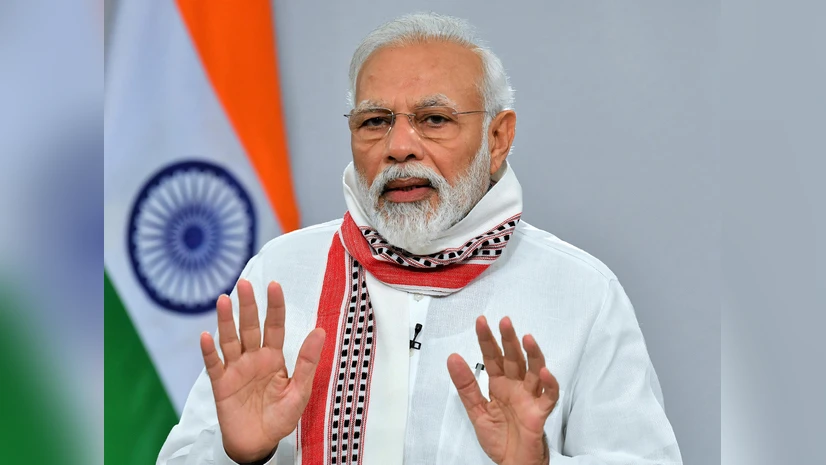
Since taking office in 2014, Prime Minister Narendra Modi has become one of the most defining figures in Indian history. His tenure has been characterized by massive mandates, ambitious slogans, and a promise to transform India into a global superpower. From “Achhe Din” (Good Days) to the vision of a “Viksit Bharat” (Developed India) by 2047, the narrative has always been grand in scale.
However, governance over a decade is rarely without hurdles. While supporters point to infrastructure development and an elevated global standing, critics argue that the administration has faced significant stumbling blocks. The period from 2014 to 2025 has seen economic shocks, social unrest, and questions regarding institutional autonomy.
Evaluating a leader’s legacy requires looking beyond the speeches and examining the on-ground reality of policy implementation. To understand the trajectory of modern India, we must critically analyze the primary challenges and criticisms that have emerged during Prime Minister Modi’s time in power. This analysis explores the economic, social, and political friction points that have defined this era.
Economic Reforms and Challenges
The economic philosophy of the Modi government has been a mix of welfarism and aggressive formalization. While the intent has often been to streamline the economy, the methods and timing have sparked intense debate and criticism regarding their impact on the average citizen.
Demonetization and the Informal Sector
In November 2016, the government announced the demonetization of ₹500 and ₹1,000 banknotes, withdrawing 86% of the currency in circulation overnight. The stated goals were to curb black money, stop terror financing, and push for a digital economy. While digital transactions did surge, the immediate aftermath was a severe liquidity crunch.
The criticism here centers on the execution and the impact on India’s vast informal sector, which runs largely on cash. Small and Medium Enterprises (SMEs), daily wage laborers, and the agricultural supply chain suffered immense disruption. Economists argue that this move slowed GDP growth at a crucial time, and the goal of extinguishing black money yielded mixed results, as nearly 99% of the demonetized currency returned to the banking system.
GST Rollout and Compliance Issues
The Goods and Services Tax (GST), launched in 2017, was a landmark reform intended to create a “One Nation, One Market, One Tax” system. While it successfully replaced a cascading tax structure, the implementation faced heavy scrutiny.
Businesses, particularly smaller ones, struggled with the complex, multi-tiered tax slab system and a glitch-prone technological backbone. The initial compliance burden was high, leading to confusion and financial strain for traders. Furthermore, state governments have frequently clashed with the center over delays in GST compensation, raising questions about the fiscal federalism that GST was supposed to uphold.
Inflation and the Employment Crisis
Perhaps the most persistent criticism has been the issue of “jobless growth.” Despite India being one of the fastest-growing major economies, employment generation has struggled to keep pace with the millions of young people entering the workforce annually.
High youth unemployment rates have been a focal point of opposition attacks. Coupled with this is the challenge of inflation. The post-pandemic era saw rising costs of fuel, food, and essentials, putting a strain on household budgets. While global factors played a role, critics argue that domestic policy interventions could have been more effective in cushioning the blow for the lower and middle classes.
Social and Policy Criticisms
The social fabric of the nation has undergone significant stress tests during this period. The administration’s approach to dissent and policy rollout has often led to prolonged standoffs with civil society groups.
Handling of Farmer Protests
The introduction of three farm laws in 2020 sparked one of the largest protests in human history. The government marketed the laws as necessary reforms to modernize agriculture and give farmers market freedom. However, farmers feared the corporatization of agriculture and the dismantling of the Minimum Support Price (MSP) safety net.
The criticism was not just about the laws themselves, but the lack of consultation before passing them. The year-long protest on the borders of Delhi eventually led to the repeal of the laws in 2021. This episode was widely viewed as a failure of stakeholder management and a rare policy retreat for a government known for its decisiveness.
Gap Between Promises and Reality
The political rhetoric of the BJP-led government is known for its high targets. However, the gap between specific promises and delivered reality remains a point of contention.
For instance, the promise to double farmers’ income by 2022 faced significant headwinds due to rising input costs and climate inconsistency. Similarly, the Smart Cities Mission, while improving pockets of urban infrastructure, has faced criticism for slow utilization of funds and a lack of holistic urban planning in many identified cities.
Health and Education Reforms
The COVID-19 pandemic exposed severe gaps in India’s public health infrastructure. The second wave in 2021 was particularly devastating, leading to widespread criticism regarding preparedness and oxygen shortages. While the subsequent vaccination drive was a logistical triumph, the initial handling left a dent in the government’s administrative reputation.
In education, the New Education Policy (NEP) 2020 was welcomed as a visionary document. However, critics point out that without a substantial increase in budgetary allocation (spending remains below the target of 6% of GDP), the structural changes envisioned in the NEP may remain on paper.
Foreign Policy and Diplomatic Hurdles
Under PM Modi, India has pursued a more muscular and visible foreign policy. While this has elevated India’s status at forums like the G20, neighborhood relations and border security remain complex challenges.
Border Tensions and Security
The most significant security challenge has been the deteriorating relationship with China. The 2020 Galwan Valley clash marked the first deadly skirmish between the two nations in decades. Since then, the standoff in eastern Ladakh has persisted. Critics argue that the government has been opaque about the extent of Chinese encroachment and that diplomatic and military talks have yielded slow results in restoring the status quo.
Trade Negotiations and Global Perception
India’s decision to opt out of the Regional Comprehensive Economic Partnership (RCEP) was driven by domestic industry concerns, but it also raised questions about India’s integration into global supply chains. Furthermore, while India maintains strong ties with Western nations, there has been increasing scrutiny from international bodies and Western media regarding human rights, press freedom, and the treatment of minorities, complicating India’s soft power projection.
Governance and Implementation Gaps
The governance style of the Modi administration is often described as centralized and bureaucrat-driven. While this can speed up decision-making, it creates its own set of problems.
Centralization vs. Federalism
A recurring critique from opposition-ruled states is the perceived erosion of federalism. Allegations include the misuse of central investigative agencies against political opponents and the central government encroaching on state subjects. The centralization of power within the Prime Minister’s Office (PMO) is often cited by political analysts as a bottleneck that disempowers ministries and suppresses internal feedback loops.
Digital India and the Divide
The push for Digital India has revolutionized payments through UPI and improved direct benefit transfers. However, the digital divide remains a stark reality. In rural areas, internet connectivity and digital literacy lag behind. During the pandemic, this divide became a barrier to accessing education and even vaccination slots, highlighting that technology without inclusive infrastructure can exacerbate inequality.
Environmental and Climate Challenges
India has set ambitious targets for renewable energy, aiming for net-zero emissions by 2070. PM Modi has championed the International Solar Alliance and the “Lifestyle for Environment” (LiFE) movement.
Air Pollution and Urban Ecology
Despite these high-level commitments, on-ground environmental indicators are worrying. Northern India faces a perennial air pollution crisis that shortens life expectancy. Critics argue that environmental regulations have been diluted to favor ease of doing business and industrial projects. The balance between aggressive infrastructure expansion—such as highways through ecologically sensitive zones in the Himalayas—and environmental preservation remains a critical area where the government faces pushback from ecologists.
Public Perception and Political Critique
The narrative surrounding the Modi government is heavily influenced by how information is consumed and controlled.
Media and Civil Society
India’s ranking on the World Press Freedom Index has seen a decline during this period. There are widespread concerns about the mainstream media’s reluctance to question the government and the increasing pressure on independent digital platforms. Civil society organizations and NGOs have also reported tighter regulations on foreign funding and operations, leading to accusations that the government is stifling dissenting voices.
Social Polarization
Perhaps the most sensitive criticism relates to social cohesion. Political opponents and international observers have frequently pointed to a rise in majoritarian politics. The discourse surrounding citizenship laws (CAA-NRC) and anti-conversion laws in various states has deepened fault lines. Critics argue that the focus on identity politics distracts from core developmental issues and risks long-term social stability.
Achievements vs Shortcomings
To provide a balanced view, one must acknowledge that the criticisms exist alongside significant achievements.
The administration has delivered on tangible infrastructure at an unprecedented pace—highway construction, new airports, and railway electrification have surged. The success of the Direct Benefit Transfer (DBT) scheme has plugged leakages in welfare delivery, ensuring money reaches the poor. The robust adoption of the Unified Payments Interface (UPI) has made India a global leader in digital finance.
However, the shortcomings lie in the structural health of the economy and society. The K-shaped recovery implies that while the corporate sector and the wealthy have thrived, the poor and lower-middle class have struggled to regain pre-pandemic income levels. The challenge for the government has been translating infrastructure growth into human capital development—health, education, and quality jobs.
Reflecting on a Decade of Governance
The decade from 2014 to 2025 under Prime Minister Narendra Modi will be remembered as a transformative yet turbulent era. It was a time of aggressive digitization, infrastructure overhaul, and a reimagining of India’s place in the world. Yet, it was also a period marked by economic disruption, social unrest, and questions about the health of democratic institutions.
Understanding these challenges is not about dismissing the progress made, but about recognizing the complexities of governing a diverse nation of 1.4 billion people. For India to truly achieve its potential, the gaps in employment, social cohesion, and institutional autonomy must be addressed with the same vigor applied to building highways and digital platforms.
The true test of this legacy will be how these criticisms are absorbed and whether future policies pivot to address the grievances of those who feel left behind by the rapid pace of change.
Stay informed on policy analysis.
To understand the deeper economic implications of these policies, explore our detailed reports on India’s fiscal landscape.
Leave a Reply