

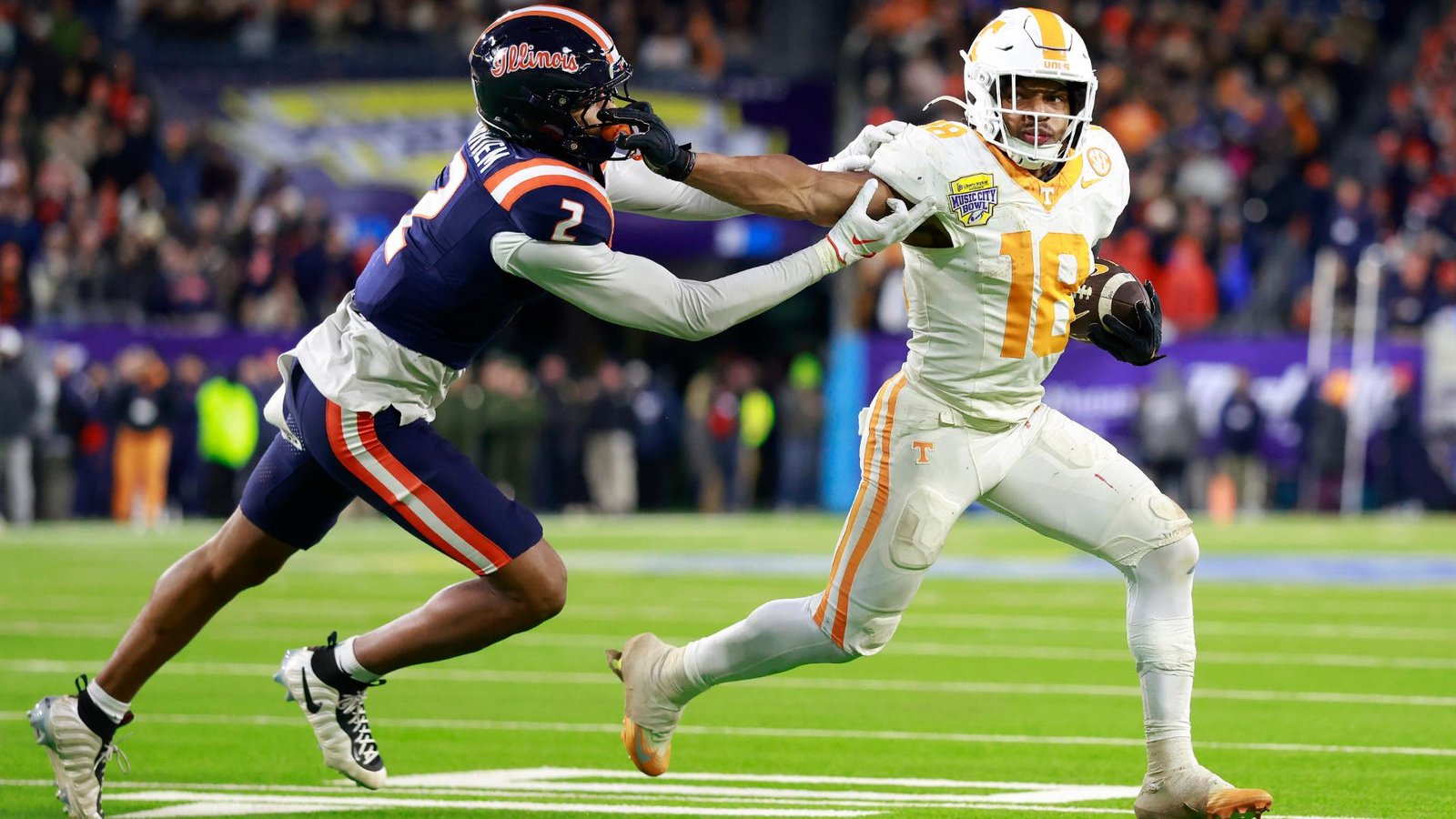
Nashville is a city built on stories, usually set to the strum of an acoustic guitar and told in three-minute verses. But on a crisp evening at Nissan Stadium, the Fighting Illini and the Tennessee Volunteers authored a different kind of epic—one written in sweat, grass stains, and a scoreboard that defied every pre-game prediction.
The atmosphere in the Music City was electric long before kickoff. Broadway was a sea of orange, with Volunteer fans turning the downtown strip into a de facto home game. The expectation wasn’t just a Tennessee victory; it was a coronation. The narrative entering the bowl season suggested an SEC powerhouse would simply overwhelm a gritty but outmatched Big Ten opponent. The betting lines, the pundits, and the energy in the stadium all pointed in one direction.
But football is not played on paper, and it certainly isn’t decided by crowd noise. What unfolded over sixty minutes of game time was a masterclass in resilience and tactical disruption. Illinois didn’t just survive the environment; they dismantled the script. By dragging the high-flying Volunteers into a physical, muddy style of play, Illinois secured a victory that will be talked about in Champaign—and lamented in Knoxville—for decades. This wasn’t just a win; it was a statement that echoed louder than any concert on Broadway.
Game Overview – Music City Bowl Showdown
The stage was set perfectly at Nissan Stadium. With the Cumberland River flowing just outside and the Nashville skyline illuminating the night, the stakes felt higher than a standard exhibition. For Tennessee, this was about cementing their status as a national contender and finishing the season with a marquee win closer to home. For Illinois, it was an opportunity to prove that their brand of physical, disciplined football could stand up against elite speed and athleticism.
The pre-game narratives focused heavily on the disparity in offensive philosophy. Tennessee’s warp-speed offense, known for snapping the ball before the chains even reset, was pitted against Illinois’ methodical, ground-and-pound approach. Analysts questioned whether the Illini defense could keep pace, or if they would be gashed for big plays early and often.
However, when the final whistle blew, those narratives had been shredded. The scoreboard reflected a tight, grueling contest that favored the team willing to do the dirty work in the trenches. The outcome was a shock to the system for the SEC faithful, as Illinois walked away with the trophy, leaving the stadium in a state of stunned silence.
How the Game Unfolded
The game began exactly as many feared it would for Illinois. Tennessee received the opening kickoff and orchestrated a lightning-fast drive, marching down the field in under two minutes to put points on the board. The speed was blinding, and for a moment, it looked like the rout was on. The stadium was shaking, and the Illini defense looked back on its heels, struggling to communicate against the tempo.
But the first-half momentum shifted midway through the second quarter. Illinois, refusing to panic, put together a drive that chewed up nearly eight minutes of the clock. It was boring, methodical, and absolutely effective. By keeping the explosive Tennessee offense on the sideline, Illinois neutralized the crowd and rested their own defense. A late second-quarter turnover by Tennessee, forced by a relentless Illinois pass rush, led to a field goal that sent the teams into the locker room locked in a tighter battle than anyone expected.
Halftime adjustments were the story of the game. While Tennessee looked to reopen the vertical passing game, Illinois doubled down on gap integrity and safety help over the top. The third quarter became a defensive stalemate, a war of attrition that favored the physically imposing Big Ten squad.
The fourth-quarter drama was palpable. With the score knotted up and time winding down, every snap felt like a sudden-death situation. Tennessee, feeling the pressure of the upset, began to press, leading to uncharacteristic mistakes. Illinois remained stoic, sticking to their game plan and waiting for the opportune moment to strike.
The Defining Moments That Turned the Game
In a contest decided by razor-thin margins, three specific sequences turned the tide permanently in Illinois’ favor. The first came early in the fourth quarter. Tennessee faced a fourth-and-short at midfield. In a bold attempt to seize momentum, they opted to go for it rather than punt. The Illinois defensive line, which had been winning the line of scrimmage quietly all night, surged forward. They stuffed the run in the backfield, resulting in a turnover on downs that sucked the air out of the orange-clad sections of the stadium.
The second moment was a masterful display of situational football. Following the defensive stop, Illinois faced a third-and-long. Instead of playing it safe, the coaching staff dialed up a screen pass that caught the aggressive Tennessee blitz off guard. The play broke for huge yardage, flipping field position and putting Illinois in scoring range. It was a play call that demonstrated the coaching staff was playing to win, not playing to avoid losing.
Finally, the coaching decisions under pressure in the dying minutes sealed the fate of the game. With Tennessee driving for a potential winning score, Illinois disguised their coverage, showing a blitz before dropping into a zone. The confusion caused the Tennessee quarterback to hold the ball a second too long, leading to a strip-sack that was recovered by Illinois. That turnover effectively ended the game, capping off a series of pivotal moments where execution met preparation.
Illinois’ Game Plan That Beat Tennessee
The blueprint for the upset was risky, but it was executed to perfection. Offensively, Illinois knew they could not get into a shootout. If the score reached the 40s, they would lose. So, they focused entirely on offensive execution that prioritized ball security and clock management. They didn’t aim for explosive plays; they aimed for positive plays. Three yards, four yards, three yards, first down. This rhythm frustrated the Tennessee defense, which relies on chaos and negative plays to fuel their energy.
Defensively, the adjustments were subtle but brilliant. Illinois sacrificed pass rush aggressively early in the down to ensure containment. They refused to let Tennessee’s receivers get behind them, forcing the Volunteers to execute long, disciplined drives—something that ran contrary to their quick-strike DNA. By forcing Tennessee to be patient, Illinois forced them out of their comfort zone.
Controlling the tempo was the final piece of the puzzle. Illinois huddled. They used the play clock. They slowed the game down to a crawl. This reduced the total number of possessions in the game, magnifying the importance of every single drive. In a game with fewer chances, the team that makes fewer mistakes usually wins, and Illinois ensured the game was played at a walking pace, not a sprint.
Tennessee’s Missed Opportunities
For all of Illinois’ credit, Tennessee will look back at the film and see a game they let slip away. The primary culprit was red-zone failure. Twice the Volunteers marched inside the Illinois 20-yard line, and twice they came away with zero points. One drive ended in a missed field goal, and another ended with a fumble on a botched exchange. In a low-scoring thriller, leaving points on the field is fatal.
Costly penalties also derailed the Volunteers’ rhythm. False starts—unusual for a home-heavy crowd—put them behind the chains, forcing obvious passing situations that allowed the Illinois defense to pin their ears back. There were also crucial personal fouls that extended Illinois drives that should have ended in punts.
Ultimately, the game slipped away because Tennessee failed to adapt when their primary plan didn’t work. When the deep ball was taken away, they struggled to pivot to a short passing game or a consistent power run. They kept looking for the knockout punch against a boxer who was happy to win on points, and that stubbornness cost them the trophy.
Standout Performances
Illinois Stars of the Night
The victory was a total team effort, but specific units shone brightest. The offensive leaders were undoubtedly the offensive line. They controlled the line of scrimmage against a fast, athletic SEC front, opening holes in the fourth quarter when everyone else was exhausted. The quarterback managed the game perfectly, avoiding turnovers and making crucial throws on third down to keep the chains moving.
On the other side of the ball, the defensive impact players were the linebackers. Their ability to fill gaps in the run game while dropping into coverage to rob the middle of the field was the key to stifling Tennessee’s RPO (Run-Pass Option) game. They played with a discipline that bordered on robotic, refusing to bite on fakes and staying true to their assignments.
Tennessee’s Bright Spots
Despite the loss, there were individual efforts that deserve recognition. Tennessee’s star receiver was nearly ungovernable in the first half, making acrobatic catches that showcased elite talent. The defensive line also had moments of dominance, racking up tackles for loss that kept the Illinois offense behind the sticks for stretches of the game. These players fought until the final whistle, even as the schematic battle turned against them.
Social Media and Fan Reactions
As the clock hit zero, the internet reacted with the speed and ferocity expected of a major college football upset. Viral highlights of the Illinois defensive stops circulated instantly, accompanied by shocked emojis and reaction GIFs. The image of the Illinois sideline rushing the field stood in stark contrast to the stunned faces in the stands.
Fan shock vs. celebration created a distinct divide on platforms like X (formerly Twitter). Tennessee fans were despondent, questioning play-calling and preparation, while Illinois fans—and Big Ten supporters at large—took a victory lap. The “SEC vs. Big Ten” narrative fueled the fire, with fans debating conference superiority well into the night.
The game trended nationally because it defied the logic of the season. Everyone loves an underdog, and watching a team physically dismantle a favorite is a compelling storyline that transcends team loyalty. It was a reminder that in college football, reputation means nothing once the ball is snapped.
What the Music City Bowl Upset Means
This wasn’t just a generic bowl win for Illinois; it was a program-defining moment. Beating an SEC team in essentially a road environment validates the coaching staff’s vision. It proves that their style of play works on a big stage. This win will likely provide a massive boost in recruiting, showing prospective players that Illinois can compete with—and beat—the heavyweights of the sport. It builds a foundation of belief heading into the offseason.
For Tennessee, the loss forces a period of reflection. They take a bitter lesson into next season: talent alone is not enough. The loss highlighted vulnerabilities in their scheme when the tempo is slowed down and the game becomes a physical brawl. It serves as a reminder that to be a true national contender, you must have a “Plan B” when the fastball isn’t working.
Conclusion
The Music City Bowl is often just another date on the calendar, but this matchup will be remembered as a classic clash of styles. It was a game where grit overcame glamor, where strategy outmaneuvered speed. Illinois stunned Tennessee not by a fluke, but by dragging them into deep water and proving they could swim longer.
As the lights went out at Nissan Stadium, the narrative of the college football season shifted slightly. It was a reminder that on any given night, the underdog can bite back. For Illinois fans, it was a night of vindication. For college football fans, it was a thriller that delivered on every level.
If you want to stay ahead of the game with deep dives into college football strategies and player analysis, don’t miss out. Subscribe to our newsletter today for exclusive insights and off-season breakdowns!
FAQ SECTION
Who won the Music City Bowl between Illinois and Tennessee?
In this thrilling matchup, Illinois defeated Tennessee in a stunning upset victory, relying on a strong defensive performance and disciplined offensive clock management.
Where was the Music City Bowl played?
The game was played at Nissan Stadium in Nashville, Tennessee, creating a distinct home-field advantage atmosphere for the Volunteers that Illinois ultimately overcame.
Why is the Illinois vs Tennessee game trending?
The game is trending due to the unexpected nature of the upset. Tennessee entered as heavy favorites, and Illinois’ ability to physically dominate the game and neutralize Tennessee’s high-powered offense shocked the college football world.
What does this win mean for Illinois football?
This victory is a significant milestone for the Illinois program. It validates their coaching philosophy, provides a massive boost to recruiting efforts, and establishes them as a team capable of competing with premier SEC opponents.
Leave a Reply