

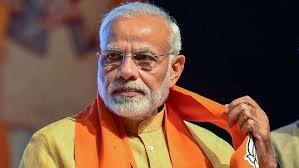
India prides itself on being the world’s largest democracy, a nation built on a foundation of robust institutions designed to operate independently of political power. For decades, this framework has been the bedrock of the country’s stability, ensuring that the rule of law prevails over the whims of any single leader. However, the narrative has shifted significantly over the past ten years. Critics, opposition leaders, civil society groups, and constitutional experts have increasingly raised a troubling question: are India’s key institutions being transformed from guardians of democracy into instruments of political control?
At the centre of this heated debate are premier investigative agencies such as the Enforcement Directorate (ED) and the Central Bureau of Investigation (CBI), alongside the Income Tax Department. The scrutiny has even extended to constitutional bodies like the Election Commission. While the Modi government maintains that these institutions are merely enforcing the law without prejudice, a growing chorus of detractors argues that their selective and aggressive deployment against political opponents reveals a deeper, more systemic erosion of democratic checks and balances.
This is not a debate about whether corruption should be punished—few would argue against that. Rather, it is a discussion about whether the mechanisms of justice are being weaponised to dismantle political opposition, creating an uneven playing field that threatens the very spirit of Indian democracy.
The Role of Institutions in a Healthy Democracy
To understand the gravity of these accusations, one must first appreciate what these institutions are designed to do. In any functioning democracy, investigative agencies, courts, and election bodies serve as the neutral umpires of the political game. Their mandate is clear:
- Act independently: They must operate free from the influence or pressure of the ruling government.
- Ensure accountability: They must hold all individuals equally accountable, regardless of their political affiliation or social standing.
- Prevent power concentration: They serve as checks on the executive, preventing any one branch of government from becoming too powerful.
- Protect rights: They safeguard the rights of citizens and ensure fair political competition.
When these institutions appear partisan or selective, the danger is that democracy slides from the ‘rule of law’ to ‘rule by fear’. Trust in the system erodes, and the public begins to view justice not as a blind arbiter, but as a tool of the powerful.
ED and CBI: From Watchdogs to Attack Dogs?
The most vocal criticism against the current administration centres on the Enforcement Directorate (ED) and the Central Bureau of Investigation (CBI). Once seen as the premier agencies for investigating high-level corruption and economic offences, they are now frequently accused of functioning as extended arms of the ruling Bharatiya Janata Party (BJP).
The Pattern of Deployment
Opposition parties have highlighted a distinct pattern in how these agencies operate. Data compiled by various media outlets and civil society watchdogs suggests that a disproportionate number of ED and CBI cases filed in the last decade involve opposition leaders.
The timing of these investigations often raises eyebrows. Raids and summons frequently coincide with crucial political moments—just before state elections, during forceful anti-government protests, or ahead of critical parliamentary sessions. This synchronization has led critics to label these actions as “political vendettas” disguised as legal procedure.
The Process as Punishment
Perhaps the most damaging aspect of these investigations is the concept that “the process itself has become the punishment.” Under the Prevention of Money Laundering Act (PMLA), which grants the ED sweeping powers, securing bail is notoriously difficult.
Agencies often make high-profile arrests, generating sensational headlines and dominating the news cycle. However, these are frequently followed by long delays in filing charge sheets. Leaders remain incarcerated for months or even years without trial, their reputations tarnished and their ability to campaign or lead their parties neutralized.
The conviction rates in these politically sensitive cases remain extremely low. Yet, the damage is done long before a verdict is reached. Political momentum is disrupted, families are put under immense strain, and the narrative of corruption is successfully planted in the public mind, regardless of the eventual legal outcome.
The ‘Washing Machine’ Phenomenon
A frequently cited criticism, often referred to in Indian political parlance as the “Washing Machine” effect, highlights the perceived selectivity of these probes. The allegation is simple: opposition leaders facing severe corruption charges and aggressive investigations often see their cases stall, slow down, or disappear entirely the moment they switch allegiance to the BJP.
Conversely, politicians who remain steadfast in the opposition continue to face prolonged investigations and repeated interrogation. This stark contrast fuels the argument that the primary objective of these agencies is not to root out corruption, but to engineer political defections and destabilise opposition parties. It suggests a system where immunity is available for a price—political loyalty.
Impact on Federalism: Squeezing the States
India’s Constitution envisions a federal structure where states enjoy significant autonomy. However, the aggressive use of central agencies has created severe friction between the Centre and opposition-ruled states.
Critics argue that central agencies are increasingly bypassing state governments to conduct raids and investigations, undermining the jurisdiction of state police forces. Furthermore, the role of Governors—appointed by the Centre—has come under scrutiny. In several non-BJP ruled states, Governors have been accused of obstructing legislation, delaying appointments, and essentially acting as political agents of the Centre rather than neutral constitutional heads.
This multi-pronged pressure weakens the spirit of cooperative federalism. It concentrates power in New Delhi and limits the ability of regional parties to govern effectively, thereby centralising authority in a way that the Constitution’s framers arguably never intended.
The Election Commission and the Question of Fairness
The Election Commission of India (ECI) has historically been one of the most trusted institutions in the country, revered for its ability to conduct free and fair elections on a massive scale. However, in recent years, its aura of invincibility has dimmed.
Critics allege that the ECI has shown reluctance or delay in acting on complaints against top leadership of the ruling party regarding hate speech or violations of the Model Code of Conduct. Conversely, notices are sent promptly to opposition leaders for similar or lesser alleged infractions.
Furthermore, the transparency of the appointment process for Election Commissioners has been debated, with concerns that the executive has too much control over who sits on the body that oversees its own re-election. When the neutrality of the electoral referee is questioned, the credibility of the election results themselves comes under strain.
The Shrinking Space for Dissent: Media and Parliament
The erosion of democratic norms is not limited to investigative agencies; it extends to the pillars of information and debate—the media and Parliament.
Media Under Duress
A free press is the lifeblood of democracy, yet journalists and media houses critical of the government have reported an increasingly hostile environment. Tax raids on media offices, legal notices, and the drying up of government advertising revenue are cited as tools used to curb unfavourable coverage.
This pressure creates a “chilling effect,” leading to widespread self-censorship. Mainstream media often pivots to debates that favour the ruling dispensation, while critical voices are relegated to digital platforms or smaller independent outlets.
The Decline of Parliament
Parliament, the supreme legislative body, is meant to be the forum where the government is held accountable. However, recent trends show a decline in its efficacy. Important laws are frequently passed with limited discussion or by voice vote amidst chaos. The suspension of unprecedented numbers of opposition MPs during crucial sessions has further reduced the space for debate.
When the executive faces little scrutiny in Parliament and the media acts with caution, the government operates with a level of impunity that weakens the democratic structure.
Fear as a Political Tool?
Beyond politicians and journalists, civil society groups argue that a climate of fear is permeating broader society. Activists, NGOs, and academics who question government policy often face increased scrutiny regarding their funding (via the Foreign Contribution Regulation Act) or are labelled as “anti-national.”
Laws related to money laundering and national security (such as the UAPA) are used broadly, making bail difficult and legal battles long and expensive. The concern is not just about the targeting of high-profile opposition leaders, but about ordinary citizens fearing the state. Legal uncertainty discourages political participation and dissent, leading to a quieter, more compliant citizenry.
The Government’s Defense: A War on Corruption
For a balanced perspective, it is crucial to acknowledge the Modi administration’s stance. The government vehemently denies allegations of misuse. Their primary arguments include:
- Independent Action: They maintain that investigative agencies act independently based on evidence and that the government does not interfere in their day-to-day operations.
- Legacy of Corruption: Supporters argue that corruption was endemic in India before 2014 and was largely ignored by previous administrations. They claim the current spike in cases represents a necessary “cleanup” of the system.
- Judicial Oversight: The government points out that arrests and custody are subject to judicial review. If agencies were acting illegally, they argue, the courts would intervene.
- Accountability: The administration posits that powerful individuals, who previously considered themselves untouchable, are finally being held accountable for their financial misdeeds.
From this viewpoint, the opposition’s outcry is merely the reaction of entrenched elites losing their impunity.
The Core Democratic Question
Despite the government’s defence, a fundamental question remains: If institutions are truly independent, why does accountability appear so politically one-sided?
This question lies at the heart of the controversy. Democracies do not typically collapse overnight via a coup; they erode gradually. They weaken when institutions lose their neutrality, when the public begins to fear the state apparatus, and when power faces no effective scrutiny.
The accusations regarding the ED, CBI, and other institutions suggest a shift where the law is no longer a shield for the citizen, but a sword for the state. If the mechanisms designed to check power are used to consolidate it, the very definition of democracy is altered.
Why This Debate Matters
This discussion is not merely about the fate of one political party or the legacy of one government. It is about the future of institutional independence in India.
The safety of political opposition is the safety of democracy itself. Without a viable opposition, there is no choice for the voter, and without choice, democracy becomes a hollow ritual. The survival of democratic accountability depends on institutions that are stronger than the individuals in power. As India moves forward, the restoration of trust in these pillars of governance will be essential to ensure that the world’s largest democracy remains its most vibrant.
Stay informed on the state of global democracy. Subscribe to our newsletter for weekly analysis and deep dives into governance, policy, and civil rights.
Leave a Reply