

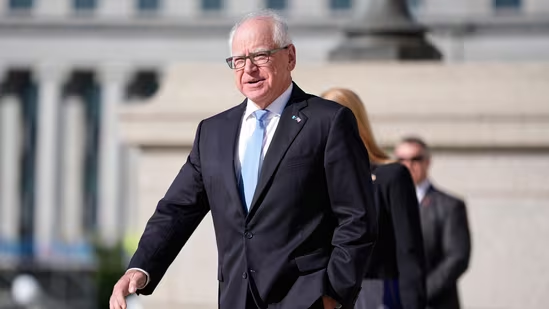
When social media fervor collides with federal investigations, the result is often a chaotic mix of public outrage, political maneuvering, and a desperate search for the truth. This is exactly what is unfolding in Minnesota, where a series of viral videos alleging massive fraud within the state’s daycare system has ignited a firestorm. The allegations suggest that millions of taxpayer dollars intended for child nutrition and care have been siphoned off, leading to intense scrutiny of Governor Tim Walz and his administration.
The situation has evolved rapidly from online speculation to serious legal and political consequences. Federal agencies are involved, indictments have been handed down in related cases, and state legislators are demanding accountability at the highest levels. For residents of Minnesota, the scandal is about more than just politics; it is about the integrity of social safety nets designed to protect the most vulnerable.
Understanding this complex web of accusations requires looking past the 30-second video clips and examining the hard evidence, the scope of the federal probes, and the political fallout that threatens to reshape the state’s leadership. This guide breaks down the timeline of events, the specific allegations, and the arguments driving the calls for Governor Walz’s resignation.
What Sparked the Controversy? Viral Videos and Daycare Claims
The current wave of outrage did not begin in a courtroom or a legislative hearing, but on smartphone screens across the state. The catalyst was a series of videos circulating on platforms like X (formerly Twitter) and TikTok, which purported to show evidence of blatant financial malfeasance within the Minnesota daycare system.
How social media started the buzz
In the digital age, transparency often comes from citizen journalists and whistleblowers. In this case, users began uploading footage that they claimed depicted daycare providers flaunting unexplained wealth. The narrative quickly took hold: individuals operating what should be modest childcare facilities were allegedly mishandling funds meant to feed low-income children during the pandemic.
The videos gained traction because they tapped into a deep-seated frustration regarding government waste. Viewers saw what they believed to be tangible proof of corruption that state auditors had missed. The shareability of this content meant that within days, a local issue had spiraled into a statewide—and eventually national—topic of conversation.
What the videos showed and why they went viral
The content of the footage was visceral. Some videos allegedly showed suitcases full of cash, luxury vehicles parked outside modest daycare centers, and passport-style photos that critics claimed were being used to fabricate enrollment numbers.
One particularly inflammatory claim suggested that daycare centers were logging attendance for children who did not exist or were never present, subsequently billing the state for meals and services never provided. The visual nature of the “evidence”—stacks of money and luxury goods—made the complex issue of forensic accounting immediately accessible and infuriating to the average taxpayer. It bypassed the need for complex spreadsheets, offering instead a simple, enraged narrative: Your money is being stolen.
Immediate public reaction
The reaction was swift and furious. Taxpayers demanded answers, flooding the phone lines of state representatives and taking to comment sections to voice their anger. Parents who struggle to afford legitimate childcare were particularly incensed, feeling that the system was being exploited while they played by the rules. The viral nature of the allegations forced mainstream media and state officials to address the claims much faster than they might have through traditional reporting channels.
What the Federal Investigation Is About
While social media provided the spark, the fuel for this scandal comes from serious, ongoing federal investigations. The viral videos are merely the tip of an iceberg that federal authorities have been chipping away at for months, primarily centered around the misuse of pandemic-era relief funds.
Overview of federal involvement
The Department of Homeland Security (DHS), the Federal Bureau of Investigation (FBI), and the U.S. Attorney’s Office are all actively involved in probing fraud in Minnesota. This is not a routine audit; it is a full-scale criminal investigation. These agencies are looking into how federal funds, specifically those allocated for child nutrition programs during the COVID-19 pandemic, were distributed and used.
Scope of alleged fraud
The investigation is massive in scale. Authorities have already uncovered a scheme involving the non-profit “Feeding Our Future,” where dozens of individuals have been charged with stealing upwards of $250 million. The alleged modus operandi involved creating shell companies and fake distribution sites—including daycares—that claimed to be serving thousands of meals to children a day, despite little to no food actually being purchased or distributed.
The daycare allegations circulating on social media are largely viewed as an extension or a component of this broader fraud network. Investigators are examining whether specific daycare providers colluded with larger non-profits to inflate numbers and split the proceeds of the federal reimbursements.
Clarification from authorities
Federal authorities have been careful to clarify that the investigation is ongoing and complex. They have emphasized that while the “Feeding Our Future” indictments were a major step, the work is not done. The U.S. Attorney has signaled that more charges could be coming as they unravel the networks of money laundering that allowed these funds to be moved overseas or converted into assets like real estate and luxury cars.
What experts have said
Legal and financial experts have weighed in, noting that the sheer volume of money flooding into states during the pandemic overwhelmed oversight mechanisms. “When you prioritize speed of distribution over vetting, fraud is an inevitable byproduct,” noted one forensic accountant analyzing the case. Experts suggest that the federal government is now in the “clawback” phase, attempting to recover assets and prosecute those who took advantage of the crisis.
The State’s Response — What Minnesota Officials Are Saying
As the pressure mounts, the spotlight has turned firmly toward St. Paul. The administration of Governor Tim Walz and the Minnesota Department of Education (MDE), which oversaw the distribution of the funds, are on the defense.
Statements from Gov. Tim Walz and state agencies
Governor Walz has maintained that his administration deserves credit for catching the fraud, not blame for causing it. In various press conferences, Walz has argued that the MDE stopped payments to “Feeding Our Future” when they suspected irregularities, only to be sued by the non-profit and ordered by a judge to resume payments (a claim that has been contested by the judge in question).
The Governor’s office portrays the state as a whistleblower that alerted the FBI, rather than a negligent overseer. “We caught this fraud. We stopped it. And we continue to work with federal partners to ensure justice is served,” has been a consistent theme in official statements.
Clarifications about the footage vs. documented fraud
State officials have urged caution regarding the viral videos. While acknowledging that fraud occurred, they argue that unverified social media clips can lead to witch hunts against legitimate business owners. They emphasize that the legal process relies on documented financial trails, not TikTok views. The state is attempting to walk a fine line: validating the public’s anger over the massive theft of tax dollars while trying to quell the spread of misinformation regarding specific, unindicted daycares.
State-level steps to address concerns
To stem the bleeding of public trust, the state has implemented stricter oversight protocols. This includes more rigorous vetting of non-profit sponsors, increased site visits (which were suspended during the height of the pandemic), and independent audits of the Department of Education’s handling of the funds. The Office of the Legislative Auditor has also launched inquiries to determine exactly where the breakdown in oversight occurred.
Political Fallout — Calls for Gov. Walz to Resign
In the high-stakes arena of state politics, a scandal of this magnitude provides ample ammunition for the opposition. The fraud allegations have become a central pillar of the Minnesota GOP’s critique of the current administration.
GOP legislators publicly urging Gov. Walz to step down
Republican lawmakers have been vocal in their demands for accountability, with many calling for Governor Walz to resign. They argue that the fraud happened on his watch and that his administration failed in its primary duty to safeguard public funds.
Prominent GOP members have held press conferences at the Capitol, stating that the sheer scale of the theft—quarter of a billion dollars—demonstrates “gross incompetence” and “systemic failure.” They contend that red flags were ignored for too long and that the administration was too slow to act even after employees raised concerns.
Arguments from critics vs. responses from the governor’s allies
The Critics: The argument against Walz is rooted in the concept of executive responsibility. Critics assert that the Department of Education answers to the Governor, and therefore, the failure of the department is a failure of the Governor. They point to the fact that money continued to flow to fraudsters long after suspicions were raised.
The Allies: Defenders of the Governor argue that the resignation calls are purely political theater. They point out that the fraud was sophisticated and that the state was hamstrung by court proceedings and pandemic rules. They also emphasize that the federal investigation is prosecuting the criminals, which they view as the system working as intended.
How politics is amplifying the controversy
This scandal has become a proxy war for broader political battles. Every new viral video or federal subpoena is used as leverage in legislative debates and campaign ads. The polarization means that finding a bipartisan solution to prevent future fraud is often sidelined in favor of assigning blame.
Separating Fact from Fiction
With emotions running high, distinguishing between verified facts and internet rumors is critical for understanding the reality of the situation.
Verified Facts
- The Fraud is Real: The Department of Justice has charged dozens of people in the “Feeding Our Future” scheme, involving $250 million in stolen funds.
- Daycares were Involved: Fake or complicit childcare centers were used as shell sites to launder money.
- Federal Investigation is Active: The FBI and IRS are actively seizing assets and investigating further leads.
Speculation and Exaggeration
- “Suitcases of Cash” Videos: While cash seizures have occurred, not every video circulating on social media has been verified as connected to the Minnesota investigation. Some footage may be out of context or repurposed from other events.
- Total System Collapse: Social media often paints the entire Minnesota daycare system as corrupt. In reality, the vast majority of providers are legitimate small businesses operating on thin margins.
- Direct Governor Involvement: There is currently no evidence suggesting Governor Walz was personally involved in the scheme or profited from it. The accusations against him center on administrative negligence, not criminal complicity.
Expert analysis on how misinformation spreads
Media literacy experts point out that this scandal is a textbook example of “data void” exploitation. When official information is slow to release (due to ongoing investigations), internet sleuths fill the void with speculation. While this can sometimes uncover truths, it often leads to the harassment of innocent parties who may be wrongly identified in blurry videos.
Impact on Minnesota Residents
Beyond the headlines and political shouting matches, the people of Minnesota are facing the real-world consequences of this scandal.
Parents and Daycare Providers
For honest daycare providers, the scandal has brought an unfair stigma. Many report feeling scrutinized by parents and neighbors, despite having clean records. They fear that the backlash will lead to onerous new regulations that make it even harder to operate in an industry already suffering from a labor shortage.
Parents are caught in the middle. They rely on state subsidies and nutrition programs to keep childcare affordable. There is a palpable fear that the state, in an effort to crack down on fraud, will overcorrect and cut funding or create red tape that delays essential services for families who truly need them.
Concerns about public trust
The most lasting damage may be to public trust. When taxpayers see $250 million vanish with little immediate accountability, faith in government competence erodes. This cynicism makes it difficult for the state to gain public support for future initiatives or tax levies, as residents question whether their money will be managed responsibly.
National Implications and Media Coverage
While the scandal is centered in the Twin Cities, it has captured the attention of the nation.
How major outlets are reporting the story
National outlets like the New York Times and Fox News have picked up the story, framing it through different lenses. Conservative media tends to focus on the failure of Democratic leadership and the sheer size of the theft. Mainstream national news often focuses on the “Feeding Our Future” aspect as the largest pandemic fraud scheme in the country, using it as a case study for the vulnerabilities of COVID relief programs.
Comparison of local vs. national narrative
Locally, the reporting is granular, focusing on specific names, agency emails, and court documents. Nationally, Minnesota is being used as a cautionary tale. The story resonates because it confirms suspicions that the rapid disbursement of trillions in federal COVID aid was ripe for exploitation. Legislators in other states are now reviewing their own books, worried that a “Minnesota style” scandal could be lurking in their own departments.
What Happens Next — Timelines & What to Watch
As the dust refuses to settle, residents and observers are looking for the endgame.
Expected developments in federal probes
The federal investigation is far from over. Legal analysts expect additional waves of indictments as prosecutors flip lower-level participants to build cases against ringleaders. The trials for those already indicted will likely dominate headlines for years, keeping the scandal fresh in the public consciousness.
Political pressure and potential outcomes
For Governor Walz, the path forward is rocky. While resignation is unlikely absent a “smoking gun” directly linking him to criminal activity, the political damage is significant. The scandal will likely be the primary weapon used against him and his party in upcoming election cycles. The outcome will depend on whether voters view this as a bureaucratic failure he is fixing, or a disqualifying lack of leadership.
How the situation could evolve
Watch for the release of the Legislative Auditor’s report. This document will likely provide the definitive timeline of who knew what and when. If the report contradicts the Governor’s narrative that his administration acted as swiftly as possible, the calls for resignation will grow louder and more bipartisan.
FAQs
What started the Minnesota fraud scandal?
The scandal began with the discovery of massive irregularities in the distribution of federal child nutrition funds during the pandemic, most notably by the non-profit “Feeding Our Future.” It gained recent viral attention due to social media videos alleging widespread cash laundering through daycare centers.
Are the daycare videos proven to be fraud?
While fraud involving daycare sites has been proven in federal court filings, individual viral videos circulating on social media are not always verified evidence. Some may depict actual evidence, while others may be out-of-context footage.
Is Gov. Walz under investigation?
There is no public indication that Governor Walz is personally under criminal investigation. The scrutiny is political and administrative, focusing on whether his administration failed to provide adequate oversight.
Who is calling for Walz’s resignation and why?
Minnesota Republicans and conservative watchdog groups are the primary voices calling for resignation. They argue that the magnitude of the fraud ($250 million+) represents a catastrophic failure of executive management that warrants stepping down.
Conclusion
The Minnesota fraud scandal is a stark reminder of the vulnerabilities inherent in government emergency spending. What began with federal indictments has morphed into a viral sensation, fueled by shocking allegations of daycare centers serving as fronts for money laundering.
As federal investigators continue to unravel the web of deceit and state politicians trade barbs, the true cost is counted not just in dollars, but in trust. The “Resign Walz” movement highlights the deep anger taxpayers feel when public resources are squandered. Moving forward, the priority must remain on rigorous, transparent investigation to ensure that every stolen dollar is accounted for and that the safety net for Minnesota’s children remains intact for those who truly rely on it.
To stay updated on the latest developments in this investigation and how it impacts your community, subscribe to our newsletter for verified updates.
Leave a Reply