

It’s 6:00 PM on a Tuesday. You’re navigating bumper-to-bumper traffic, your phone is buzzing with work emails, and you’re mentally calculating if you have enough time to cook dinner or if you’re hitting the drive-thru again. If this scene feels familiar, you are not alone. Stress has become an unwelcome roommate for millions of Americans, lurking in our commutes, our bank accounts, and our notification centers.
While a little stress can be motivating, chronic stress is a different beast entirely. It eats away at our sleep, our patience, and our physical health. We often look for quick fixes—a vacation once a year or a spa day once a month—but true resilience isn’t built on sporadic escapes. It’s built on the small, unglamorous things we do every single day.
This guide isn’t about quitting your job to live in a yurt or spending thousands on wellness retreats. It explores the practical, science-backed lifestyle habits that can lower your baseline stress levels. By understanding the root of American stress and integrating simple adjustments into your routine, you can reclaim your calm without flipping your life upside down.
Why Stress Is So Common in the USA
The United States frequently ranks as one of the most stressed nations in the world. But why is the pressure cooker turned up so high here? It’s rarely just one thing; rather, it is a perfect storm of systemic pressures and modern inconveniences.
Work Pressure and Financial Strain
The “hustle culture” that permeates American life glorifies overwork. We wear burnout like a badge of honor. Many workers face long hours, limited paid time off compared to European counterparts, and a pervasive fear of job instability. Coupled with inflation and the rising cost of living—from housing to healthcare—financial anxiety acts as a constant background hum for families across the country.
Digital Overload and Fast-Paced Lifestyles
We are the first generation to carry our offices, news anchors, and social circles in our pockets. The average American spends hours each day on screens, bombarded by a 24-hour news cycle that thrives on crisis. This constant connectivity means our brains never truly switch off. We are always “on,” always reachable, and always processing information, leaving little room for mental downtime.
How Lifestyle Habits Influence Stress Levels
You might think stress is just something that happens to you, but how your body receives that stress is largely determined by your habits. Your daily routine acts as a filter.
Stress Response and Daily Routines
When you encounter a challenge, your body activates the “fight or flight” response, flooding your system with cortisol and adrenaline. A healthy lifestyle helps your body return to baseline quickly once the threat passes. A chaotic lifestyle—fueled by poor food, lack of movement, and sleep deprivation—keeps that alarm bell ringing long after the danger is gone.
Short-Term Relief vs. Long-Term Resilience
Many of us cope with stress using “numbing” behaviors: scrolling TikTok for two hours, drinking a few glasses of wine, or binge-watching TV. While these offer immediate relief, they don’t build resilience. Constructive habits, like exercise or meditation, might require more effort upfront, but they actually change your brain’s architecture, making you less reactive to stress in the future.
Daily Habits That Reduce Stress
The foundation of a low-stress life is physical. If your body is running on empty, your mind has no defense against anxiety.
Quality Sleep Routines
Sleep is the ultimate stress reducer. It is when your brain processes emotions and clears out metabolic waste.
- Consistent Schedules: Going to bed and waking up at the same time every day (even on weekends) regulates your circadian rhythm. This consistency signals to your body when to release cortisol (for alertness) and melatonin (for sleep).
- Sleep Environment Basics: Americans are notorious for sleeping with TVs on or phones in hand. To reduce stress, treat your bedroom like a sanctuary. Keep it cool (around 65°F), dark, and quiet. If you can, charge your phone in the kitchen to avoid late-night doomscrolling.
Regular Physical Activity
You don’t need to train for a marathon to feel the benefits. Movement metabolizes stress hormones.
- Walking, Strength, and Flexibility: A brisk 20-minute walk during your lunch break can reset your nervous system. Strength training builds physical resilience that translates to mental grit, while yoga or stretching helps release the physical tension we hold in our shoulders and jaws.
- Stress Hormone Regulation: Exercise stimulates the production of endorphins—the body’s natural painkillers and mood elevators—while simultaneously reducing levels of the body’s stress hormones, adrenaline and cortisol.
Balanced Nutrition and Hydration
The Standard American Diet (SAD), high in processed foods and sugar, can mimic the symptoms of anxiety.
- Stable Energy and Mood: Eating complex carbohydrates (like whole grains), lean proteins, and healthy fats keeps blood sugar stable. When blood sugar crashes, your body releases cortisol to bring it back up, which can make you feel jittery and anxious.
- Reducing Sugar and Caffeine Spikes: That third cup of coffee might feel necessary, but it stimulates your nervous system in a way that mimics a stress response. Try swapping afternoon caffeine for herbal tea or water to keep your hydration up and your anxiety down.
Mental and Emotional Stress-Reduction Habits
Once the physical foundation is laid, you can focus on mental tactics to keep the noise at bay.
Mindfulness and Breathing Practices
Mindfulness isn’t just for monks. It’s simply the act of paying attention to the present moment without judgment.
- Short, Practical Techniques: You don’t need an hour. Try “Box Breathing” (inhale for 4, hold for 4, exhale for 4, hold for 4) before a big meeting. Or, use the “5-4-3-2-1” technique: identify 5 things you see, 4 you feel, 3 you hear, 2 you smell, and 1 you taste to ground yourself when overwhelmed.
Setting Boundaries and Saying No
In a culture that values saying “yes,” the most radical self-care move is saying “no.”
- Time and Energy Protection: You cannot pour from an empty cup. If you agree to every social invite, volunteer opportunity, and extra project, you deplete your resources. Set clear boundaries around your time. It’s okay to leave work at work or to decline a dinner invitation because you need to rest.
Limiting Digital Overload
Our phones are dopamine slot machines designed to keep us hooked.
- Notifications and Screen Breaks: Turn off non-essential notifications. Do you really need to know instantly that a stranger liked your photo? Set “tech-free zones” in your house, like the dinner table, and try a “digital sunset” where screens go off an hour before bed.
Stress-Reducing Habits at Work
Since work is a primary stressor for U.S. adults, we need specific strategies for the 9-to-5 grind.
Task Prioritization
The to-do list never ends, which can be paralyzed. Use the Eisenhower Matrix to categorize tasks by urgency and importance. Focus on the top three priorities for the day. Accomplishing these gives a sense of control and progress, which is the antidote to the helplessness that often drives stress.
Breaks and Recovery Moments
Sitting for eight hours straight is unnatural. Our brains work best in pulses. Try the Pomodoro technique (25 minutes of focus, 5 minutes of break). Use those five minutes to stand up, look out a window, or stretch. These micro-breaks prevent cognitive fatigue from accumulating throughout the day.
Flexible Routines
If your workplace allows it, advocate for flexibility. Avoiding rush hour traffic by shifting your schedule by 30 minutes, or working from home on Wednesdays to focus deeply without office interruptions, can significantly lower your weekly stress load.
Social Habits That Lower Stress
Humans are wired for connection. Isolation is a major risk factor for chronic stress and poor health.
Supportive Relationships
Ventilating your frustrations to a trusted friend or partner releases tension. But it’s not just about complaining; laughter and shared positive experiences reduce cortisol. Invest time in people who make you feel seen and heard, not those who add drama to your life.
Community and Connection
Beyond close friends, feeling part of a larger whole matters. This could be a recreational sports league, a church group, or a book club. These connections provide a safety net and a sense of perspective—reminding us that our work problems are not the sum total of our existence.
Weekend and Recovery Habits
The weekend warrior mentality often leaves us more tired on Monday morning than we were on Friday evening.
Rest Without Guilt
In the USA, we often feel guilty if we aren’t “productive” on weekends. We fill Saturdays with chores and Sundays with meal prep. While errands are necessary, prioritize “passive rest.” It is productive to nap, to read a fiction book, or to sit on a porch and do absolutely nothing.
Nature Exposure and Hobbies
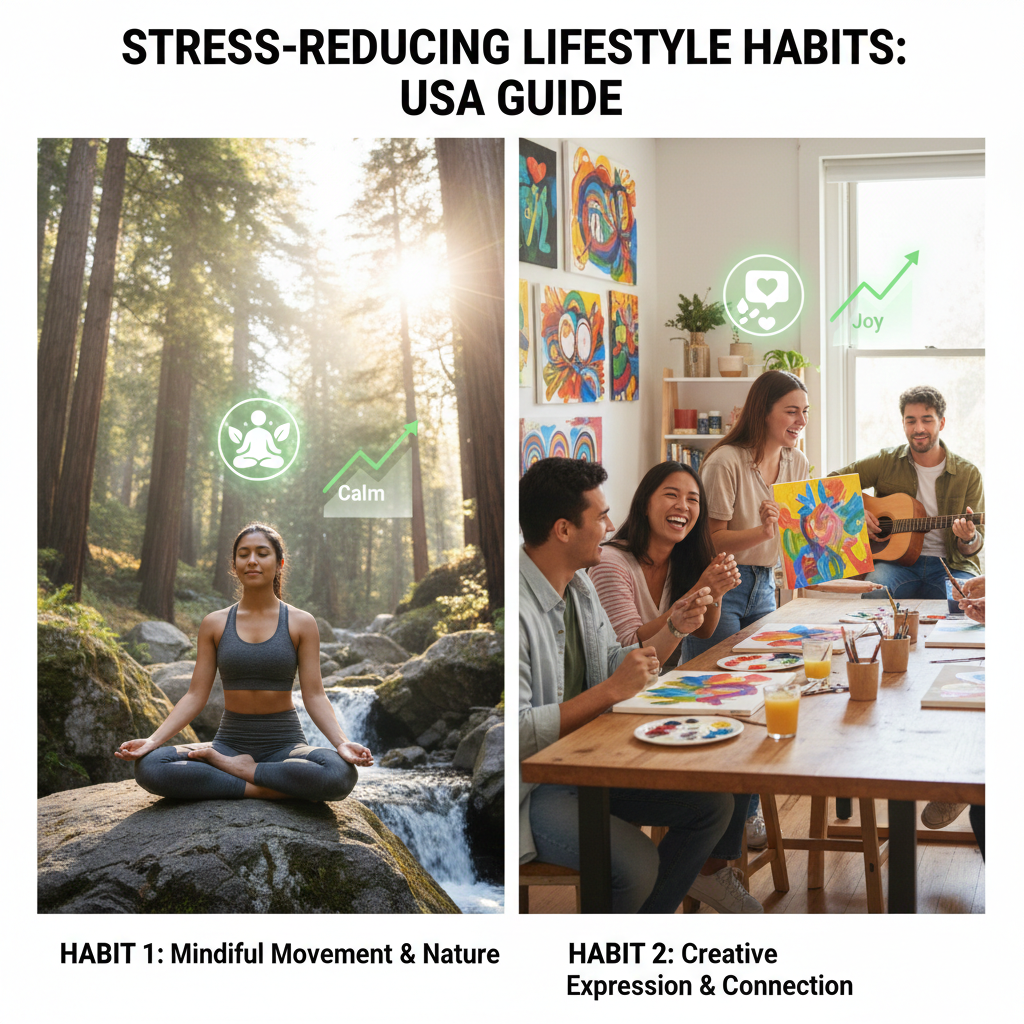
Ecotherapy is real. Time in nature lowers blood pressure and stress hormone levels. A hike, a trip to the beach, or even gardening puts our problems in perspective. Additionally, engaging in a hobby just for fun—not to monetize it as a “side hustle”—allows your brain to enter a flow state, which is deeply restorative.
Habits That Increase Stress (to Avoid)
Sometimes, stress reduction is about what you stop doing.
Poor Sleep Patterns
“Revenge bedtime procrastination”—staying up late to reclaim free time you didn’t get during the day—is a trap. It steals energy from tomorrow, making the next day’s stress harder to handle.
Overcommitment
FOMO (Fear Of Missing Out) drives us to overbook our schedules. A packed calendar creates a logistical stress that is entirely self-imposed. Leave white space in your diary.
Constant Multitasking
Multitasking is a myth; we are actually just “task-switching” rapidly. This drains cognitive resources and increases error rates, which leads to… you guessed it, more stress. Do one thing at a time.
Building a Sustainable Low-Stress Lifestyle
You can’t overhaul your life overnight. If you try to change your sleep, diet, exercise, and work habits all at once, you will just get more stressed.
Start Small and Stay Consistent
Pick one habit from this list. maybe it’s drinking water instead of soda, or going for a 10-minute walk after dinner. Do that for two weeks until it feels automatic. Then, add another.
Habit Stacking Strategies
Attach a new habit to an existing one. If you want to practice gratitude, do it while you brush your teeth. If you want to listen to an educational podcast, do it while you fold laundry. This reduces the mental friction of starting something new.
Who Benefits Most from Stress-Reducing Habits?
While everyone benefits, certain groups see drastic improvements:
- Professionals and Parents: The “sandwich generation” caring for kids and aging parents while working needs these habits to prevent burnout.
- Students: With academic pressure and social anxiety, developing these skills early sets up a lifetime of resilience.
- Caregivers: Those who care for others often neglect themselves. Stress reduction is not a luxury for caregivers; it is a necessity for survival.
FAQs – Lifestyle Habits and Stress Reduction
What habits reduce stress the fastest?
Deep breathing exercises and physical movement offer the quickest physiological reset. A few minutes of box breathing or a quick sprint/jumping jacks can burn off acute adrenaline spikes almost immediately.
Can lifestyle changes really lower stress?
Yes. While you cannot control external stressors (like the economy or traffic), lifestyle changes control your internal reaction. They lower your baseline cortisol, meaning it takes more to ruffle your feathers, and you bounce back faster when challenges occur.
How long do stress-reducing habits take to work?
Some effects, like the post-exercise endorphin rush, are immediate. However, rewiring your brain’s stress response through meditation or improved sleep hygiene typically takes 4 to 8 weeks of consistency to show significant, lasting results.
Is exercise or sleep more important for stress?
Sleep is arguably the foundation. If you are sleep-deprived, your body is already in a state of physiological stress, making exercise harder and less effective. Prioritize sleep first, then layer in exercise.
How do I stay consistent with stress-reducing habits?
Focus on “minimum viable habits.” On a bad day, don’t aim for a 60-minute gym session; aim for 5 minutes of stretching. Consistency beats intensity. Also, track your habits—seeing a streak on a calendar is a powerful motivator.
Take Control of Your Calm
Living in a high-pressure society doesn’t mean you have to be a high-stress person. The American lifestyle has normalized chronic anxiety, but we have the power to opt out of the chaos, one habit at a time.
By prioritizing sleep, moving your body, and setting boundaries with your technology and your time, you build a fortress of resilience. Start today with just one small change. Your future self—calmer, happier, and healthier—will thank you.
Leave a Reply