

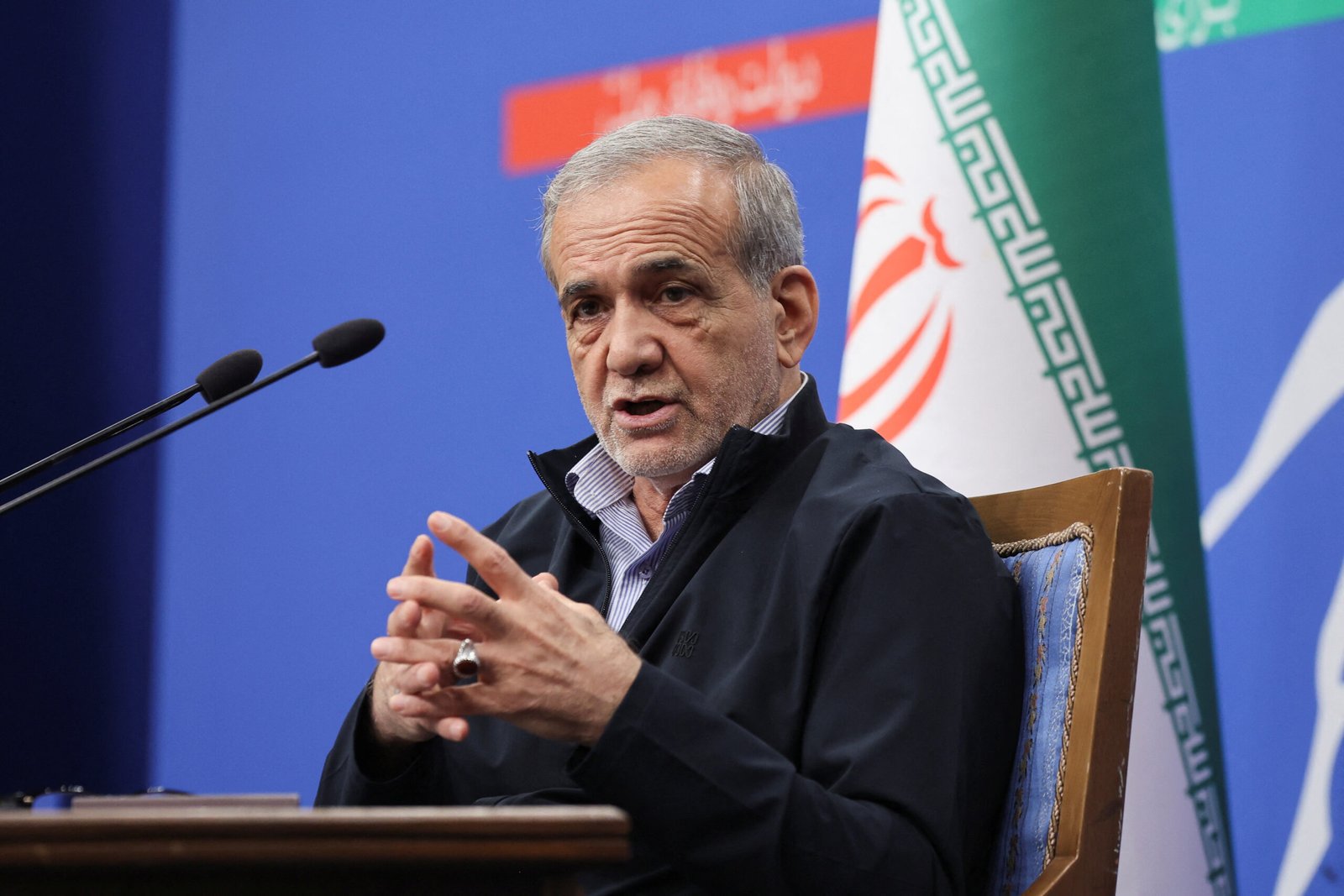
In recent days, the term “Iranian President” has surged to the top of search trends and social media conversations worldwide. The sudden spike in interest isn’t accidental—it stems from a series of high-stakes statements attributed to President Masoud Pezeshkian regarding regional conflict and Iran’s stance toward its adversaries.
In a geopolitical landscape already fraught with tension, words carry immense weight. When a world leader uses phrases like “full-fledged war” or critiques international sanctions with fiery rhetoric, the global community listens. However, the gap between what is said, what is meant, and how it is interpreted by the media often creates a storm of confusion.
This article dissects the current buzz surrounding the Iranian President. We will explore the exact nature of his recent comments, the geopolitical context fueling the trend, and the difference between rhetorical posturing and actual military escalation. By understanding the nuances behind the headlines, we can better grasp the implications for global politics, regional stability, and international markets.
Why “Iranian President” Is Trending Now
The digital world acts as a barometer for global anxiety, and right now, the needle is pointing toward Tehran. A significant surge in Google searches and social media engagement has centered on President Pezeshkian, driven largely by dramatic headlines and viral clips circulating on platforms like X (formerly Twitter) and YouTube.
The catalyst for this trend was a specific set of remarks made during a period of heightened friction in the Middle East. News outlets, competing for attention in a crowded information ecosystem, often amplify the most sensational aspects of political speeches. When phrases suggesting “war” or “total conflict” are used, they naturally trigger algorithmic spikes.
This amplification is not just about the words themselves but the timing. With ongoing conflicts in Gaza and Lebanon, and strained relations between Iran and Western powers, the global audience is hyper-sensitive to any signal of escalation. Consequently, a speech intended for a domestic audience or a specific diplomatic context can quickly become a global flashpoint when stripped of nuance and broadcast to an anxious world.
What Masoud Pezeshkian Actually Said
To understand the trend, we must look past the headlines and examine the transcript. The controversy centers on remarks where President Pezeshkian reportedly discussed the concept of a “full-fledged” or “total” economic and diplomatic war being waged against Iran, and Iran’s readiness to defend itself.
It is crucial to differentiate between military aggression and defensive rhetoric. Pezeshkian’s comments were deeply rooted in the context of ongoing sanctions and what Tehran views as external pressure campaigns led by the United States and its allies. When leaders in Tehran speak of “war” in this context, they are often referring to “economic warfare”—the crippling sanctions that have isolated Iran’s banking and energy sectors.
Furthermore, the President’s statements regarding military readiness are standard for leaders in the region facing external threats. The “full-fledged war” phrasing, while alarming to Western ears, is often used in Persian political discourse to describe a comprehensive state of struggle that encompasses culture, economy, and diplomacy, rather than just kinetic military action. Misinterpreting these metaphors as an imminent declaration of World War III ignores the complex vocabulary of Iranian statecraft.
Did Iran Actually Declare War?
The short answer is no. A formal declaration of war is a specific legal and diplomatic act, distinct from the fiery rhetoric often seen in political speeches. Despite the alarming nature of the trending headlines, Iran has not issued a formal declaration of war against any nation.
In the modern era, the line between war and peace has blurred. We live in an age of “gray zone” conflicts—cyberattacks, proxy skirmishes, and economic sanctions—rather than traditional battlefields where war is formally declared via ambassadors. President Pezeshkian’s comments fit squarely into this modern paradigm. They act as a signal of resolve and a warning against further pressure, rather than a commitment to immediate troop deployments.
Historically, Iranian leadership has utilized aggressive rhetoric as a deterrent. By projecting strength and a willingness to escalate, Tehran aims to discourage adversaries from crossing specific red lines. Confusing this strategic signaling with a formal intent to invade or attack misreads the fundamental strategy of the Islamic Republic, which generally prefers asymmetric warfare and proxy influence over direct state-on-state conventional conflict.
Who Was the Statement Directed At?
The target of President Pezeshkian’s rhetoric was clear to geopolitical observers: the United States, Israel, and, to a lesser extent, European powers aligned with them.
This creates a “triangle of tension.” First, the United States remains the primary architect of the sanctions regime that has squeezed Iran’s economy for decades. Any reference to “economic war” is a direct address to Washington. Second, Israel is viewed by Tehran as its primary regional existential threat. Amidst the conflict in Gaza and skirmishes with Hezbollah in Lebanon, Pezeshkian’s words serve as a message to Tel Aviv that Iran remains a formidable backer of the “Axis of Resistance.”
Finally, European nations, who have oscillated between mediating nuclear talks and enforcing sanctions, are also intended recipients. The message is one of defiance: despite years of diplomatic and economic isolation, the Iranian administration intends to signal that it has not capitulated. This posture is also meant for domestic consumption, reassuring the Iranian public and the hardline political base that the government remains strong in the face of perceived Western imperialism.
Global Reactions to the Iranian President’s Statement
The international response has been swift and varied, reflecting the deep divides in global diplomacy.
International Media Coverage
Western media outlets largely framed the comments as a dangerous escalation. Headlines focused on the “threat” aspect, often omitting the context of economic sanctions. Conversely, media in nations allied with or sympathetic to Iran, such as Russia or China, tended to frame the comments as a legitimate defense of national sovereignty against Western aggression.
Political and Diplomatic Responses
Diplomats in Washington and Brussels have reacted with caution. While condemning the aggressive rhetoric, many officials recognize the pattern of bluster that often accompanies Iranian domestic politics. There has been no immediate shift in NATO’s military posture, suggesting that intelligence agencies do not view the speech as a precursor to immediate military action. However, Israel has placed its forces on higher alert, viewing the rhetoric as part of a broader coordination with proxy groups like Hezbollah and Hamas.
Public and Social Media Reactions
On social media, the reaction has been polarized. On platforms like X, hashtags related to #Iran and #WWIII trended briefly, fueled by anxiety and speculation. Many users expressed fear of a wider conflict, while others criticized the media for fear-mongering. This digital discourse highlights how quickly unverified interpretations can shape public perception, turning a political speech into a source of global panic.
Implications for the Middle East and Global Politics
Even if the President’s words were rhetorical, they have real-world consequences for regional stability.
Potential Regional Security Risks
The Middle East functions on a delicate balance of power. Aggressive statements can lead to miscalculations. If a proxy group interprets Pezeshkian’s words as a green light for more aggressive attacks on US bases or Israeli territory, the situation could spiral out of control regardless of Tehran’s original intent. The “fog of war” is dense in the region; rhetoric adds another layer of obscurity that increases the risk of accidental escalation.
Impact on International Relations
Diplomatically, these statements make a return to the negotiating table much harder. Efforts to revive the JCPOA (the Iran nuclear deal) or establish new security frameworks are hampered when trust is eroded by threats of “total war.” For European diplomats trying to bridge the gap between Washington and Tehran, Pezeshkian’s comments represent a significant setback.
Broader Geopolitical Consequences
On a global scale, this reinforces the alignment of anti-Western powers. Iran’s deepening ties with Russia—supplying drones for the war in Ukraine—and its economic partnership with China create a bloc that challenges Western hegemony. Pezeshkian’s defiance is a signal to Beijing and Moscow that Iran remains a committed partner in challenging the US-led world order.
How Media and Social Buzz Amplify the Trend
We cannot ignore the role of the medium in this message. The reason “Iranian President” is trending isn’t just because of what he said, but how the internet consumes news.
Viral Headlines and Video Clips
Social media algorithms prioritize high-engagement content, which usually means content that evokes fear, anger, or shock. A 10-second clip of a leader saying “war” will travel faster and further than a 30-minute analysis of economic sanctions. This “clipification” of politics strips away context, leaving only the most inflammatory soundbites to shape public opinion.
Engagement on Twitter/X, YouTube, and News Platforms
The architecture of modern platforms encourages this volatility. On YouTube, news commentary channels rush to upload videos with thumbnails depicting explosions or military hardware, driving clicks through sensationalism. On X, bot networks and partisan accounts amplify the most extreme interpretations of the speech, creating a feedback loop where the trend feeds itself.
Why Search Interest Peaks
When people see a trending hashtag implying war, their first instinct is to search for confirmation. This massive influx of search queries for “Iranian President statement” or “Iran war declaration” signals to Google’s algorithms that this is a breaking news event, pushing it even higher in news feeds. It is a cycle where user anxiety drives the algorithm, which in turn feeds more anxiety.
What It Means for Investors and Global Markets
Geopolitics and economics are inextricably linked. The mere mention of instability in the Persian Gulf—a critical artery for global oil supplies—sends shivers through financial markets.
Oil, Commodities, and Currency Market Sensitivity
Historically, threats from Iran lead to a spike in oil prices. Brent Crude futures often react within minutes of such headlines. Even if no oil tanker is blocked, the fear of disruption causes traders to price in a “risk premium.” Similarly, gold, often seen as a safe-haven asset, tends to rise when geopolitical tensions flare.
Risk Perception Among Investors
For global investors, these headlines increase the perceived risk of emerging markets. Capital tends to flee to safer assets like US Treasury bonds or the US Dollar. This can put pressure on the currencies of neighboring countries like Turkey or even India, which are sensitive to energy prices and regional stability.
Why Geopolitical News Drives Volatility
Markets hate uncertainty. A declared war is a known quantity with measurable risks; a vague threat of “total war” is an unquantifiable risk. This uncertainty drives volatility, as algorithms and human traders alike struggle to price in the probability of conflict. For the average investor, this serves as a reminder that portfolios are not immune to events happening thousands of miles away.
Navigating the Noise
The recent surge in interest around President Masoud Pezeshkian is a case study in modern information warfare. A speech focused on resilience against sanctions and regional posturing was amplified by algorithms and anxiety into a global trend suggesting imminent conflict.
While the situation in the Middle East is undeniably serious, it is vital to distinguish between a headline designed to get clicks and a policy decision designed to start a war. Iran’s leadership is engaging in a high-stakes game of signaling, directed at both domestic and international audiences.
For the casual observer, the lesson is clear: verify before you react. In an era where “World War III” can trend because of a mistranslated idiom or a decontextualized clip, media literacy is the most effective defense against panic.
Stay informed, but stay critical. The world is complex, and rarely can a single speech tell the whole story.
Leave a Reply