

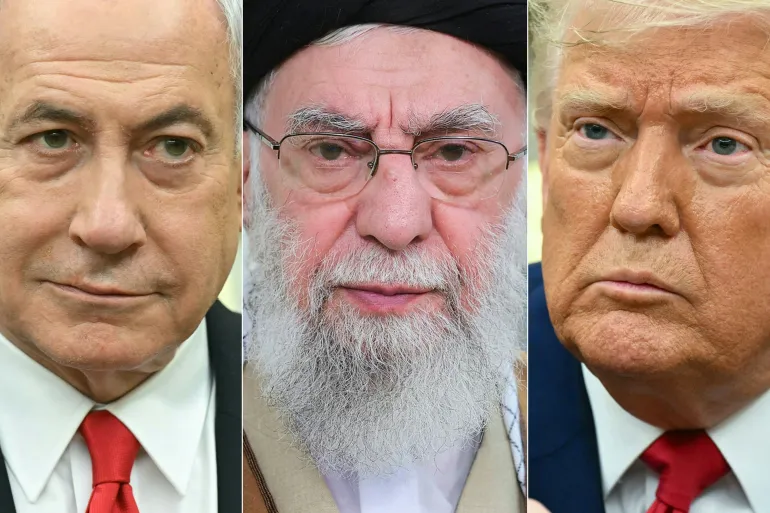
You pick up your phone, open social media, and see a terrified phrase trending at the top of the list: “Iran Declared War.” Immediately, your mind races. Visions of breaking news alerts, tank deployments, and global instability flood your feed. It feels like a moment where history shifts under your feet. But before you start panic-buying canned goods or checking the news for bunker locations, it is vital to pause.
Geopolitics is rarely as simple as a 280-character post or a truncated headline suggests. In the high-stakes arena of international relations, language is a weapon, and rhetoric is often designed to provoke rather than inform. The current frenzy surrounding the Iranian President’s recent comments is a textbook example of how diplomatic signaling can be misinterpreted as military action by the time it reaches the general public.
This article dissects the gap between what was actually said and what the internet thinks happened. We will look at the specific phrasing used, the context of “economic war” versus military conflict, and why global markets react so volatilely to uncertainty in the Middle East. By understanding the nuance behind the noise, you can better navigate the anxiety-inducing landscape of modern news cycles.
Why Is “Iran Declared War” Trending Worldwide?
The journey from a political speech to a viral panic is short and often fueled by algorithms that prioritize engagement over accuracy. The spike in searches for “Iran declared war” didn’t happen in a vacuum. It usually begins with a specific soundbite—a clip of the President using the word “war” in a passionate speech.
News aggregators and social media accounts, competing for attention, strip away the surrounding context. A statement about “economic warfare” or a “hybrid war waged against our culture” gets shortened to “Iran Declared War.” Once that phrase hits the trending topics on platforms like X (formerly Twitter) or TikTok, the “telephone game” effect takes over. Users react to the trend rather than the source material, amplifying the fear.
Furthermore, public anxiety regarding the Middle East is already at a fever pitch. Given the ongoing tensions involving Israel, Gaza, and various proxy groups, the global audience is primed to believe the worst. When people are already expecting escalation, a mistranslated or decontextualized quote confirms their fears, leading to a rapid spread of misinformation that mainstream media outlets then have to scramble to clarify.
What Did Iran’s President Actually Say?
To understand the situation, we must look at the transcript rather than the tweet. In recent instances where this narrative has emerged, Iranian leadership—whether the President or the Supreme Leader—has used the term “war” in a metaphorical or defensive capacity.
The phrase “full-fledged war” or “all-out war” often appears in Iranian political discourse, but it rarely refers to mobilizing troops across borders. Instead, it is frequently used to describe the pressure of Western sanctions. The President likely stated that Iran is currently in a state of “economic war” initiated by the United States and its allies. In Farsi, the rhetoric can be poetic and intense, designed to rally domestic resilience against external hardships.
When a leader says, “The enemy has started a war against our economy and our people,” they are describing a state of siege regarding trade, banking access, and inflation. They are not issuing a command to the military to invade a neighbor. However, translation software and hasty reporting often drop the adjective “economic,” leaving only the noun “war.” This distinction is the difference between a geopolitical standoff and World War III.
The Role of “Hybrid War”
Another common context is the mention of “hybrid war” or “soft war.” Iranian officials often accuse Western powers of waging a psychological or cultural war through media and the internet to destabilize the Islamic Republic from within. When the President vows to “fight this war,” he is talking about censorship, internet control, and counter-propaganda, not ballistic missiles.
Did Iran Officially Declare War?
The short answer is no. A formal declaration of war is a specific legal and diplomatic act, and one that has become increasingly rare in the modern era.
Historically, a declaration of war involves a formal document delivered to an ambassador or a public proclamation stating that a state of peace no longer exists and a state of war has begun. This brings specific international laws into play regarding the treatment of prisoners, neutral ships, and trade. Iran has not issued such a document to the United Nations, the United States, Israel, or any European power.
The Obsolescence of Formal Declarations
It is also important to note that most modern conflicts happen without formal declarations. The United States has not formally declared war since World War II, despite being involved in major conflicts in Korea, Vietnam, Iraq, and Afghanistan. Similarly, nations in the Middle East often engage in “gray zone” conflicts—using proxy groups, cyberattacks, and limited strikes—without ever officially declaring war.
Therefore, looking for a formal declaration is sometimes a red herring. However, the absence of widespread troop mobilization, the lack of emergency martial law declarations within Iran, and the continuation of standard diplomatic channels all signal that the country has not shifted into a state of total military conflict.
Who Was Iran Referring To?
If the “war” rhetoric was metaphorical or economic, who is the antagonist in this narrative? Almost invariably, these comments are directed at the “Western bloc,” primarily the United States, and its regional ally, Israel.
The relationship between Iran and the US has been defined by sanctions and diplomatic freezes for decades. When Iranian leadership speaks of being “at war,” they are referring to the “Maximum Pressure” campaigns that restrict Iran’s oil sales and access to international banking systems (SWIFT). They view these economic measures as acts of aggression that are just as damaging as physical bombs.
Additionally, references are often made to European powers (the E3: France, Germany, and the United Kingdom) regarding nuclear negotiations. If talks stall or if European nations threaten “snapback” sanctions, Iranian rhetoric intensifies. The language is meant to signal that Iran views these political maneuvers as hostile acts, accusing these nations of being complicit in the suffering of the Iranian people.
Why Leaders Use Strong War Language
If they don’t mean actual war, why use such terrifying language? Why not just say “sanctions are hurting us”? The choice of words is deliberate and serves three main purposes:
1. Domestic Consolidation
The primary audience for these speeches is often not the international community, but the Iranian populace. By framing economic hardships as a foreign “war,” the leadership shifts the blame for inflation and unemployment away from internal mismanagement and onto external enemies. It acts as a rallying cry, encouraging the population to endure hardship as a form of patriotic resistance.
2. Deterrence Strategy
Iran operates on a doctrine of asymmetric deterrence. They know they cannot win a conventional direct war against the US military. Therefore, they use aggressive rhetoric to signal that they are unpredictable and willing to escalate if pushed too far. The threat of war is intended to prevent war. It warns adversaries that increasing pressure might lead to consequences they aren’t prepared for.
3. Diplomatic Leverage
Paradoxically, war rhetoric is often a precursor to negotiation. By raising the temperature and creating a crisis atmosphere, Iran tries to force the international community to the table. It creates a sense of urgency: “Solve this economic issue, or risk a military one.” It is a high-stakes bargaining tactic designed to extract concessions in nuclear talks or sanctions relief.
Global Reactions to Iran’s Statement
The chasm between how the public reacts and how governments react to these statements is usually vast. While “Iran Declared War” trends on social media, the reaction inside the State Department, the Foreign Office, and the Élysée Palace is usually far more muted.
The Diplomatic Response
Seasoned diplomats and intelligence analysts are accustomed to the ebb and flow of Middle Eastern rhetoric. They analyze the troop movements, not just the speeches. Unless satellites show missile launchers moving to firing positions or naval mines being laid in the Strait of Hormuz, governments rarely raise the DEFCON level based on a speech alone. Their official statements usually urge “de-escalation” and “restraint,” signaling that they understand the difference between bluster and intent.
The Media Frenzy
Media outlets, however, have a different incentive structure. Headlines that scream danger get clicks. 24-hour news networks will often invite pundits to speculate on “what if” scenarios, fueling the idea that conflict is imminent. This creates a feedback loop where the public panic incentivizes more coverage, which generates more panic, regardless of the reality on the ground.
What This Means for the Middle East
Even if a formal war hasn’t been declared, the rhetoric is not harmless. It contributes to a tense environment where the margin for error shrinks.
The real danger in the Middle East is rarely a formal declaration of war, but rather an accidental escalation. When leaders shout about war, soldiers and proxy militias on the ground go on high alert. A misunderstood drone flight, a rogue militia firing a rocket without orders, or a cyberattack that hits critical infrastructure can spiral out of control.
The “war” narrative reinforces the proxy conflict model. Iran supports groups like Hezbollah in Lebanon, Hamas in Gaza, and the Houthis in Yemen. Intensified rhetoric from Tehran often serves as a green light for these groups to increase their harassment of Israeli or US targets. So, while Iranian tanks aren’t rolling across borders, the region remains in a state of heated, dangerous friction. The “declaration” is false, but the volatility is very real.
Impact on Global Markets and Energy Prices
Perhaps the most tangible immediate impact of the “Iran Declared War” headline is financial. Money hates uncertainty, and there is no uncertainty quite like the threat of war in the Persian Gulf.
The Oil Spike
The Strait of Hormuz is a choke point through which a massive percentage of the world’s oil supply passes. The moment a headline suggests conflict involving Iran, algorithmic traders and investors dump risky assets and buy oil futures. You might see a sudden spike in Brent Crude prices within minutes of a speech.
Safe Haven Assets
Simultaneously, investors flee to “safe haven” assets. Gold prices typically rise, and the US dollar strengthens. The stock market, particularly airlines and logistics companies, often takes a temporary dip.
However, these market reactions are usually short-lived. Once analysts verify that no troops are moving and that the “declaration” was rhetorical, prices tend to correct. But for the average consumer, this volatility can eventually trickle down to gas pumps and grocery prices if the tension remains sustained over weeks rather than days.
Navigating the Noise in Geopolitics
The viral spread of “Iran Declared War” serves as a potent reminder of the fragility of information in the digital age. We live in an ecosystem where fear travels faster than facts. The Iranian President’s comments, likely centered on economic struggles and defense against sanctions, were stripped of nuance and weaponized for clicks, causing unnecessary global anxiety.
This does not mean the situation is safe. The Middle East remains a powder keg, and rhetoric matters. But there is a massive difference between a political speech designed for leverage and a military order designed for destruction.
As consumers of news, our best defense against panic is verification. When you see a headline that seems too catastrophic to be true, check the source. Look for corroboration from major international wire services rather than trending hashtags. History is indeed happening, but it rarely happens as abruptly or simply as a viral tweet suggests.
Stay Informed with Reliable Analysis
Don’t let sensationalism dictate your understanding of the world. If you want to cut through the noise and understand the real drivers behind geopolitical shifts, markets, and international relations, you need deeper insights.
Subscribe to our newsletter today for fact-checked, expert analysis on global events delivered straight to your inbox.
Leave a Reply