

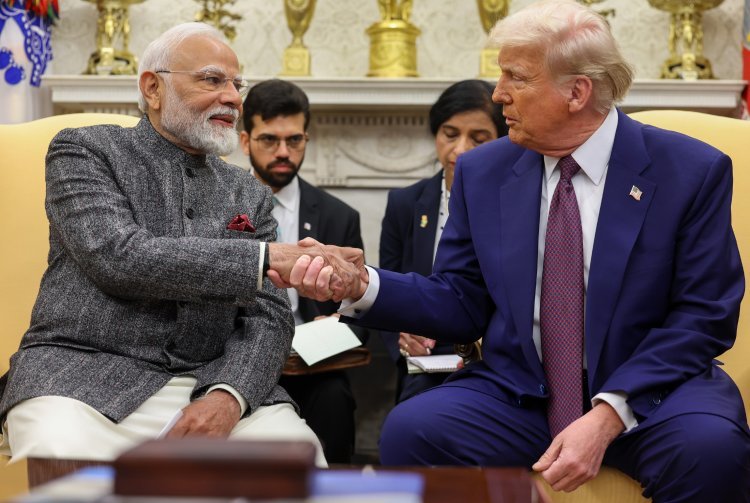
Since 2014, Indian foreign policy has undergone a seismic shift. The headlines are often dominated by images of camaraderie: filled stadiums in Houston, bear hugs in Washington, and declarations of an unbreakable bond between the world’s oldest democracy and its largest. The narrative sold to the Indian public is one of ascent—India is no longer a bystander but a “strategic partner” to the global superpower.
However, beneath the gloss of diplomatic spectacles and high-profile summits, the economic ledger tells a more complicated story. While the political optics suggest a relationship of equals, the trade and economic realities often paint a picture of concession and loss. From the sudden withdrawal of trade privileges to the collapse of vital export markets under American pressure, the costs of this alignment have been borne silently by specific sectors of the Indian economy.
To understand the true impact of this geopolitical pivot, we must look beyond the press releases. We must examine the ledgers of rice farmers in Punjab, the order books of steel exporters, and the strategic calculations of energy policymakers. The central question facing New Delhi is uncomfortable but necessary: In its rush to embrace Washington, did India gain a powerful ally, or did it simply absorb significant economic losses?
The Shift in India–US Relations After 2014
For decades, India championed the cause of Non-Alignment. The Nehruvian doctrine prioritized strategic autonomy, ensuring that New Delhi remained equidistant from competing superpowers. However, the post-2014 era marked a departure from this caution. The government, led by Prime Minister Narendra Modi, pursued a policy that many analysts describe as “multi-alignment,” though in practice, it heavily leaned towards the United States.
From Non-Alignment to Strategic Embrace
The rationale was clear. A rising China posed a direct threat to India’s borders and regional influence. The United States, viewing India as a necessary counterweight to Beijing, seemed the natural partner. This convergence of interests led to a flurry of activity.
Key Milestones
The relationship was cemented through landmark defence agreements like LEMOA (Logistics Exchange Memorandum of Agreement) and COMCASA (Communications Compatibility and Security Agreement). These acronyms represented a profound integration of military logistics and communication. Diplomatic summits became grand public events, designed to showcase India’s arrival on the global stage. Yet, while the defence dossiers grew thicker, the economic files began to show signs of strain.
Trade Promises vs Ground Reality
While diplomats toasted to shared democratic values, trade negotiators were often locked in bitter disputes. The expectation was that a closer strategic partnership would naturally lead to preferential economic treatment. The reality was starkly different.
The Loss of GSP Benefits
One of the most significant blows came in 2019, when the Trump administration terminated India’s designation as a beneficiary developing country under the Generalized System of Preferences (GSP). This programme allowed duty-free entry for up to $5.6 billion worth of Indian exports to the US.
Its removal was a direct hit to small and medium-sized enterprises (SMEs) in sectors like gems and jewellery, leather, and engineering goods. While India was buying billions in American defence equipment, Indian exporters were being stripped of competitive advantages they had enjoyed for decades.
Tariffs and the Missing Trade Deal
Furthermore, the US imposed tariffs on steel and aluminium under Section 232, citing national security concerns—an odd justification to use against a “strategic partner.” Despite years of negotiations, a comprehensive Free Trade Agreement (FTA) remains elusive. The “mini-trade deal” discussed frequently often failed to materialise, leaving Indian exporters facing high barriers while American companies pressed for greater access to India’s dairy and medical device markets.
Iran Sanctions and the Collapse of a Key Export Market
Perhaps the most quantifiable cost of India’s alignment with US foreign policy priorities can be found in its relationship with Iran. Historically, Iran was not just a supplier of crude oil; it was a civilizational neighbour and a vital gateway to Central Asia and Afghanistan.
Zeroing Out Oil Imports
Under immense pressure from Washington following the US withdrawal from the Iran nuclear deal (JCPOA), India ceased purchasing Iranian oil in 2019. This was a massive concession. Iran had offered India highly favourable terms, including shipping insurance and extended credit periods, often accepting payments in rupees.
By abandoning Iranian oil, India was forced to source more expensive crude from other suppliers, directly impacting its current account deficit and domestic fuel prices. The decision was a clear instance where US geopolitical objectives trumped India’s energy security needs.
The Decline in Trade Volumes
The damage extended beyond oil. The bilateral trade relationship collapsed. Indian exports to Iran, which included tea, rice, and pharmaceuticals, faced a payment crisis. With the rupee-rial mechanism severely hindered by sanctions, Indian exporters were left with millions in unpaid dues. A robust regional market was effectively dismantled not because of bilateral friction between New Delhi and Tehran, but because New Delhi chose to adhere to Washington’s red lines.
How Farmers Paid the Price
Macroeconomic data often obscures human stories. The geopolitical decision to isolate Iran had a direct, devastating impact on the fields of Punjab and Haryana.
The Basmati Connection
Iran was historically the largest importer of Indian Basmati rice, accounting for nearly a third of India’s total Basmati exports. When the sanctions hit and the payment channels froze, this market evaporated.
Rural Distress in the North
Farmers who had planted premium crop varieties anticipating Iranian demand were left in the lurch. Prices for Basmati paddy crashed in local mandis (markets). Exporters, unable to secure payments from Iranian buyers due to banking restrictions, stopped buying from farmers or delayed payments indefinitely.
While the government touted its foreign policy successes, the agricultural heartland was paying the invoice. The loss of the Iranian market created a glut in domestic supply, driving down prices and exacerbating the financial distress of farmers who were already grappling with high input costs.
Strategic Autonomy Under Pressure
The core tenet of Indian foreign policy has always been “Strategic Autonomy”—the ability to take decisions based solely on national interest, free from external coercion. The post-2014 alignment raised serious questions about whether this autonomy was being compromised.
Constrained Flexibility
By adhering to US secondary sanctions on Iran (and later facing pressure regarding Russia), India reduced its own diplomatic manoeuvrability. The relationship with Tehran, once a lever of influence in the Islamic world and a counter to Pakistan, cooled significantly. The Chabahar port project, India’s strategic answer to China’s Gwadar port in Pakistan, faced delays and uncertainty due to the looming threat of sanctions, despite receiving vague exemptions.
Dependence on US Policy
The danger of such alignment is that India’s economic fortunes became increasingly tethered to the whims of the US State Department. When US policy shifted—for instance, the chaotic withdrawal from Afghanistan—India found itself with limited leverage in the region, having alienated regional players like Iran to please a partner that eventually left the theatre abruptly.
Optics vs Outcomes in Foreign Policy
A critical analysis of this period reveals a stark dichotomy between what was seen and what was achieved.
The Power of Imagery
The Modi government excelled at the performative aspects of diplomacy. Events like “Howdy Modi” in Texas were PR triumphs, projecting an image of India as a global power broker. These events played well domestically, creating a perception of enhanced prestige.
The Economic disconnect
However, foreign policy must ultimately be judged by outcomes, not optics. While the leaders embraced, the US Trade Representative’s office was filing complaints against India at the WTO. While the diaspora cheered, visa rejection rates for Indian professionals remained high. The “feel-good” factor of the partnership served as a mask, obscuring the hard data on trade deficits, tariff barriers, and lost markets.
Who Benefited From the Alignment?
If the farmers and small exporters lost out, who gained? It would be inaccurate to suggest the alignment yielded zero benefits, but the gains were unevenly distributed.
The Winners: Defence and Tech
The primary beneficiaries were the defence and technology sectors. India gained access to high-end military hardware, such as Apache helicopters, Chinook transport choppers, and Sea Guardian drones. Intelligence sharing regarding the Chinese border improved.
For the corporate sector, particularly IT services, the alignment helped maintain stability in outsourcing, despite the occasional H-1B visa scare. American tech giants like Google, Meta, and Amazon poured billions into India, aligning with the government’s digital ambitions.
The Question of Equity
Yet, these benefits largely accrued to the urban elite, the corporate sector, and the military establishment. The “strategic partnership” did little to alleviate the struggles of the agrarian workforce or the manufacturing SMEs that form the backbone of India’s employment generation. The benefits were strategic and corporate; the costs were agrarian and widespread.
Domestic Political and Economic Fallout
The ramifications of these foreign policy choices were not confined to international trade statistics; they rippled through India’s domestic economy.
Industry Warnings
Trade bodies and export councils repeatedly flagged the issues arising from the loss of GSP and the Iranian market. Their warnings, however, were often drowned out by the louder narrative of diplomatic success. Small exporters, operating on thin margins, found themselves uncompetitive in the US market without duty-free access, losing ground to competitors from Vietnam and Bangladesh.
Political Repercussions
The distress in the agricultural belts contributed to the simmering unrest that eventually erupted in the massive farmer protests of 2020-2021. While the protests were triggered by domestic farm laws, the underlying economic fragility—exacerbated by lost export markets like Iran—was a vital context. The rural economy was fragile, and foreign policy decisions had removed a crucial safety valve.
What Could India Have Done Differently?
Critics argue that alignment with the US was inevitable given the Chinese threat. While true, the nature of that alignment was a choice.
Stronger Negotiations
India is a market of 1.4 billion people. It is the world’s largest importer of defence equipment. This gives New Delhi tremendous bargaining power. Critics argue that India could have driven a harder bargain. Just as India eventually stood its ground on purchasing Russian oil despite Western pressure in 2022, it could have sought firmer exemptions for the Chabahar project and oil trade with Iran earlier.
Leveraging Market Size
Countries like Turkey and various European nations found ways to maintain certain trade channels with sanctioned entities when it suited their national interest. India, in its eagerness to prove its reliability as a US partner, may have complied too readily, sacrificing economic leverage without securing reciprocal market access in the US for its own goods.
Reassessing the True Cost of India’s US Alignment
As we look back at the years since 2014, the “Strategic Partnership” with the United States appears less like a balanced friendship and more like a transactional relationship where India paid a premium.
The alignment undoubtedly bolstered India’s defence posture against China and integrated its technology sector with Silicon Valley. But the price tag was steep. It cost India its strategic autonomy in West Asia, destroyed the booming trade relationship with Iran, and pushed farmers in Punjab into deeper financial precarity.
Was India a strategic partner? In name, yes. But in the granular details of trade and commerce, it often resembled a silent loser—absorbing the shocks of American unilateralism while receiving little in the way of economic shelter.
As India moves forward, the lesson is clear. Foreign policy cannot be divorced from economic reality. A partnership that looks good on a billboard but bleeds the balance sheet is not a sustainable strategy. Future engagements must prioritize not just the applause of the diaspora or the approval of the White House, but the prosperity of the rice farmer in Karnal and the textile weaver in Tirupur. True strategic autonomy lies not in who India shakes hands with, but in whose interests it protects when the cameras are turned off.
Join the Conversation
Understanding the nuances of foreign policy is vital for navigating the global economy. Subscribe to our newsletter for weekly insights into how geopolitical shifts impact trade, markets, and your bottom line.
Leave a Reply