

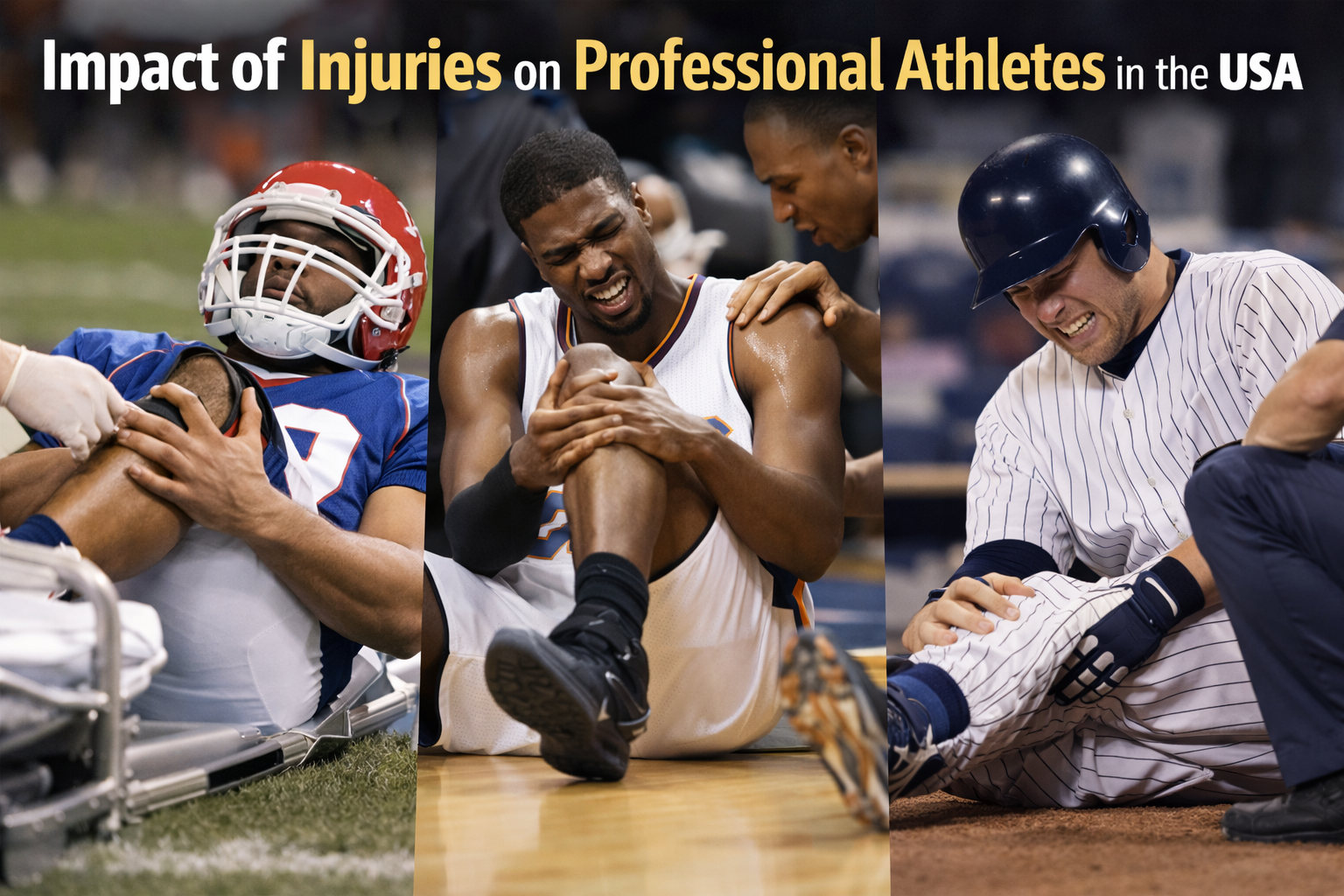
Professional athletes are often perceived as invincible figures, pushing the boundaries of human potential. Yet, beneath the highlight reels and championship trophies lies a harsh reality: the pervasive risk of injury. In the high-stakes environment of US professional sports—spanning the NFL, NBA, MLB, and NHL—an injury is more than just physical pain. It is a disruptive force that ripples through a player’s performance, career longevity, financial stability, and mental health.
The modern sports landscape places immense physical demands on athletes, resulting in injuries that range from minor setbacks to career-ending trauma. While advancements in sports medicine have improved recovery times, the sheer intensity of competition means that injury management remains a critical component of every major league organization.
Understanding the full scope of how injuries impact professional athletes requires looking beyond the physical symptoms. It involves examining the complex interplay between biomechanics, economics, psychology, and organizational strategy. This article explores the multifaceted consequences of injuries in American professional sports, shedding light on the challenges athletes face from the moment they get hurt to life after retirement.
Why Injuries Are a Major Issue in Professional Sports
Injuries are not merely accidental byproducts of sport; in many ways, they are a statistical inevitability given the current structure of professional leagues. The frequency of injury in elite sports has become a central concern for governing bodies, players’ associations, and medical staff alike.
Injury Frequency in Elite Sports
Data consistently shows high injury rates across major US leagues. In the NFL, for instance, the collision-based nature of the game results in a 100% injury rate for many positions over a long enough timeline. Similarly, the NBA’s grueling 82-game schedule places immense stress on players’ joints and soft tissues. The sheer volume of game exposures increases the probability of acute trauma and chronic wear and tear.
Physical Demands of Modern Competition
The evolution of athleticism has contributed to injury rates. Athletes today are faster, stronger, and larger than in previous decades. While this leads to a more exciting product on the field, it also increases the kinetic energy involved in collisions and the torque applied to ligaments and tendons during non-contact maneuvers. The human body’s structural integrity has not evolved at the same pace as athletic training, creating a gap where the physical forces exerted during play often exceed the body’s breaking point.
Common Injuries Among Professional Athletes
While every sport carries specific risks, certain types of injuries are prevalent across the board. These generally fall into acute traumatic events or chronic overuse conditions.
Muscle Strains and Ligament Tears
Soft tissue injuries are the most common setbacks in professional sports. Hamstring strains, for example, plague sprinters and position players in baseball and football due to the explosive acceleration required. More severe are ligament tears, specifically to the Anterior Cruciate Ligament (ACL) in the knee or the Ulnar Collateral Ligament (UCL) in the elbow. An ACL tear typically requires extensive surgical reconstruction and a rehabilitation period of 9 to 12 months, effectively ending a player’s season.
Fractures and Overuse Injuries
Fractures occur frequently in high-contact sports like hockey and football, often resulting from direct impact. Conversely, overuse injuries such as stress fractures and tendinitis are common in the NBA and MLB, where repetitive motions—jumping on hardwood floors or throwing a baseball at high velocities—degrade bone and tissue over time without adequate rest.
Concussions and Head Trauma
Perhaps the most scrutinized injury in modern sports is the concussion. Traumatic brain injuries (TBIs) are distinct because their damage is not always visible on a standard MRI. Repeated head trauma has been linked to long-term neurodegenerative diseases, prompting significant rule changes in the NFL and NHL to protect players from unnecessary head contact.
Impact of Injuries on Athletic Performance
When an athlete returns from injury, the assumption is often that they are “healed.” However, medical clearance does not always equate to peak performance.
Short-Term Performance Decline
Returning to play involves a re-acclimatization period. Athletes often experience a dip in statistical production immediately following an injury. This can be attributed to a lack of game fitness, lingering pain, or a disruption in rhythm and timing. For a baseball pitcher returning from shoulder surgery, this might manifest as a loss of velocity or control. For a basketball player, it might mean reduced vertical leap or lateral quickness.
Long-Term Physical Limitations
Some injuries permanently alter biomechanics. To compensate for a weakened joint, an athlete might unconsciously adjust their gait or throwing motion, which can lead to secondary injuries in other parts of the body—a phenomenon known as the kinetic chain reaction. For example, favoring an injured left ankle can place excessive stress on the right knee, leading to new structural issues.
Loss of Peak Conditioning
Rehabilitation focuses on healing the specific injury, but it cannot replicate the cardiovascular and muscular conditioning of live gameplay. Extended time on the sidelines often results in a loss of general fitness, making the athlete more susceptible to fatigue and subsequent injury upon return.
Career Impact of Injuries
The longevity of a professional athlete’s career is often dictated by their durability. Injuries act as the primary catalyst for roster turnover.
Missed Seasons and Games
Availability is arguably an athlete’s best ability. A single severe injury can remove a player from the spotlight for a full year. In leagues with high turnover like the NFL, missing a season can mean losing a starting spot to a younger, cheaper draft pick.
Shortened Athletic Careers
The average career span in the NFL is roughly 3.3 years; in the NBA, it is about 4.5 years. Injuries are the leading cause of forced retirement. “Career-ending” injuries, while less common than in the past due to surgical advances, still occur. More frequently, however, it is the accumulation of minor injuries that erodes an athlete’s skills until they can no longer compete at an elite level, forcing an early exit from the sport.
Reduced Playing Time and Roles
Players who suffer recurring injuries often see their roles diminished. A former superstar starter might be relegated to a bench role to manage their “load” or limit their exposure to risk. This transition affects their statistical output and their standing within the league hierarchy.
Financial Impact on Professional Athletes
The physical toll of injuries directly correlates to financial consequences. While top-tier athletes often have guaranteed contracts, the majority of professional players face significant financial instability due to injury.
Lost Salary and Bonuses
In the NFL, contracts are famously not fully guaranteed. If a player is cut due to injury, they often lose the remaining value of their contract. Furthermore, many contracts include performance incentives or “per-game” roster bonuses. An injury that sidelines a player prevents them from hitting these statistical benchmarks, resulting in millions of dollars in lost potential earnings.
Contract Renegotiations
An injury history serves as leverage for teams during contract negotiations. Players labeled “injury-prone” are often forced to sign short-term “prove-it” deals rather than lucrative multi-year extensions. This lack of security makes financial planning difficult and increases the pressure to play through pain.
Endorsement and Sponsorship Losses
Marketability is tied to visibility. Athletes who are not on the field are not visible to consumers. Extended absences can lead sponsors to drop athletes or reduce the value of endorsement deals, as brands prefer to align themselves with active, consistent performers.
Mental and Emotional Effects of Injuries
The psychological impact of injury is as profound as the physical damage, yet it is historically less discussed.
Depression and Anxiety
Separation from the team and the inability to do what they love can trigger significant mental health struggles. Studies indicate that injured athletes experience higher rates of depression and anxiety compared to their active counterparts. The isolation of rehabilitation, combined with the fear of re-injury or career termination, creates a high-stress psychological environment.
Loss of Confidence
Physical recovery does not guarantee psychological readiness. Kinesiophobia—the fear of movement or re-injury—can cause athletes to hesitate during play. This hesitation often leads to poor performance or, ironically, further injury. Rebuilding trust in one’s own body is often the hardest part of the recovery process.
Identity Challenges During Recovery
For many professionals, being an athlete is their primary identity. When injury strips that away, they often face an identity crisis. The question “Who am I if I can’t play?” can be debilitating, requiring psychological support and counseling to navigate the transition, whether temporary or permanent.
Impact on Teams and Organizations
Injuries do not occur in a vacuum; they affect the entire organizational ecosystem.
Roster Instability
Injuries force coaches and general managers to constantly shuffle lineups. This lack of continuity can disrupt team chemistry and the execution of complex game plans. Teams must dedicate roster spots and salary cap space to depth players solely as insurance against injury.
Strategic and Performance Setbacks
The loss of a star player often dictates a shift in strategy. An NBA team built around a dominant center must completely alter its offensive and defensive schemes if that player gets hurt. Statistically, teams with lower “games lost to injury” metrics consistently perform better in the regular season and playoffs.
Increased Medical and Insurance Costs
Teams invest millions in medical staff, rehabilitation facilities, and insurance policies. The cost of treating injuries and paying the salaries of injured players (who are not contributing on the field) represents a massive sunk cost for ownership groups.
Injury Prevention and Recovery in Professional Sports
As the stakes have risen, so has the investment in keeping players healthy.
Training and Load Management
“Load management”—the strategic resting of healthy players—has become a controversial but scientifically backed tactic, particularly in the NBA. By monitoring workloads using GPS trackers and biometric data, teams attempt to prevent overuse injuries before they occur.
Medical Advancements and Rehab Technology
From stem cell therapy to hyperbaric chambers and anti-gravity treadmills, the technology available to pro athletes is cutting-edge. Procedures that once ended careers, like Tommy John surgery for pitchers, now have high success rates for return to play.
Role of Sports Science and Analytics
Data analytics now drives medical decisions. Teams analyze biomechanical data to identify movement patterns that predict injury risk. If a pitcher’s arm slot drops or a runner’s stride length changes, staff can intervene to correct the mechanics before a catastrophic failure occurs.
Differences by Sport in the USA
The nature of the injury usually correlates with the specific demands of the sport.
- NFL (Football): High incidence of concussions, ACL tears, and orthopedic trauma due to high-impact collisions.
- NBA (Basketball): Prevalance of lower extremity injuries (ankle sprains, patellar tendinitis) due to jumping and cutting on hard surfaces.
- MLB (Baseball): Dominated by upper extremity injuries, specifically to the shoulder and elbow in pitchers, due to the unnatural motion of overhand throwing.
- NHL (Hockey): Unique risks involving high-speed collisions, skate blades (lacerations), and shoulder separations from checking into the boards.
Long-Term Health Effects After Retirement
The impact of injuries often outlasts the playing career, affecting quality of life for decades.
Chronic Pain and Mobility Issues
Many retired athletes live with chronic pain. Arthritis, joint replacements, and limited mobility are common among former NFL and NBA players in their 40s and 50s. The body pays a toll for years of pushing past physiological limits.
Brain Health and Concussions
Chronic Traumatic Encephalopathy (CTE) has been found in the brains of deceased NFL and NHL players. This degenerative brain disease, linked to repeated head trauma, can lead to memory loss, confusion, impaired judgment, impulse control problems, aggression, depression, and eventually dementia.
Quality of Life After Sports
The transition to life after sports is physically demanding. Former athletes often require ongoing medical care and physical therapy to manage the damage accumulated during their careers. This reality has spurred players’ unions to fight for better post-retirement healthcare benefits.
A Realistic Path Forward
Injuries are an inherent risk in professional sports, but they are not merely “part of the game.” They are complex events with cascading effects on the athlete’s body, bank account, and mind, as well as the team’s success. While total prevention is impossible, the continued integration of sports science, better equipment, and rule changes focused on safety offers the best path toward mitigating these risks. Understanding the full weight of these injuries helps fans and organizations alike appreciate the fragility of the careers they cheer for every week.
FAQs – Impact of Injuries on Professional Athletes
How do injuries affect athlete performance?
Injuries disrupt training rhythms and game fitness. Upon return, athletes may experience reduced speed, strength, or agility. Additionally, they may subconsciously alter their mechanics to protect the injured area, leading to inefficient movement and a decline in statistical output.
Can injuries end professional sports careers?
Yes. While medical advancements have reduced the number of career-ending injuries, severe trauma (such as complex nerve damage or multiple joint reconstructions) can still force retirement. More commonly, a series of smaller injuries erodes an athlete’s ability to compete at an elite level, leading to an early exit from the league.
Which sport has the highest injury risk?
The NFL generally has the highest injury rate per game due to the full-contact nature of football. However, injury frequency varies by definition; the NBA has high rates of overuse injuries, while the NHL has high rates of traumatic impact injuries.
How do athletes recover mentally from injuries?
Mental recovery involves rebuilding confidence and overcoming the fear of re-injury. Athletes often work with sports psychologists to address anxiety and depression. Visualization techniques, setting small rehabilitation goals, and maintaining a connection with teammates are common strategies used to support mental health.
Are injuries more common today than before?
The perception of increased injuries is partly due to better reporting and transparency. However, the increased speed and force of modern athletes, combined with year-round specialization in youth sports (leading to earlier wear and tear), have contributed to a rise in certain types of injuries, such as UCL tears in baseball and non-contact ligament injuries in other sports.
Leave a Reply