

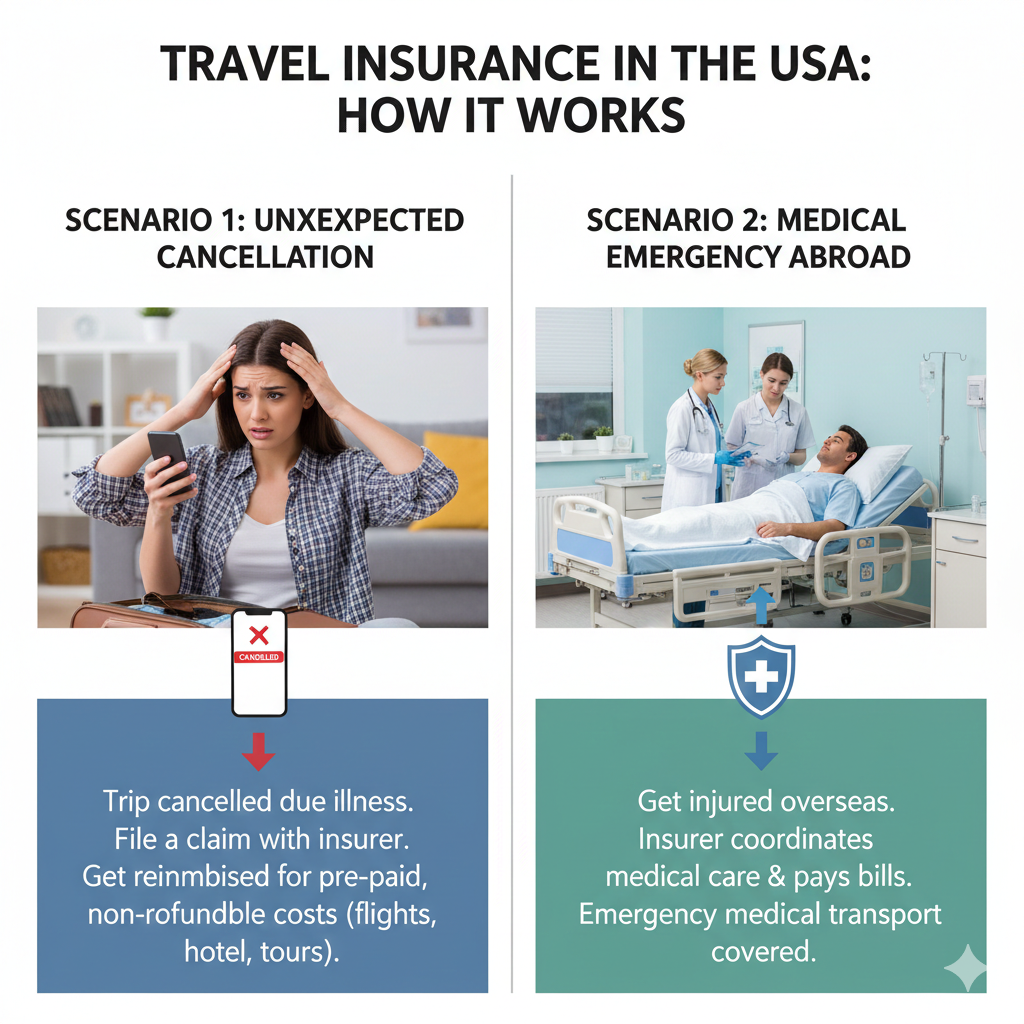
We all know the feeling. You’ve booked the flights, selected the perfect boutique hotel, and built an itinerary packed with bucket-list experiences. The anticipation of a trip is often just as sweet as the journey itself. But somewhere in the back of your mind, there’s a small, practical voice asking: What if something goes wrong?
For many U.S. travelers, the concept of travel insurance can feel complicated, unnecessary, or just another tedious expense to add to an already pricey vacation. Is it really worth it? Does your health insurance cover you in Rome? What happens if a hurricane hits your resort in the Caribbean?
Understanding how travel insurance works isn’t just about preparing for the worst-case scenario; it’s about giving yourself the freedom to explore with confidence. When you know you have a financial safety net, a missed connection becomes a minor annoyance rather than a budget-destroying disaster. This guide breaks down exactly how travel insurance functions for American travelers, from the types of coverage available to the nitty-gritty of filing a claim, helping you decide exactly what protection you need for your next adventure.
What Is Travel Insurance?
At its core, travel insurance is a plan you purchase that protects you from certain financial risks and losses that can occur while traveling. These losses can range from minor inconveniences, like a delayed suitcase, to significant crises, like a last-minute trip cancellation or a medical emergency overseas.
Think of it as a safety net designed to reimburse you for money you lose due to unforeseen events. It is a contract between you and an insurance provider: you pay a premium upfront, and in exchange, the provider agrees to cover specific costs if things don’t go according to plan. While we often associate insurance with health, travel policies are multifaceted, covering your financial investment in the trip (flights, hotels) as well as your personal wellbeing and belongings.
Why Travel Insurance Matters for U.S. Travelers
For Americans specifically, travel insurance fills critical gaps that domestic policies leave wide open. Many travelers assume their standard protections will follow them across borders, but that is rarely the case.
Medical Costs Abroad
The most significant reason to secure coverage is healthcare. Most U.S. health insurance plans, including Medicare, provide little to no coverage outside the United States. If you break a leg hiking in the Swiss Alps or catch a severe tropical virus in Thailand, you are often expected to pay upfront for treatment. These costs can be astronomical. A comprehensive travel insurance policy steps in to act as your primary health coverage during your trip, preventing a medical issue from becoming a financial catastrophe.
Trip Cancellation Risks
Life is unpredictable. You might book a non-refundable safari six months in advance, only to have a family member fall ill a week before departure. Without insurance, the money you spent on flights, lodges, and tours is likely gone. Trip cancellation coverage ensures you can recover those pre-paid, non-refundable expenses if you have to cancel for a covered reason.
Unexpected Travel Disruptions
Modern travel is complex. Flights get canceled due to crew shortages, luggage gets routed to the wrong continent, and weather systems shut down airports. While airlines have some obligations, they are limited. Insurance provides reimbursement for the extra costs incurred during these delays, such as meals, hotel stays, or essential toiletries.
Types of Travel Insurance Coverage
Travel insurance policies are rarely one-size-fits-all. They are bundles of different types of coverage. Understanding these components helps you choose a plan that actually fits your itinerary.
Trip Cancellation & Interruption
This is the bread and butter of most comprehensive policies. It reimburses you for pre-paid, non-refundable trip costs if you have to cancel or cut your trip short.
Covered reasons typically include:
- Sickness, injury, or death of you, a traveling companion, or a family member.
- Severe weather or natural disasters at your destination.
- Jury duty or a subpoena.
- Terrorism incidents in your destination city.
Reimbursement basics: If you have to return home early (interruption), this coverage can also pay for the last-minute flight change. It’s important to read the fine print, as “work reasons” or simply “changing your mind” are usually not covered under standard cancellation policies.
Medical & Emergency Coverage
If you fall ill or get injured while traveling, this component covers doctor visits, hospital stays, X-rays, and prescription drugs.
Healthcare costs outside the USA: In many countries, hospitals may refuse to treat foreign patients without a guarantee of payment. Travel insurance providers often have 24/7 assistance lines that can guarantee payment to the hospital on your behalf, ensuring you get treated immediately.
Emergency evacuation: This is arguably the most vital part of any policy. If you are in a remote area and suffer a life-threatening injury, you may need to be airlifted to the nearest adequate facility or even flown back to the U.S. with a medical escort. Medical evacuation can cost upwards of $100,000. Emergency transport coverage handles these logistics and bills.
Baggage & Personal Belongings
We’ve all stood at the baggage carousel watching it spin empty. If your luggage is lost, stolen, or damaged during your trip, this coverage reimburses you for the depreciated value of your items.
Lost, delayed, or stolen luggage: Coverage isn’t just for permanently lost bags. If your carrier delays your bags for a set period (usually 12-24 hours), the policy provides a daily allowance for you to buy clothes and toiletries so you can get on with your vacation while you wait.
Travel Delay Coverage
When you are stranded in an airport due to a covered hazard (like a mechanical breakdown or bad weather), travel delay coverage kicks in.
Missed connections: If a delay causes you to miss a cruise departure or a connecting flight, this coverage helps pay for catch-up transportation.
Accommodation and meal expenses: Instead of sleeping on the terminal floor, this benefit reimburses you for a hotel room and meals during significant delays.
Cancel for Any Reason (CFAR)
Standard cancellation coverage requires a “covered reason.” If you are worried you might want to cancel because you’re simply anxious about travel, or your boss cancels your vacation time, standard insurance won’t help.
Flexibility vs higher premiums: CFAR is an optional upgrade that allows you to cancel for literally any reason—even just fear of travel. However, it usually only reimburses 50% to 75% of your trip cost, requires you to purchase the policy within 14–21 days of your initial trip deposit, and costs about 40-50% more than a standard policy.
How Travel Insurance Works Step by Step
Using travel insurance is a process that starts long before you board the plane.
Buying a policy: The best time to buy is immediately after making your first trip deposit (like buying your flight). This ensures you are eligible for time-sensitive benefits like Pre-Existing Condition waivers or CFAR. You provide your age, trip cost, and destination to get a quote.
Coverage period explained: Your trip cancellation coverage generally begins at 12:01 AM the day after you buy the plan. Your medical and baggage coverage, however, only begins when you depart for your trip and ends when you return home.
Filing a claim: If something happens, you must document everything. If your flight is delayed, get a statement from the airline. If you see a doctor, keep the medical report and receipts. When you get home, you submit these documents to the insurer. The claims process can take a few weeks, after which you are reimbursed via check or direct deposit.
What Travel Insurance Does NOT Cover
It is just as important to know what isn’t covered so you don’t have a false sense of security.
Pre-existing conditions: Standard policies exclude medical issues you were treated for or had symptoms of during a “look-back period” (usually 60-180 days) before buying the policy. You can often get this exclusion waived if you buy the insurance shortly after booking your trip and are medically fit to travel at the time of purchase.
Risky activities: Most basic plans will not cover injuries sustained during high-risk activities like skydiving, bungee jumping, or backcountry skiing. If you plan on being adventurous, you need to purchase a specific “adventure sports” rider.
Known events: You cannot buy insurance for an event that has already happened or is “foreseeable.” For example, if a hurricane has already been named and is heading toward your destination, you cannot buy insurance to cover cancellation for that storm.
How Much Travel Insurance Costs in the USA
Travel insurance is generally affordable relative to the total cost of a vacation.
Typical price ranges: You can expect a comprehensive plan to cost between 4% and 10% of your total pre-paid, non-refundable trip cost. A $5,000 trip might cost between $200 and $500 to insure.
Factors that affect premiums:
- Age: Older travelers pay more because they statistically have higher medical risks.
- Trip Cost: The more expensive the trip, the higher the premium.
- Trip Length: Longer trips increase the risk of something going wrong.
- Coverage Limits: Higher medical limits or lower deductibles will increase the price.
Single-Trip vs Annual Travel Insurance
Differences explained: A single-trip plan covers one specific vacation. An annual (or multi-trip) plan covers all trips you take within a 12-month period.
Who each option is best for:
- Single-Trip: Best for people who take one or two big vacations a year. These plans can be tailored specifically to that trip’s destination and activities.
- Annual: Best for frequent travelers, business travelers, or retirees who take three or more trips a year. It’s convenient because you buy it once and you are covered for every trip, though the trip cancellation limits are often lower per trip than single-trip policies.
Travel Insurance vs Credit Card Coverage
Many premium travel credit cards (like the Chase Sapphire Reserve or Amex Platinum) offer built-in travel protections. Do you still need a separate policy?
What credit cards include: Cards often cover trip cancellation, delay, and lost luggage if you paid for the trip with that card. Some offer rental car insurance and limited medical evacuation.
Coverage gaps to watch for: Credit card medical coverage is often much lower than standalone policies (or non-existent). They rarely offer “Cancel For Any Reason” upgrades. Furthermore, credit card coverage is often “secondary,” meaning you have to file a claim with other insurance providers first. For expensive international trips, relying solely on a credit card can be risky.
How to Choose the Right Travel Insurance Plan
Shopping for insurance can feel overwhelming, but focusing on three key areas simplifies the process.
Coverage limits: Look at the Medical Emergency Limit. For international travel, experts often recommend at least $50,000 in medical coverage and $100,000 in emergency evacuation.
Deductibles and exclusions: Check if the policy has a deductible (an amount you pay before insurance kicks in). A $0 deductible plan is ideal but might cost a few dollars more upfront.
Provider reputation: Look for reviews regarding the provider’s claims process. A cheap policy is useless if the company fights you on every legitimate claim. Stick to reputable, major insurers.
Common Travel Insurance Mistakes
Buying too late: Waiting until the week before travel means you miss out on the pre-existing condition waiver and protection against hurricanes that may have formed in the interim.
Assuming all policies are the same: A budget plan might lack the medical evacuation coverage you need for a hiking trip in Nepal. Always read the Summary of Benefits.
Skipping medical coverage: Relying on domestic U.S. health insurance for overseas travel is the most common and potentially expensive mistake travelers make.
FAQs – How Travel Insurance Works
Is travel insurance required in the USA?
No, the U.S. government does not require citizens to have travel insurance to leave or enter the country. However, some specific tour operators (like those in Antarctica or the Galapagos) or certain countries may require proof of medical insurance for entry.
When should I buy travel insurance?
The best time is within 14 to 21 days of making your first trip deposit (like buying your flight). This qualifies you for “early purchase” benefits like pre-existing condition waivers and CFAR upgrades.
Does travel insurance cover COVID-related issues?
Most modern comprehensive plans treat COVID-19 like any other unexpected illness. If you contract COVID-19 before your trip and a doctor certifies you cannot travel, cancellation is covered. If you get sick during the trip, medical expenses are covered. However, fear of travel due to a new variant is generally not covered unless you have CFAR.
Can I get travel insurance after booking?
Yes, you can buy travel insurance up until the day before you depart. However, policies purchased late will not cover pre-existing conditions or events that are already known (like a named storm).
Is travel insurance worth it for short trips?
For a cheap weekend domestic getaway, you might skip it. But for short international trips, the medical coverage alone makes it worth the relatively low cost. A broken ankle in Mexico is expensive regardless of whether your trip was three days or three weeks.
Travel Smart, Travel Safe
Travel insurance is the ultimate travel companion—it’s quiet, unobtrusive, and there when you need it most. While we all hope to never use the policy we purchased, having it allows us to immerse ourselves fully in the experience. We can hike that trail, book that remote villa, and board that plane knowing that our investment and our health are protected. The world is waiting; go explore it with peace of mind.
Leave a Reply