

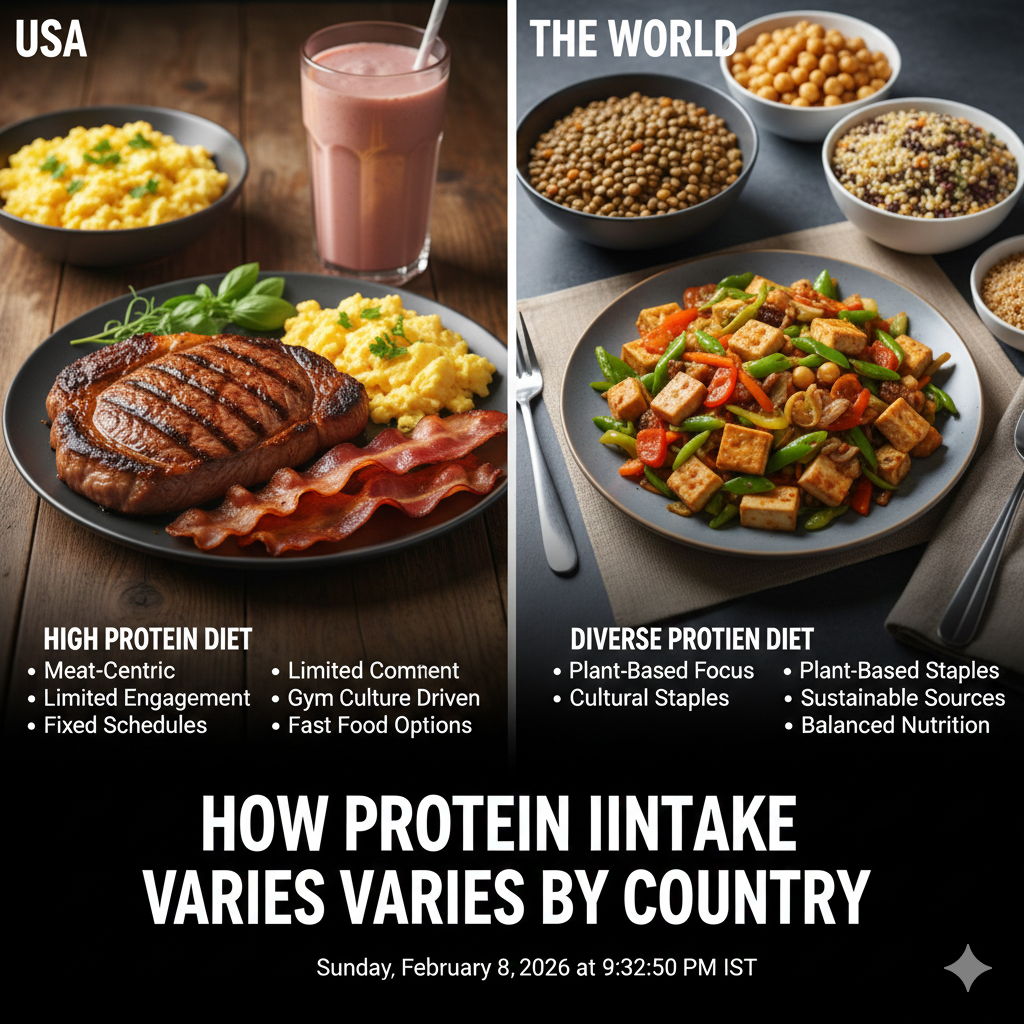
Protein is often hailed as the king of macronutrients. It fuels our muscles, supports our immune systems, and keeps us feeling full. But while biology dictates that every human needs protein to survive, the way we consume it—and how much we get—varies wildly depending on where we live.
In some corners of the globe, protein is a luxury, with diets heavily reliant on starchy staples. In others, particularly in wealthy Western nations, it is the centerpiece of almost every meal. Walk into a grocery store in the United States, and you will see “high protein” stamped on everything from yogurt to cereal boxes. But is this obsession with protein universal?
The reality of global nutrition is a story of contrast. While an average American might casually consume double their daily requirement, someone in a developing nation might struggle to meet the minimum. These differences aren’t just about personal preference; they are shaped by economics, culture, geography, and government policy.
This article explores the fascinating divide in global protein consumption. We will look at how the United States stacks up against the rest of the world, what drives these dietary patterns, and what it all means for our collective health.
What Is Protein Intake and Why It Matters
Before looking at the global map of consumption, it helps to understand why protein is such a vital nutrient. At a microscopic level, proteins are made up of amino acids, often described as the “building blocks” of life. Every cell in the human body contains protein. It is essential for repairing tissue, making enzymes and hormones, and supporting healthy skin, hair, and bones.
Role of protein in human health
When we eat protein-rich foods, our body breaks them down into amino acids, which are then reused to build new proteins. Unlike fat and carbohydrates, the body does not store amino acids for later use. This means we need a steady supply from our diet every day. Without adequate protein, the body begins to break down muscle tissue to get the amino acids it needs, leading to muscle loss, weakness, and a compromised immune system.
Recommended daily protein intake
So, how much is enough? The Recommended Dietary Allowance (RDA) suggests that an average adult needs about 0.8 grams of protein per kilogram of body weight. For a sedentary man weighing 180 pounds, that translates to roughly 65 grams per day. However, many nutritionists argue this is a minimum to prevent deficiency, not necessarily the optimal amount for vibrant health, especially for active individuals or older adults who need more to maintain muscle mass.
Average Protein Intake by Country
When you zoom out to look at the world as a whole, the disparities in nutrition become stark. Data from the Food and Agriculture Organization (FAO) of the United Nations reveals that developed nations generally consume far more protein than developing ones.
Global protein consumption overview
On average, the global population consumes enough protein to meet basic biological needs. However, the distribution is uneven. In North America and Western Europe, average daily consumption frequently exceeds 100 grams per person. In contrast, in parts of sub-Saharan Africa and South Asia, averages can hover closer to 50 or 60 grams per day.
High vs low protein intake regions
The highest consumers are typically found in affluent regions. Countries like Iceland, Hong Kong, and Israel often top the charts alongside the United States. These regions have high accessibility to meat, dairy, and seafood. Conversely, the lowest intake levels are found in countries facing food insecurity, such as Madagascar, Haiti, and the Central African Republic. In these areas, diets are often plant-based out of necessity rather than choice, relying heavily on roots, tubers, and grains which have lower protein density compared to animal products.
Protein Intake in the USA
The United States is arguably the protein capital of the world. The American diet is characterized by large portion sizes and a heavy reliance on animal products, making protein deficiency extremely rare in the general population.
Average daily protein consumption
Recent surveys indicate that the average American man consumes nearly 100 grams of protein per day, while the average woman consumes around 70 grams. This is significantly higher than the standard RDA. For many Americans, a meal doesn’t feel “complete” without a substantial portion of meat, poultry, or fish.
Comparison to recommended guidelines
Most Americans are not just meeting their protein needs; they are exceeding them. While the guideline is 0.8 grams per kilogram, many Americans are consuming closer to 1.2 to 1.5 grams per kilogram. This surplus is generally safe for healthy individuals, but it raises questions about sustainability and the long-term health effects of a diet so heavily skewed toward animal protein.
Trends over recent decades
Historically, beef was the primary driver of US protein intake. However, consumption trends have shifted over the last 30 years. Chicken consumption has skyrocketed, overtaking beef as the most popular meat. Additionally, there has been a recent surge in interest regarding plant-based proteins, though these still make up a minority of total intake compared to animal sources.
USA vs Other High-Protein Countries
While the USA is a heavyweight in protein consumption, it isn’t the only country with a high-protein diet. Comparing the US to its peers reveals interesting cultural nuances.
Comparison with Europe
Western European nations like France, Germany, and Spain also have high protein intakes, comparable to the US. However, the sources often differ. European diets tend to include more dairy (think French cheeses and Scandinavian yogurts) and often slightly less red meat than the standard American diet. Portions in Europe are generally smaller, yet the nutrient density remains high.
Comparison with Australia and Canada
Australia is one of the few countries that rivals the US in meat consumption per capita. With a strong barbecue culture similar to the US, Australians consume vast amounts of beef and lamb. Canada follows a similar pattern but has seen a slightly more aggressive push in its national dietary guidelines to encourage plant-based proteins, de-emphasizing dairy and meat in favor of a balanced “plate” approach.
Comparison with East Asia
East Asian countries, particularly South Korea, Japan, and parts of China, have seen rapid increases in protein consumption as their economies have grown. However, the profile is different. Seafood and soy play a much larger role here than in the US. While Western fast food has made inroads, traditional diets rich in fish and tofu ensure that protein intake is high but often lower in saturated fats compared to the American model.
Low-Protein Intake Countries
In contrast to the protein abundance of the West, billions of people live in regions where getting enough nutrients is a daily challenge.
Regions with limited protein access
In many parts of Central and East Africa, as well as South Asia, protein intake is often limited by what can be grown locally. The staple diet might consist of maize, cassava, or rice. While these foods provide energy, they lack the complete amino acid profile found in animal products or carefully combined plant proteins.
Economic and food availability factors
The primary driver here is economics. Animal protein is expensive to produce and purchase. In low-income nations, meat is often reserved for special occasions rather than daily meals. Furthermore, weak infrastructure means that perishable items like milk, fish, and meat cannot easily be transported to rural areas, leaving populations dependent on shelf-stable grains.
Sources of Protein by Country
It is not just about how much protein people eat, but what kind of protein they choose.
Animal-based protein consumption
The Americas, Europe, and Oceania rely heavily on animal sources. In the US, animal products account for nearly two-thirds of total protein intake. Argentina and Uruguay are famous for their beef consumption, while island nations like Japan and Iceland lean heavily on seafood. In these cultures, animal protein is deeply ingrained in culinary tradition.
Plant-based protein trends
In contrast, countries like India rely significantly on plant-based sources due to both economic factors and religious beliefs. Legumes, lentils, and chickpeas are staples in Indian cuisine, providing a robust source of protein without the need for meat. Similarly, in many Mediterranean and Middle Eastern cultures, beans and nuts are central to the diet, bridging the gap between high and low animal consumption regions.
Cultural dietary patterns
Culture shapes our plate. In Mexico, beans and corn provide a complementary protein pairing that has sustained populations for centuries. In Southeast Asia, fermented soy products like tempeh and tofu are staples. These cultural patterns show that high protein intake is possible without a burger-centric diet.
Factors That Influence Protein Intake
Why does a person in Texas eat differently than a person in Tokyo or Tanzania? Several powerful forces dictate these habits.
Income and food affordability
There is a direct correlation between a country’s GDP and its protein consumption. As nations become wealthier, their populations tend to eat more meat, dairy, and eggs. This phenomenon, known as the “nutrition transition,” is currently visible in developing economies like Brazil and China, where meat consumption is rising rapidly alongside the middle class.
Cultural and religious diets
Religion plays a massive role. The prevalence of vegetarianism in India is largely tied to Hinduism and Jainism. In Muslim and Jewish populations, pork is prohibited, shifting consumption toward lamb, beef, and poultry. In the US, the culture of “bigger is better” influences portion sizes, making a 12-ounce steak a desirable dinner option.
Urbanization and lifestyle
Urban populations tend to consume more processed and convenience foods, which are often fortified with protein or centered around meat. Rural populations in developing nations typically stick to traditional, crop-based diets.
Government nutrition guidelines
Government policy also steers the ship. The US dietary guidelines have long promoted dairy and meat as key food groups, though this is softening. In contrast, countries like Denmark are updating guidelines to explicitly encourage climate-friendly, plant-based eating, which changes how public institutions like schools and hospitals plan meals.
Health Implications of Protein Intake Differences
The disparity in protein intake leads to different health outcomes across the globe.
Muscle mass and aging
In high-intake countries like the USA, sarcopenia (muscle loss due to aging) is often combated effectively by high protein diets in older adults. Adequate protein protects bone density and keeps the elderly mobile. In low-intake regions, muscle wasting can be a significant issue for aging populations, leading to frailty.
Obesity and metabolic health
However, the high protein intake in the West comes with a catch. It is often accompanied by high levels of saturated fat and calories (think cheeseburgers and fried chicken). This contributes to the obesity epidemic and metabolic diseases like type 2 diabetes. While protein itself is satiating, the vehicle it comes in matters.
Malnutrition and deficiency risks
In low-intake countries, protein-energy malnutrition remains a serious threat, particularly for children. Lack of protein can stunt growth, impair cognitive development, and weaken the immune system, making populations more susceptible to infectious diseases.
Trends Shaping Global Protein Consumption
The way the world eats is changing. Environmental pressures and health consciousness are reshaping dietary landscapes.
Rise of plant-based diets
Even in meat-loving USA, there is a distinct shift toward “flexitarianism.” Consumers are swapping beef for burgers made from pea or soy protein. This isn’t just a niche trend; major fast-food chains are adopting plant-based options, signaling a mainstream shift.
Sustainability and environmental concerns
Producing beef requires significantly more land and water than producing lentils or soy. As concerns over climate change mount, many consumers in developed nations are reducing animal protein intake to lower their carbon footprint. This eco-conscious eating is less prevalent in developing nations, where the priority remains securing enough calories.
Protein supplements and fortified foods
The sports nutrition market has exploded globally. Protein powders, bars, and fortified waters are no longer just for bodybuilders. They are everyday items for busy professionals in the US, Europe, and parts of Asia, further driving up intake averages in these regions.
Is the USA’s Protein Intake Too High or Too Low?
Given the data, the verdict on American habits is nuanced.
Benefits of higher protein intake
For active people, athletes, and those trying to lose weight, the higher protein intake common in the USA is beneficial. Protein helps control appetite and preserves lean muscle mass during weight loss. It is a metabolic advantage in a sedentary world.
Potential risks of excess consumption
However, for the average sedentary American, eating triple the required protein (especially from processed meats) may tax the kidneys over time and is often linked to higher risks of heart disease due to the accompanying fats and sodium. The consensus among nutrition experts is that while Americans get enough protein, they could benefit from diversifying their sources—swapping the steak for salmon, or the chicken for chickpeas.
FAQs – Protein Intake by Country
How much protein do people eat in the USA?
On average, American men consume about 100 grams per day, and women consume about 70 grams. This is well above the minimum recommendation of roughly 50-60 grams for the average sedentary adult.
Which country consumes the most protein?
Rankings fluctuate, but countries like Iceland, Hong Kong, and Israel consistently appear at the top of the list for per capita protein consumption, often exceeding 100 grams per day per person.
Is high protein intake healthy?
High protein intake is generally safe for healthy individuals and can support muscle maintenance and weight management. However, if the protein comes primarily from processed or red meats high in saturated fats, it can increase the risk of heart disease.
Do plant-based diets meet protein needs?
Yes. It is entirely possible to meet protein needs on a plant-based diet. Countries with high vegetarian populations, like India, demonstrate this. However, it requires eating a variety of plant foods (legumes, grains, nuts) to ensure all essential amino acids are consumed.
How does income affect protein consumption?
Wealthier nations and individuals generally consume more protein, particularly from animal sources. As income rises, diets typically shift from grain-based to including more meat, dairy, and processed foods.
The Future of Protein
The divide between the USA and the rest of the world highlights a complex relationship with food. While the US battles the complications of abundance—seeking to balance high intake with heart health and sustainability—other nations strive to secure the basics.
As the global population grows, the conversation is shifting from simply “getting enough” to “getting it right.” Whether through high-tech plant-based burgers in California or improved agricultural access in sub-Saharan Africa, the goal remains the same: fueling humanity efficiently, equitably, and healthily.
Leave a Reply