

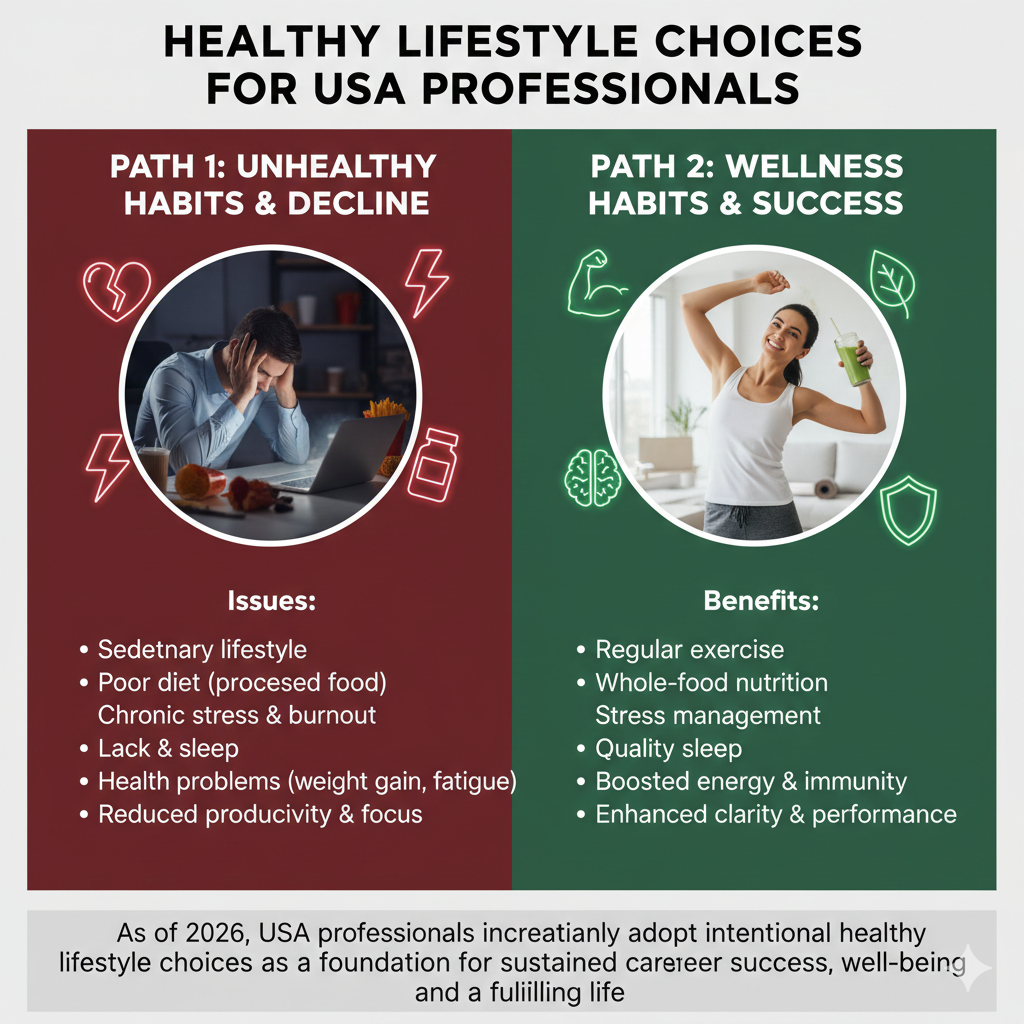
You are finally closing your laptop after a ten-hour day. Your back aches from sitting in the same position since lunch, your eyes are dry from staring at spreadsheets, and you realize the only thing you’ve eaten all day is a bagel and three cups of coffee. You promise yourself tomorrow will be different, but the cycle often repeats itself.
For professionals in the United States, this scenario is all too common. The drive to succeed, climb the corporate ladder, and meet quarterly targets often comes at the expense of physical and mental well-being. However, sacrificing health for a career is a false economy. Eventually, the body keeps the score, and productivity plummets.
Adopting a healthy lifestyle doesn’t require quitting your job to live on a farm or spending three hours a day at the gym. It requires a strategic approach to energy management. By integrating small, sustainable changes into your daily routine, you can sharpen your focus, reduce burnout, and actually improve your professional performance. This guide explores practical, realistic ways to prioritize your health without compromising your career ambitions.
Why Healthy Living Is Challenging for Professionals
Understanding the barriers to health is the first step in overcoming them. The structure of modern professional life often works against physical well-being.
Long work hours and screen time
The average U.S. workday is rarely limited to nine-to-five. With smartphones keeping us tethered to email around the clock, the boundary between “work” and “life” has blurred. This leads to sedentary behavior, where professionals sit for prolonged periods. Physically, this lack of movement slows metabolism and weakens muscles, while the constant blue light exposure disrupts circadian rhythms.
Stress and burnout risks
High-pressure environments trigger the body’s fight-or-flight response. When stress becomes chronic, cortisol levels remain elevated, leading to weight gain, high blood pressure, and anxiety. Many professionals wear stress as a badge of honor, not realizing that it is slowly eroding their capacity to work effectively.
What Does a Healthy Lifestyle Look Like for Professionals?
We need to redefine what “healthy” means in a corporate context. It isn’t about having six-pack abs; it’s about having the energy to get through the day and the longevity to enjoy your success.
Sustainability over perfection
The “all-or-nothing” mindset is the enemy of progress. You might not be able to cook a gourmet organic meal every night, and that is okay. A healthy lifestyle for a professional is about making the best possible choice in the given circumstances. It’s choosing a salad over a burger at a client lunch, or taking the stairs instead of the elevator when you’re rushing to a meeting.
Balancing career demands and well-being
True health involves recognizing that your job is a marathon, not a sprint. A healthy professional understands that taking time to recharge isn’t “wasting time”—it’s an investment in their future output. It involves negotiating deadlines when necessary and understanding that you cannot pour from an empty cup.
Core Healthy Lifestyle Choices for Professionals
Building a foundation of health requires focusing on four pillars: sleep, nutrition, movement, and stress management.
Prioritizing Quality Sleep
Consistent sleep schedules
Sleep is often the first thing to go during a busy week. However, irregular sleep patterns confuse your biological clock. Try to go to bed and wake up at the same time every day, even on weekends. This consistency regulates your hormones and makes waking up on Monday morning significantly less painful.
Sleep and work performance
Think of sleep as a performance-enhancing tool. During deep sleep, the brain clears out toxins and consolidates memories. A well-rested professional has better emotional regulation, sharper problem-solving skills, and improved decision-making abilities. If you want to perform better at work, prioritize eight hours of sleep over two extra hours of late-night email checking.
Smart Nutrition for Busy Workdays
Balanced meals and snacks
Reliance on processed office snacks or fast food leads to inflammation and lethargy. Aim for meals that balance protein, healthy fats, and complex carbohydrates. For example, a lunch of grilled chicken with quinoa and vegetables provides a steady release of energy, unlike a slice of pizza which causes a spike and a crash.
Avoiding energy crashes
The mid-afternoon slump is usually a result of blood sugar instability. Instead of reaching for a candy bar, keep non-perishable healthy snacks in your desk drawer, such as almonds, beef jerky, or protein bars with low sugar. Staying hydrated is also crucial; often, fatigue is simply dehydration in disguise.
Regular Physical Activity
Short, effective workouts
You don’t need an hour-long block of time to exercise. High-Intensity Interval Training (HIIT) can deliver cardiovascular benefits in just 20 minutes. Early morning workouts ensure that late meetings don’t derail your fitness plans. Alternatively, utilize your commute by biking or parking further away from the office entrance.
Movement during the workday
Combat “sitting disease” by integrating movement into your workflow. Use a standing desk if available, or set a timer to stand up and stretch every hour. Walking meetings are an excellent way to get steps in while discussing projects with colleagues; the change of scenery often sparks creativity as well.
Stress Management and Mental Health
Mindfulness and breaks
Mindfulness is not just for yogis; it is a potent business tool. Taking two minutes to practice box breathing (inhale for 4, hold for 4, exhale for 4, hold for 4) can reset your nervous system before a high-stakes presentation.
Managing work pressure
Learn to categorize tasks by urgency and importance. Often, stress comes from the feeling of being overwhelmed rather than the workload itself. By breaking large projects into smaller steps, you reduce anxiety. Furthermore, don’t hesitate to utilize mental health days. They are part of your benefits package for a reason.
Healthy Work Habits
Your physical environment and how you interact with it play a massive role in your health.
Ergonomic work setups
If you spend eight hours a day in a chair, that chair matters. Ensure your screen is at eye level to prevent “tech neck,” and your feet are flat on the floor. An ergonomic setup prevents chronic back pain and repetitive strain injuries like carpal tunnel syndrome, which can sideline a career.
Managing screen time and posture
Eye strain is a major issue for U.S. professionals. Follow the 20-20-20 rule: every 20 minutes, look at something 20 feet away for 20 seconds. This relaxes the eye muscles. Additionally, be mindful of hunching over your keyboard. Roll your shoulders back and engage your core to support your spine.
Time Management and Health
How you manage your calendar dictates how you manage your health.
Planning meals and workouts
Treat your workout and meal prep times as non-negotiable meetings. If it isn’t on the calendar, it likely won’t happen. Spend Sunday afternoon preparing lunches for the week to remove the friction of decision-making during busy weekdays.
Protecting personal time
Parkinson’s Law states that work expands to fill the time available for its completion. If you don’t set a hard stop for your workday, you will work indefinitely. strict end times force you to be more efficient during the day and preserve your evenings for recovery.
Work-Life Balance Strategies
Achieving balance is an active process of setting and maintaining standards.
Setting boundaries
In an era of remote connectivity, you must teach people how to treat you. Make it clear that you do not answer emails after a certain hour unless it is a genuine emergency. Most “urgent” requests can wait until the morning. By setting these boundaries, you protect your mental space.
Remote and flexible work options
If your company offers hybrid work, utilize it to your advantage. Use the time saved on commuting to sleep longer, cook a healthy breakfast, or fit in a workout. However, be careful not to let work bleed into your home life; have a designated workspace that you can physically leave at the end of the day.
Social and Emotional Well-Being
Humans are social creatures, and isolation is a significant health risk.
Maintaining relationships
Don’t let your network become purely transactional. Nurture friendships outside of your industry. Spending time with people who don’t care about your job title or quarterly results helps ground you and provides essential emotional support during tough times.
Avoiding isolation
For remote workers, isolation is a real danger. Make an effort to work from a co-working space or a coffee shop occasionally. Engage in video calls rather than just emails to see friendly faces. Joining professional groups or hobby clubs can also provide a sense of community.
Using Technology to Support Health
Technology caused many of these problems, but it can also help solve them.
Fitness and wellness apps
Wearable technology like Apple Watches or Fitbits provides accountability by tracking steps, sleep, and heart rate. Apps like MyFitnessPal help you stay honest about nutrition, while Calm or Headspace offer guided meditations tailored for busy schedules.
Productivity tools that reduce overload
Use project management tools like Asana or Trello to get tasks out of your head and onto a screen. This reduces cognitive load. Apps like Freedom can block distracting websites during deep work sessions, allowing you to finish tasks faster and log off sooner.
Common Unhealthy Habits Professionals Should Avoid
Certain habits seem like shortcuts but are actually dead ends.
Skipping meals
“Powering through” lunch usually results in a brain fog by 3:00 PM and overeating at dinner. Your brain needs glucose to function. Skipping meals deprives your most important asset—your mind—of fuel.
Excessive caffeine
Coffee is a staple of the American office, but relying on it to mask exhaustion is dangerous. It creates a cycle of highs and lows that disrupts sleep. Try to cut off caffeine intake by 2:00 PM to ensure it leaves your system before bedtime.
Chronic overworking
There is a point of diminishing returns. Working 60 hours a week does not mean you are producing 50% more value than someone working 40 hours. Chronic overworking leads to mistakes, burnout, and resentment.
Healthy Lifestyle Choices by Career Stage
Your health needs and capabilities evolve as your career progresses.
Early-career professionals
In your 20s, you might feel invincible, but this is the time to build habits. Avoid the trap of late-night networking drinks every day. Focus on establishing a workout routine and learning how to cook simple, healthy meals now, before life gets more complicated.
Mid-career leaders
This is often the “sandwich” phase, balancing aging parents, young children, and increased management responsibility. Efficiency is key here. Focus on high-impact health activities: 20-minute heavy lifting sessions, bulk cooking on weekends, and ruthless prioritization of sleep.
Executives and managers
At this level, you are a corporate athlete. Your decisions impact the whole company. You need stamina. Additionally, you set the culture. If you send emails at midnight, your team will feel pressured to do the same. Model healthy behaviors to create a sustainable work environment for everyone.
Long-Term Benefits of Healthy Habits
Investing in your health provides the highest return on investment of any asset you own.
Sustained energy and focus
A healthy body houses a sharp mind. By fueling yourself correctly and resting adequately, you bring a higher level of intensity and focus to your work. You become the person who is still generating great ideas at the end of a long meeting.
Career longevity and satisfaction
Burnout cuts careers short. By pacing yourself and prioritizing your well-being, you ensure that you can stay in the game for decades. You will enjoy your achievements more if you are physically and mentally well enough to appreciate them.
Prioritize Yourself to Prioritize Your Career
The narrative that you must destroy your body to build your career is outdated and scientifically flawed. In the competitive landscape of the U.S. job market, your health is your competitive advantage. It is the fuel that drives your ambition, your creativity, and your resilience.
Start small. Choose one area from this guide—whether it’s drinking more water, turning off notifications after dinner, or taking a daily walk—and implement it this week. Your future self, and your career, will thank you.
FAQs – Healthy Lifestyle Choices for Professionals
How can busy professionals stay healthy?
Focus on integration rather than addition. Walk during calls, stand while working, and prep meals on weekends. Small, consistent actions compound over time.
What’s the most important healthy habit at work?
Taking regular breaks. The human brain can only focus deeply for about 90 minutes. Stepping away for five minutes improves overall productivity and reduces stress.
Can small habits really improve health?
Yes. Drinking one extra glass of water, sleeping 30 minutes more, or stretching for five minutes daily can significantly lower cortisol levels and improve metabolic health over time.
How do professionals manage stress effectively?
By setting boundaries and practicing mindfulness. Disconnecting from work physically and digitally allows the mind to recover from the stresses of the day.
Is work-life balance realistic for professionals?
Yes, but it is dynamic. Some weeks will be work-heavy, others will focus on life. The goal is an overall equilibrium where neither side is consistently neglected.
Leave a Reply