

When news broke in August 2019 that the United States was interested in purchasing Greenland, the initial reaction from the global public was one of bemusement. Internet memes circulated images of gold towers superimposed on icy fjords, and late-night talk show hosts had a field day. It sounded like a relic of 19th-century imperialism, a diplomatic curiosity that would quickly fade from the news cycle.
However, for military strategists and geopolitical analysts, the laughter died down quickly. The subsequent diplomatic spat between Washington and Copenhagen was not merely a disagreement over real estate; it was a stress test for the North Atlantic Treaty Organization (NATO). It laid bare a clash between transactional politics and traditional alliance building, raising uncomfortable questions about the cohesion of the West’s most important military bloc.
The incident forced member nations to confront a stark reality: the Arctic is no longer a frozen periphery but a central theatre of great power competition. As ice sheets melt and shipping lanes open, the strategic value of Greenland has skyrocketed. But if NATO allies cannot agree on how to manage this territory without sparking a diplomatic crisis, how will they fare against the encroachments of Russia and China? This article examines whether the Greenland dispute was a singular oddity or a tremor signalling a widening fault line in the transatlantic alliance.
The Greenland Dispute Explained
To understand the severity of the fallout, one must look past the headline of the purchase offer and examine the strategic rationale and the diplomatic breakdown that followed.
The Offer and the Rejection
The catalyst was a confirmed report that then-President Donald Trump had discussed the possibility of the United States buying Greenland, an autonomous territory within the Kingdom of Denmark. While the concept seemed outlandish to modern ears, the US interest was rooted in hard power. Greenland sits atop substantial deposits of rare earth minerals—critical components for modern technology and weapons systems—currently dominated by Chinese supply chains. Furthermore, its geography allows for dominance over the North Atlantic and vital missile warning capabilities.
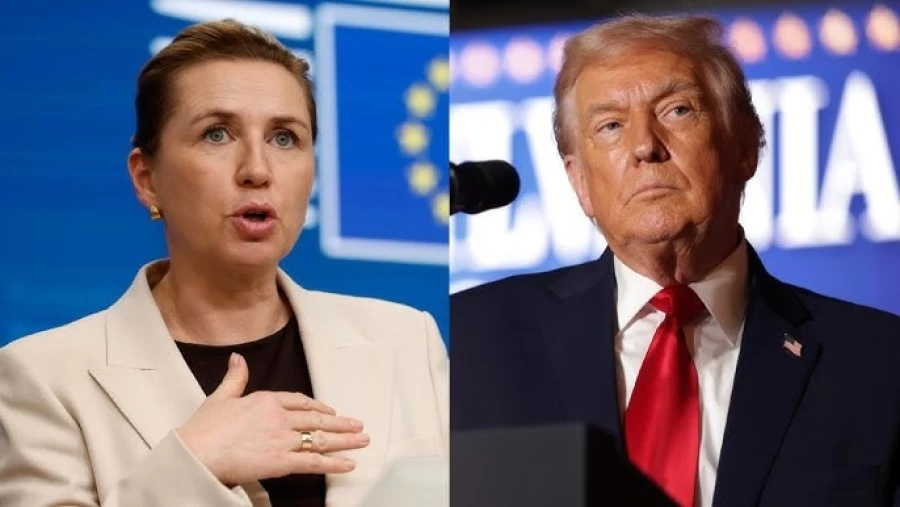
The response from Copenhagen was swift and unequivocal. Danish Prime Minister Mette Frederiksen described the idea as “absurd,” emphasising that “Greenland is not for sale. Greenland is not Danish. Greenland belongs to Greenland.” This statement was not just a rejection of a business deal; it was an affirmation of the self-determination of the Greenlandic people and the modern norms of international relations.
A Diplomatic Freeze
The rejection triggered an unprecedented reaction. The US President cancelled a planned state visit to Denmark, openly criticising the Prime Minister’s comments as “nasty.” This escalation shocked NATO allies. Denmark is one of America’s steadfast partners, having contributed troops to conflicts in Afghanistan, Iraq, and Libya. To treat a loyal ally with such diplomatic harshness over a rejected commercial transaction signaled a volatile shift in how the US viewed its partnerships: not as ironclad bonds of shared defence, but as conditional arrangements subject to negotiation.
Historical Context: NATO and Internal Tensions
While the Greenland row was unique in its nature, NATO is no stranger to internal friction. The alliance has weathered crises for over 70 years, often emerging adapted but intact.
A History of Disagreement
The narrative that NATO has always been a perfectly harmonious family is a myth. The Suez Crisis of 1956 saw the US forcing the UK and France to back down, a humiliation that reshaped European geopolitics. In the 1960s, France withdrew from NATO’s integrated military command structure, demanding more autonomy. More recently, the 2003 invasion of Iraq caused a deep rift between the “Old Europe” (France and Germany) that opposed the war, and the US-led coalition.
However, the Greenland dispute differed in tone. Previous disputes usually centred on military strategy or foreign policy objectives. This conflict felt more like a business merger gone wrong, threatening the foundational trust that Article 5—an attack on one is an attack on all—relies upon.
The Strategic Anchor of Thule
Historically, Greenland has always been vital to NATO. During World War II, it served as a crucial way station for aircraft. In 1946, the Truman administration actually made a similar offer to buy the island for $100 million in gold, seeing it as essential for containing the Soviet Union.
Though Denmark rejected that offer too, they allowed the construction of Thule Air Base in 1951. Located 750 miles north of the Arctic Circle, Thule is the US Armed Forces’ northernmost installation. It houses a massive radar system essential for ballistic missile early warning and space surveillance. For decades, Denmark allowed the US to operate this critical shield, balancing its own sovereignty with alliance security. The 2019 dispute threatened to upset this delicate balance, risking access to a facility that protects the entire alliance.
Diplomatic Fallout
The immediate aftermath of the dispute created a chilled atmosphere in Brussels and exposed the fragility of diplomatic norms in the current era.
Words Matter
The language used during the row caused significant damage. By cancelling a state visit—a high honour in diplomatic protocol—solely because a sovereign nation refused to sell its territory, the US signaled that respect was contingent on compliance.
Diplomats across Europe scrambled to assess whether this transactional approach would apply to other areas of cooperation. If a nation disagreed with Washington on trade, would security guarantees be withdrawn? The dispute emboldened critics of the alliance who argued that Europe could no longer rely solely on the US for its security and needed to pursue “strategic autonomy.”
Trust and Collaboration
Behind closed doors, the fallout was managed by career diplomats who understood the stakes. The US State Department worked to smooth over relations, reaffirming the importance of the partnership. However, the public nature of the spat meant the damage was visible to adversaries. It painted a picture of a disjointed alliance where the leading power was willing to berate a smaller, loyal member over a resource grab. This erosion of trust makes collaboration on sensitive intelligence and joint military exercises more difficult, as political will is the fuel that powers the NATO engine.
Strategic Implications for NATO
The true danger of the Greenland dispute lies not in the hurt feelings of politicians, but in the cold realities of Arctic security.
The Arctic Rush
The Arctic is warming at twice the rate of the rest of the planet. As the ice recedes, it exposes new shipping routes that cut travel time between Asia and Europe, as well as vast untapped reserves of oil, gas, and minerals.
Russia has moved aggressively to militarise its northern coast, refurbishing Soviet-era bases and deploying advanced S-400 missile systems. They are establishing an “ice curtain” to control access to the Northern Sea Route. Simultaneously, China has declared itself a “near-Arctic state,” investing heavily in infrastructure and research vessels to secure a foothold in the region.
A House Divided
To counter these threats, NATO needs a unified Arctic strategy. This requires seamless cooperation between the US, Canada, Denmark (via Greenland), Norway, and Iceland.
The Greenland dispute distracted from this unified front. Instead of discussing how to collectively monitor the GIUK gap (Greenland-Iceland-UK) to track Russian submarines, the alliance was bogged down in a conversation about sovereignty and purchase prices. If NATO members are suspicious of each other’s territorial ambitions, they cannot effectively coordinate a defence against external encroachments. The dispute essentially handed a propaganda victory to Moscow and Beijing, who could point to the chaos as evidence of Western decline.
Public Perception and Media Narratives
In the age of information warfare, how a dispute is perceived is almost as important as the dispute itself. The media framing of the Greenland affair varied wildly across the alliance, further complicating the political landscape.
The View from Europe
In Denmark and broader Europe, the media framed the incident as an affront to national dignity. It reinforced a narrative that the US had become an unpredictable, perhaps even bullying, partner. Public opinion polls in several NATO countries showed a decline in trust regarding US leadership. This matters because NATO is a democratic alliance; leaders cannot commit to collective defence if their voting public views the alliance leader with suspicion or disdain.
The View from the US
In the United States, the media narrative was split. While many outlets mocked the absurdity of the purchase offer, conservative commentators often focused on the strategic necessity of securing Greenland against Chinese influence. They framed the transaction as a bold, if unorthodox, move to secure American interests. This divergence in narratives highlights a growing transatlantic gap in how threats and solutions are perceived.
Could This Signal the Beginning of the End?
Is it hyperbolic to suggest that a spat over an icy island could spell the end of the most successful military alliance in history? Perhaps. But it serves as a powerful symbol of the challenges NATO faces.
Cracks vs. Structural Damage
NATO has survived because its members shared a fundamental belief in democratic values and collective security. The Greenland dispute suggested a shift toward a “protection racket” model, where security is provided in exchange for economic or territorial concessions. If this transactional mindset becomes the norm, the Article 5 guarantee becomes negotiable. That is the true existential threat.
Scenarios for the Future
Moving forward, there are two likely paths. The first is that this was an aberration, a temporary flare-up driven by personality rather than policy, which will be smoothed over by institutional bureaucracy. The opening of a US consulate in Nuuk (Greenland’s capital) and an aid package suggests an attempt to return to traditional diplomacy.
The second, more worrying scenario, is that this is the new normal. As resources become scarcer and great power competition heats up, allies may increasingly view each other as competitors. If the US prioritises “America First” resource acquisition over alliance cohesion, and if Europe retreats into defensive autonomy, NATO could become a hollow shell—technically existing on paper, but politically paralysed.
Expert Opinions and Predictions
Geopolitical analysts and military experts have weighed in heavily on the implications of the dispute.
- The Optimists: Many defence experts argue that the military logic of NATO is too strong to be broken by diplomatic rudeness. They point to the fact that on the ground, military-to-military cooperation remains robust. The interoperability of Danish and American forces has not degraded, and the strategic reality of the Russian threat forces cooperation regardless of political rhetoric.
- The Realists: Analysts at think tanks like the Atlantic Council warn that the dispute highlighted a lack of a coherent Western strategy for the Arctic. They argue that until NATO formulates a formal Arctic policy, these bilateral squabbles will continue to leave the door open for Chinese and Russian influence.
- The Pessimists: Some diplomatic historians draw parallels to the dissolution of historical alliances, noting that the end often starts not with a bang, but with a gradual loss of mutual respect. They predict that if the US continues to surprise allies with erratic demands, smaller nations may begin to hedge their bets, looking for security arrangements outside of the traditional NATO structure.
Moving Forward: The Future of the Alliance
The dust has largely settled on the Greenland purchase offer, but the landscape has changed. The dispute served as a wake-up call that the Arctic is the next great geopolitical chessboard, and the West was caught arguing amongst itself while opponents moved their pieces.
The incident proved that NATO’s unity can no longer be taken for granted. It requires constant maintenance, mutual respect, and a shared vision of the future. The alliance must pivot from bickering over ownership to collaborating on security. The question is not who owns Greenland, but how the free world ensures that the High North remains stable and secure.
If NATO can learn from this diplomatic stumble, it may emerge with a clearer focus on the Arctic. If not, the Greenland dispute may be remembered by historians as a pivotal moment where the cracks in the foundation became too large to ignore.
Stay ahead of the changing world order.
Geopolitics is moving faster than ever. Sign up for our weekly briefing to get expert analysis on NATO, Arctic security, and global defence strategy delivered straight to your inbox.
Leave a Reply