

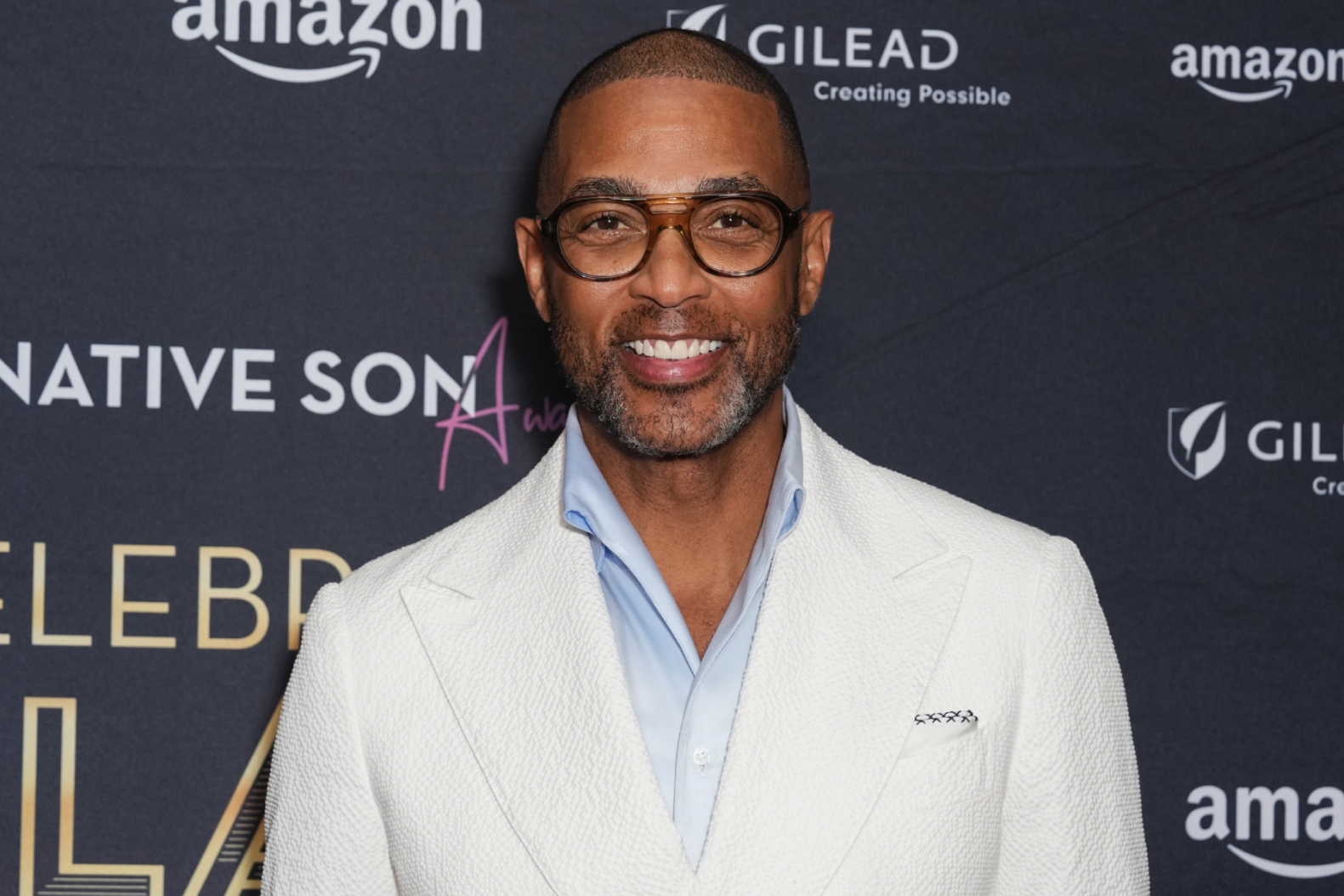
In the high-stakes world of cable news, where personality drives ratings, the line between commentary and controversy is often blurred. Don Lemon, a fixture at CNN for nearly two decades, recently found himself at the center of a media firestorm that resulted in his abrupt departure from the network. While Lemon is no stranger to polarizing headlines, this latest incident sparked a national conversation about sexism, ageism, and the responsibilities of on-air talent.
For years, Lemon was one of CNN’s most recognizable faces, known for his candid opinions and emotional delivery during prime time. His transition to the morning slot was meant to revitalize the network’s early programming. Instead, it became the setting for an on-air exchange that would ultimately unravel his tenure at the network. This article breaks down exactly what happened, why the public reaction was so visceral, and what this moment signifies for the broader landscape of broadcast journalism.
What Happened: Step-by-Step Timeline
The catalyst for the controversy occurred during a segment on CNN This Morning regarding Nikki Haley, the former South Carolina governor and Republican presidential candidate. Haley had proposed mandatory mental competency tests for politicians over the age of 75.
During the discussion with co-hosts Poppy Harlow and Kaitlan Collins, Lemon pushed back against Haley’s proposal, but his argument pivoted to her age rather than the policy itself. “Nikki Haley isn’t in her prime, sorry,” Lemon said. “A woman is considered to be in her prime in her 20s and 30s and maybe 40s.”
The comment prompted an immediate, visible reaction from his co-hosts. Harlow pressed him on the statement, asking, “Prime for what? Prime for childbearing? Or are you talking about prime for being president?”
Lemon doubled down, telling Harlow not to “shoot the messenger” and suggesting that viewers “Google it.” He argued that if you search “when is a woman in her prime,” the results would support his claim. The awkward exchange continued for several moments, creating a palpable tension on set that radiated through the screen to viewers at home.
Within hours, the clip went viral. It wasn’t just a political gaffe; it was perceived as a direct insult to women professionals everywhere, seemingly reducing a woman’s value and competency to her reproductive years or physical appearance.
Public and Media Reactions
The backlash was swift and severe. Social media platforms lit up with criticism, with hashtags trending as users debated the implications of Lemon’s words. The criticism was bipartisan; conservatives saw it as proof of liberal media bias against Republican women, while liberals and feminists condemned the inherent sexism and ageism of the remark.
Prominent journalists and media analysts weighed in, noting that the comments were factually incorrect regarding political leadership—history is filled with world leaders, both male and female, who ascended to power well past their 40s. Michelle Yeoh, who had recently won an Oscar in her 60s, was frequently cited by social media users as a counter-example, with her acceptance speech quote, “Ladies, don’t let anyone tell you you are ever past your prime,” serving as a rallying cry against Lemon’s sentiment.
Perhaps most damaging were the reports from inside CNN. Leaks suggested that the internal morale had plummeted, with female staffers reportedly furious. The incident wasn’t viewed in a vacuum but rather as a tipping point following other reported on-set tensions.
Don Lemon’s Response
Realizing the gravity of the situation, Lemon issued an apology the same day. He took to Twitter (now X) to express regret, writing, “The reference I made to a woman’s ‘prime’ this morning was inartful and irrelevant, as were colleagues and loved ones, and I regret it. A woman’s age doesn’t define her either personally or professionally. I have countless women in my life who prove that every day.”
He was absent from the show for several days following the incident, a move widely interpreted as a suspension. During this time, he reportedly participated in formal training. Upon his return, he did not address the issue on air immediately, but CNN CEO Chris Licht (who has since also left the network) sent a memo to staff calling the remarks “unacceptable.”
However, the apology did little to quell the storm. In April 2023, just months after the incident, Don Lemon announced on social media that he had been terminated by CNN. “I was informed this morning by my agent that I have been terminated by CNN. I am stunned,” he wrote, claiming that no one at the network had the decency to tell him directly—a claim CNN PR later disputed.
Historical Context: Previous Controversies
This was not the first time Don Lemon had courted controversy. Throughout his career, he had evolved from a traditional news anchor to an opinionated personality, often sparking debate.
Early in his career, he faced backlash for comments regarding the Black community, famously agreeing with Bill O’Reilly on certain criticisms of Black culture, which drew ire from African American leaders and progressives. Conversely, in the Trump era, he became a hero to the resistance for his unvarnished critiques of the former president, famously laughing uncontrollably during a segment mocking Trump’s supporters, which critics labeled as elitist.
The “prime” comment, however, hit a different nerve. Unlike political sparring, which is expected on cable news, this was viewed as a personal attack based on gender and age. It alienated the very demographic—women over 40—that makes up a significant portion of morning news viewership.
Implications for Media and Journalism
The fallout from the Don Lemon saga forces a difficult conversation about the state of modern journalism. As networks shift toward “infotainment” to combat declining ratings, they encourage anchors to be provocative. Yet, this incident shows there are still boundaries.
It highlights the precarious balance between authenticity and professionalism. Audiences crave authentic personalities, but they also demand respect. When an anchor’s personal biases—in this case, perceived misogyny—bleed into their commentary, it erodes the credibility of the entire network.
Furthermore, it serves as a case study in corporate accountability. In the #MeToo and post-#MeToo era, major corporations are less willing to tolerate behavior that could be deemed discriminatory. CNN’s decision to cut ties suggests that no talent is too big to fail if they become a liability to the brand’s reputation and internal culture.
Legal or Professional Considerations
Following his termination, the focus shifted to the legal ramifications. Lemon hired high-profile legal counsel, signaling a potential battle over the terms of his exit. Discussions regarding unpaid contract value—reportedly in the millions—became the subject of entertainment news speculation.
For CNN, the legal risk involved potential hostile work environment claims if they hadn’t acted. Reports had surfaced regarding Lemon’s alleged behavior toward female colleagues dating back years, published by Variety. While Lemon denied these reports, the accumulation of grievances created a legal and HR minefield for the network.
What This Means for Don Lemon’s Career
Despite the messy exit, Don Lemon remains a recognizable brand. The question is whether he can rehabilitate his image. The path to redemption in media is well-trodden; many figures have been fired only to resurface on different platforms, start podcasts, or launch independent media ventures.
The “cancelled” label is rarely permanent for those with a large following. Lemon has since launched The Don Lemon Show on X (formerly Twitter), attempting to bypass traditional gatekeepers and speak directly to his audience. This move mirrors other ousted anchors like Tucker Carlson, signaling a shift where individual personalities may wield more power than the legacy networks that once employed them. However, his initial interview with Elon Musk on the platform also turned contentious, proving that Lemon’s style remains confrontational and unpredictable.
Frequently Asked Questions (FAQ)
What exactly did Don Lemon say or do?
Don Lemon argued that Nikki Haley was not in her “prime” because she was 51. He stated that a woman is considered in her prime in her “20s, 30s, and maybe 40s,” citing Google searches as his evidence.
How did the public respond to Don Lemon’s controversy?
The response was overwhelmingly negative. Critics across the political spectrum labeled the comments sexist and ageist. It sparked a broader conversation about how older women are treated in society and media.
Has Don Lemon faced similar situations before?
Yes. Lemon has faced backlash for various comments over the years, ranging from critiques of Black culture to mocking political opponents. However, this was the most significant incident involving accusations of sexism.
Will this affect Don Lemon’s role at CNN?
It already has. Following the incident and a brief suspension, Don Lemon was terminated from CNN in April 2023.
Why is this controversy significant in media today?
It highlights the tension between opinion-based news and professional standards. It also underscores the growing intolerance for casual sexism and ageism in corporate environments, even for high-profile figures.
The Future of Opinion Journalism
The Don Lemon controversy serves as a stark reminder that words matter. In an industry built on hot takes and viral moments, the “prime” comment crossed a line that viewers and executives were no longer willing to ignore. It ended a nearly two-decade run at a major network and forced a reckoning regarding how female politicians and professionals are discussed in the public sphere.
As media continues to fracture and evolve, the lessons here are clear: credibility is fragile. For networks, the challenge will be managing the personalities they cultivate. For Lemon, the challenge is reinvention.
Stay informed on the latest developments in media and journalism by subscribing to our newsletter for weekly updates and in-depth analysis.
Leave a Reply