

In the summer of 2023, the global cinematic landscape was dominated by an unlikely pair of blockbusters. Barbie and Oppenheimer—two films with diametrically opposed tones, visuals, and themes—released on the same day, sparking a cultural phenomenon dubbed “Barbenheimer.” Instead of cannibalizing each other’s audiences, the simultaneous release created a rising tide that lifted all boats. Audiences flocked to theaters for double features, memes flooded social media, and box office records were shattered.
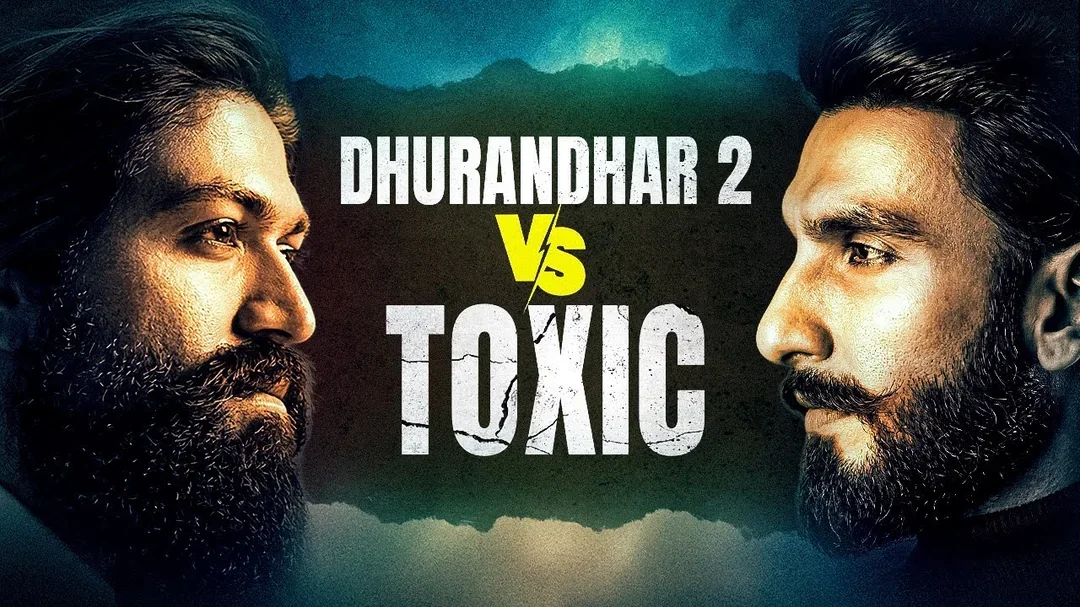
Now, whispers in trade circles and fan forums suggest that Indian cinema might be on the verge of its very own Barbenheimer moment. The contenders? The highly anticipated action sequel Dhurandhar 2 and the gritty, mysterious narrative of Toxic.
Historically, big clashes in Indian cinema—like Dil vs. Ghayal or Lagaan vs. Gadar—have often been viewed as zero-sum games where one film’s gain is the other’s loss. However, the dynamics of movie-going are shifting. Audiences are increasingly genre-agnostic, willing to embrace diverse storytelling styles back-to-back. With Dhurandhar 2 and Toxic potentially locking horns, we aren’t just looking at a battle for screens; we are witnessing a test of whether Indian audiences are ready to embrace counter-programming on a massive scale.
Fans, critics, and trade analysts are watching closely. Will the masses divide into two camps, or will they, like their global counterparts, simply decide to watch both? As promotional campaigns gear up and release dates loom, the stage is set for one of the most intriguing box office face-offs in recent memory.
What Is a ‘Barbenheimer’ Moment in Cinema?
To understand the stakes of the Dhurandhar 2 vs. Toxic clash, we must first dissect the “Barbenheimer” phenomenon. Originating as an internet joke highlighting the absurdity of releasing Greta Gerwig’s neon-pink existential comedy alongside Christopher Nolan’s somber biopic about the father of the atomic bomb, it evolved into a genuine marketing strategy.
The core of a Barbenheimer moment lies in contrast. It isn’t just about two big films releasing together; it’s about two big films that offer completely different emotional and visual experiences. This specific kind of clash fuels audience curiosity. It creates a “fear of missing out” (FOMO) that extends beyond a single fanbase. The conversation shifts from “Which movie should I see?” to “Which order should I see them in?”
Indian cinema is no stranger to release clashes. We’ve seen titans like Shah Rukh Khan and Sanjay Leela Bhansali square off (Om Shanti Om vs. Saawariya), often resulting in one clear victor while the other underperforms. However, the Barbenheimer model suggests a different outcome is possible: peaceful, profitable coexistence fueled by the stark difference in genre. If Dhurandhar 2 leans into mass appeal and high-octane action while Toxic offers cerebral, edgy storytelling, they could theoretically occupy different lanes on the same highway, speeding toward box office glory together.
Dhurandhar 2 – Everything We Know So Far
Plot Expectations and Franchise Legacy
Dhurandhar, the predecessor, established a new benchmark for mass-action entertainers. It wasn’t just about fights; it was about building a mythos around a protagonist who stood as a one-man army against corruption. Dhurandhar 2 carries the weight of this legacy. Early reports suggest the sequel will expand the universe significantly, taking the narrative from local conflicts to international stakes. The audience expects larger set pieces, higher emotional stakes, and a continuation of the adrenaline-fueled storytelling that made the first installment a blockbuster.
Cast, Director, and Production Scale
A franchise like this relies heavily on its leading star’s charisma, and Dhurandhar 2 is no exception. With a top-tier superstar reprising the lead role, supported by a seasoned ensemble cast including a formidable antagonist, the casting alone guarantees opening-day crowds. The director, known for handling scale and spectacle with finesse, is rumored to be utilizing IMAX cameras and international stunt coordinators to deliver a visual feast. The production scale is reportedly massive, aiming to rival global action standards while retaining the emotional core that resonates with Indian sensibilities.
Genre, Themes, and Target Audience
The genre is clear: commercial action drama. The themes likely revolve around justice, revenge, and duty—staples of Indian masala cinema. The target audience is vast, encompassing families, youth, and the single-screen crowds who whistle at punchlines and cheer for hero entry scenes. It is designed to be a “festival” film, a communal experience best enjoyed in a packed theater.
Why Dhurandhar 2 Has Massive Box Office Potential
The formula is tested and proven. Sequels in India often benefit from the goodwill of the original (the “brand value”), ensuring a strong initial opening. If the content delivers on the promise of the trailer, Dhurandhar 2 has the potential to act as a box office tsunami, sweeping up casual viewers and die-hard fans alike. Its wide appeal across Tier-2 and Tier-3 cities ensures that even if metropolitan audiences are split, the film has a massive safety net in the heartland.
Toxic – The Film Challenging the Status Quo
Storyline and Core Concept
If Dhurandhar 2 is the unstoppable force, Toxic appears to be the immovable object—albeit a much darker, more enigmatic one. While plot details are being kept tightly under wraps, the title itself suggests a narrative that delves into uncomfortable territories. Speculation points toward a psychological thriller, a gangster drama with a moral grey area, or a character study of a flawed protagonist. It promises to be a film that demands attention and intellectual engagement, rather than just passive viewing.
Star Power, Direction, and Creative Vision
Toxic is not an indie underdog; it is backed by significant star power. The lead actor is known for taking risks and redefining their on-screen persona. This is a project driven by a strong creative vision, likely helmed by a director who prioritizes atmosphere and storytelling nuance over formulaic tropes. The cinematography and sound design are expected to be unconventional, creating a distinct “vibe” that separates it from standard commercial fare.
Genre Contrast: Dark, Gritty, and Experimental?
Where Dhurandhar 2 is likely bright, loud, and heroic, Toxic is poised to be shadowy, intense, and morally ambiguous. This is cinema for the audience that craves “content”—viewers who binge-watch complex series on OTT platforms and appreciate non-linear narratives. It targets the multiplex crowd, the urban youth, and cinema lovers who are looking for something fresh and provocative.
Why Toxic Could Become a Cultural Conversation Starter
Films like Toxic often grow through word-of-mouth. If the content strikes a chord, it could spark debates, theories, and deep-dive analyses online. In an era where audiences are quick to dismiss “mindless” entertainment, Toxic offers the promise of substance. It could become the “cool” film to watch—the one you need to see to be part of the cultural zeitgeist. Its success relies not just on footfalls, but on impact.
Dhurandhar 2 vs. Toxic – A Genre Clash That Works
Action Spectacle vs. Edgy, Unconventional Cinema
The beauty of this potential clash lies in the lack of overlap. A family looking for a fun Sunday outing will likely pick Dhurandhar 2. A group of friends discussing cinema over coffee might lean toward Toxic. Or, crucially, the same person might watch Dhurandhar 2 for the thrill and Toxic for the art. This action vs. edge dynamic means the films aren’t fighting for the exact same headspace.
How Contrasting Tones Can Expand Overall Audience Turnout
When two similar films release together (e.g., two romantic comedies), they split the demographic. When contrasting films release, they expand the market. The “Barbenheimer” effect showed that contrasting tones can actually encourage people to go to the movies more often. The sheer noise generated by the clash makes cinema the center of attention. People who haven’t been to a theater in months might be drawn in simply because “everyone is talking about it.”
Similarities to Barbie vs. Oppenheimer Dynamics
The parallels are striking. Dhurandhar 2, like Barbie, represents the colorful, populist, event-style cinema. Toxic, like Oppenheimer, represents the darker, director-driven, serious cinema. Just as audiences enjoyed the whiplash of transitioning from Barbie Land to Los Alamos, Indian audiences might find joy in moving from the high-octane stunts of Dhurandhar to the gritty intensity of Toxic.
Box Office Predictions and Trade Expectations
Advance Booking Trends and Early Buzz
Trade analysts anticipate that Dhurandhar 2 will dominate the initial advance bookings due to its mass appeal and franchise recognition. However, Toxic is expected to see a surge closer to the release date as reviews and early reactions trickle in. If Toxic manages to generate a “cult” buzz, its late-night shows could see occupancy rates rivaling the prime-time slots of its competitor.
Single-Screen vs. Multiplex Appeal
The battleground is geographically divided. Dhurandhar 2 will likely own the single screens and smaller centers where action reigns supreme. Toxic is expected to perform exceptionally well in premium multiplexes in metros like Mumbai, Bengaluru, and Delhi. The true test will be the crossover—can Dhurandhar 2 charm the elites, and can Toxic penetrate the mass belts?
Regional and Overseas Market Expectations
Overseas markets are increasingly vital. Dhurandhar 2 will target the traditional diaspora audience that loves star-driven spectacles. Toxic, however, might find unexpected traction in non-traditional markets that appreciate genre cinema, similar to how films like KGF or RRR found global audiences. The combined export potential of these two films could result in a massive weekend for Indian cinema globally.
Social Media Buzz and Fan Wars
Twitter/X, Instagram, and Reddit Reactions
Social media is the engine room of modern movie hype. Already, fan clubs are drawing battle lines. Twitter (now X) is witnessing trending wars, with hashtags supporting each film vying for dominance. Reddit threads are dissecting trailers frame-by-frame. This digital noise is free marketing. The more fans fight, the more visibility both films get.
Meme Culture and Hashtag Battles
If the “Barbenheimer” trend taught us anything, it’s the power of memes. We can expect to see mash-up posters, fan-made trailers combining the two worlds, and jokes about the “mood shift” required to watch both. This user-generated content is invaluable; it humanizes the clash and turns a corporate competition into a community event.
How Fan-Driven Marketing May Shape Opening Weekend Numbers
In the digital age, the audience is the marketing team. If fans decide to embrace the double-feature concept, they will organize group viewings and create viral challenges. This organic push can significantly boost opening weekend numbers, turning what could have been a standard release into a historic box office event.
Can This Clash Redefine Indian Film Release Strategies?
Impact on Future Release-Date Planning
For years, superstars have avoided clashes, carving out solo release windows during festivals. If Dhurandhar 2 and Toxic both succeed, it could signal the end of this risk-averse strategy. Producers might realize that the market is big enough for two quality films, provided they are distinct enough.
The Rise of Counter-Programming in Indian Cinema
Counter-programming—releasing a niche or different genre film against a blockbuster—is a standard Hollywood tactic. Its success here would validate the maturity of the Indian market. It would encourage studios to back diverse content even during busy holiday weekends, knowing that there is an audience hungry for alternatives.
Lessons Filmmakers and Studios May Take From This Clash
The biggest lesson? Content is king, but context is queen. Positioning a film correctly against a competitor can define its success. Studios may learn that manufacturing a “rivalry” or a “pairing” is a more effective marketing tool than trying to clear the release calendar entirely.
Industry Voices and Expert Opinions
What Trade Analysts Are Saying
Veteran trade analysts are cautiously optimistic. Many believe that the post-pandemic recovery of theaters relies on event films. “Two big films bring the habit of movie-going back,” notes one prominent analyst. “If both films are good, the industry wins. If one fails, the clash narrative turns negative.”
Quotes from Film Critics and Entertainment Journalists
Critics are excited by the variety. “It’s rare to get two such potential high-quality films in one week,” says a leading film critic. “It forces the audience to choose based on taste, not just availability.” Journalists highlight that this competition forces filmmakers to bring their A-game; you can’t serve a mediocre product when the audience has a stellar alternative next door.
Filmmaker Perspectives on Competing Releases
While the directors and stars publicly maintain a supportive stance (“We are all part of one industry”), privately, the competition is fierce. Filmmakers understand that screens are limited and attention spans are short. This pressure often leads to better final cuts and more aggressive, innovative marketing campaigns.
A Win-Win Moment for Indian Cinema?
The narrative of “Film A vs. Film B” is outdated. In the modern entertainment landscape, the real competition is streaming, gaming, and staying at home. The Dhurandhar 2 and Toxic clash represents an opportunity to make the cinema theater the place to be.
If both films deliver, this won’t be remembered as a battle where one fell; it will be remembered as the weekend Indian cinema flexed its range. From the high-octane escapism of Dhurandhar 2 to the brooding intensity of Toxic, there is something for everyone. This could be the moment that proves the Indian box office has expanded, evolved, and is ready for its own global pop-culture moment.
So, pick your side, or better yet—don’t choose at all. The best way to celebrate cinema is to watch it.
Leave a Reply