

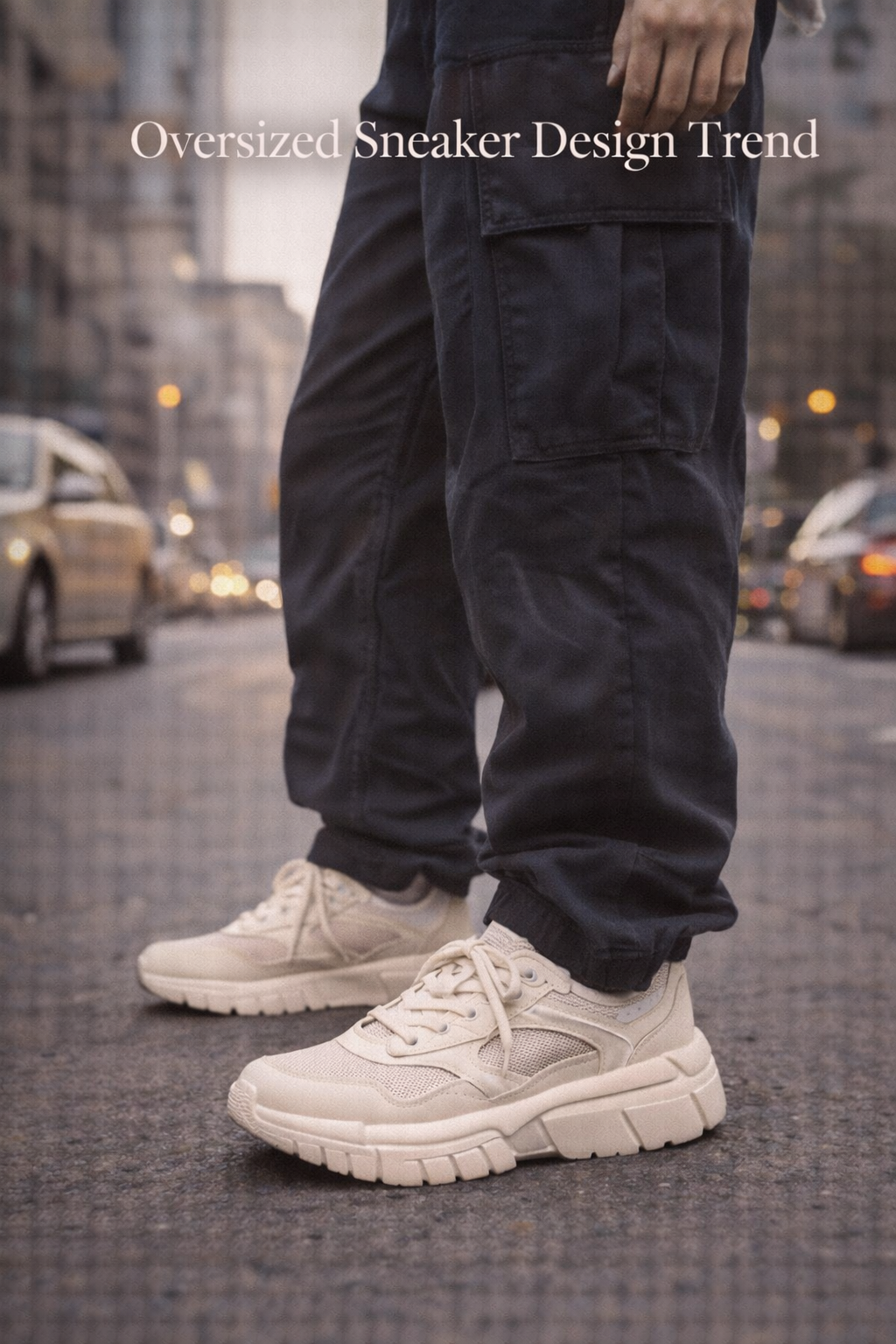
The shift toward bigger sneaker shapes has been impossible to ignore. Walk down any city street, scroll through any fashion feed, or step into any boutique, and you will see footprints that are undeniably larger than life. The era of the sleek, barely-there trainer has given way to the dominance of the oversized sneaker.
This movement isn’t just about added bulk; it represents a fundamental change in how we view silhouette proportions. Modern fashion has embraced a “more is more” philosophy, where footwear anchors an outfit rather than simply complementing it. From high-fashion runways to the pavement of global capitals, the oversized sneaker has cemented itself as a cultural icon, driven by a mix of digital culture, streetwear influence, and a collective desire for comfort wrapped in a bold aesthetic.
In this deep dive, we will explore the anatomy of the chunky silhouette, trace its historical roots, and understand the technological innovations that make these massive shoes wearable.
What Defines an Oversized Sneaker Silhouette?
To understand the trend, we must first dissect the visual identity of chunky sneakers. An oversized silhouette isn’t defined by a single feature but rather a combination of exaggerated elements that create a distinct profile. It’s about volume, depth, and a deliberate departure from the anatomical shape of the human foot.
Thick Midsoles and Platform Structures
The most recognizable feature of the oversized trend is the midsole. Unlike traditional athletic shoes where the sole is designed for minimal ground contact and maximum energy return, chunky sneakers utilize thick, often platform-like midsoles. This verticality changes the wearer’s stance and adds significant visual weight to the bottom of the silhouette. Designers often stack layers of foam or rubber, creating architectural shapes that extend far beyond the heel and toe. [Sole Thickness and Style Impact]
Bold Toe Profiles
Minimalist sneakers often feature tapered, almond-shaped toe boxes that mimic the foot. Oversized sneakers flip this script with bold, often bulbous toe profiles. The toe box is wider, taller, and more reinforced, contributing to the overall “stout” appearance of the shoe. This design choice isn’t just aesthetic; it provides a different type of roominess and comfort, allowing the toes to splay naturally within a cavernous structure.
Exaggerated Proportions
Proportion is the playground of the oversized trend. Designers manipulate the ratio of the upper to the sole, often making the shoe look two or three sizes larger than it actually is. This is achieved through heavy padding in the tongue and collar, multi-layered uppers with complex paneling, and extended heel counters. The result is a shoe that commands attention and physically occupies more space, disrupting the clean lines of a traditional outfit.
The History Behind Oversized Sneaker Trends
While the current craze feels modern, the DNA of the chunky sneaker traces back decades. Fashion is cyclical, and the oversized silhouette is a perfect example of retro athletic inspiration colliding with high-fashion experimentation.
Retro Athletic Inspiration
The genesis of the “dad shoe”—a term often used interchangeably with chunky sneakers—lies in the athletic footwear of the 1990s. Brands prioritized function over form, creating shoes with massive cushioning systems to protect runners’ joints. Silhouettes like the Nike Air Monarch or the New Balance 990 series were designed for stability and shock absorption, resulting in bulky, unpretentious shapes. What was once considered “uncool” or purely functional has been reclaimed by modern designers as a vintage aesthetic. [Classic Sneaker Silhouettes in History]
Platform Shoe Influence
The desire for height and drama has roots in the platform shoes of the 1970s disco era and the 1990s rave culture. The Spice Girls and Buffalo London boots proved that footwear could be architectural. The modern oversized sneaker borrows this vertical ambition, blending the sporty upper of a trainer with the towering sole of a platform boot. [Platform Shoes and Their Evolution]
Luxury Fashion Collaborations
The tipping point for the current trend can be traced to the intervention of luxury fashion houses. When Balenciaga released the Triple S in 2017, it legitimized the “ugly” sneaker. By taking the retro athletic look and distorting it to grotesque proportions, high fashion signaled that bulk was the new luxury. This opened the floodgates for collaborations between sportswear giants and avant-garde designers, solidifying the oversized silhouette as a status symbol.
Why Oversized Sneakers Became Popular
The popularity of these massive shoes goes beyond simple aesthetics. It sits at the intersection of comfort innovation, digital influence, and psychological nostalgia.
Comfort and Cushioning Innovation
At its core, the chunky sneaker trend is a rebellion against discomfort. The minimalist trends of the early 2010s often sacrificed cushioning for a sleek profile. In contrast, oversized sneakers offer a maximalist approach to comfort. The thick midsoles are often packed with advanced foam technologies, providing a walking-on-clouds sensation. For a generation that prioritizes wellness and self-care, a shoe that feels good is just as important as one that looks good.
Streetwear and Social Media Influence
We live in an image-centric world, and oversized sneakers photograph well. Their bold lines and complex colorways pop on small screens, making them perfect for Instagram and TikTok. Streetwear culture, which thrives on exclusivity and hype, embraced the chunky silhouette as a canvas for limited-edition drops. The sheer size of the shoe allows for more branding, more colors, and more design elements, making them instantly recognizable status markers in a digital feed.
Nostalgia and Retro Revival
Nostalgia is a powerful drug. For Millennials and Gen Z, the oversized sneaker represents a comforting callback to the pop culture of their youth or the “normcore” style of their parents. There is an irony in wearing “dad shoes” that appeals to modern sensibilities—it’s a way of dressing that feels familiar yet subversive. [Retro Silhouettes Making a Comeback]
Oversized vs Minimalist Sneaker Silhouettes
To truly appreciate the chunky trend, it helps to contrast it with its polar opposite: the minimalist sneaker. This comparison highlights how silhouette choices define style identity.
Weight and Structure
Minimalist sneakers, like the Common Projects Achilles or the Adidas Stan Smith, are defined by lightness and flexibility. They are unstructured and aim to disappear on the foot. Oversized sneakers are structural beasts; they are heavier, stiffer, and impose a shape onto the foot rather than conforming to it.
Style Identity
Minimalist shoes whisper; oversized shoes shout. A clean white sneaker says “refined, versatile, classic.” A chunky, multi-colored sneaker says “bold, experimental, trendy.” The choice between the two is often a choice between blending in and standing out. [Minimalist vs Chunky Shoe Trends]
Performance vs Fashion
Interestingly, the lines here are blurred. Minimalist shoes often lack the support needed for long-distance walking, while oversized fashion sneakers, despite their athletic look, are often too heavy for actual sports. However, the technology developed for performance running (like maximalist cushioning) has been co-opted by fashion, meaning the chunky sneaker often wins on raw comfort, if not agility.
See also: Why Silhouette Matters More Than Color In Shoe Design
Construction and Technology Behind Chunky Sneakers
Building a massive shoe that doesn’t feel like a brick requires sophisticated engineering. The industry has had to innovate to ensure these exaggerated shapes are actually wearable.
Lightweight Foam Materials
The biggest challenge with oversized silhouettes is weight. If a Triple S was made of solid rubber, it would be unwearable. The solution lies in lightweight foam materials. Ethylene-vinyl acetate (EVA) and proprietary compounds (like Adidas’ Boost or Nike’s React) allow designers to create massive volume with minimal density. Air injection technologies further reduce weight while maintaining the structural integrity of the thick sole. [Cushioning Technologies Explained]
Glue vs Stitch Assembly
Constructing these complex shoes requires different assembly methods. Traditional cup soles might be stitched, but the complex, layered midsoles of chunky sneakers are often cemented (glued). This allows for the stacking of different materials—hard rubber for the outsole, soft foam for the midsole, and plastic shanks for stability—without the limitations of a stitching needle. [Glue vs Stitch Construction]
Advanced Cushioning Systems
It’s not just foam; it’s mechanics. Many oversized sneakers incorporate air bubbles, gel pockets, or hollowed-out sections within the sole to reduce weight and improve shock absorption. This engineering allows the shoe to look heavy while acting as a responsive suspension system for the foot.
Cultural Meaning of Oversized Sneakers
Fashion is a language, and wearing oversized sneakers communicates specific cultural values.
Bold Self-Expression
In a world that often encourages conformity, the chunky sneaker is a declaration of individuality. It takes up space. It refuses to be ignored. Wearing a shoe with such exaggerated proportions requires a level of confidence and presence. It signals that the wearer is unafraid to challenge traditional standards of beauty and proportion. [Why Humans Care About Shoes]
Influence of Youth Culture
The trend is inextricably linked to youth culture. It challenges the sleek, professional aesthetic of the corporate world, replacing it with something playful, disruptive, and arguably “juvenile” in its proportions. It aligns with a broader shift in fashion toward relaxed fits, gender-fluid clothing, and a rejection of formal dress codes.
The Future of Oversized Sneaker Design
Is the bubble about to burst? Unlikely. Instead, the oversized silhouette is evolving.
AI-Generated Exaggerated Shapes
Artificial intelligence is beginning to influence sneaker design, generating shapes that are organically complex and impossible for a human to draft manually. We are seeing “alien” silhouettes with biological, root-like structures and impossible geometries that push the oversized trend into the realm of sci-fi.
Sustainable Thick Soles
As the industry grapples with waste, the future of chunky soles lies in sustainability. Brands are experimenting with mushroom leather, recycled rubber, and 3D-printed plant-based materials to create volume without the environmental footprint.
Hybrid Performance-Fashion Silhouettes
The divide between high fashion and high performance will continue to erode. We can expect to see oversized silhouettes that are not just aesthetically bold but functionally superior, utilizing carbon plates and energy-return systems from marathon shoes in lifestyle products. [The Future of Shoes: Technology & Innovation]
Oversized Sneakers as a Modern Design Movement
The oversized sneaker is not a fleeting fad; it is a significant design movement that has reshaped our understanding of silhouette. It challenged the idea that footwear must be sleek to be stylish and proved that comfort and high fashion can coexist.
As we move forward, the definition of a “standard” sneaker has permanently shifted. The chunky silhouette has expanded the boundaries of what is acceptable, allowing for a more diverse, expressive, and technologically advanced future for footwear. whether you love them or loathe them, the footprints of the oversized sneaker are here to stay. [Shoe Silhouettes Explained: Shape, Structure & Style]
Leave a Reply