

If you paused to look around a hospital waiting room ten years ago, you likely saw stacks of paperwork, pagers buzzing on doctors’ belts, and patients waiting hours for routine test results. Fast forward to 2026, and the landscape of American healthcare is shifting beneath our feet. While the sterile smell of antiseptic remains, the tools and technologies powering our care have evolved rapidly.
The pace of change in medicine has accelerated to a point where “future tech” is becoming daily practice. From artificial intelligence that spots diseases before symptoms appear to wearable devices that act as 24/7 guardians of our heart health, innovation isn’t just a buzzword—it is the lifeline of a modern healthcare system under immense pressure.
This shift comes at a critical time. As the population ages and chronic conditions rise, the old ways of managing health are no longer sufficient. We are moving away from a reactive “sick-care” model toward a proactive, preventative approach. This article explores the medical innovations defining 2026, examining how they work, why they matter, and what they mean for patients across the United States.
Why Medical Innovation Matters in 2026
The urgency for innovation has never been greater. The U.S. healthcare system faces a perfect storm of rising demand and straining resources. With millions of Baby Boomers entering their 80s, the sheer volume of patients requiring complex care has skyrocketed.
Simultaneously, we face significant hurdles regarding cost and access. Healthcare expenses have historically outpaced inflation, burdening families and businesses alike. Innovation offers a path out of this spiral. By focusing on efficiency and precision, new technologies aim to reduce waste, minimize hospital stays, and catch expensive conditions early when they are cheaper to treat. Ultimately, the goal isn’t just newer gadgets; it’s better outcomes for patients who have historically fallen through the cracks.
What Is Driving Medical Innovation in the USA
Three major engines are propelling this wave of change.
First is the aging population. As life expectancy increases, so does the prevalence of age-related conditions like dementia, heart disease, and arthritis. This demographic shift creates a massive market demand for treatments that extend quality of life, not just years of life.
Second is the prevalence of chronic disease. Conditions like diabetes and hypertension affect millions of Americans. These diseases require constant management, making them prime targets for automated, digital solutions that can monitor patients at home rather than in a clinic.
Finally, advances in technology and data act as the accelerant. Computing power has grown exponentially, allowing researchers to analyze biological data at speeds previously unimaginable. We now have the infrastructure to support complex AI models and secure data sharing, laying the groundwork for a truly connected health ecosystem.
Top Medical Innovations Shaping 2026
The innovations defining this year are diverse, but they share a common thread: they make healthcare more intelligent, personalized, and accessible.
Artificial Intelligence in Healthcare
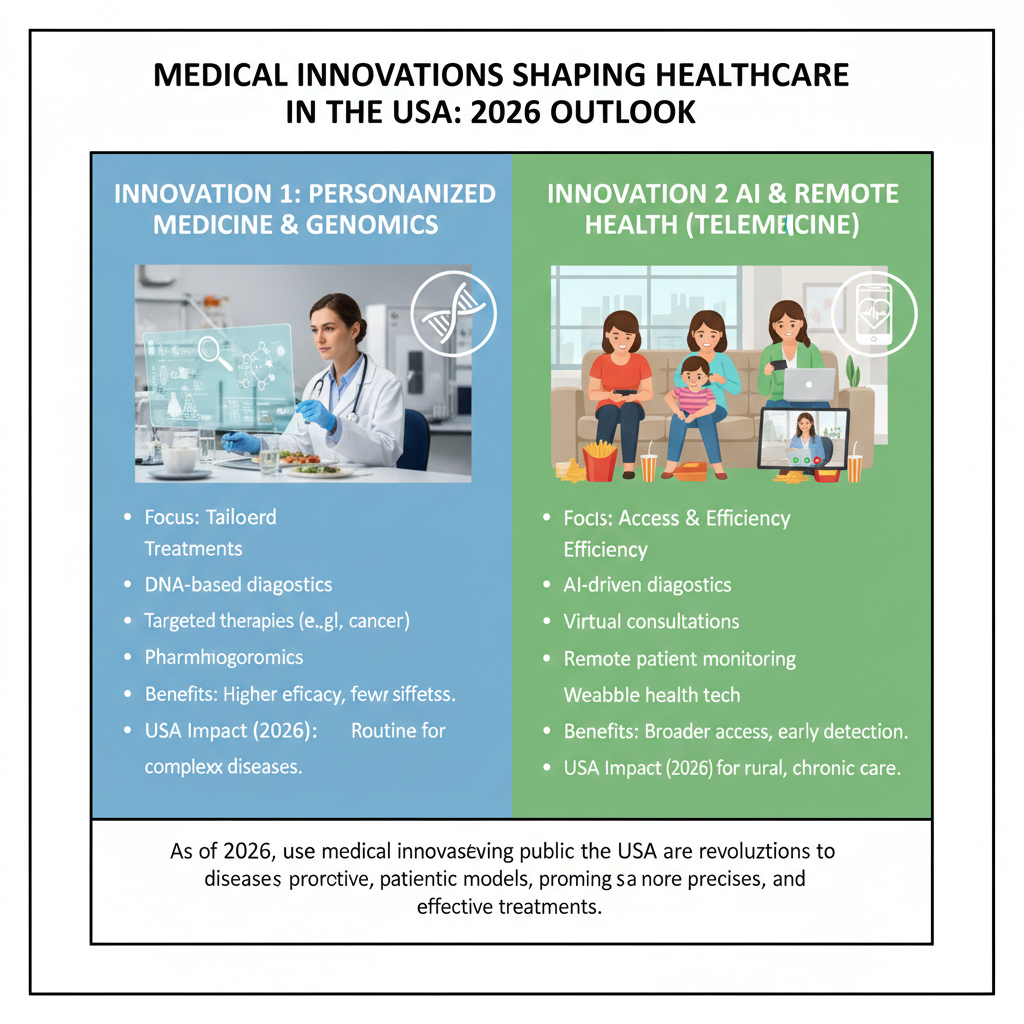
Artificial Intelligence (AI) has graduated from experimental labs to clinical reality. In 2026, AI-powered diagnostics are helping radiologists and pathologists detect anomalies with superhuman accuracy. Algorithms can scan thousands of X-rays or MRI images in minutes, flagging potential issues like early-stage tumors that the human eye might miss due to fatigue or subtlety.
Beyond diagnostics, predictive analytics are transforming hospital operations. AI systems analyze patient data to predict who is at risk for readmission or sepsis, allowing medical teams to intervene days before a crisis occurs. This shift from reactive to predictive care is saving lives and freeing up critical hospital beds.
Precision and Personalized Medicine
The days of “one-size-fits-all” medication are fading. Genetics-based treatment analyzes a patient’s DNA to determine how they will respond to specific medications. This is particularly revolutionary in cancer care, where oncologists can identify genetic mutations driving a tumor and select drugs that target those specific pathways.
Tailored drug therapies mean fewer side effects and higher success rates. Instead of trial-and-error prescribing for conditions like depression or hypertension, doctors can use genetic markers to prescribe the right drug at the right dose from day one.
Telemedicine and Virtual Care
While telemedicine surged during the pandemic, by 2026 it has refined its focus. Remote consultations are now seamless, integrated with home monitoring devices that send real-time vitals to the doctor during the video call.
This creates expanded access to care, particularly for rural Americans living miles from the nearest specialist. Virtual care platforms now support complex multidisciplinary visits, meaning a patient in a remote town can consult with a top neurologist in a major city without leaving their living room.
Wearable Health Technology
The smartwatch on your wrist has become a powerful medical device. Continuous health monitoring tracks metrics like heart rate variability, blood oxygen, and sleep quality with clinical-grade accuracy.
The real innovation lies in early risk detection. These devices can alert users to irregular heart rhythms like atrial fibrillation or sudden drops in oxygen saturation, prompting them to seek care before a catastrophic event like a stroke occurs.
Digital Health Records and Interoperability
For decades, patient data was trapped in silos. Now, smarter data sharing is becoming the norm. New interoperability standards ensure that a patient’s health record can travel with them from a primary care doctor to a specialist and then to a hospital, regardless of the software each facility uses.
This leads to improved care coordination. When every member of a care team sees the full picture—medications, allergies, past procedures—medical errors drop, and care becomes more cohesive and efficient.
Innovations in Disease Detection and Prevention
Prevention is the ultimate cost-saver. Early screening technologies have become less invasive and more accurate. Liquid biopsies, for instance, allow doctors to detect cancer DNA in a simple blood draw, potentially catching malignancies long before a tumor is visible on a scan.
Preventive health tools are also empowering patients. Apps and platforms now use behavioral science to help individuals manage diet, exercise, and stress, reducing the risk of developing chronic conditions in the first place. These tools essentially put a health coach in every pocket.
Advances in Treatment and Therapy
When treatment is necessary, it is becoming gentler and more effective. Minimally invasive procedures continue to replace open surgeries. Robotic-assisted surgery allows for greater precision and smaller incisions, leading to faster recovery times and less pain.
Targeted drug delivery is another breakthrough. Nanotechnology allows medication to be delivered directly to diseased cells—like chemotherapy to a tumor—while sparing healthy tissue. This drastically reduces the debilitating side effects often associated with potent treatments.
Medical Innovation in Mental Healthcare
Mental health is finally receiving the technological attention it deserves. Digital therapy platforms offer cognitive behavioral therapy (CBT) and other evidence-based treatments via apps, making support accessible to those who cannot afford or find a local therapist.
AI-assisted mental health screening can analyze speech patterns or typing behaviors to detect subtle signs of depression or anxiety. While not a replacement for human diagnosis, these tools act as an early warning system, prompting timely professional intervention.
Role of Biotechnology and Research
Behind the scenes, biotechnology is reshaping the pharmacy. Faster drug development is possible thanks to computer simulations that test how molecules interact with the body, shaving years off the traditional research timeline.
Gene and cell therapies are offering cures for previously untreatable genetic disorders. By editing or replacing faulty genes, scientists are tackling the root cause of diseases like sickle cell anemia, offering hope where there was once only symptom management.
Medical Innovation and Healthcare Costs
The big question remains: can innovation lower the bill? Efficiency gains are the primary driver here. AI automating administrative tasks reduces overhead, while telemedicine reduces expensive emergency room visits.
The long-term cost reduction potential is immense. Preventing a diabetic patient from needing dialysis or catching cancer at Stage 1 saves the system hundreds of thousands of dollars per patient. While new tech has high upfront costs, the savings from improved health outcomes are the economic engine driving adoption.
Challenges Facing Medical Innovation
The road ahead is not without potholes. Regulation and approval timelines often lag behind the pace of innovation. The FDA must balance safety with speed, ensuring new AI tools and therapies don’t harm patients, which can delay access to life-saving tech.
Data privacy and ethics are also paramount. As health data becomes more fluid, protecting it from breaches is critical. Furthermore, we must ensure AI algorithms do not inherit the biases of their creators, which could lead to disparities in care for minority populations.
Impact on Patients and Healthcare Providers
For patients, these innovations mean improved outcomes and experience. Care is becoming more convenient, less painful, and more successful. Patients are more informed and empowered partners in their own health journey.
For clinicians, this represents a workflow transformation. While some fear technology will replace doctors, the reality is that it removes the robotic parts of their job—data entry, chart review—allowing them to focus on the human elements of empathy and complex decision-making.
What the Future of U.S. Healthcare Looks Like
Looking beyond 2026, the trajectory is clear. We are moving toward more proactive and personalized care. The check-up of the future won’t just look at what’s wrong today; it will predict what might go wrong tomorrow and offer a plan to stop it.
Tech-driven healthcare systems will integrate the hospital, the home, and the wearable device into a single continuum of care. The boundaries of the clinic are dissolving, bringing health expertise directly into the daily lives of Americans.
FAQs – Medical Innovations in 2026
What are the biggest medical innovations in 2026?
The most impactful innovations include AI-driven diagnostics, precision medicine based on genetics, advanced telemedicine platforms, and wearable devices for continuous remote monitoring.
How does AI improve healthcare?
AI improves healthcare by analyzing vast amounts of data quickly to aid in diagnosis, predicting patient risks to prevent emergencies, and automating administrative tasks to free up doctors’ time.
Is personalized medicine widely available?
It is becoming increasingly common, particularly in oncology (cancer care) and pharmacogenomics (medication management), though access can still vary based on location and insurance coverage.
Will medical innovation reduce healthcare costs?
While new technologies can be expensive initially, the long-term goal is to reduce costs by preventing severe disease, minimizing hospital stays, and streamlining administrative efficiency.
How quickly are innovations adopted in the USA?
Adoption varies. Large academic medical centers usually adopt tech first, while rural or smaller clinics may take longer due to budget constraints and infrastructure requirements.
Embracing a Healthier Tomorrow
The medical innovations of 2026 are not just cool gadgets; they represent a fundamental restructuring of how we approach human health. By leveraging data, biology, and connectivity, we are building a system that is smarter, kinder, and more effective.
For patients, the takeaway is one of optimism and engagement. The tools to live a longer, healthier life are becoming more accessible every day. Staying informed about these changes empowers you to advocate for the best care possible for yourself and your loved ones. As technology continues to evolve, the most important component of healthcare remains you—the patient—and your ability to access the care you deserve.
Leave a Reply