

You’ve likely seen the itinerary before. Perhaps you’ve even lived it. It looks something like this: three countries in ten days, 6:00 AM wake-up calls, rushing from the Louvre to the Eiffel Tower, and ending the trip more exhausted than when you started. For decades, this “see it all” mentality defined the American vacation. We treated travel like a checklist, measuring the success of a trip by the number of landmarks photographed rather than the memories made.
But the tide is turning. A quiet revolution is taking place in how Americans explore the world. It isn’t about going faster or farther; it is about hitting the brakes.
The concept of “slow travel” has moved from a niche subculture of backpackers to a mainstream desire for professionals, families, and retirees alike. It prioritizes connection over consumption and depth over breadth. As burnout rates climb and remote work unchains millions from their cubicles, travelers are trading frantic sightseeing for the luxury of time.
What Is Slow Travel?
At its core, slow travel is a mindset rather than a specific mode of transportation. It is the conscious choice to disconnect from the rush of everyday life and reconnect with the environment around you.
A Simple Definition
Slow travel typically involves staying in one location for an extended period—usually a week, a month, or even longer. Instead of hopping between hotels every two days, a slow traveler rents an apartment, shops at the neighborhood grocery store, and adopts the rhythm of local life. It is about savoring the experience rather than rushing to the next attraction.
Slow Travel vs. Traditional Tourism
Traditional tourism often feels like a race. It is characterized by packed itineraries, bucket lists, and a fear of missing out (FOMO). You visit a place to see its sights. In contrast, slow travel is about visiting a place to feel its soul. You aren’t there to just look at a cathedral; you are there to sit in the plaza across from it, drinking coffee for two hours while watching the residents go about their Tuesday morning. It shifts the focus from “doing” to “being.”
Why Slow Travel Is Gaining Popularity in the USA
The United States is famous for its hustle culture. We work long hours, take fewer vacation days than our European counterparts, and often feel guilty for resting. However, the collective exhaustion of the past few years has triggered a reevaluation of how we spend our limited free time.
Burnout from Fast-Paced Lifestyles
Americans are tired. The constant connectivity required by modern jobs means that true relaxation is rare. When vacations simply mimic the high-stress pace of the workweek—navigating airports, rushing to reservations, managing logistics—they fail to provide the recharge people desperately need. Travelers are realizing that returning from a trip needing a “vacation from the vacation” is a sign that something is broken.
Desire for Meaningful Experiences
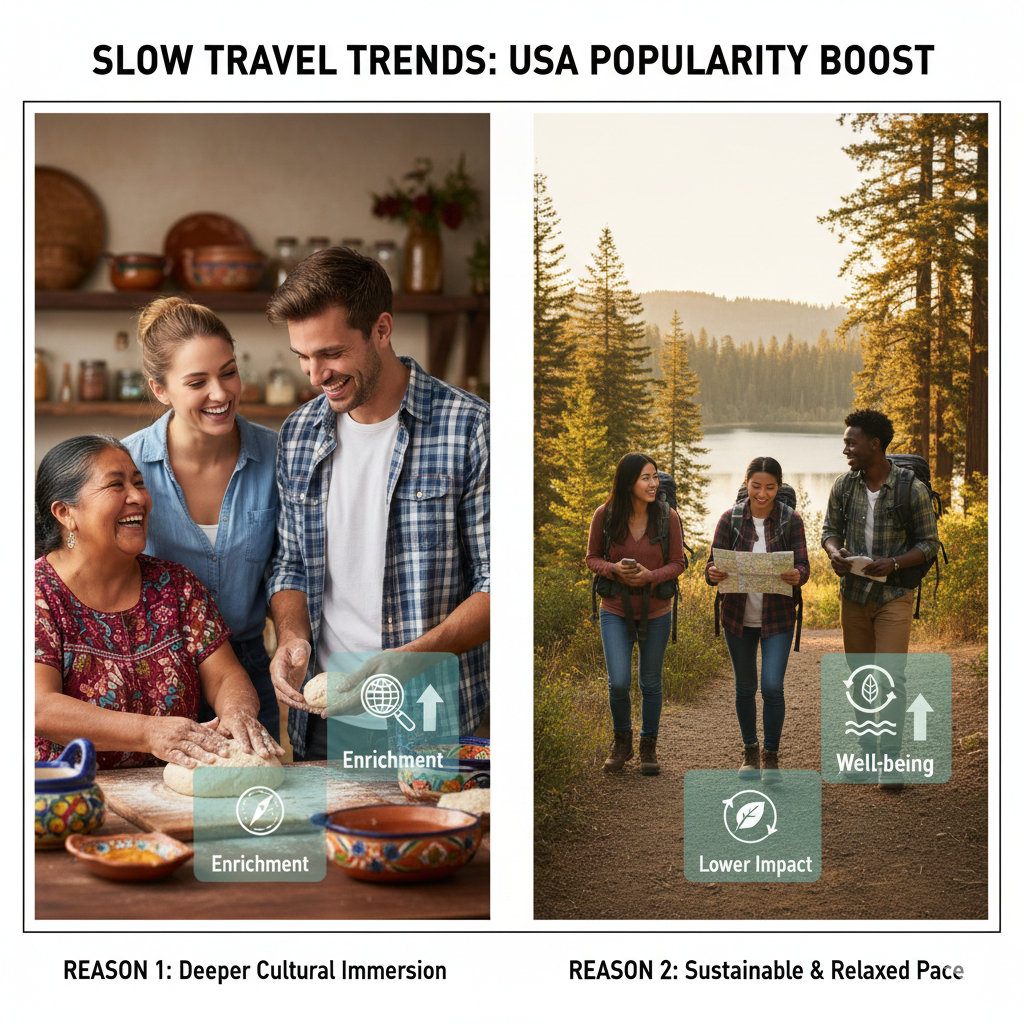
We are shifting away from material accumulation toward experiential wealth. A photo of the Colosseum is nice, but it doesn’t hold the same emotional weight as a memory of learning to make pasta from a grandmother in Bologna. Americans are seeking authenticity. We want to understand the places we visit, not just pass through them behind the glass of a tour bus. Slow travel facilitates the kind of serendipitous, unscripted moments that create lasting impact.
Key Reasons Americans Are Choosing Slow Travel
Beyond the philosophical shift, there are practical and physiological drivers pushing this trend forward.
Reduced Stress and Better Well-Being
Less Rushing and Tighter Schedules
Eliminating the pressure to “see everything” immediately lowers cortisol levels. When you have three weeks in a location instead of three days, a rainy afternoon isn’t a ruined vacation—it’s just an excuse to read a book or visit a cozy café. The flexibility of slow travel removes the anxiety of strict timelines.
Mental and Physical Health Benefits
Travel can be physically demanding. Jet lag, poor sleep in unfamiliar beds, and processed food on the go take a toll on the body. Slow travel allows for a routine. You can cook healthy meals, sleep in, and exercise. Mentally, the deceleration allows for genuine decompression, giving the brain space to process and rest.
Deeper Cultural Experiences
Living Like a Local
When you stay in a residential neighborhood rather than a hotel district, your perspective changes. You learn the garbage pickup schedule. You recognize the person walking their dog every morning. You see the destination as a living community rather than a backdrop for selfies.
Language, Food, and Community Immersion
It is difficult to learn a language when you only interact with hotel concierges. Slow travel forces—and encourages—interaction. You have the time to navigate a local market, decipher a menu that isn’t in English, or strike up a conversation with a neighbor. These interactions bridge cultural divides and foster empathy, which is often cited as the most valuable takeaway from travel.
Cost Efficiency and Longer Stays
Lower Daily Travel Costs
Ironically, traveling longer can sometimes be cheaper on a per-day basis. Short-term tourism is expensive: nightly hotel rates are high, and you are forced to eat out for every meal. Slow travelers often book rentals (like Airbnb or Vrbo) for a month, which frequently unlocks discounts of 30% to 50%.
Remote Work and Flexible Schedules
Cooking your own meals saves a fortune. Furthermore, amortizing the cost of a long-haul flight over a month makes the ticket price more palatable than spreading it over a week. For Americans battling inflation, getting more value for their dollar is a major incentive.
Sustainability and Responsible Tourism
Reduced Environmental Impact
A significant portion of travel’s carbon footprint comes from transportation. Flying into one hub and staying there is far greener than taking three short-haul flights or long train rides within a single trip.
Supporting Local Economies
Slow travelers tend to spend money where locals do—at independent grocers, small cafes, and neighborhood shops—rather than at international hotel chains or large tour operators. This ensures that tourism dollars remain in the community, supporting the people who actually live there.
Role of Remote Work in Slow Travel Growth
The single biggest accelerator of slow travel in the US has been the decoupling of work and location. The concept of the “digital nomad” was once reserved for freelance graphic designers and tech entrepreneurs. Today, corporate accountants and HR managers are doing it.
Digital Nomads and Flexible Work
With Zoom and Slack, the office is wherever the Wi-Fi is strong. This newfound freedom means Americans don’t have to cram their travel into two weeks of PTO a year. They can clock out at 5:00 PM in Lisbon or Mexico City and spend their evenings exploring.
Extended Stays and Work-Travel Balance
This has given rise to the “workcation.” Travelers might spend a month in Colorado, working weekdays and hiking weekends. This blend allows for extended exploration without sacrificing career progression. It changes the binary mindset that you are either “at work” or “on vacation.”
How Slow Travel Changes Trip Planning
Planning a slow trip requires a different toolkit than planning a standard vacation.
Fewer Destinations, Longer Stays
The itinerary shrinks geographically but expands in depth. Instead of “Italy, France, and Spain,” the plan becomes “Tuscany.” This focus allows for thorough exploration of secondary towns and hidden gems that guidebook-skimming tourists miss.
Alternative Accommodations
Hotels are designed for transience. Slow travelers look for livability. High-speed internet, a fully equipped kitchen, and laundry facilities become non-negotiable. Platforms catering to mid-term rentals (1-6 months) are seeing a surge in usage as travelers look for a “home away from home.”
Local Transportation Choices
Instead of high-speed rail passes or domestic flights, slow travelers might rent a bicycle, figure out the local bus system, or simply walk. This changes the texture of the trip. You see the graffiti, smell the street food, and notice the architecture when you aren’t blurring past it at 60 miles per hour.
Popular Slow Travel Destinations for Americans
The destination needs to support a lifestyle, not just offer sights.
Small Towns and Rural Areas
Domestic slow travel is booming. Places like the Hudson Valley in New York, the hill country of Texas, or the coast of Maine offer peace and beauty without the need for a passport. These areas allow Americans to disconnect from urban noise and reconnect with nature.
Secondary Cities
Instead of London or Paris, slow travelers are looking at Valencia, Spain; Lyon, France; or Medellin, Colombia. These cities offer vibrant culture and infrastructure but often come with a lower cost of living and a less frantic pace than their capital city counterparts.
Nature-Focused Locations
National Parks and beach towns are prime territory. Spending two weeks in a cabin near Zion National Park allows you to hike the trails that day-trippers don’t have time to reach.
Slow Travel vs. Fast-Paced Tourism
To understand the shift, it helps to look at the trade-offs directly.
Experience Quality Comparison
Fast tourism provides a highlight reel. You see the Mona Lisa, but you spend most of your time in line. Slow tourism provides a narrative. You might miss the Mona Lisa, but you spent three afternoons sketching by the Seine. The memories formed in slow travel tend to be more vivid because they are attached to emotions and relationships rather than just visual inputs.
Budget and Stress Differences
Fast travel is high-intensity for both your wallet and your nervous system. It requires expensive convenience solutions (taxis, express passes, central hotels). Slow travel allows you to trade money for time. You can walk. You can wait. You can take the cheaper, slower train. The financial burn rate is significantly lower, which reduces the anxiety surrounding the trip’s cost.
Who Is Embracing Slow Travel the Most?
While the movement is broad, certain demographics are leading the charge.
Millennials and Gen Z
This group values experiences over possessions. They are also the most likely to have remote work flexibility and are acutely aware of mental health and burnout. They are driving the “digital nomad” infrastructure globally.
Families and Retirees
“Worldschooling” is on the rise, where families take children out of traditional schools to learn through travel. Slow travel makes this manageable with kids. Similarly, retirees are using their freedom to spend winter months in warmer climates, engaging in slow travel to stretch their retirement savings.
Remote Workers and Freelancers
This group is the engine of the slow travel economy. They require infrastructure (co-working spaces, reliable internet) and are reshaping housing markets in popular destinations by renting mid-term.
Challenges of Slow Travel
It would be dishonest to say slow travel is without friction. It requires a significant adjustment.
Time Commitment
The biggest barrier is time. Not everyone has a job that allows remote work, and Americans with limited vacation days simply cannot take a month off. This makes slow travel a privilege for many.
Planning and Logistics
Setting up a temporary life is harder than checking into a hotel. You have to figure out grocery shopping, trash recycling rules, and how to pay bills in a foreign currency. There is also the “mid-trip slump”—boredom can set in when the novelty wears off, requiring travelers to be self-sufficient in finding entertainment.
Visa and Work Limitations
For international slow travel, bureaucracy is a hurdle. The Schengen Zone in Europe limits Americans to 90 days. Staying longer requires navigating complex visa processes. Working legally in another country also brings up tax implications that can be a headache to resolve.
Is Slow Travel the Future of Tourism?
The travel industry is betting on it. Airlines are changing routes, hotels are adding “extended stay” wings, and countries are launching “digital nomad visas” to attract long-term visitors.
Long-Term Travel Behavior Shifts
The pandemic broke the habit of frantic travel. Once people tasted the freedom of a slower pace, they were reluctant to go back. As we move forward, the definition of a “successful” trip is being rewritten. It is no longer about how far you went, but how deeply you connected.
Industry Response and Trends
We will likely see a continued rise in subscription-based living services (like Landing or Selina) that allow people to hop between slow-travel destinations easily. The future of travel looks less like a vacation and more like a mobile lifestyle.
FAQs – Slow Travel in the USA
What is slow travel in simple terms?
Slow travel is an approach to tourism that emphasizes connection to local people, cultures, and food. It relies on the idea that a trip is meant to educate and have an emotional impact, in the present moment and for the future, while remaining sustainable for local communities and the environment.
Why is slow travel becoming popular?
It is largely a reaction to burnout and stress. Americans are seeking more meaningful, restorative experiences. The rise of remote work has also made it logistically possible for more people to travel for extended periods without quitting their jobs.
Is slow travel cheaper than regular travel?
Generally, yes, on a per-day basis. By renting apartments with kitchens and staying in one place, you avoid the high costs of eating out three times a day and constant transportation tickets. However, the total cost depends on the length of your stay and the destination.
Can families or workers do slow travel?
Absolutely. Families often find slow travel easier because it creates a stable routine for children, rather than moving hotels every night. Workers utilize the concept of “workcations,” working during the day and exploring during evenings and weekends.
How do I start slow traveling?
Start small. Instead of visiting four cities on your next one-week vacation, pick one. Rent a house in a neighborhood, not a hotel in the tourist center. Commit to cooking a few meals and walking without a map.
Rediscovering the Joy of the Journey
The shift toward slow travel in the USA represents a maturation of our travel culture. We are realizing that the goal isn’t to finish the trip, but to inhabit it. By slowing down, we open ourselves up to the nuance, beauty, and humanity of the places we visit. In a world that demands we run faster every day, choosing to walk is a radical—and rewarding—act.
Leave a Reply